Omnia
Pricing
Customer Stories
Blog
Resources
AI Visibility Tools
Knowledge Base
API Docs
Log inSign up
Log inStart for Free

Omnia vs Promptwatch

Both Omnia and Promptwatch are mid-market AI visibility platforms that track brand mentions, citations, and share-of-voice across AI assistants. Promptwatch emphasizes broader multi-LLM coverage, crawler logs, and built-in content tooling, while Omnia offers a simpler, focused stack with solid SOV and export capabilities.

Omnia

AI-powered visibility and share of voice analytics for brands.

Omnia delivers comprehensive AI-driven monitoring of brand mentions, citations, and share of voice across digital channels, empowering brands with actionable insights.

Get started

Promptwatch

Monitor and optimize AI search visibility across LLMs

Promptwatch monitors major AI search engines (ChatGPT, Claude, Perplexity, Gemini and others) to track citations, prompt volume, and optimize brand visibility and share-of-voice.

Visit website

Omnia vs Promptwatch

A snapshot of how both tools compare across the four dimensions that matter most.

Product comparison
Omnia
Promptwatch
AI engine coverage
5
4
Analytics and reporting depth
5
4
Ease of use and workflow fit
4
4
Pricing and overall value
4
4
Ratings use a 1–5 scale, where 5 is highest, and are based on feature depth, coverage, and product fit, not just numbers
Coverage
Analytics
Ease of use
Value

Coverage across AI engines

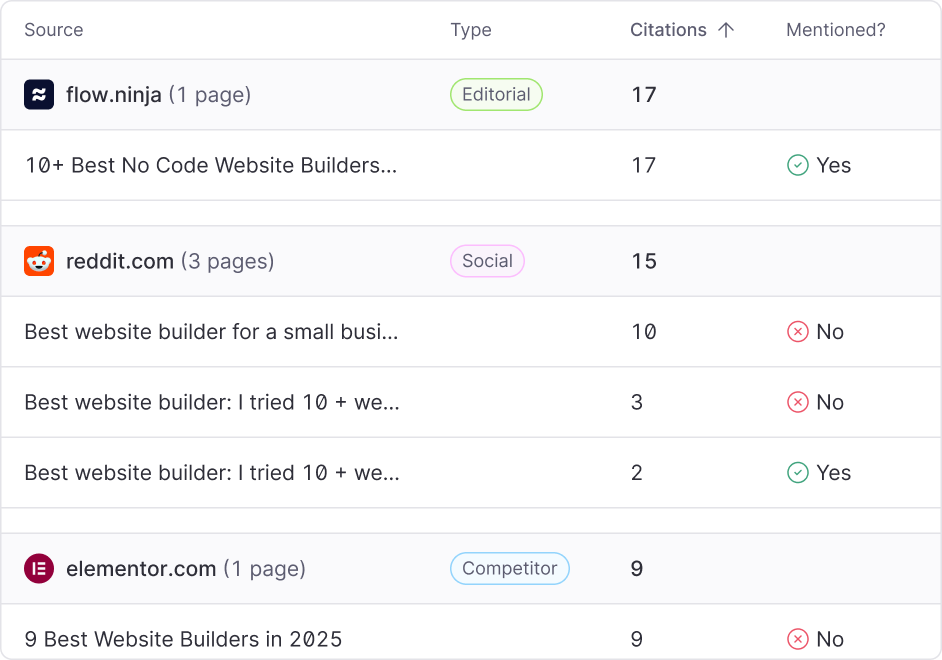
Promptwatch covers a wider set of engines (ChatGPT, Claude, Perplexity, Gemini, Meta Llama variants and others) and lists global geo coverage, which makes it better for brands that need visibility across many LLMs and markets. Omnia supports core engines (ChatGPT, Perplexity, Google AI Overviews) and still provides citation and brand mention tracking but is narrower in engine breadth. Both score 4/5 for coverage in your input, but Promptwatch gives more direct multi-LLM surface area and crawler logs.
Placeholder Image

Analytics and reporting depth

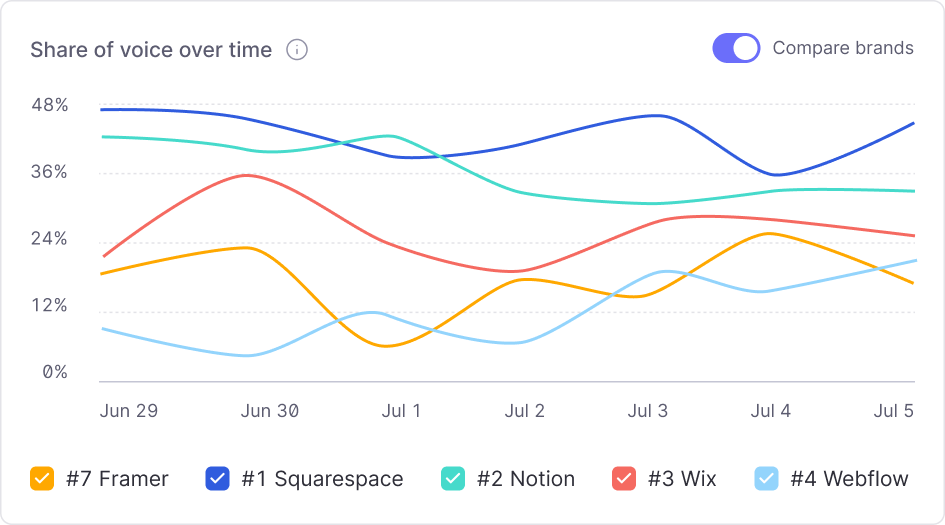
Promptwatch covers a wider set of engines (ChatGPT, Claude, Perplexity, Gemini, Meta Llama variants and others) and lists global geo coverage, which makes it better for brands that need visibility across many LLMs and markets. Omnia supports core engines (ChatGPT, Perplexity, Google AI Overviews) and still provides citation and brand mention tracking but is narrower in engine breadth. Both score 4/5 for coverage in your input, but Promptwatch gives more direct multi-LLM surface area and crawler logs.
Placeholder Image

Ease of use and workflow fit

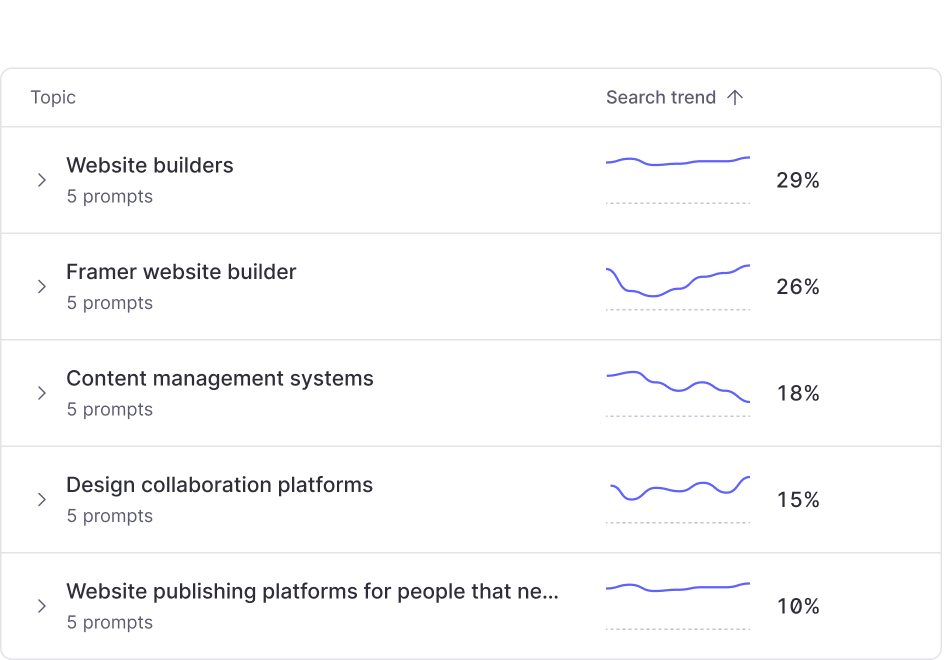
Each tool scored 4/5 for ease of use in your inputs, and both aim at mid-market buyers with interfaces suitable for marketing and product teams. Promptwatch includes more built-in features (content tools, team seats, integrations) that increase capability but add some complexity during onboarding. Omnia appears more focused, which can translate to faster adoption for teams that only need core SOV and citation workflows.
Placeholder Image

Pricing and overall value

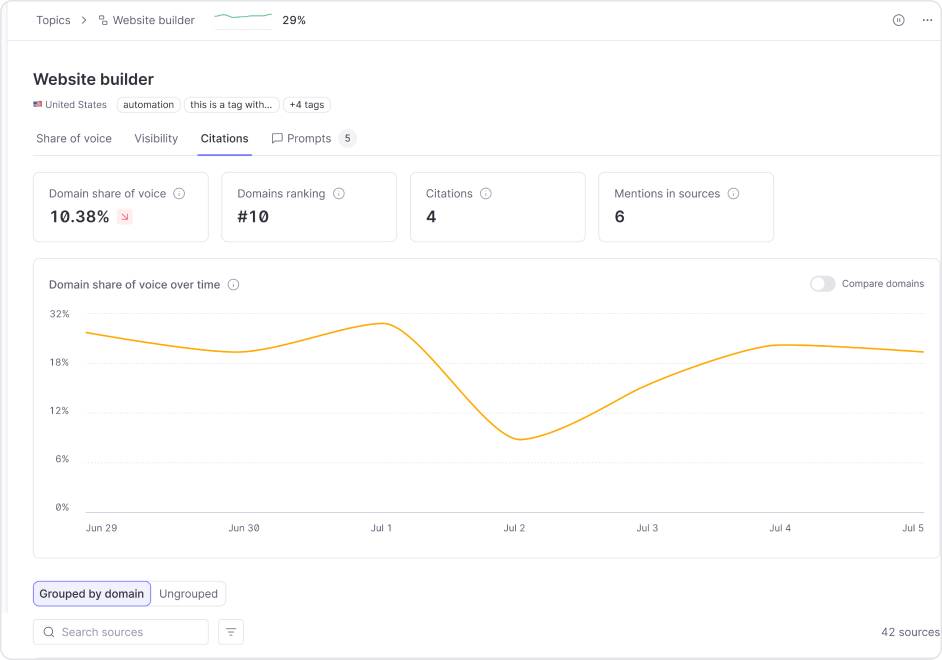
Both platforms are mid-market and score 4/5 for pricing value in your inputs, but their cost profiles differ: Promptwatch publishes tiered plans starting at about $74/month (annual) with a 7-day trial, while Omnia lists a mid-market positioning without public starter pricing. Expect costs to scale with prompt volume, monitors, and crawler log needs; Promptwatch warns that costs can grow with usage, and Omnia will have similar scaling dynamics given export and monitoring needs.
Placeholder Image

When to choose Omnia vs Promptwatch

When Omnia is a better fit

You want a focused, easy-to-adopt SOV and citation tool without lots of extra content features or integrations. Your priority engines are ChatGPT, Perplexity, and Google AI Overviews and you do not need exhaustive multi-LLM coverage. You prefer a simpler export workflow for feeding core SOV metrics into your BI stack. You are a mid-market team that values a lighter, more focused product footprint over broad LLM experimentation.

When Promptwatch is a better fit

You need broad multi-LLM coverage (Claude, Gemini, Perplexity, ChatGPT, Meta Llama, etc.) and global geo visibility. You require source-level crawler logs and citation detail to diagnose indexing or content issues in LLM answers. You want prompt-volume analytics, share-of-voice trends, and built-in content generation/optimization to act on insights directly. You run an agency or multi-client program that benefits from API access, Looker Studio integration, and tiered team features.

Why teams often move to Omnia

Omnia positions itself as a focused mid-market AI visibility solution that delivers reliable share-of-voice and citation tracking with straightforward exports for teams that want a simpler, faster-to-adopt product.

Try Omnia for AI visibility analytics

Omnia delivers comprehensive AI-driven monitoring of brand mentions, citations, and share of voice across digital channels, empowering brands with actionable insights.

Promptwatch wins for most buyers because it delivers deeper multi-LLM coverage, real-time crawler logs, prompt-volume metrics, and built-in content optimization that turn visibility signals into actionable workstreams. Omnia remains a strong choice when teams want a simpler, focused solution with reliable SOV metrics and straightforward exports.
Start with OmniaSee it in action

Frequently Asked Questions

What is Omnia?

Omnia is an AI visibility platform that shows where and how your brand appears in AI search engines like ChatGPT, Perplexity, Google AI Overviews, and Google AI mode.

Unlike most AI visibility tools, Omnia also takes a step further and shows you how to act on your data to get featured in future AI answer.

What AI engines can I track with Omnia?

Omnia tracks the major AI engines out there, like ChatGPT, Perplexity, Google AI Overviews, and Google AI mode.

We choose to deliberately not track every AI engine out there, and consider these ones the most relevant at this moment in time, with others just adding to the noise.

How often do you track prompts and refresh data?

Omnia tracks prompts every 24 hours so you can spot changes in AI as they happen. We have clients that see results in as little as 7 days, and use daily tracking to give you quick feedback loops to act on.

How do I know if AI recommends my product?

Omnia runs prompts to find out and show you whether your brand is mentioned in AI answers, including how you benchmark against competitors.

How does Omnia track brand mentions in AI answers?

Omnia mimics real user behaviour to runs prompts that users type to learn about your category and product.

What are the best AI search monitoring tools?

Most tools only test APIs or sample answers. Omnia focuses on real AI search experiences, real prompts that users type to find products like yours.

What is Answer Engine Optimization (AEO)?

AEO is the practice of optimizing your brand’s online presence to be mentioned and recommended in AI-generated answers instead of the traditional ranking blue links.

How is AEO different from SEO?

SEO optimizes for clicks from search results. AEO optimizes for mentions and recommendations inside AI answers, often without a click.

How long does it take to see results from AEO?

We’ve seen results in AEO in as little as 7 days with customers. Unlike SEO, which often takes months, AI visibility can be changed and influenced much more quickly.

How do AI search engines decide which brands to recommend?

They rely on authority signals like brand mentions, citations, content clarity, structured data, and third-party validation, not just keywords or backlinks.

Omnia helps brands discover high‑demand topics in AI assistants, monitor their positioning, understand the sources those assistants cite, and launch agents to create and place AI‑optimized content where it matters.

Omnia, Inc. © 2026
Product
Pricing
Resources
BlogCustomersAI visibility toolsKnowledge baseAPI docs
Company
Contact usPrivacy policyTerms of Service