

An AI visibility platform tracks how your brand appears in AI-generated answers across ChatGPT, Perplexity, Google AI Mode, and other AI systems. The best tools go beyond monitoring to deliver actionable intelligence — which prompts trigger competitor mentions, what citations drive recommendations, how visibility varies by geography, and what content to create next. Look for platforms like Omnia that track multiple AI answer engines, extract exact citation URLs, segment performance by country and topic, and provide workflow automation. This guide reviews 28 platforms to help you find the right fit for your budget and use case.
Customers increasingly ask AI which product to buy before they ever open a search tab. When ChatGPT recommends three competitors instead of your brand, most marketing teams have no idea they’re being overlooked. Traditional SEO metrics like keyword rankings and organic traffic don't capture this shift. That's because AI search engines don't crawl pages nor assign ranks the way Google does. Instead, they synthesize sources, cite what they trust, and skip what they don't.
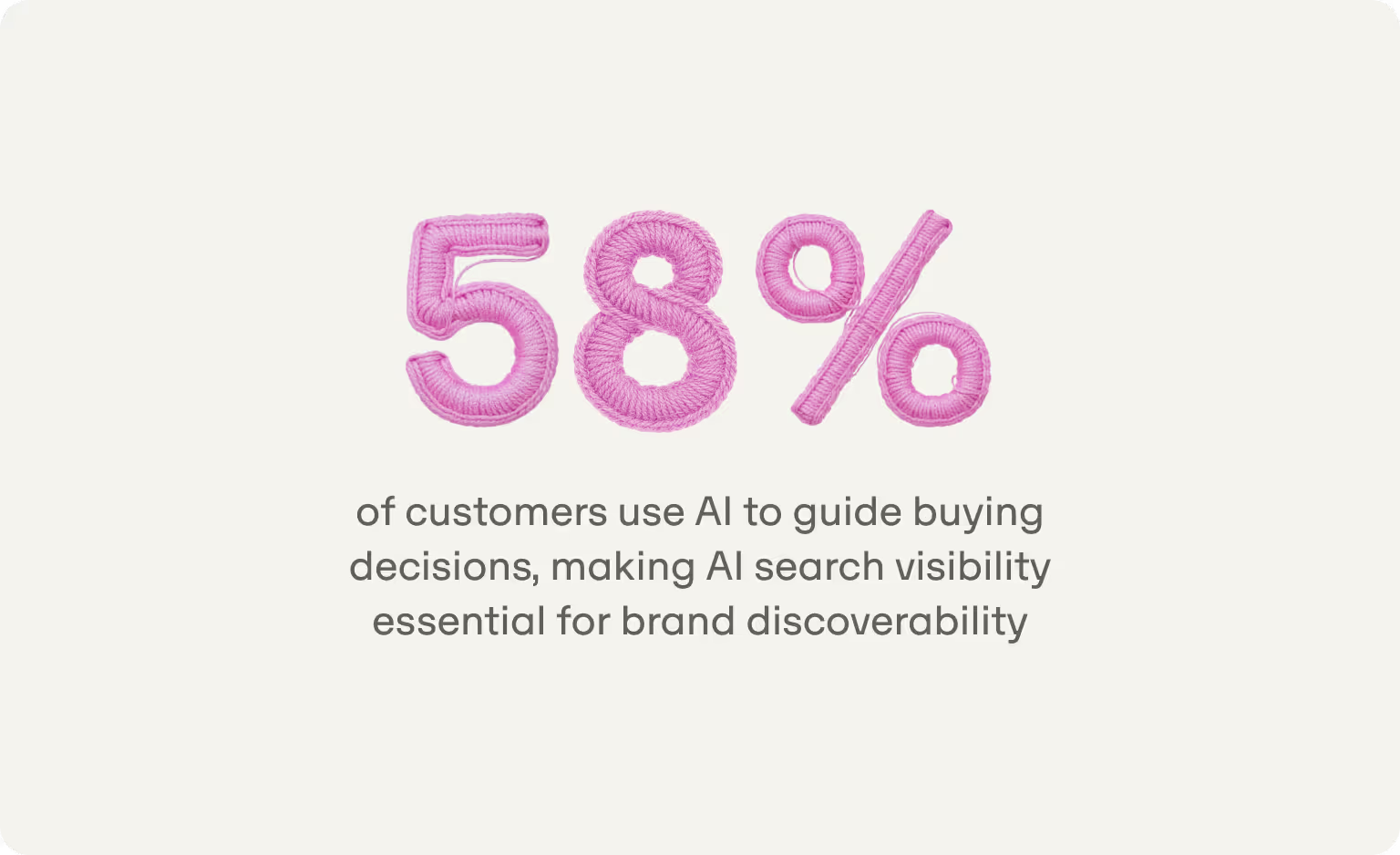
With 58% of customers now using AI when deciding what to buy, your brand presence in AI search determines whether you're part of the conversation — or invisible to more than half your market.
This guide walks you through what AI visibility platforms track, what features separate monitoring tools from execution engines, and which platforms deliver the best fit for different team sizes, budgets, and use cases.
What is an AI visibility platform?
An AI visibility platform tracks how (and whether) your brand shows up inside AI-generated answers across AI search platforms. Instead of tracking how your content ranks, it monitors:
- The prompts people ask
- The AI search results
- Where your brand is mentioned
- Which sources (URLs and domains) are cited
- How your visibility compares to competitors
The best AI visibility tools reveal what's driving recommendations.
AI visibility vs SEO rank tracking
Traditional SEO is deterministic. Google crawls your page, assigns a rank, and that position typically remains stable. AI search is variable — ask ChatGPT the same question twice and you might get different answers. The “rank” doesn't exist, only mentions and citations that shift based on context.
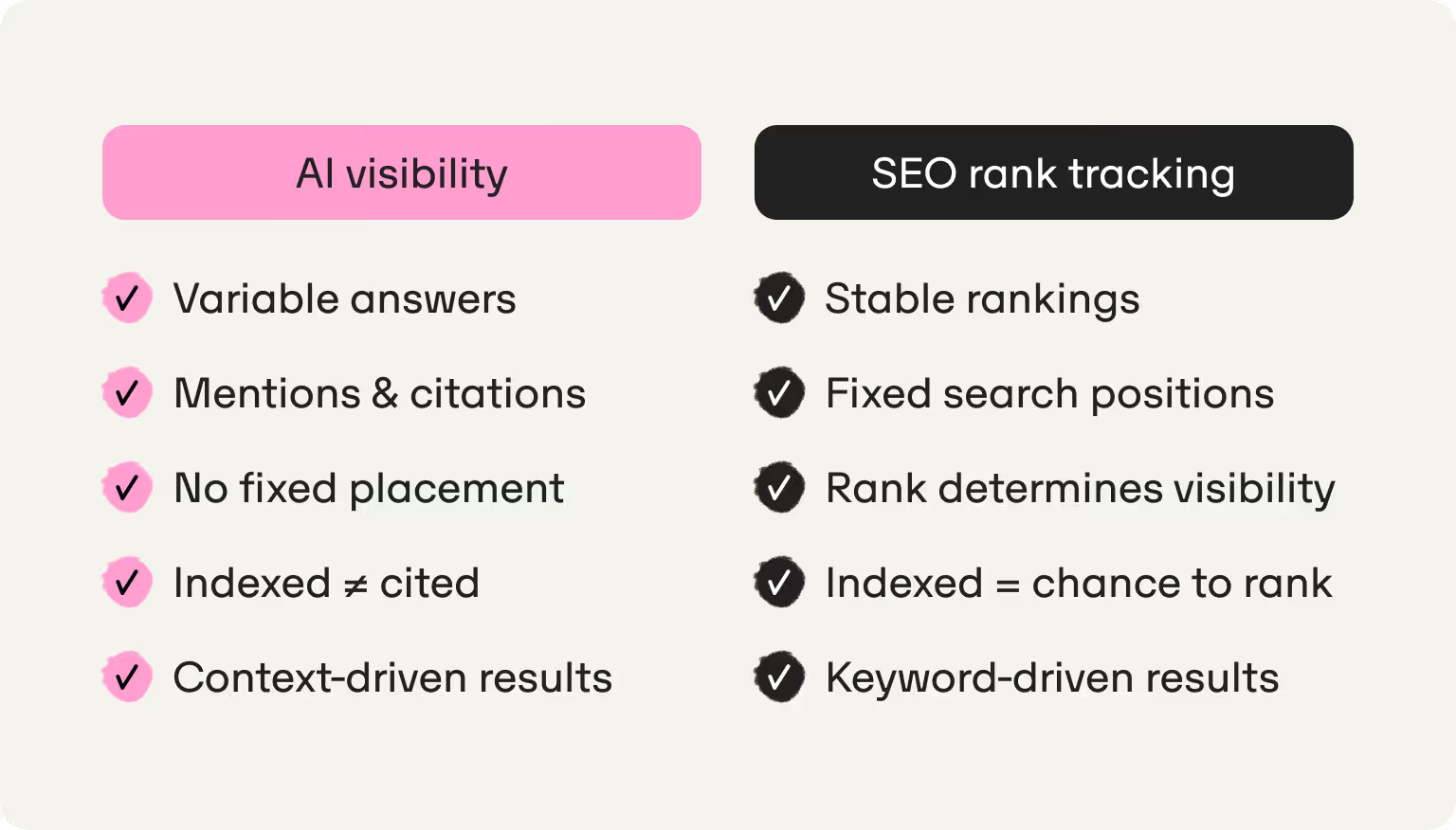
In traditional search, getting indexed means you have a chance to rank. In AI search, being indexed means nothing if the AI doesn't cite you. The LLM model might know about your content but choose not to reference it.
What to look for in an AI visibility tool
Not all AI visibility platforms are built the same. A few tools just take screenshots. Others help you act on the visibility data. Here’s what to look for.

Prompt monitoring
The best AI visibility platforms look beyond your branded queries and monitor the full category with prompt tracking. What are people asking about your industry? Which prompts trigger competitor mentions? How often does the tool refresh answers to catch changes?
Look for platforms that track both branded and non-branded prompts, rerun queries daily (or more frequently) to catch answer variance, show trending topics and high-volume question patterns, and let you add custom prompts tied to your product, category, or direct competitors. AI-generated answers change fast, so avoid tools that only refresh weekly or require manual reruns.
Brand mentions and share of voice
“Share of voice” in AI-powered search isn't as clean as traditional SEO. Some tools count any brand mention, others only count recommendations, and a few distinguish between positive citations and dismissive references through sentiment analysis.
Be sure to check:
- Does the tool show the actual AI answer? Screenshots prove the mention exists.
- Does it provide citation analysis? Knowing which sources AI platforms referenced when mentioning your brand is essential for improving your visibility.
- How is the share of voice calculated? Is it prompts where you appear versus total prompts?
Make sure the math is clear. If a platform gives you a percentage but hides the underlying brand performance and brand perception, you can't verify or act on it. For more information on how to peel back on insights, read our playbook to improving brand visibility in ChatGPT.
Citation extraction
Citations are the real signal. When an AI engine cites your blog post, case study, or third-party review, that's evidence the AI models perceive your content as trustworthy. The best tools extract:
- Exact URLs cited: Not just your domain, but which specific pages get referenced
- Third-party sources: News articles, reviews, industry sites mentioning you
- Citation frequency: How often each page gets cited across different prompts
This tells you what's working. If your “How to choose project management software” guide gets cited 50 times but your product page gets cited zero, you know where to focus.
Aggregation
Good tools don't just dump data on you, they organize it. Look for platforms that let you group prompts by topic or theme, segment by intent, tag competitors, and filter by geography or language. Aggregation turns noise into insights. Without it, you're staring at thousands of individual prompts with no way to prioritize.
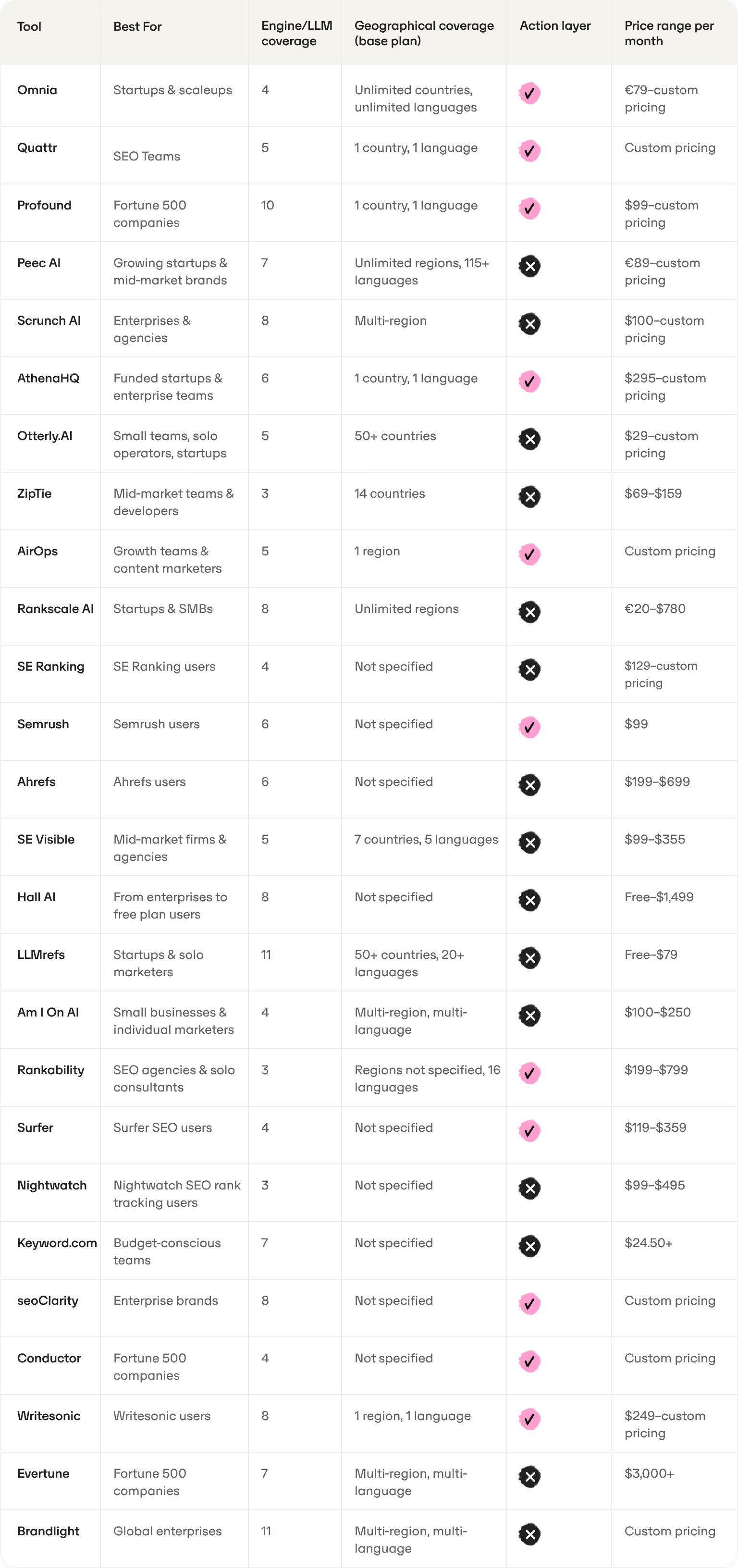
The top AI visibility tools at a glance
Use this table to shortlist three tools. Then, read their complete tool cards.
The 28 best AI visibility platforms in 2026
Many AI visibility tools are glorified dashboards — they show you data but don't ship content, change citations, or win you prompts. The best platforms turn AI signals into actions, what content to create, which places to publish, and any fixes to make.
#1 Omnia
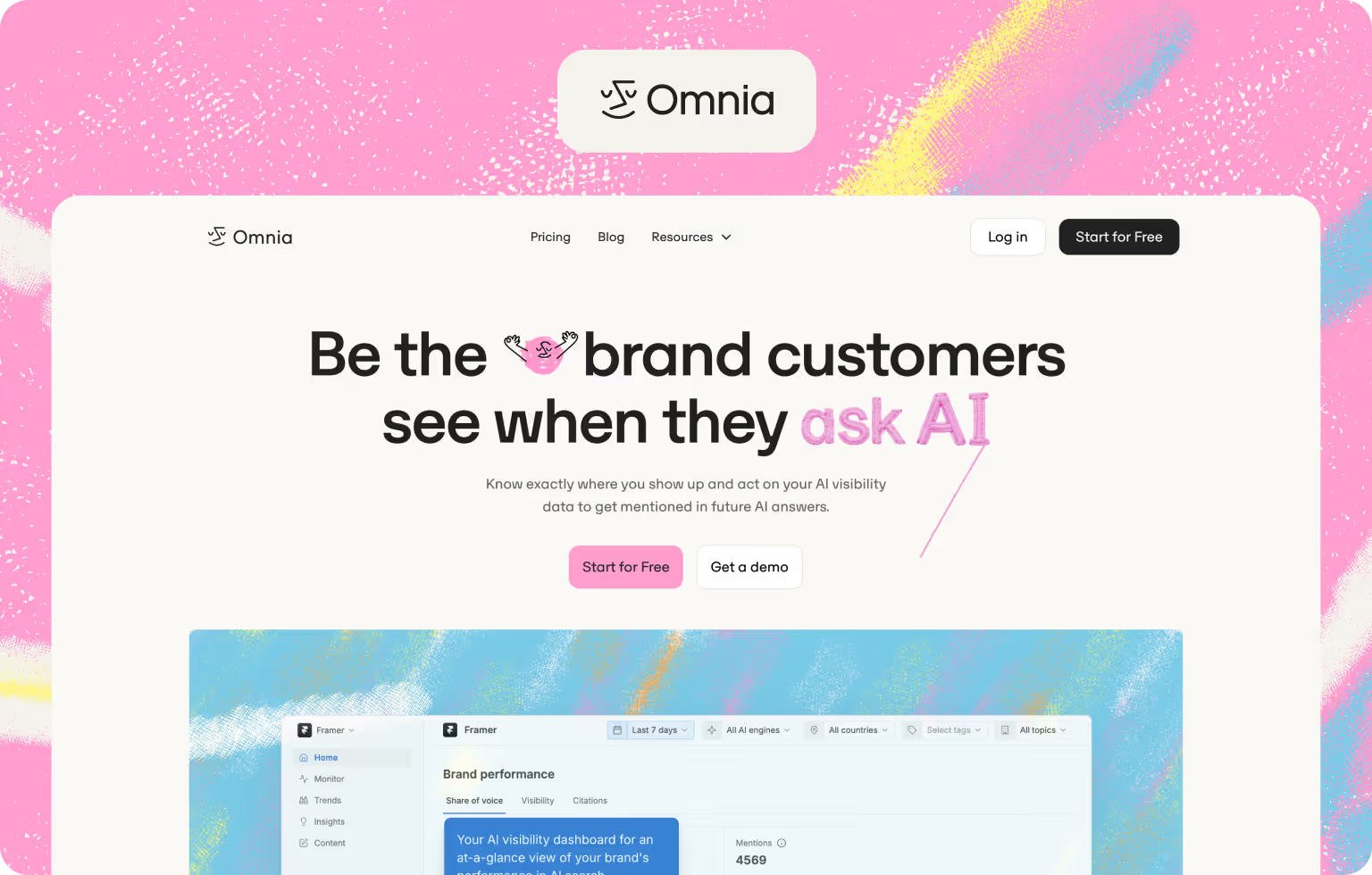
Omnia is a comprehensive AI visibility platform that turns monitoring into action through AI-powered content recommendations and strategic insights.
Best for
Startups and scale-ups with active content marketing programs who need answers to two key questions:
- Do we show up in AI and how do we benchmark against competitors?
- How can we increase our AI visibility?
What it does well
Omnia's shift from visibility-only reporting to AI-powered content recommendations sets it apart from dashboard-heavy competitors. The platform analyzes top citations, identifies patterns across winning content, and delivers detailed action plans for content creation. These include specific topics to build, structural recommendations, and strategic placement opportunities.
The platform reveals exactly which URLs and domains AI engines cite when recommending competitors. Your competitor gets cited 40 times. You get cited zero. Omnia shows you it's their comparison guide, so you build yours. Perplexity ignores your product pages and pulls from G2 instead, so you fix your review strategy. There’s no three-month content roadmap — just a clear signal on what to ship next.
Startups and scaleups can't compete with established brands on head terms or outspend them on content. Omnia's advantage is finding the prompts you can actually win. While enterprise tools optimize for brands already dominating traditional search, Omnia identifies long-tail queries where fresh, specific content beats generic alternatives. Content recommendations point to specific gaps competitors left open. Real-time alerts catch visibility shifts before they become problems.
Location-based views let you see performance across different countries and understand visibility variations by region, a must for brands operating in multiple markets. This granular geographic insight helps identify which prompts perform differently across locations, enabling region-specific optimization strategies.
Traditional SEO favors established brands with 10x the marketing budget competing on head terms. Omnia helps startups identify prompts you can actually win — niche queries where fresh, specific content beats generic alternatives. Topic discovery reveals the long-tail opportunities competitors aren't tracking yet.
With Omnia, INDYA discovered a winnable prompt and moved from #11 to #2 in tracked AI prompts in under seven days. Topic discovery reveals these long-tail opportunities competitors aren’t tracking yet.
Key features
- Citation analysis showing exact sources AI engines reference
- Brand and competitor visibility comparison with share of voice trends
- Topic discovery revealing the most searched AI queries in your category
- AI-powered insights with content recommendations and strategic guidance
- Unlimited countries and languages
- Daily monitoring with real-time alerts
Good fit if
- You’re a VC-funded startup or scaleup focused on growth
- You want actionable recommendations, not just dashboards, to guide your content strategy
- You’re competing in crowded categories where traditional SEO is dominated by established players
- You're focused on finding long-tail prompts you can actually win
Not a fit if
- You prefer manual control over every content decision without AI-powered guidance
- You need coverage for other engines beyond the core four
- Growth: €79/mo
- Pro: €279/mo
- Enterprise: Starting at €499/mo
#2 Quattr

Quattr is an AI SEO platform that helps brands rank better on Google Search and get mentioned inside AI engines like ChatGPT, Claude, and Perplexity. It combines SEO reporting, content creation, internal linking, technical SEO, and AI visibility tracking.
Best for
Teams looking to manage SEO and AI search visibility together.
What it does well
- A complete AI SEO Suite that does keyword research, content optimization, internal linking, and tracking.
- Focuses on earning mentions and citations across AI engines where modern discovery is increasingly happening.
Key features
- Build content briefs, optimize pages with predictive scoring and AI to draft and improve content.
- Build an internal link network using performance, bot, and user data to increase crawl efficiency.
Watch-outs
Quattr is a full SEO ecosystem rather than a single-feature tool.
Pricing
- Starter: Custom
- Pro: Custom
- Enterprise: Custom
#3 Profound
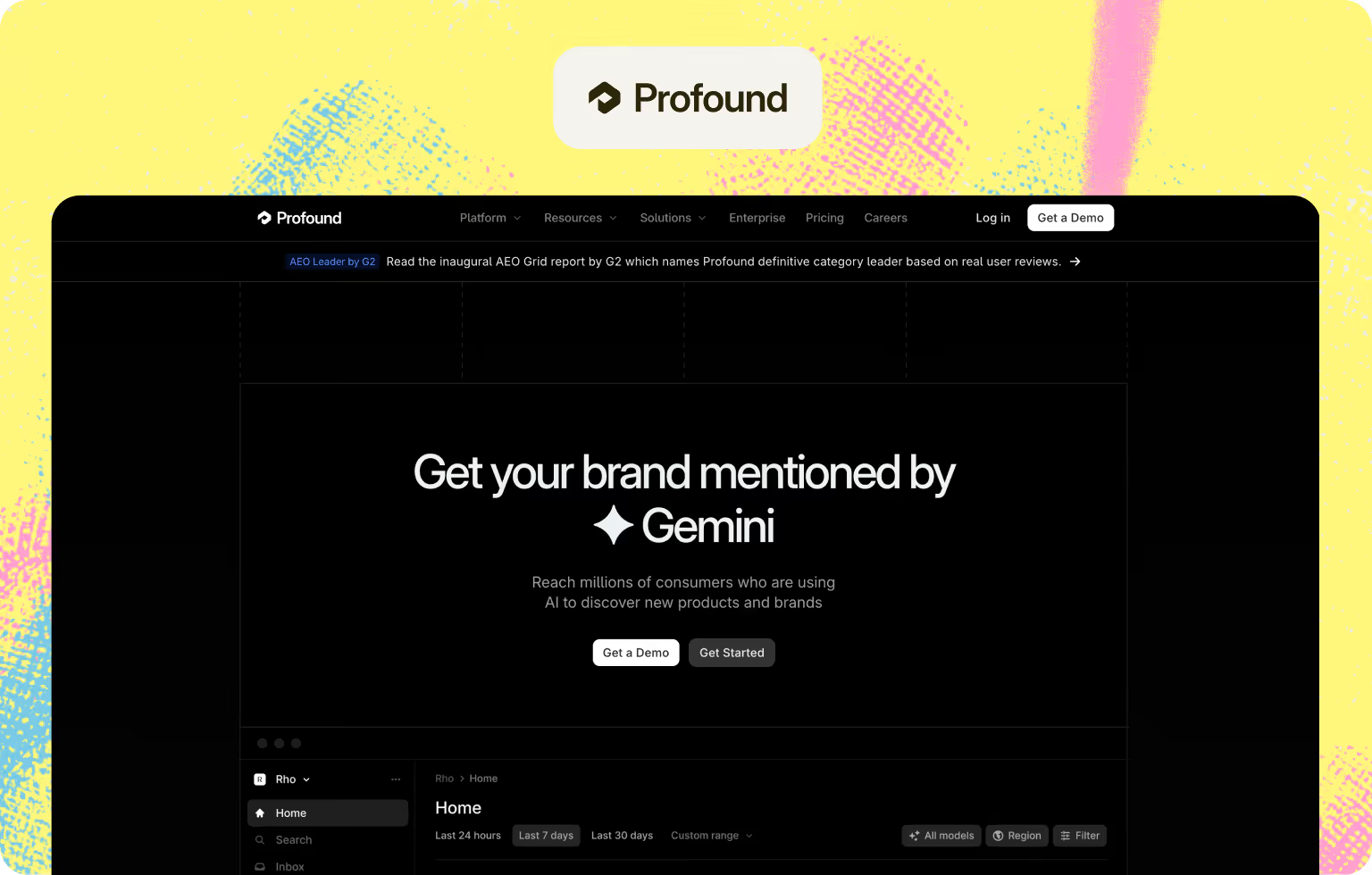
Profound is an enterprise AI visibility platform with real-time AI search volume data.
Best for
Fortune 500 companies and other enterprises needing comprehensive analytics and white-glove support across 10+ AI answer engines.
What it does well
With enterprise-grade architecture, Profound delivers market-research analytics and a content generation action layer alongside superb customer support.
Key features
- Agent Analytics for insight into crawler behavior tracking
- Prompt Volumes to uncover trends and track performance
Watch-outs
Pricing is well-above the market average, with the lowest plan only providing access for one user, one language, and one AI search engine.
Pricing
- Starter: $99/mo
- Growth: $399/mo
Enterprise: Custom
#4 Peec AI
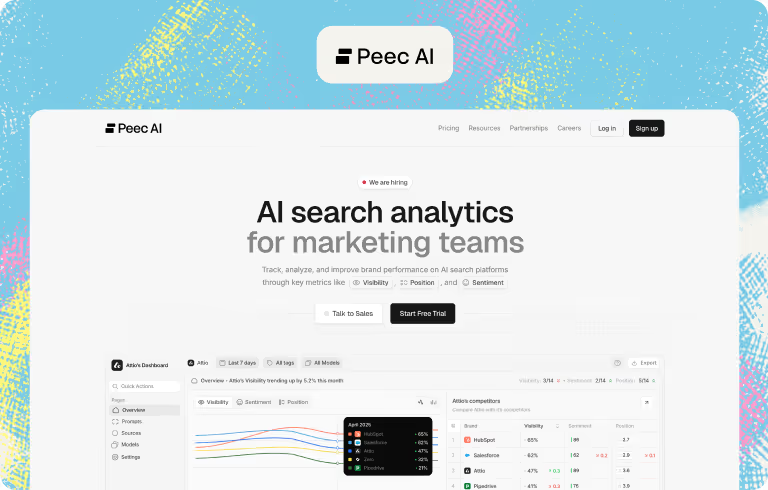
Peec AI is an AI brand visibility tool with budget-friendly pricing.
Best for
Growing startups and mid-market teams who value clean design and fast setup.
What it does well
Peec AI has a great price-to-value ratio and provides unlimited seats across all plans. The suggested prompts feature auto-generates relevant queries from website content, saving teams hours.
Key features
- Daily tracking with visibility, position, and sentiment metrics
- Suggested prompts for content gap identification
Watch-outs
Peec AI purely delivers monitoring insights. Additional platforms require add-on pricing.
Pricing
- Starter: €89/mo
- Pro: €199/mo
- Enterprise: Custom
#5 Scrunch AI
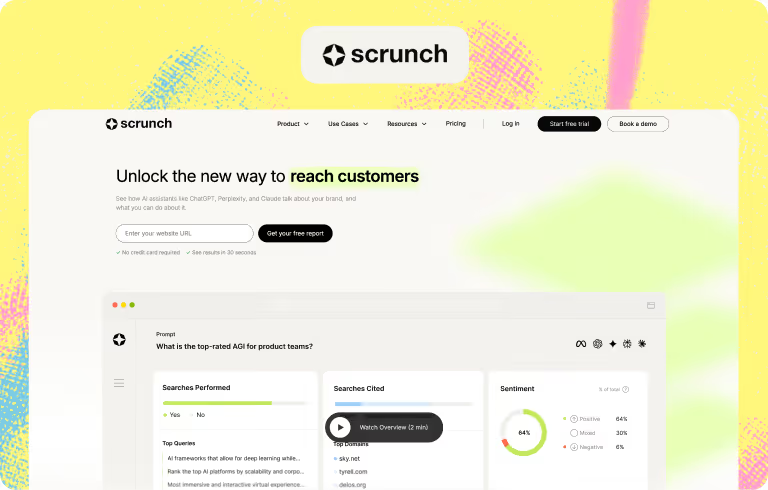
Scrunch AI is a multi-engine AI search visibility monitoring tool with enterprise-grade security.
Best for
Enterprises or agencies needing wide AI engine coverage with SOC 2 certification and detailed competitive analysis.
What it does well
Scrunch AI has a real-time bot crawling feed that shows exactly when AI engines access your content.
Key features
- Multi-dimensional competitor analysis by persona, topic, geography
- Agency Partner Program supports multiple brands
Watch-outs
Not a great fit for organizations needing end-to-end execution, as the platform focuses more on monitoring and is better suited for organizations with internal teams to act on data.
Pricing
- Explorer: $100/mo
- Growth: $500/mo
- Enterprise: Custom
- Agencies: Custom
#6 AthenaHQ

Athena HQ is a generative engine optimization (GEO) platform built by ex-Google/DeepMind engineers with AI-powered optimization recommendations.
Best for
Funded startups and enterprise teams that value expert pedigree, strategic guidance, and model-driven recommendations over basic analytics and monitoring.
What it does well
Rather than dumping data on you, AthenaHQ provides AI-powered recommendations on what to fix next.
Key features
- GA4, Search Console, and Shopify integration
- Unified GEO score combines data points to reveal how often and where your brand is cited
Watch-outs
AthenaHQ is likely cost-prohibitive for bootstrapped startups or small teams. The self-serve 3,600 credits may feel limiting for high-volume needs.
Pricing
- Self-Serve: $295/mo
- Enterprise: Custom
#7 Otterly.AI

Otterly.AI is an entry-level AI search visibility tool.
Best for
Small teams, solo operators, bootstrapped startups on tight budgets wanting straightforward plug-and-play AI visibility tracking.
What it does well
Otterly.AI delivers great value at one of the lowest price points on the market. It has a clean, modern interface with stand-out features.
Key features
- AI Keyword Research tool reveals real user prompts, not guessed search terms
- GEO Audit tool analyzes 25+ on-page factors
Watch-outs
Data refreshes occur weekly, not daily. The platform also lacks competitive analysis features.
Pricing
- Lite: $29/mo
- Standard: $189/mo
- Premium: $489/mo
- Enterprise: Custom
#8 ZipTie
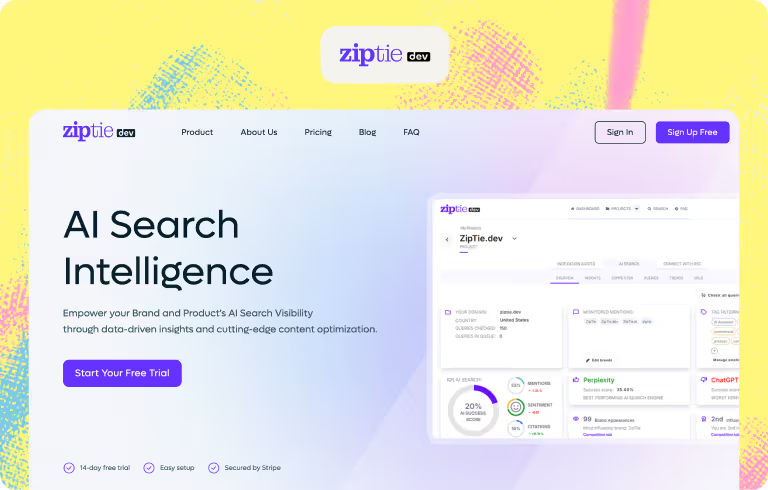
ZipTie is an AI visibility optimization tool with data-driven insights and content optimization features.
Best for
Mid-market teams and developers seeking content optimization guidance and API-first design.
What it does well
Ziptie goes beyond monitoring by suggesting prompts to track and content optimizations to make. For technical teams, the API-first design means you can pipe visibility data into your existing reporting stack.
Key features
- AI Success Score combines citation frequency, sentiment, and platform performance into one metric that's easy to track over time
- Built-in prompt suggestions and content optimization
Watch-outs
One major limitation is narrow platform coverage. There are only three engines available with no possibility for add-ons.
Pricing
- Basic: $69/mo
- Standard: $99/mo
- Pro: $159/mo
#9 AirOps
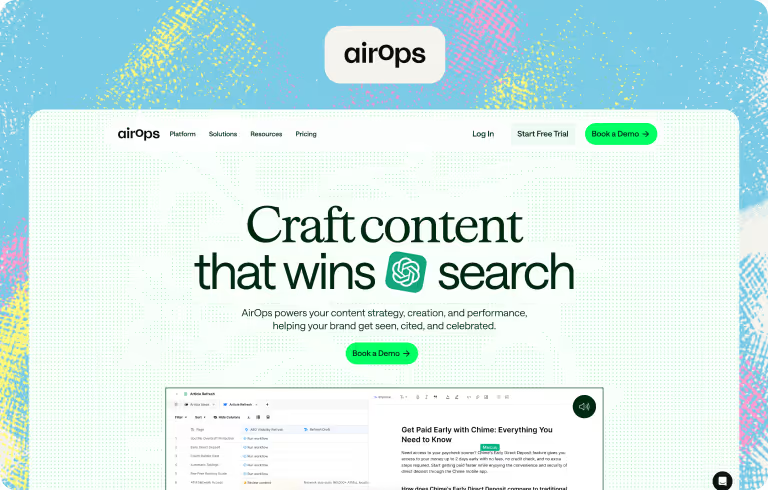
AirOps is a complete AI search visibility platform covering owned and third-party placements.
Best for
Growth teams and content marketers wanting AI workflow automation and scale.
What it does well
With the launch of Offsite, AirOps covers the full spectrum of what you publish and what others say about you. The platform combines AI visibility tracking with publisher discovery, outreach automation, and measured impact tracking.
Key features
- Influence Score ranks publishers by citation impact
- Workflow automation for scaled content operations
Watch-outs
AirOps features many capabilities, which may be complex for teams wanting only monitoring. Visibility monitoring features are new.
Pricing
- Solo: Custom
- Pro: Custom
- Enterprise: Custom
#10 Rankscale
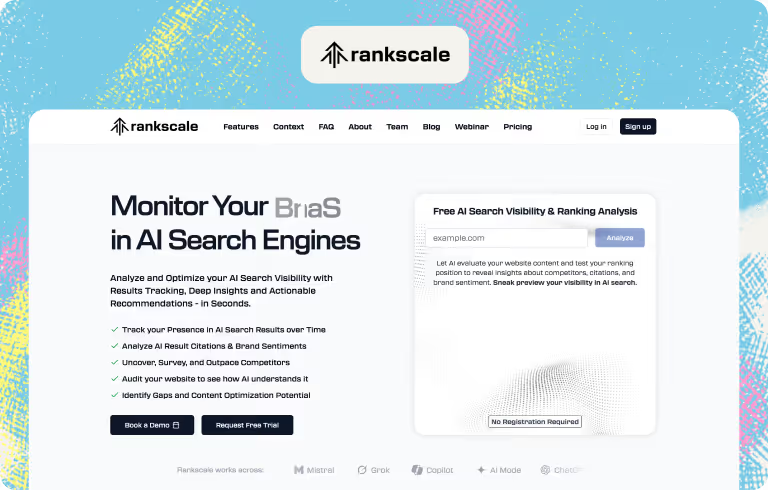
Rankscale is a cost-friendly AI search visibility tracking tool with technical depth.
Best for
Startups and SMBs comfortable with data-rich analytics.
What it does well
Even though Rankscale is budget-friendly, it’s not basic. Unlike tools that only show brand-level metrics, Rankscale lets you test specific pages.
Key features
- Daily tracking and monitoring
- AI site audit provides an AI readiness score (0-100%) with detailed breakdowns of your site's preparedness
Watch-outs
Rankscale AI is technical with a steep learning curve. Technical depth may be overwhelming for some teams.
Pricing
- Essentials: €20/mo
- Pro: €99/mo
- Enterprise: €780/mo
#11 SE Ranking AI Visibility Tracker
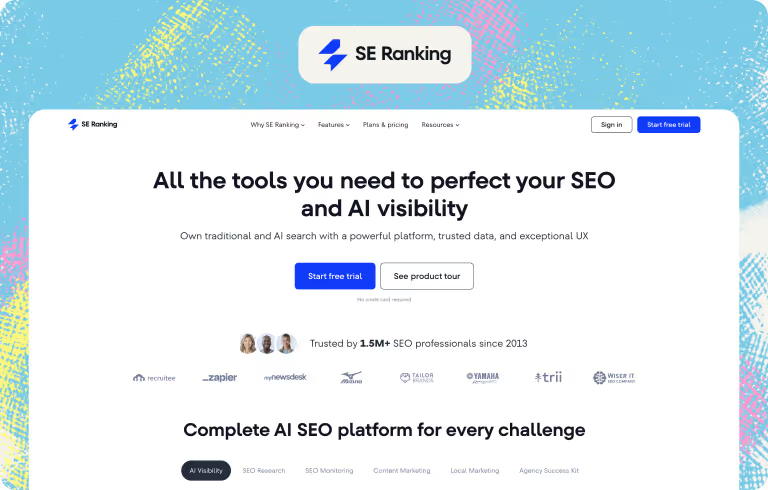
SE Ranking AI Visibility Tracker is an integrated AI visibility tracker bundled with a comprehensive SEO platform.
Best for
Teams already using SE Ranking for SEO who want integrated AI visibility, or budget-conscious buyers seeking best bundled value.
What it does well
SE Ranking's biggest advantage is integration. If you're already using the platform for traditional SEO, adding AI visibility feels natural. Plus, the bundled approach saves teams money compared to buying standalone tools.
Key features
- Integration with SE Ranking's full SEO suite (keyword tracking, site audits, backlinks, etc.)
- Clean intuitive dashboard with clear data visualization
Watch-outs
The pricing structure is complex with required add-ons making total cost difficult to calculate upfront.
Pricing
- Core: $129/mo
- Growth: $179/mo
- Enterprise: Custom
#12 Semrush AI Visibility Toolkit
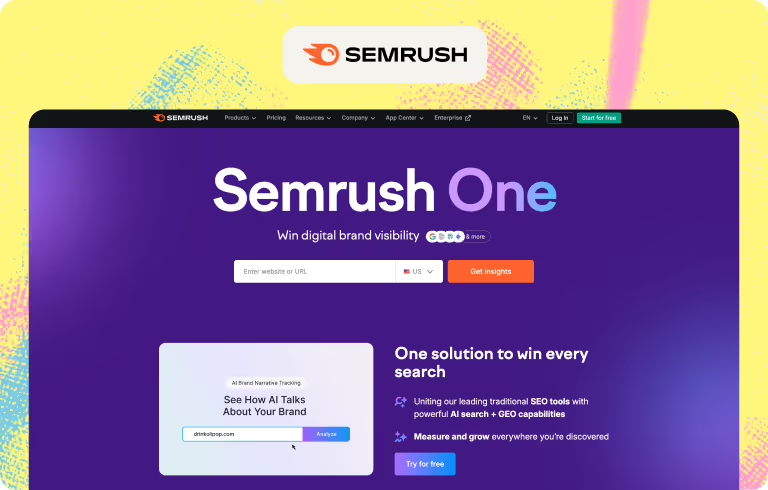
Semrush AI Visibility Toolkit is an all-in-one SEO and AI visibility tool for existing Semrush users.
Best for
Existing Semrush users wanting integrated AI visibility, or mid-size businesses seeking a comprehensive all-in-one solution.
What it does well
Semrush's strength is client-friendly visualizations. The platform turns complex AI visibility data into charts and reports that make sense to stakeholders who don't live in GEO jargon.
Key features
- 300 daily AI queries
- Combines with Content Toolkit for LLM-optimized content
Watch-outs
If you need to increase the limit of Semrush's AI Toolkit, you’ll have to purchase Semrush One, additional prompts, or additional domains.
Pricing
- Standalone: $99/mo with the option for add-ons
#13 Ahrefs Brand Radar

Ahrefs Brand Radar is an AI brand visibility analysis tool with one of the industry’s largest prompt indexes including Google AI Overviews and AI Mode.
Best for
Enterprise brands and large agencies already invested in Ahrefs wanting integrated AI visibility with massive datasets and AI overviews tracking.
What it does well
Ahrefs Brand Radar leverages sheer data scale to capture long-tail queries competitors might miss. Integration with Ahrefs' massive web index means you can correlate AI citations with backlink data, organic rankings, and traffic analytics.
Key features
- YouTube and TikTok visibility tracking
- Track visibility across six AI platforms with 264M+ prompts
Watch-outs
Extreme pricing limits accessibility. If you want access to all AI platforms, you must pay $699/mo. To access Search Demand and Web Visibility reports, you need a paid Ahrefs plan.
Pricing
- Individual platforms: $199/mo per index
- All AI platforms: $699/mo
#14 SE Visible

SE Visible is an AI visibility analysis tool with a clean AI visibility dashboard.
Best for
Agencies, business owners, and digital marketers who want a standalone platform with unlimited seats.
What it does well
SE Visible prioritizes clarity over complexity. Compared to data-heavy enterprise platforms, SE Visible has an intuitive interface with easy navigation.
Key features
- Competitor comparison and benchmarking
- Multi-prompt tracking (150-1,000+ depending on tier)
Watch-outs
SE Visible doesn’t have optimization capabilities. It focuses purely on visibility monitoring without built-in content creation or optimization workflows.
Pricing
- Basic: $99/mo
- Core: $189/mo
- Plus: $355/mo
#15 Hall AI

Hall AI is a dashboard-based AI visibility platform.
Best for
Mid-market teams and enterprises needing a clear dashboard displaying brand tracking and website citations.
What it does well
Hall AI's unique agent analytics visualizes real-time trends for AI assistants, crawlers, and bots, showing entry points, crawl depth, and dwell characteristics.
Key features
- Conversational commerce allows you to analyze how your products are appearing in ChatGPT conversations
- Agent analytics helps you understand how AI agents and assistants explore your site
Watch-outs
Many of the analytics features are locked behind higher tier plans. Variability in data depth and coverage also results in teams noticing gaps when conducting long-term comparisons.
Pricing
- Lite: Free
- Starter: $239/mo
- Business: $599/mo
- Enterprise: $1,499/mo
#16 LLMrefs
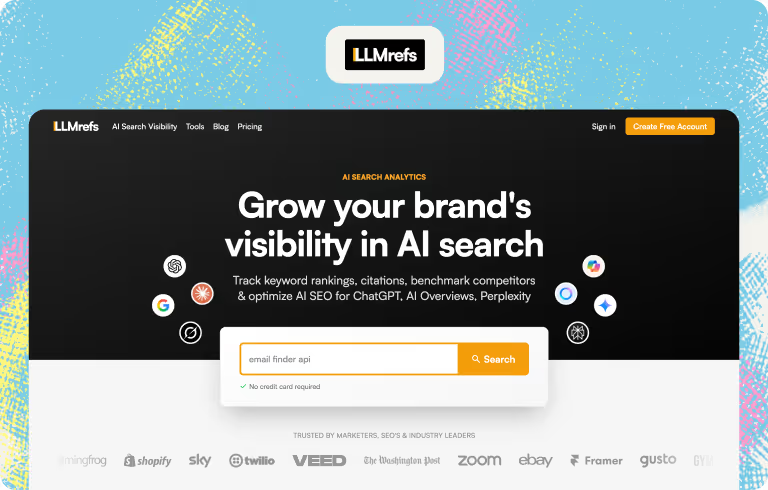
LLMrefs is a simple and affordable AI visibility tool.
Best for
SMBs, agencies, startups, and solo marketers seeking ultra-simple, affordable AI visibility tracking with a freemium tier for testing.
What it does well
LLMrefs offers an accessible entry point to AI search visibility management tools. The freemium tier allows risk-free testing and its simplicity is great for teams new to GEO.
Key features
- Proprietary scoring system for optimization priorities
- Live keyword crawling for AI engines
Watch-outs
Weekly trend cadence (not daily or real-time) may be insufficient for rapidly changing campaigns. There’s also limited integration capabilities, API access, and team collaboration features.
Pricing
- Free tier
- All-in-one: €79/mo
#17 Am I On AI
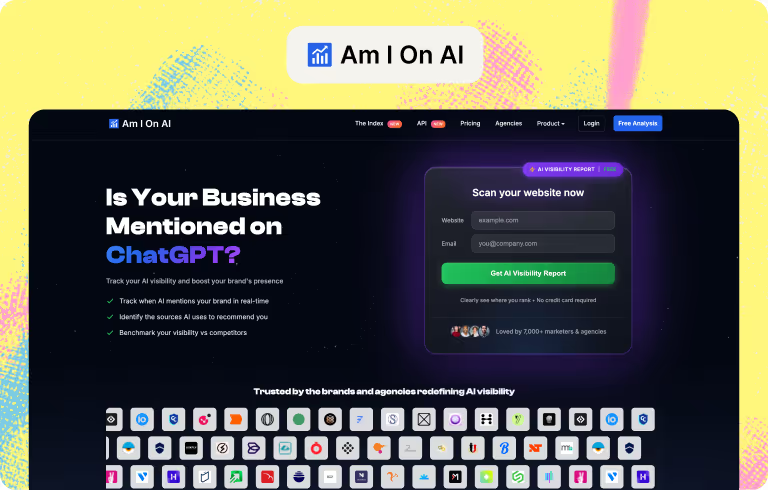
Am I On AI is an entry-level AI brand visibility platform.
Best for
Small businesses, individual marketers, and agencies looking for beginner-friendly AI visibility auditing.
What it does well
Am I On AI tracks brand mentions in a straightforward manner to help users understand how their brand appears in AI-generated responses. It focuses on simplicity and essential monitoring without overwhelming features.
Key features
- Personalized visibility recommendations
- Competitor share-of-voice analysis
Watch-outs
While Am I On AI is useful for initial audits, teams often graduate to more comprehensive platforms for ongoing optimization and understanding of AI responses.
Pricing
- Single: $100/mo
- Multiple: $250/mo
- Agencies: From $250/mo
#18 Rankability AI Analyzer

Rankability AI Analyzer is an agency-focused AI visibility tracking tool.
Best for
SEO agencies and solo consultants using Rankability who need lightweight, actionable AI visibility tracking.
What it does well
The platform functions as a complete agency toolkit, enabling teams to research, write, and track rankings for all clients in one place.
Key features
- AI Success Score ranks queries by AI mentions, citations, and sentiment
- Integrated suite (AI Search Analyzer, Content Optimizer, AI SEO Writer, Keyword Finder)
Watch-outs
Rankability isn’t ideal for teams wanting standalone specialized monitoring.
Pricing
- Core: $199/mo
- Team: $399/mo
- Agency: $799/mo
#19 Surfer AI Tracker
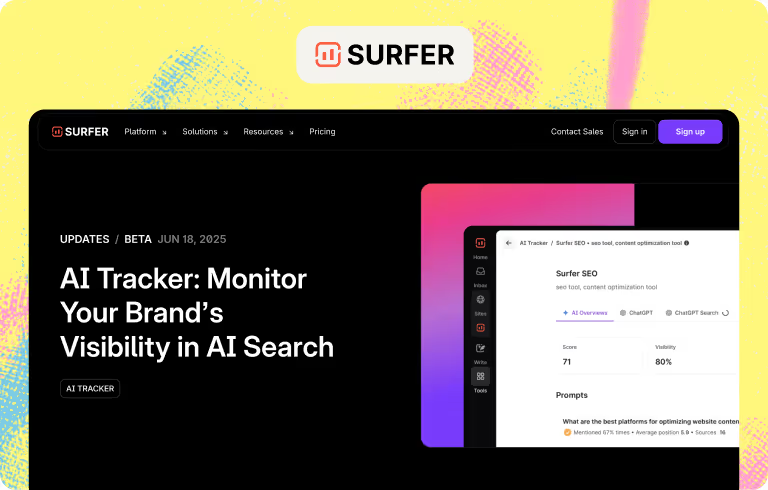
Surfer AI Tracker is an AI visibility add-on tool for Surfer SEO users.
Best for
Existing Surfer SEO users wanting to add AI visibility tracking to their content optimization workflow and keep everything in the same platform.
What it does well
Surfer's AI Tracker integrates seamlessly with the SurferSEO content optimization ecosystem.
Key features
- Prompt-level tracking insights
- Source transparency and cited pages
Watch-outs
The lowest tier of Surfer AI Tracker only gives you access to ChatGPT, and the highest tier only provides three platforms. It launched in July 2025, meaning it lacks the long-term trend analysis that competitors have.
Pricing
- Standard: $119/mo
- Pro: $219/mo
- Peace of Mind: $359/mo
#20 Nightwatch LLM Tracking
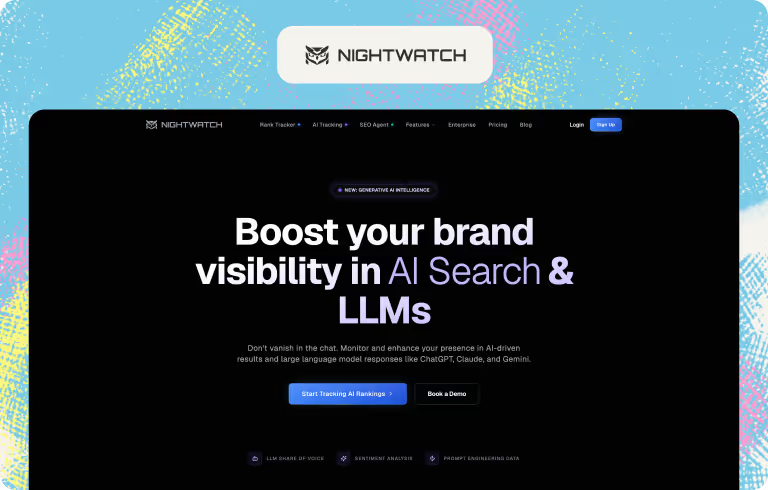
Nightwatch LLM Tracking is a hybrid SEO and AI monitoring tool..
Best for
Nightwatch SEO rank tracking users seeking an affordable solution extending traditional tracking into ChatGPT, Google Gemini, and Claude AI visibility.
What it does well
It's one of the more budget-friendly options including both traditional and AI search monitoring.
Key features
- Unified dashboard for SEO and AI metrics
- Search Simulator allows you to see search engine queries from any location and in any language
Watch-outs
The platform isn’t as comprehensive as dedicated GEO tools. Nightwatch LLM Tracking prioritizes traditional rank tracking with AI as secondary add-on, so AI features may be less developed.
Pricing
- 100 prompts: $99/mo
- 500 prompts: $495/mo
#21 Keyword.com AI Tracker
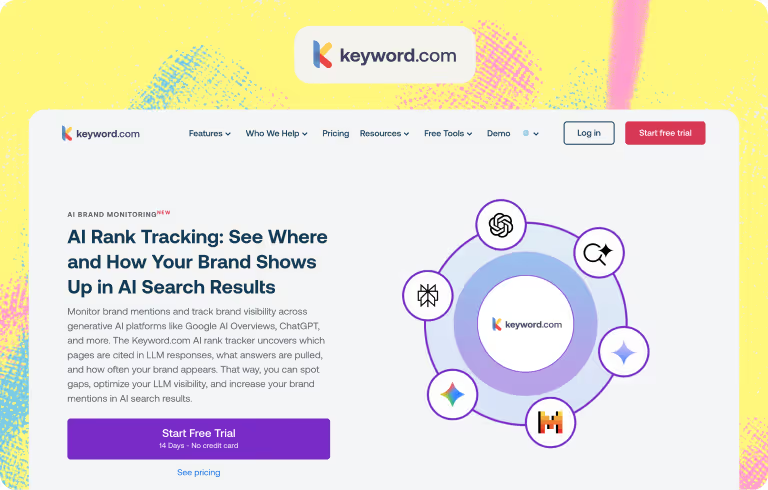
Keyword.com AI Tracker is a credit-based AI search visibility tool.
Best for
Budget-conscious teams seeking cross-engine tracking.
What it does well
Keyword.com AI Tracker has one of the most affordable entry points. The credit-based model provides scheduling flexibility from manual to weekly updates, letting teams right-size monitoring intensity to budget.
Key features
- Citation tracking and competitive analysis
- Covers the major AI engines
Watch-outs
Refresh cadence limitations (manual to weekly only, no daily or real-time) may be insufficient for rapid campaigns. There’s also variability between region and engine coverage.
Pricing
- 50 credits starts at $24.50/mo
#22 seoClarity ArcAI
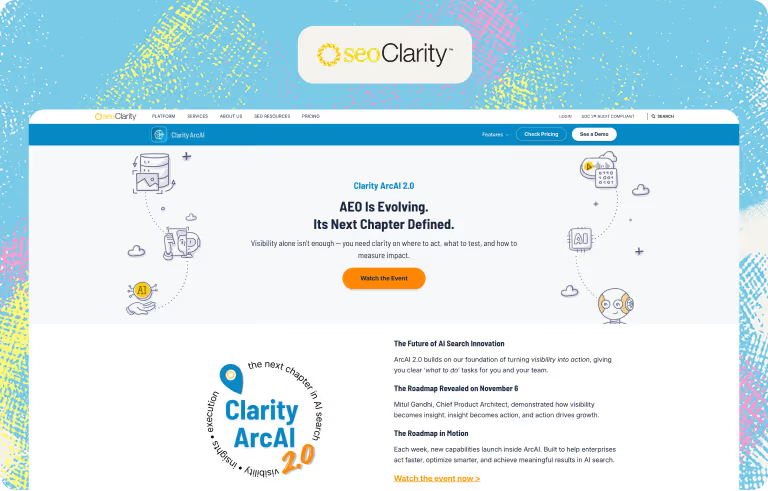
seoClarity ArcAI is an add-on of seoClarity’s enterprise-grade, unified AEO/GEO platform.
Best for
Enterprise brands and global companies using seoClarity’s full-suite platform.
What it does well
seoClarity ArcAI covers the major AI platforms with a range of sophisticated features. It connects AI visibility with traditional SEO data, providing unified intelligence.
Key features
- AI Content Optimizer helps you create content written, structured, and optimized for search
- AI Mode Tracking gives you real-time visibility into Google’s AI Mode
Watch-outs
Enterprise-only pricing and setup complexity eliminates access for SMBs, startups, and mid-market teams.
Pricing
- Core: Custom
- Discovery: Custom
- Accuracy: Custom
#23 Conductor
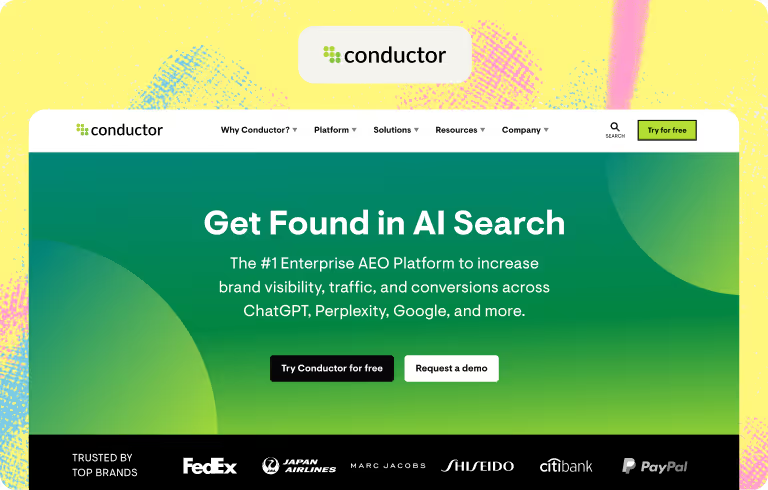
Conductor is an end-to-end enterprise AEO platform.
Best for
Fortune 500 companies in need of unified AEO/SEO intelligence.
What it does well
Conductor connects AI visibility insights to content creation workflows and SEO operations.
Key features
- Real-time website monitoring with proactive alerts
- Scaled AI content generation workflows
Watch-outs
Conductor is positioned for enterprise companies with complexity that may be too much for smaller teams.
Pricing
- Custom
#24 Writesonic GEO
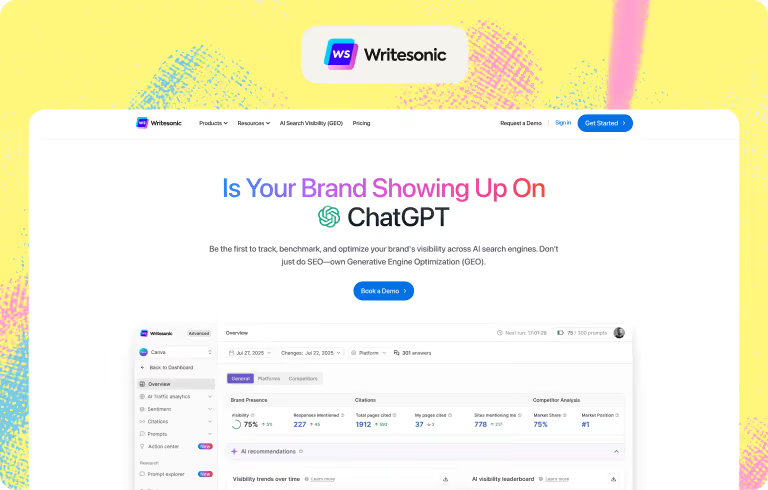
Writesonic GEO is an AI visibility tracking tool integrated with Writesonic content generation.
Best for
Writesonic users wanting AI visibility tracking integrated with their content generation platform.
What it does well
Allows teams to monitor AI visibility while creating optimized content.
Key features
- Competitor benchmarking
- Brand sentiment analysis
Watch-outs
As an add-on, it may feel less developed compared to dedicated GEO tools and platforms.
Pricing
- Professional: $249/mo
- Advanced: $449/mo
- Enterprise: Custom
#25 Evertune

Evertune is a GEO platform with strategic consulting and content execution.
Best for
Fortune 500 companies wanting managed AEO services and comprehensive hands-on support beyond software access.
What it does well
The platform provides white-glove managed AEO services, combining visibility tracking, strategic consulting, content creation, and execution.
Key features
- Strategic consulting and planning
- Content creation and optimization executing
Watch-outs
Managed services model means less direct control compared to self-service platforms. Pricing isn’t realistic for smaller teams.
Pricing
- Starts at $3,000/mo
#26 Brandlight

Brandlight is an enterprise-grade AI visibility platform.
Best for
Global enterprises requiring the most comprehensive AI engine coverage and white-glove support.
What it does well
Brandlight tracks 11 AI search systems. It goes beyond basic monitoring to support content creation and other unique features.
Key features
- Agentic Commerce for AI agent purchase optimization
- Content creation and automatic distribution to AI platforms
Watch-outs
Brandlight requires dedicated resources for implementation and ongoing optimization. It’s not suited for smaller teams.
Pricing
- Enterprise: Custom
#27 Geneo
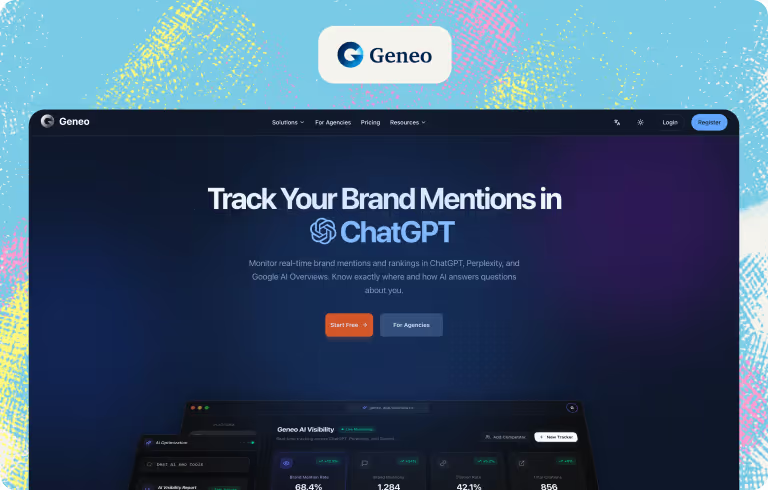
Geneo is a credit-based AI brand visibility tracking tool.
Best for
Small businesses, individual marketers, and agencies seeking ultra-affordable entry into AI visibility tracking.
What it does well
Geneo delivers clear visibility scores and actionable content recommendations without any enterprise complexity.
Key features
- Live keyword crawling for AI engines
- Proprietary scoring system for optimization priorities
Watch-outs
The credit-based system can become expensive and unpredictable during high-volume research phases. Geneo also lacks technical depth compared to competitors.
Pricing
- Brands: Free trial, Pro ($39.9/mo), Custom
- Agencies: Starter ($129/mo), Growth ($249/mo), Scale ($499/mo)
#28 Gauge
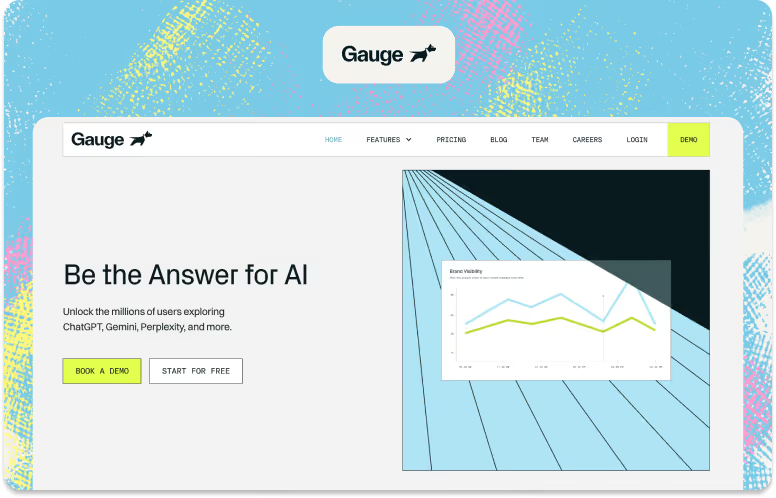
Gauge tracks AI presence across AI engines like ChatGPT, Gemini, Perplexity, and Google AI Overviews.
Best for
Teams focused on Generative Engine Optimization (GEO) and tracking how their brand shows up in AI search rather than just traditional Google rankings.
What it does well
- Purpose-built for AI visibility
- Pulls real front-end data from AI platforms
Key features
- Track hundreds of custom prompts daily.
- Maps search intent to produce articles designed to earn AI citations.
Watch-outs
Gauge is focused specifically on AI visibility and GEO. It's not a traditional SEO suite, so teams needing keyword rank tracking or backlink analysis will still need complementary tools.
Pricing
- Starter: $100/mo
- Growth: $599/mo
- Enterprise: Custom
Why Omnia is the best fit for startups and scale-ups
Two things set Omnia apart for fast-moving teams:
- AI-powered content recommendations: Automated citation analysis for your monitored prompts identifies which sources AI platforms cite most frequently. This analysis informs actionable insights — showing you successful content patterns from top-performing citations and revealing specific placement opportunities to increase your AI visibility.
- Simple UI that focuses on what matters: Omnia strips away unnecessary complexity. Filter by branded vs non-branded prompts, drill into specific countries, and focus on individual AI engines. Do all this without wading through features you’ll never use.
See how the UI keeps things organized — topics, tags, and drill-down views instead of overwhelming dashboards.
Ready to stop guessing and start measuring?
Omnia offers a 14-day free trial on the Growth plan. No credit card required. See exactly where your brand shows up (or doesn't) across AI engines, then let the platform's recommendations guide your next move.
Or book a demo to see how teams like INDYA go from zero visibility to top three in less than a week.
FAQs
What are the best AI search visibility tools?
The best AI search visibility tools vary by use case. Omnia excels for startups needing actionable content recommendations and unlimited geographic tracking, while Otterly.AI serves budget-conscious teams and Profound suits enterprises requiring white-glove support. Choose based on whether you need monitoring only or full execution workflows with content guidance.
Which AI search engines should I track first?
Start with ChatGPT, Perplexity, and Google AI Mode/Overviews as these three cover the majority of AI search usage. ChatGPT dominates conversational queries, Perplexity handles research-heavy prompts, and Google AI Mode captures users still starting searches on Google.
What’s the difference between visibility and share of voice?
Visibility measures whether your brand appears in an AI answer at all (yes/no). Share of voice measures how often you're mentioned compared to competitors (percentage).
How many prompts do I need to start?
Start with 20-50 prompts covering your core category. Include both branded queries ("best [your brand] alternatives") and category queries ("best [product category] for [use case]").
How do citations help me improve brand visibility?
When you track citations, you discover exactly where AI search systems find information about you. If ChatGPT cites a competitor's blog post 30 times but never cites yours, you know content quality or distribution is the issue. If third-party review sites consistently get cited while your product pages don't, focus on getting featured in those publications.
How quickly can I see impact?
Initial visibility improvements can happen within two to four weeks if you're starting from zero. Getting cited in a high-authority source that AI engines already trust (industry publications, review sites, established blogs) delivers faster results than building new content from scratch.