AI Search Visibility
AEO vs GEO vs AI SEO vs SEO: What's the Difference?

 Jose Luis García del RíoGrowthatOmnia
 Daniel EspejoFounder & CEOatOmnia
TL;DR
People are no longer searching to find pages. They’re searching to reach a decision faster.
When someone searches for a product, service or solution, they don't want ‘information’. They want to find the option that best suits their needs.
For years, this search was done using a traditional search engine, with generic words and clicking through links until something useful was found. The process was long and often inaccurate.
With the introduction of AI-based search engines, this behaviour has changed. Questions are no longer generic. They are specific, contextualised and personal.
This allows the answers to be much more tailored to what each person is looking for at that moment. And it means that the decision begins within the answer, not after a list of links.
Visibility is now about being included and framed correctly inside an answer.
For years, visibility was a matter of position. Appearing before others and capturing the click.
In AI engines, visibility works differently. It's not just about being in the answer, but how the engine talks about your brand when it responds.
The answers generated by these engines do not show entire categories. They build specific answers based on what the person is asking at that moment. The more specific the question, the more specific the answer.
That is one of the keys to GEO.
If someone asks for ‘a smartphone,’ the answer will be generic. Typically, the AI will ask more questions to narrow down the need. But when the query becomes specific, that's when brands have a real opportunity to appear.
For example:
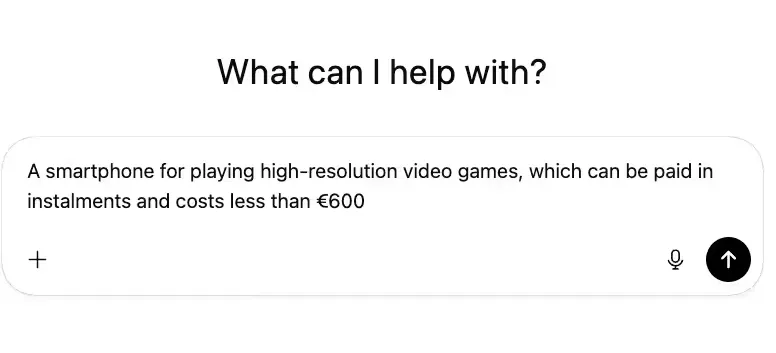
‘A smartphone for playing high-resolution video games, which can be paid in instalments and costs less than €600.’
At that point, visibility is no longer about being the biggest in the category, but about matching exactly what is being searched for.
Generative Engine Optimisation seeks to make a brand appear more often in generated responses. (It is the same practice Omnia calls answer engine optimization, AEO: see AEO vs GEO vs AI SEO vs SEO.)
But it's not just about volume. It's about appearing when it makes sense, and ensuring that the engine knows exactly why it is including you and how it should talk about you.
When an AI answers a question, it doesn't select results. It builds an answer based on what it understands about a category and the options that make it up. To appear there repeatedly, a brand has to be easy to interpret.
Easy to interpret means three very specific things:
The brands that appear most often are not usually the ones that publish the most content, but the ones that maintain a consistent message across different sources. When that consistency exists, the engine can reuse it in many different responses.
That's why Optimising in GEO is not just about adding more pages or more text. It's about reducing the friction that an engine faces when ‘explaining’ you within a response.
The clearer that explanation is, the more contexts there are in which your brand can appear.
In a link-based environment, brand positioning used to be noticed later. First came the click, then the page, and that's where the persuasion to buy began.
With generated responses, that order is reversed.
When someone asks an AI assistant a question, the response already includes a mental framework: what options exist, how they differ, and for whom each one makes sense. That response is not just informative. In many cases, it has already done much of the research work.
That's why conversion through AI can be up to 600% higher than in traditional search. Not because the channel is ‘better,’ but because the answers appear much closer to the moment of decision. The user is not exploring anymore. They are validating, comparing, and choosing.
This means that brand positioning appears much earlier in the process.
If a brand is described as ‘cheaper,’ ‘more technical,’ ‘simpler,’ or ‘better for a certain profile,’ that label conditions everything that comes after. Even if the user continues to research, they will do so from that starting point.
When an AI assistant responds, it does not start from scratch every time.
If a brand already fits well with a type of question, it quickly enters the response. It comes out almost automatically.
Other brands, even if they are large or well-known, do not appear so easily. Not because they are worse, but because it is not clear when they make sense.
This is very noticeable in specific questions.
The more specific the question, the fewer options really fit. And that's where a huge gap opens up.
There are brands that appear over and over again for the same type of query. Others simply disappear.
It's not favouritism or magic. It's clarity.
The brands that appear most often are the ones that are easy to mention for that specific case. Those that don't generate doubts. And when there are doubts, the answer goes elsewhere.
From GEO's point of view, the goal is simple:
to make your brand a clear choice when someone asks certain questions, without the AI assistant having to ‘think too hard’.
Treat GEO as a distinct channel with its own rules, while keeping SEO as the foundation underneath it.
The first thing is to accept that GEO is a new channel and that it is already part of many brands' strategies.
SEO remains an important base. It helps information exist, be accessible, and be well structured. Without that, there is nothing to understand or reuse.
But GEO does not work with the same logic as SEO.
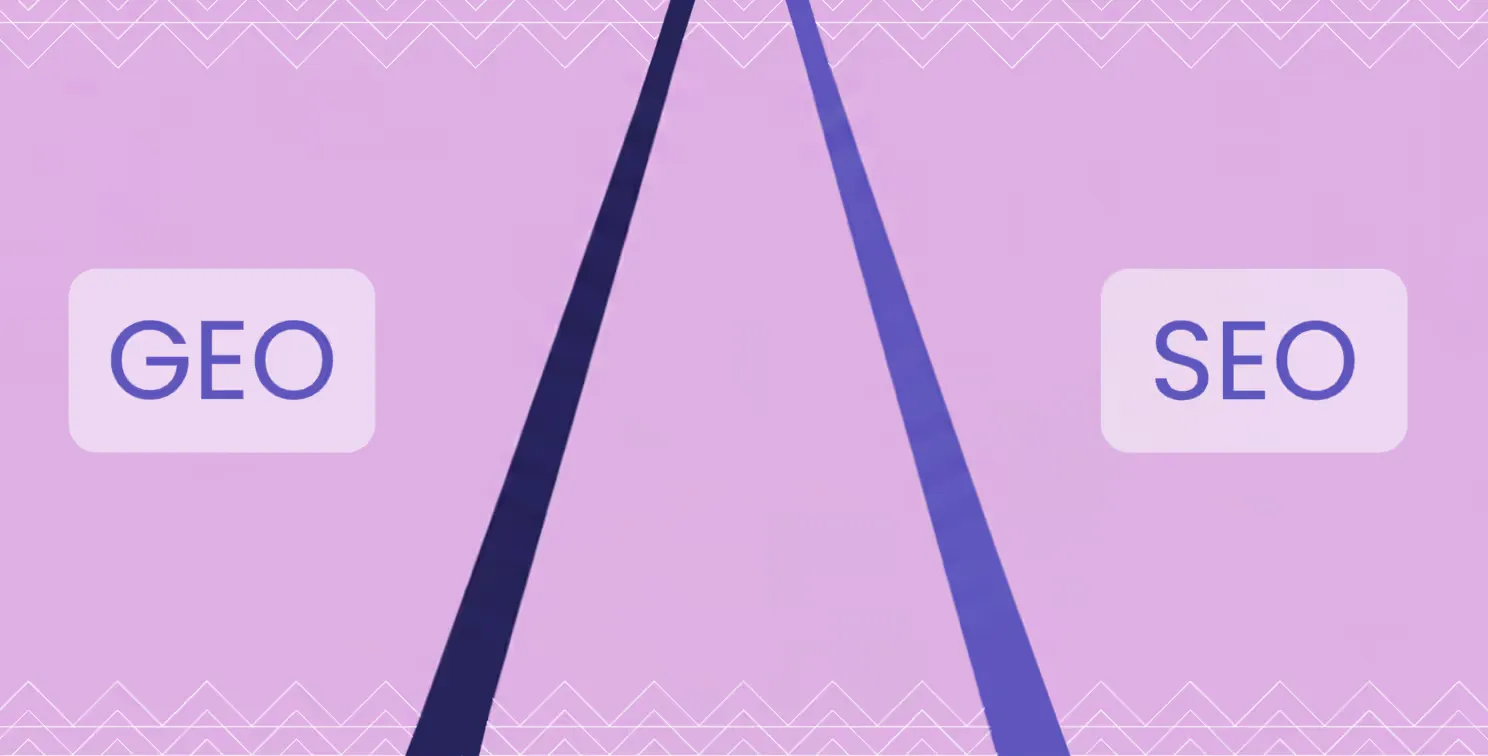
While SEO Optimises for pages and rankings, GEO Optimises for answers. To be mentioned, explained, and compared at the right time.
From there, there are three clear changes, on three different levels.
First, shift the focus of the strategy: from keywords to moments of decision.
It's not about covering generic terms, but about understanding what questions arise when someone is about to make a choice. Comparisons, specific doubts, concrete scenarios. That's where you decide who gets to be part of the answer. Those are the real long-tail prompts.
Second, simplify the message, don't multiply it.
In GEO, consistent repetition carries more weight than constant creativity. The brands that appear most frequently are usually those that say little, but always say it the same way, in different contexts.
And third, assume that visibility is built outside your own channels.
AI engines don't just read what you publish. They incorporate what the media, comparisons, reviews, documentation and third parties say. If that external layer does not exist or is unclear, the brand loses strength in its responses.
In 2026, gaining visibility in AI is not about ‘doing something with AI’.
It is about working with GEO as a discipline in its own right, connected to SEO, but with different rules, metrics and priorities.
Ready to start Optimising your AI visibility in 2026? Try Omnia today.
Omnia offers a 14-day free trial on the Growth plan.
No credit card required. See exactly where your brand shows up (or doesn't) across AI engines, then let the platform's recommendations guide your next move.
Written By
 Daniel EspejoFounder & CEOatOmniaJose Luis García del RíoGrowthatOmnia
 Jose Luis García del RíoGrowthatOmnia
 Jose Luis García del RíoGrowthatOmnia
 AndreiHead of GrowthatOmnia
 Jose Luis García del RíoGrowthatOmnia
No credit card required · Free for 14 days · See your AI visibility within 3 minutes