LLMs
How To Run an AEO (Also Known as GEO) Audit Step by Step in 2026

 AndreiHead of GrowthatOmniaAndreiHead of GrowthatOmnia
TL;DR
Improving brand visibility in ChatGPT requires three things: measuring your current mention rate across high-intent prompts, publishing structured content AI models can cleanly extract and cite, and earning third-party mentions from sources ChatGPT already retrieves. Here's the data behind why, and a system to execute it.
Brand mentions correlate 3x more strongly with AI visibility than traditional backlinks (0.664 vs. 0.218), according to an Ahrefs study of 75,000 brands. And research from Princeton, Georgia Tech, and IIT Delhi found that adding specific statistics to content improves AI visibility by 41%. The game has shifted from ranking to citation — and the rules are different.
Most ChatGPT visibility advice is just traditional SEO with new buzzwords slapped on top. Yes, you do need to optimize your content, build backlinks, and add schema markup. But that’s only the foundation.
What actually improves visibility is understanding how you're being mentioned today, identifying which sources are shaping those answers, and then systematically changing the inputs. G2 found that 50% of B2B buyers now start their buying journey in an AI chatbot instead of traditional search engines. Their preferred platform is ChatGPT, chosen by 47% of buyers, nearly triple any other AI tool.
If prospects can't find you when they ask ChatGPT for recommendations, you're not making the shortlist.
This guide shows you how to improve brand visibility in ChatGPT — from understanding how answers are formed, to what influences mentions and citations, to measuring progress. We've also included a 30-day execution plan to help you move from baseline to visibility fast.
Brand visibility in ChatGPT is how often your brand appears inside relevant AI answers, is supported by trusted sources, and whether the narrative reflects your strengths.
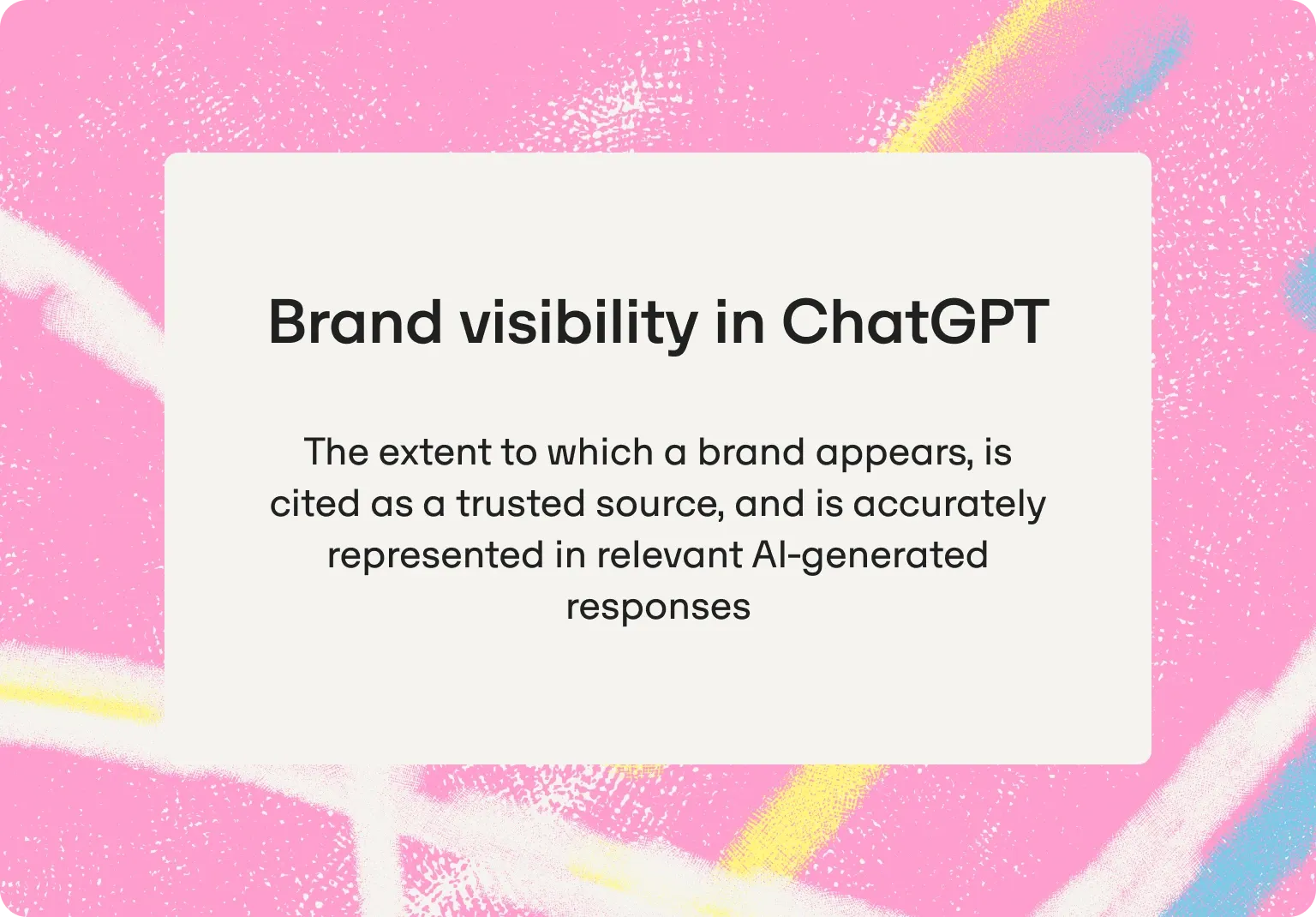
Understanding the importance of brand mentions on ChatGPT starts with recognizing three distinct outcomes to AI visibility:
Most companies track mentions, assume citations, and completely miss framing.
A mention means your brand name appears inside an AI answer. A citation means ChatGPT is referencing content from your domain.
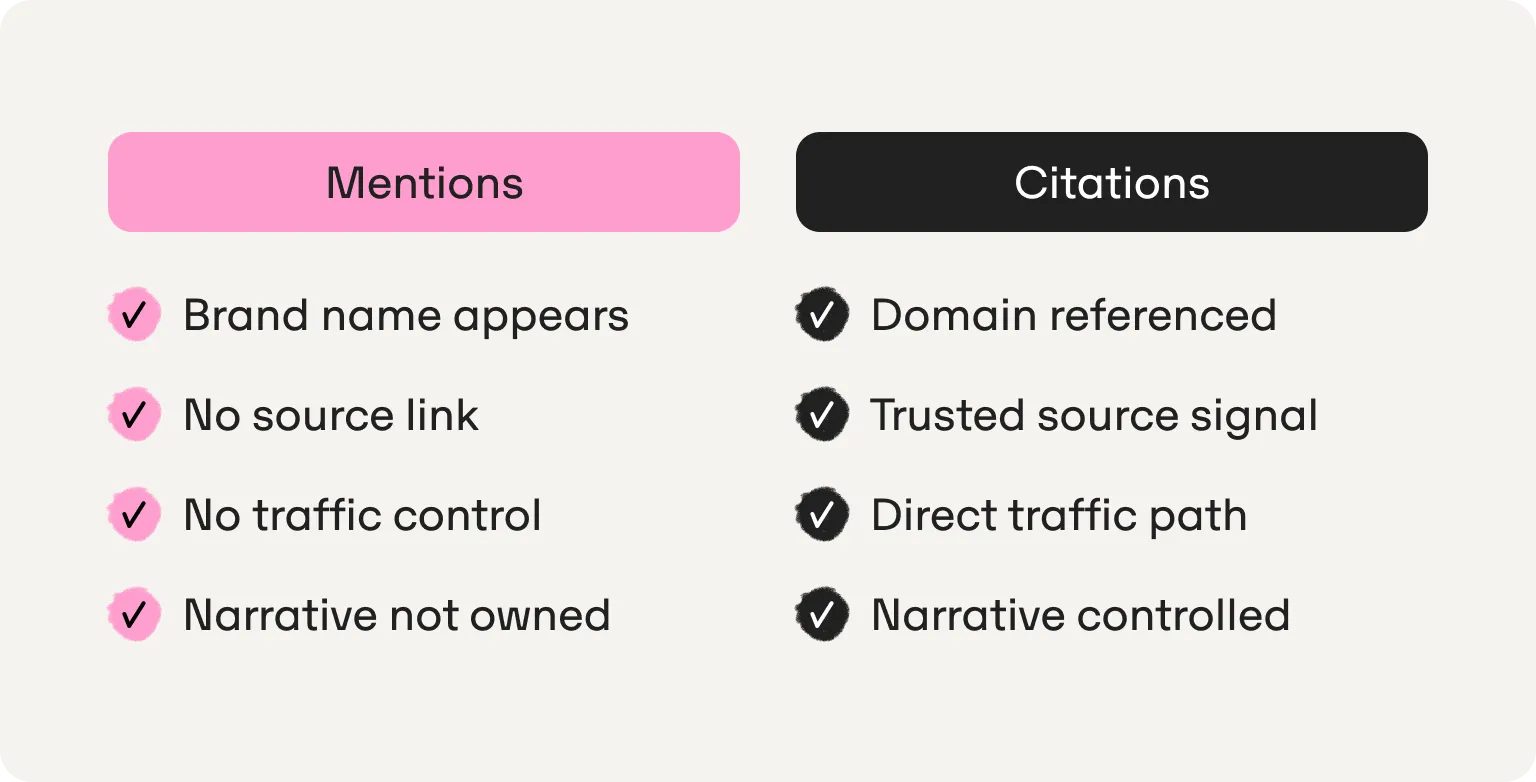
You can be mentioned without being cited when ChatGPT synthesizes from training data or sources that discuss your category without linking to you. Citations give buyers a direct route from tools like ChatGPT to your owned content. Traffic from AI platforms converts at 11x the rate of traditional search (1.66% vs 0.15% for sign-ups). Without citations, someone else shapes your narrative and captures that high-intent traffic. Citations mean you control the inputs and direct those high-converting buyers to your owned pages.
ChatGPT isn’t mystical. It’s pattern-matching across what it can learn, retrieve, and trust. Large language models like ChatGPT are shaped by three factors:
When you ask ChatGPT about a category like "best project management tools for remote teams," it synthesizes information from sources it considers credible. Those sources include established blogs, review platforms, product pages, comparison articles, technical documentation, and communities where real users discuss tools.
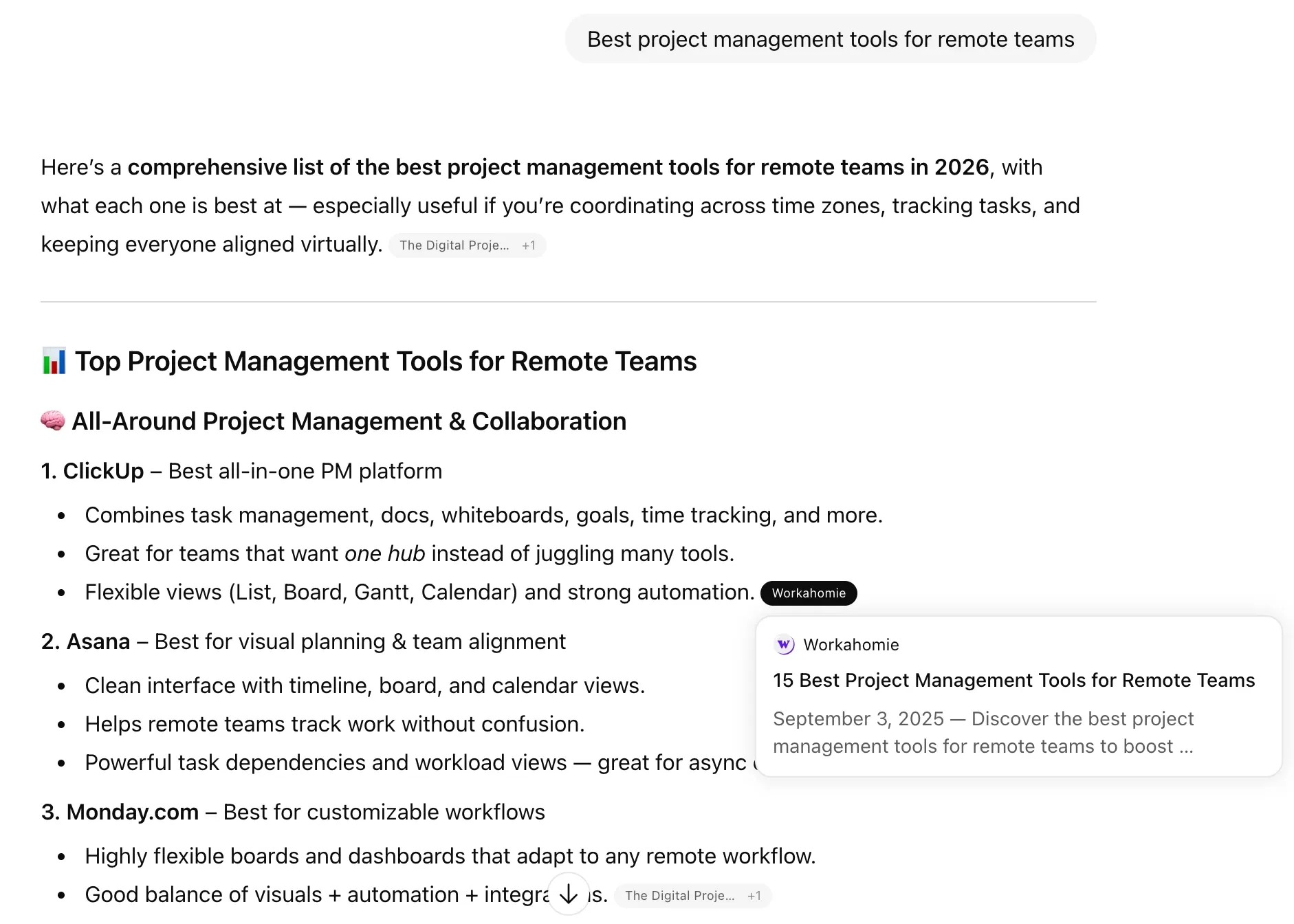
ClickUp is recommended as the best project management tool for remote teams because an established blog lists it as the top choice.
If your brand is clearly described, consistently mentioned, and referenced across reputable sources, it becomes easier for the model to include you in AI-generated answers. If your signals are weak, contradictory, or buried in inaccessible pages, you’re invisible.
Based on Omnia's tracking data across thousands of prompts, ChatGPT's citation patterns reveal clear preferences. Reddit and Wikipedia dominate citation share. These two platforms account for a disproportionate percentage of cited sources across categories. This isn't surprising since both platforms offer comprehensive, community-validated information that AI systems trust.
Based on Omnia data, ChatGPT cites unique URLs 37% of the time for the same prompts. This fragmentation has critical implications. If you're only present in sources that ChatGPT uses, that visibility likely won't transfer to other AI platforms like Perplexity or Google AI Overviews. Each platform pulls from different URL sets to answer identical questions.
You can't optimize for “AI visibility” generically. You need platform-specific citation strategies. What works for ChatGPT won't automatically work for Google's AI Overviews. The sources that get cited vary significantly across platforms, which makes tracking citation patterns by platform essential.
Even though ChatGPT brand visibility isn’t a steady ranking position like in organic search results, you can still influence it.
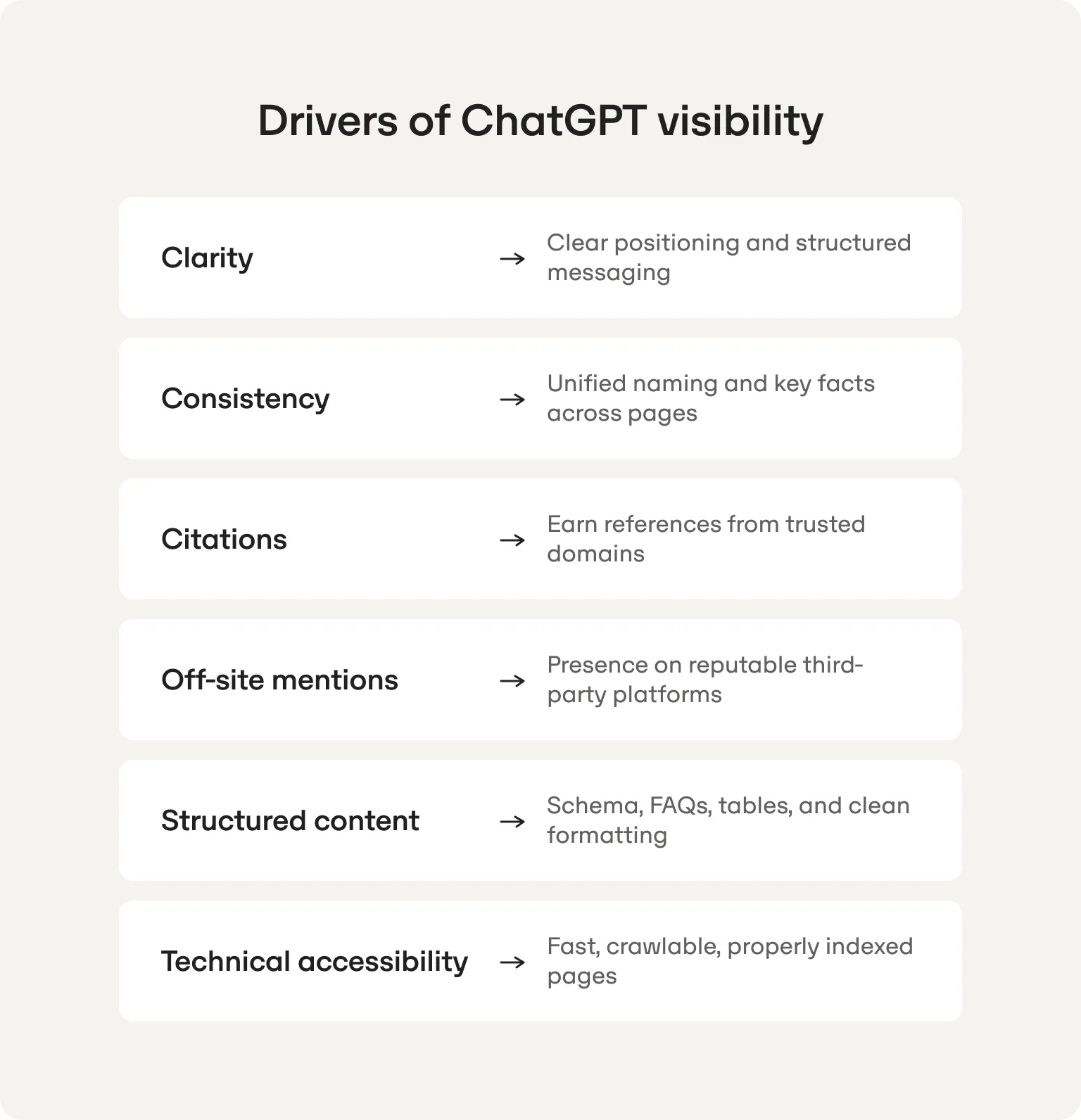
The best strategies for ChatGPT brand visibility focus on factors you can directly control:
Some things don't influence ChatGPT visibility despite what you might read. There's no secret prompt or keyword trick. Overloading pages with “ChatGPT SEO” and keyword density makes content harder to parse. Writing 50 blog posts with no backlinks or external mentions won't help.
Good answer engine optimization starts with traditional SEO fundamentals and layers in citation strategy and content designed for reuse.
To increase business visibility in ChatGPT, you need to forget rank tracking. There is no stable position one or position three like in traditional search. This is an input and citation game. You measure where you stand, fix the foundations, publish content AI systems can cite, and earn off-site mentions that amplify your signal. This requires a strong content strategy focused on optimizing content for AI systems.
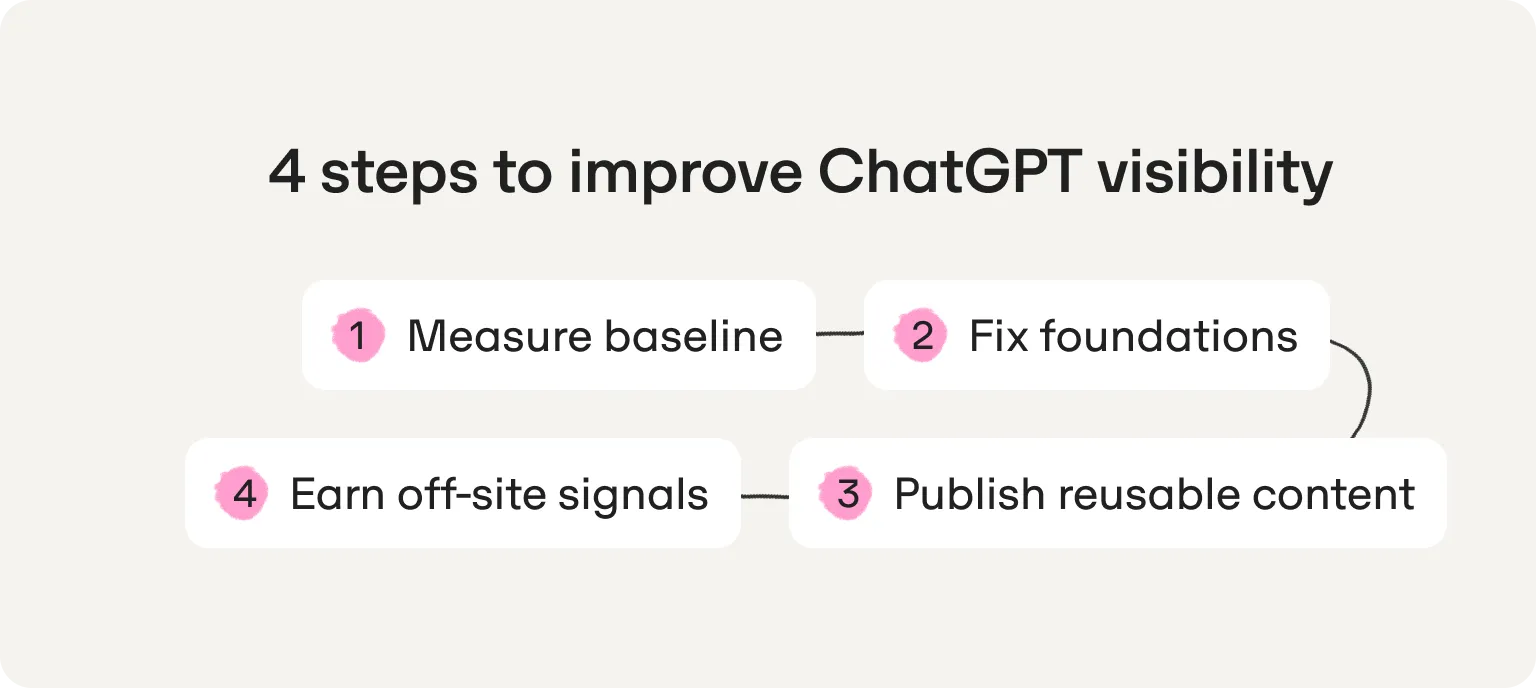
You can’t improve what you can’t measure. So, before starting your ChatGPT SEO strategy, set a baseline for your current visibility.
Define:
You need to know how often your brand appears in relevant ChatGPT results, which competitors show up instead, and which domains are being cited.
Start simple. Create a list of 10 to 20 prompts across category, use case, and competitor comparisons. A free ChatGPT visibility checker gives you a focused single-engine baseline before you expand to a broader prompt set. Example prompts include “best [category] for [use case],” “[your product] vs [competitor],” and “how to [solve problem] with [product type].”
Run these prompts weekly in ChatGPT so you can identify opportunities to improve your brand’s presence in AI responses. Log the answers and track whether your brand is mentioned, where it appears in the list, which competitors are included, and which URLs or domains are cited.
Manual tracking works for small prompt sets, but it doesn't scale. For consistent monitoring across markets, competitors, and prompt clusters, you need automation.
Tools like Omnia monitor prompts daily, compare visibility by country, extract citations (URLs and domains), and track share of voice over time. Instead of manually logging answers, you get structured data — visibility rate, citation presence, top domains influencing AI answers, and competitor mentions overlap. This turns tracking from a chore into a feedback loop where AI signals lead to action.
If your site is confusing, slow, or technically broken, you're feeding AI systems unusable information. No amount of clever content will fix that. Before chasing citations or new assets, fix the base layer.
Your site needs to explain your product in simple, structured terms. Make these pages clear, accessible, and easy to navigate:
Keep navigation simple, pages fast, and everything mobile-friendly.
Strong technical SEO ensures your content can be crawled, indexed, and understood.
Focus on:
Traditional search engines and AI platforms deprioritize slow sites. And those same slow sites frustrate users who click citations.
Use schema markup to help AI systems understand your content. If you need valid FAQPage JSON-LD, use the free FAQ schema generator after confirming the questions and answers are visible on the page:
Make sure your brand name, descriptors, and key facts appear consistently across your site. If your homepage says “customer engagement platform” but your product page says “CRM tool,” AI systems won't know how to categorize you.
Once your foundations are solid, you can finally focus on content that improves your brand visibility in ChatGPT. Understanding how to make content visible on ChatGPT means publishing structured, citation-worthy material that directly answers buyer questions.
Certain formats consistently influence ChatGPT answers because they align with how buyers phrase prompts.
Prioritise:
These formats map directly to high intent searches across AI search and make it easier for your brand to appear in recommendation style answers. They're specific, factual, and easy to cite.
Structure matters as much as topic. It’s also equally important to write for both humans and machines.
These best practices help you catch the attention of both:
Add original visuals like screenshots, diagrams, and short videos where helpful, too. Visual content doesn't get cited by ChatGPT directly, but it increases engagement and time-on-page — and it’s a valuable addition for human readers. Content that demonstrates real expertise through practical examples and original insights earns more visibility in AI-powered answers.
Don’t waste time creating content randomly. Map specific keywords to real buyer prompts.
Build clusters around the content formats mentioned above. For each cluster, create authoritative content with two to three pages that directly answer those questions. Use search volume data, customer questions, and manual ChatGPT tests to validate what people actually ask.
Many AI answers rely heavily on third-party sources. If your competitors dominate those sources, they’re the ones influencing the narrative and your brand’s perception inside ChatGPT answers. Your on-site content is necessary, but it’s not enough. You need off-site mentions and citations to build authority and amplify your brand signal.
This is where citation tracking becomes invaluable. Omnia automatically extracts and tracks these citations over time, showing you which domains dominate citation share in your category and revealing content patterns that consistently get referenced (like URL structures, title formats, and content types that perform well).
Start by identifying which domains are most frequently cited for your target prompt clusters. Look at review platforms (like G2 or TrustRadius), comparison sites, industry blogs, niche communities, and directories that appear repeatedly in AI generated responses.
Knowing which domains dominate citations in your category is critical. Across Omnia’s tracking data, Wikipedia's citation dominance is unique to ChatGPT — other AI platforms like Perplexity and Google AI Overviews show different citation patterns. This reinforces why platform-specific strategies matter. What works for ChatGPT won't automatically transfer to other AI engines.
The same goes for category-specific patterns. If you're in B2B SaaS, G2 and industry blogs might dominate. If you're in e-commerce tools, Shopify's ecosystem and review platforms might rank higher.
Not all links are created equal. You want to obtain mentions in high-quality content pages and platforms where ChatGPT already pulls information. Pitch yourself for inclusion in existing content listicles and expert blogs that already get cited.
If a comparison page or roundup consistently appears in ChatGPT citations but you're not featured, reach out to the publisher. Update and optimize your profiles on review platforms that dominate citations in your space. Contribute expert content to industry publications. Participate authentically in relevant communities (especially Reddit if it's relevant to your category). Build reciprocal integration pages with partners. Get listed in niche directories and SaaS catalogs.
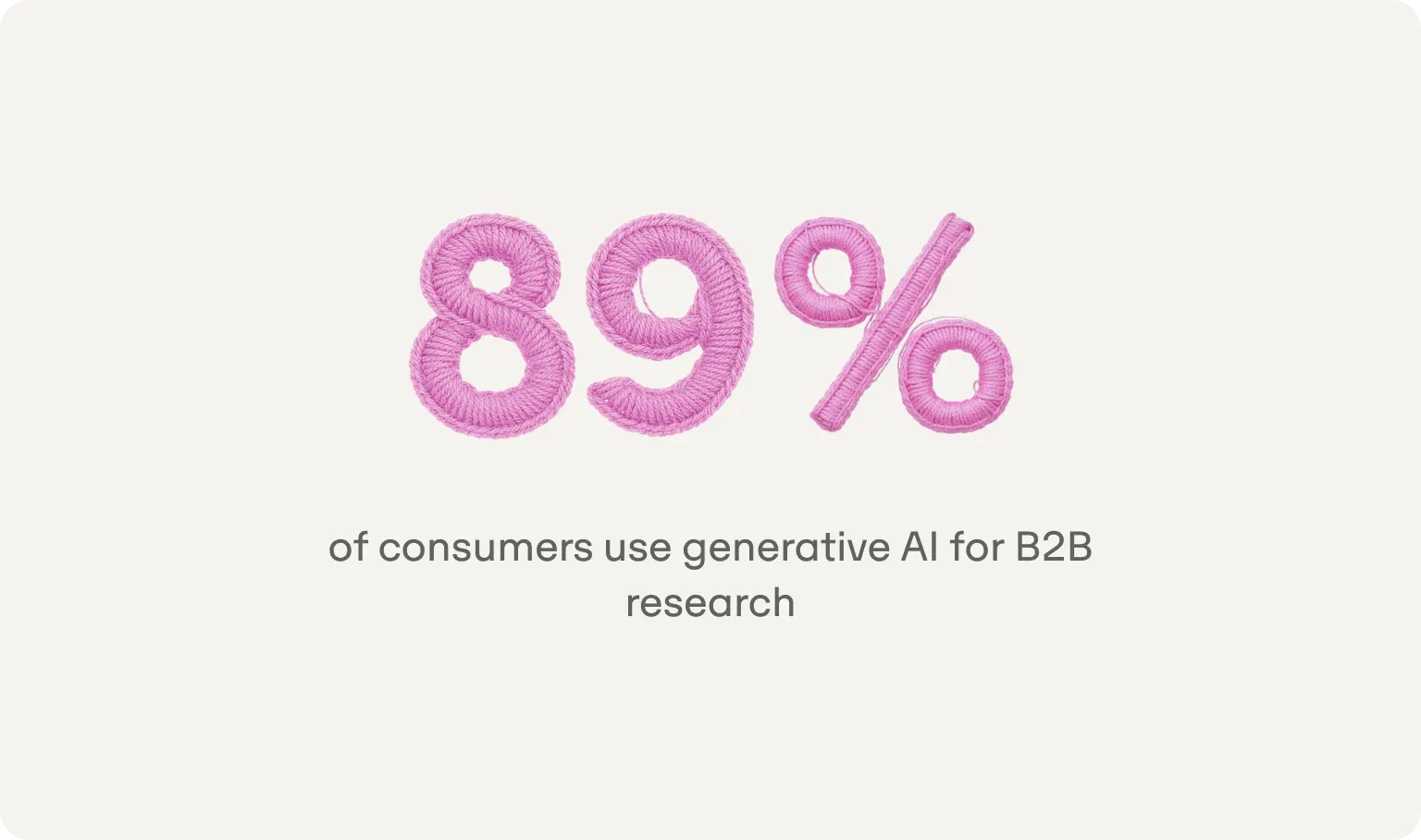
89% of consumers use generative AI for B2B research. It’s one of the top sources of self-guided information for every phase of the buying process. Buyers now use ChatGPT for vendor research. They ask about strengths, weaknesses, pricing, and alternatives. If your reviews are outdated, inconsistent, or negative, that narrative can surface in AI-generated answers.
Strengthen your off-site presence by collecting reviews on G2, Trustpilot, and relevant platforms. Respond to reviews (positive and negative) to show engagement.
Tracking ChatGPT visibility can quickly turn into noise if you treat it like traditional search. There is no stable ranking position and no official keyword volume. Citations change all the time. Models update.
So, keep it practical. Measure trends over time, focus on meaningful deltas, and sanity check changes against real business signals like demos, signups, and branded search lift.
Focus on metrics that reflect your brand’s presence in ChatGPT:
These metrics show whether your brand mentions and authority signals are expanding or shrinking across relevant AI answers. Use an AI visibility platform to keep track of these numbers.
Just because you can measure something doesn’t mean you should. Avoid metrics that look precise but lack substance:
Track weekly or biweekly. Look for trends. When visibility drops, investigate which sources changed or which competitors gained ground. When it rises, double down on what's working.
If you’re a VC-backed startup with a lean team, you don’t need a six-month SEO program to improve brand visibility in ChatGPT. You need weekly visibility wins you can measure and repeat.
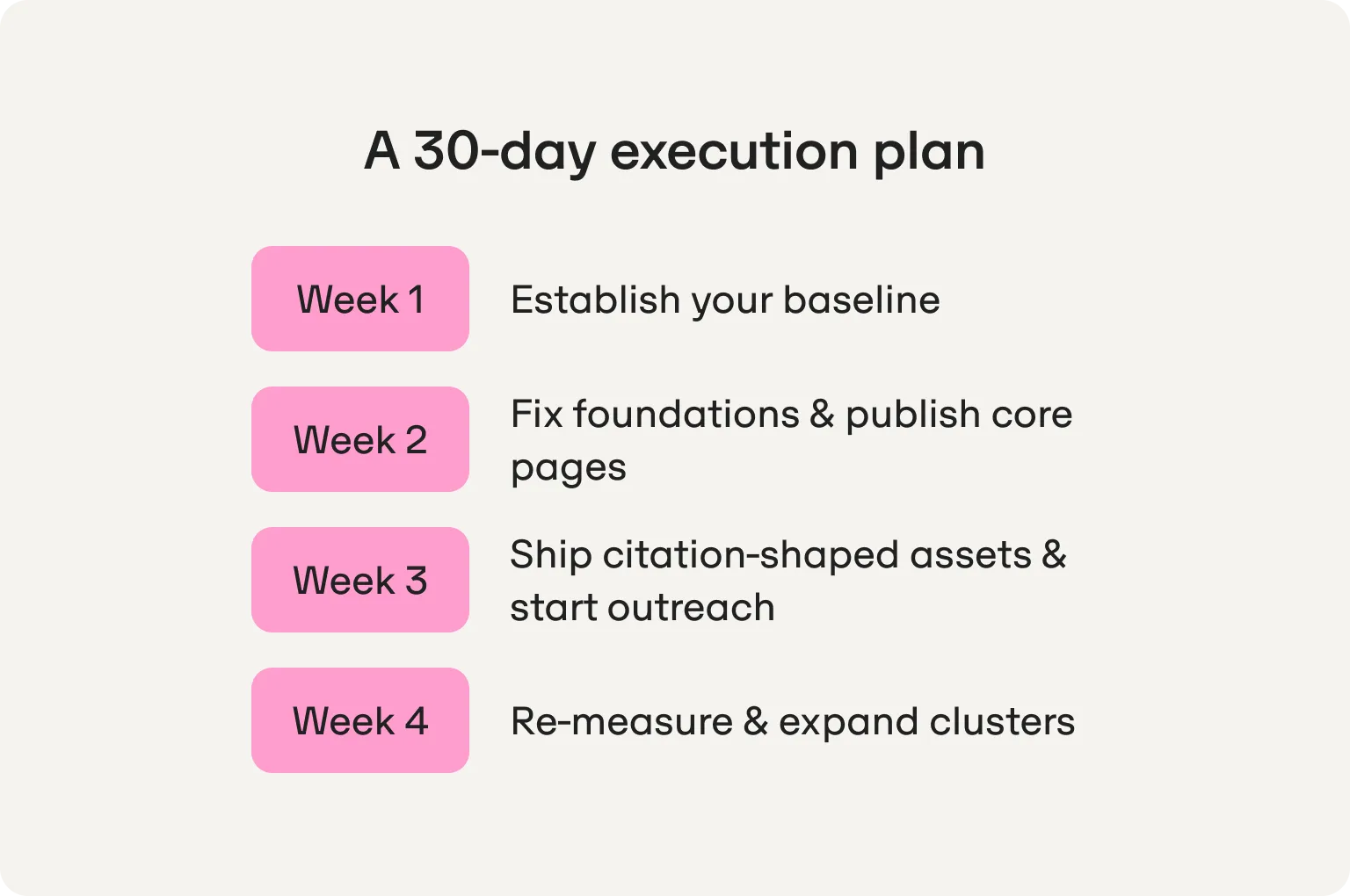
Here’s a simple 30-day plan for boosting brand visibility on ChatGPT.
After 30 days, you should have momentum, directional data, and a repeatable process for improving business visibility in ChatGPT.
Most tools show you charts. Then you’re on your own.
Omnia does the opposite. It finds the prompts that matter, shows the sources shaping answers, and turns that into a prioritized execution plan your team can ship this week — pages to create, pages to fix, and off-site targets to earn.
Whether you're a startup trying to break into a crowded category or a scaleup defending hard-won category position, Omnia gives you the visibility data and execution tools to control how AI answers shape your narrative.
Ready to improve your brand visibility in ChatGPT? Book a demo to see how Omnia helps companies track, optimize, and act on AI visibility data. Or start tracking your prompts today with a 14-day free trial on the Growth plan.
Omnia offers a 14-day free trial on the Growth plan.
No credit card required. See exactly where your brand shows up (or doesn't) across AI engines, then let the platform's recommendations guide your next move.

Making your brand visible on ChatGPT starts with three actions. Measure where you currently appear across high intent prompts. Fix foundational UX and technical SEO issues. Then publish structured, reusable content and earn citations on authoritative sites. Visibility improves when your brand is easier to understand, cite, and trust.
To increase brand mentions in ChatGPT, focus on consistent positioning, authoritative off site mentions, and content formats that align with buyer prompts such as comparisons and alternatives. The more your brand appears across reputable sources and structured pages, the more likely it is to surface in relevant AI answers.
Yes. Many AI summaries review platforms and public sentiment. If reviews are outdated, inconsistent, or heavily negative, that narrative can surface when customers research vendors. Strengthening review profiles and sentiment improves overall AI brand visibility.
Yes. Even if you sell in one country, models can show variations in answers by region. Tracking geo ensures your brand visibility in ChatGPT search results reflects your actual target market.
Manual checking works for a quick baseline, but it does not scale. The most reliable approach is automated tracking across defined prompts and markets, with visibility rate, citation presence, and competitor comparison over time. Tools built specifically for LLM visibility like Omnia make this consistent and actionable.
Written By
 AndreiHead of GrowthatOmniaAndreiHead of GrowthatOmnia
 AndreiHead of GrowthatOmnia
 Jose Luis García del RíoGrowthatOmnia
 Jose Luis García del RíoGrowthatOmnia
 AndreiHead of GrowthatOmnia
No credit card required · Free for 14 days · See your AI visibility within 3 minutes