AI Search Visibility
How We Fixed Our Own AEO in a Single Day by Leaving Webflow for Astro

 Miguel FernándezFounder & CTOatOmnia
 Daniel EspejoFounder & CEOatOmnia
TL;DR
Not every brand needs to prioritize AI visibility equally. It depends on whether your customers actually use AI to research and compare options in your category. This post walks through three quick tests to assess your AI readiness and match your investment level to where you actually stand.
In the last year, marketers have heard the same question in different forms:
The honest answer is: not every brand needs to invest at the same depth, or all at once. AI assistants are reshaping discovery and decision-making, but they are not equally important for all categories, price points or business models.
Instead of treating AI as a new checkbox, it is more useful to ask a simpler question:
Is our brand actually eligible for AI? Not in a technical sense, but in terms of how people choose us?
This article offers a practical way to think about that eligibility, and to decide whether you should be observing AI visibility, actively optimising it, or simply keeping an eye on it for now.
In this context, being “eligible for AI” does not mean integrating an API, building your own chatbot or replacing your website with an assistant. It means something more basic and strategic:
When people use AI assistants to research your category or compare options, does it meaningfully influence whether they end up choosing you?
If the answer is yes, then AI visibility (how you appear inside AI-generated answers) becomes part of your brand strategy. If the answer is no (or not yet), the urgency is different, but the direction of travel is the same.
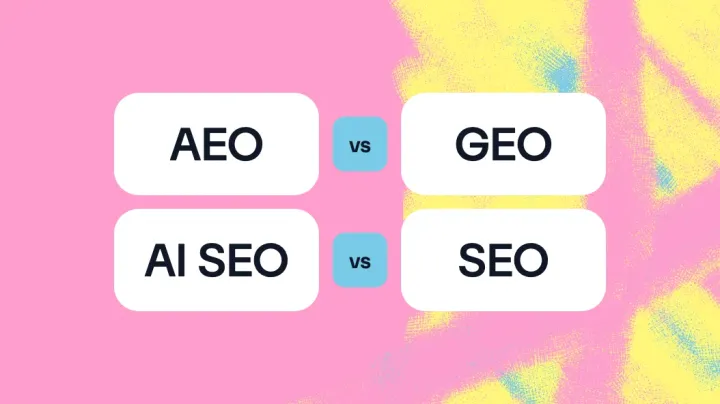
Answer Engine Optimisation (AEO) sits on top of that idea. Where SEO focuses on ranking in lists of links, AEO focuses on being named, described and recommended inside AI answers when users are close to make a decision.
This matters because consumer behaviour is already shifting. Recent studies suggest that around 40–60% of consumers have used generative AI in their shopping journey, often for product research, recommendations and price comparison. In other words: for a really big share of buyers, “search” now means “ask an assistant”.
The rest of this article is a simple way to test whether AEO should be on your roadmap now, or in the very near future.
You do not need a complex framework. Start with a simple question:
How much thinking does someone do before choosing us?
AI assistants tend to appear in the journey when people need to research, compare and weigh options. That is usually the case for products or services that:
Think of insurance, software, healthcare, education, B2B services, financial products, travel or long-term subscriptions. In those categories, asking “Which option is best for me?” is almost natural, and increasingly happens in AI engines as well as search.
At the same time, users are also starting to use AI assistants for much more specific, nuanced queries. For example, someone might ask: “What are the best vegan running shoes for flat feet?”

These types of long-tail prompts reflect a high level of intent and context. They are often less about browsing and more about finding the right option, which makes them a powerful entry point for positioning specific products within AI-generated answers.
If most of your revenue comes from decisions where people pause, compare and seek reassurance, AI assistants are likely to play a role, even if you do not see it directly in your analytics yet.
A useful internal check is to ask:
“For our top products or services, do customers usually compare us with alternatives before buying?”
If the answer is yes, AI assistants are already a potential influence point. If the answer is no, and purchases are mostly habitual or impulsive, AI may matter more for brand presence than for conversion, at least for now.
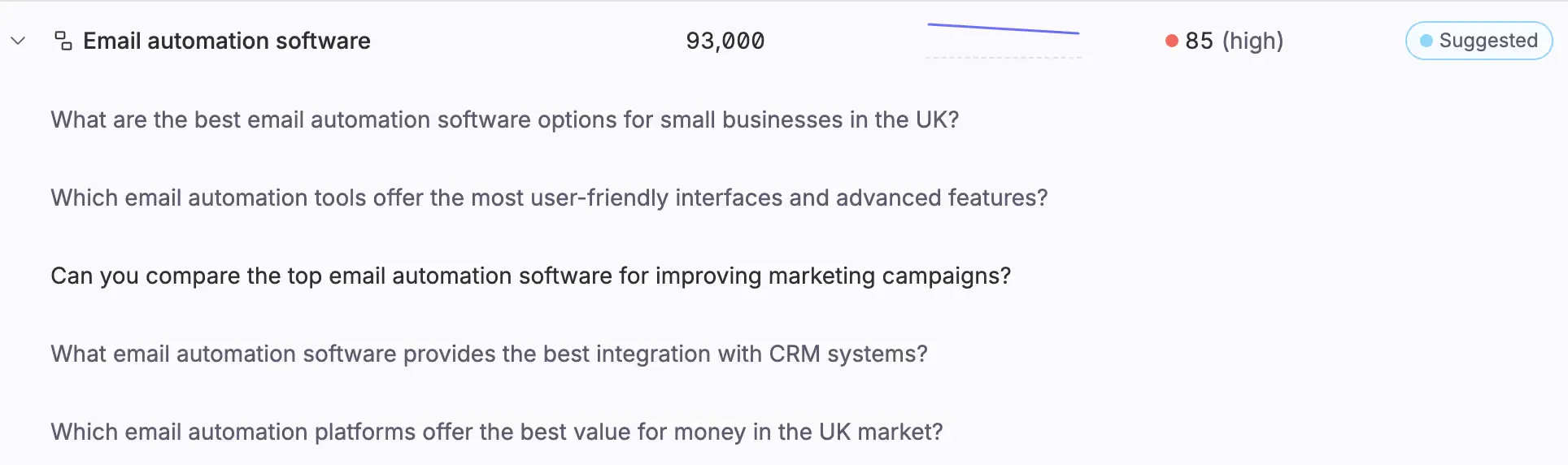
The second test is very concrete: what would someone actually type into an assistant if they were in your market?
Examples:
If you can easily list five or ten natural prompts that reflect real customer questions, it is a strong signal. You are operating in a question-led category, where assistants naturally fit.
If you struggle to imagine meaningful prompts, or they feel forced, your category may move more slowly into AI. That does not mean it will not happen.
You can use Omnia’s Trends feature to see the types of questions people ask AI assistants, how often those prompts appear over time, and how challenging they are to track consistently.
AI assistants build their answers from what exists publicly: websites, documentation, reviews, articles, forums and media.
Ask yourself:
If the answer is yes, AI assistants may already have material to work with. Your AI visibility is effectively the interpretation of that footprint.
If not, the priority is more basic: improving clarity, documentation and presence. AEO can only shape what already exists.
Once you run those tests, most brands tend to recognise themselves in one of three broad situations. These are not fixed stages, but useful ways to think about what makes sense right now.
Your category involves research and comparison. People ask real questions before choosing, and there is already enough information online for AI assistants to form an opinion.
In this situation, assistants are likely already shaping how options are presented and compared, even if you cannot yet see that influence clearly in your analytics. How your brand shows up, and which alternatives appear alongside it, becomes part of the competitive picture.
At this stage, measuring AI visibility is less about testing new channels and more about awareness: understanding how choices in your category are being framed.
You can see the signs: people compare options, relevant questions exist, and AI assistants are starting to appear in the journey. At the same time, their impact on demand is still limited or hard to measure.
This is often a good moment to stay light and focused:
The goal is not to optimise everything, but to build familiarity and avoid blind spots as behaviour continues to evolve.
In some categories, decisions are still largely habitual, low-involvement or driven by context rather than research. AI assistants may appear occasionally, but they are not yet shaping most choices.
Even in this scenario, the direction is clear: more people are using AI to ask questions, narrow options and validate decisions. Starting early with light monitoring and stronger content foundations reduces friction later on, when AI becomes the common entry point.
The question here is not if AI visibility will matter, but when it becomes meaningful enough to deserve more attention.
Thinking in terms of eligibility cuts through the noise.
If people research, compare and think before choosing you, AI visibility is already part of your competitive landscape, whether you track it or not.
From there, the steps are simple:
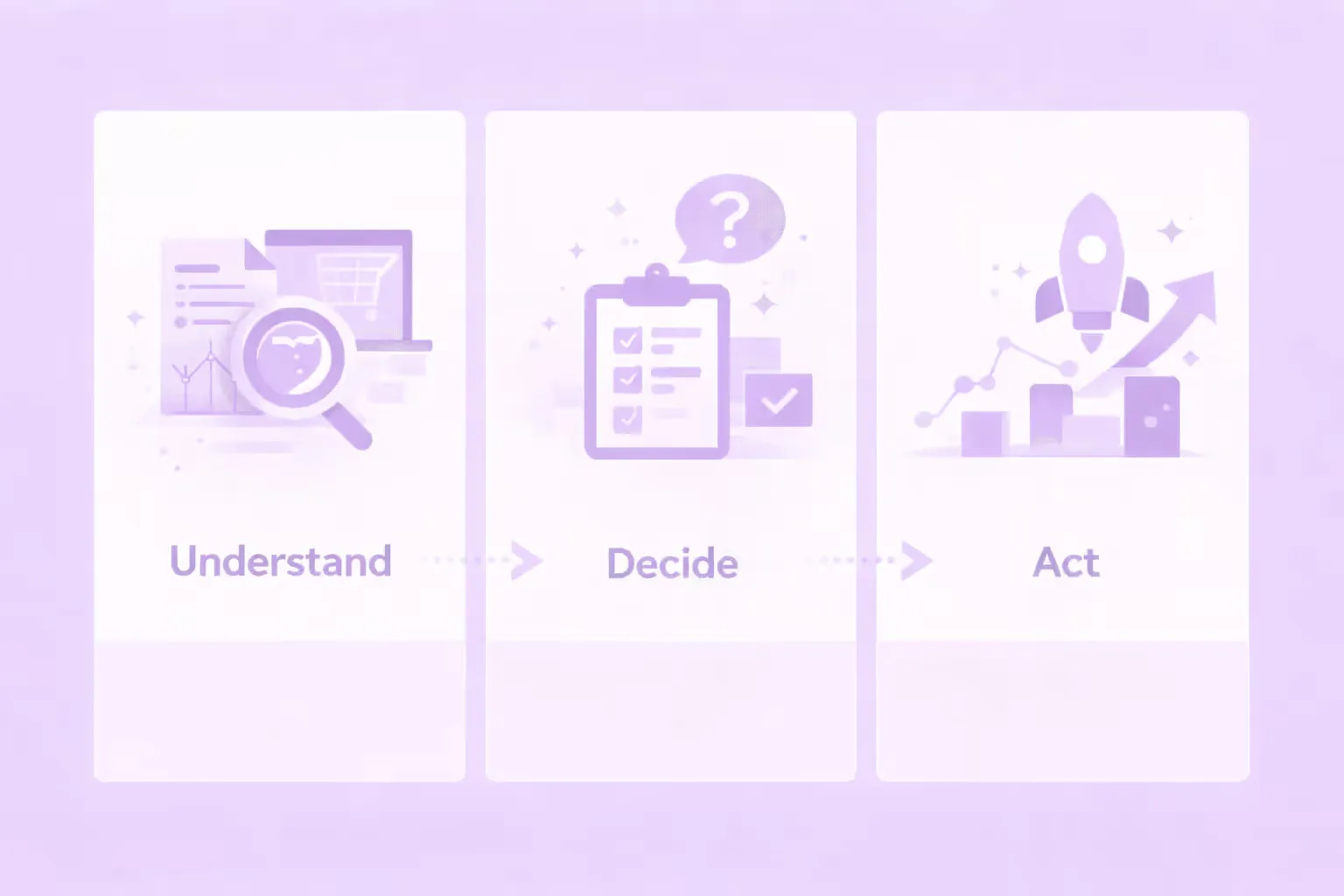
You do not need to “do AI” because it sounds urgent. You need to know whether AI assistants are already influencing the choices that matter to your brand, and act accordingly.
At the same time, AI assistants are becoming a default interface for research and decisions. Starting earlier helps you build visibility, learn what shapes answers in your category, and stay ahead of competitors who wait until it is obvious.
Omnia offers a 14-day free trial on the Growth plan.
No credit card required. See exactly where your brand shows up (or doesn't) across AI engines, then let the platform's recommendations guide your next move.
Written By
 Daniel EspejoFounder & CEOatOmniaMiguel FernándezFounder & CTOatOmnia
 Jose Luis García del RíoGrowthatOmnia
 Jose Luis García del RíoGrowthatOmnia
 Miguel FernándezFounder & CTOatOmnia
 Jose Luis García del RíoGrowthatOmnia
No credit card required · Free for 14 days · See your AI visibility within 3 minutes