AI Search Visibility
AEO vs GEO vs AI SEO vs SEO: What's the Difference?

 Jose Luis García del RíoGrowthatOmniaJose Luis García del RíoGrowthatOmnia
TL;DR
Learning how to monitor AI search visibility starts with choosing the right prompts based on buyer questions — not keyword lists. Track brand mentions, citations, and share of voice across AI search engines and countries. Then turn those findings into execution: content to create, sources to earn, technical fixes to ship. Most teams treat this like a dashboard project, but monitoring should produce decisions and action. Omnia helps you move from AI signals to execution, giving you more than just charts.
If your “monitoring” process is screenshots and vibes, you’re not monitoring. You’re hoping.
AI visibility isn’t a position you can track. It’s a set of inclusion decisions made by models pulling from whatever sources they trust in that moment. That’s why it feels like measuring smoke.
So treat it like an engineering loop. Define prompts from buyer questions, rerun enough to get signal, extract mentions and citations, then turn it into an execution backlog. This guide explains how to do exactly that, with a bonus 15-day monitoring plan so you can start seeing results before you’ve burned a quarter trying to gamify “AI SEO” with nothing to show for it.
AI search visibility is how often your brand appears in AI-generated answers and how credibly AI platforms position you. Unlike traditional search where you optimize for rankings, AI engines like Google AI Overviews, ChatGPT, Perplexity, and Meta AI generate direct responses that mention only a few brands.
Visibility in AI search encompasses four dimensions:
Traditional search engines return consistent results. A Google search for “best CRM for startups” returns the same rankings today and tomorrow. AI search platforms give variable AI answers with different brand mentions, context, and citations — even if you ask the same question just minutes apart.
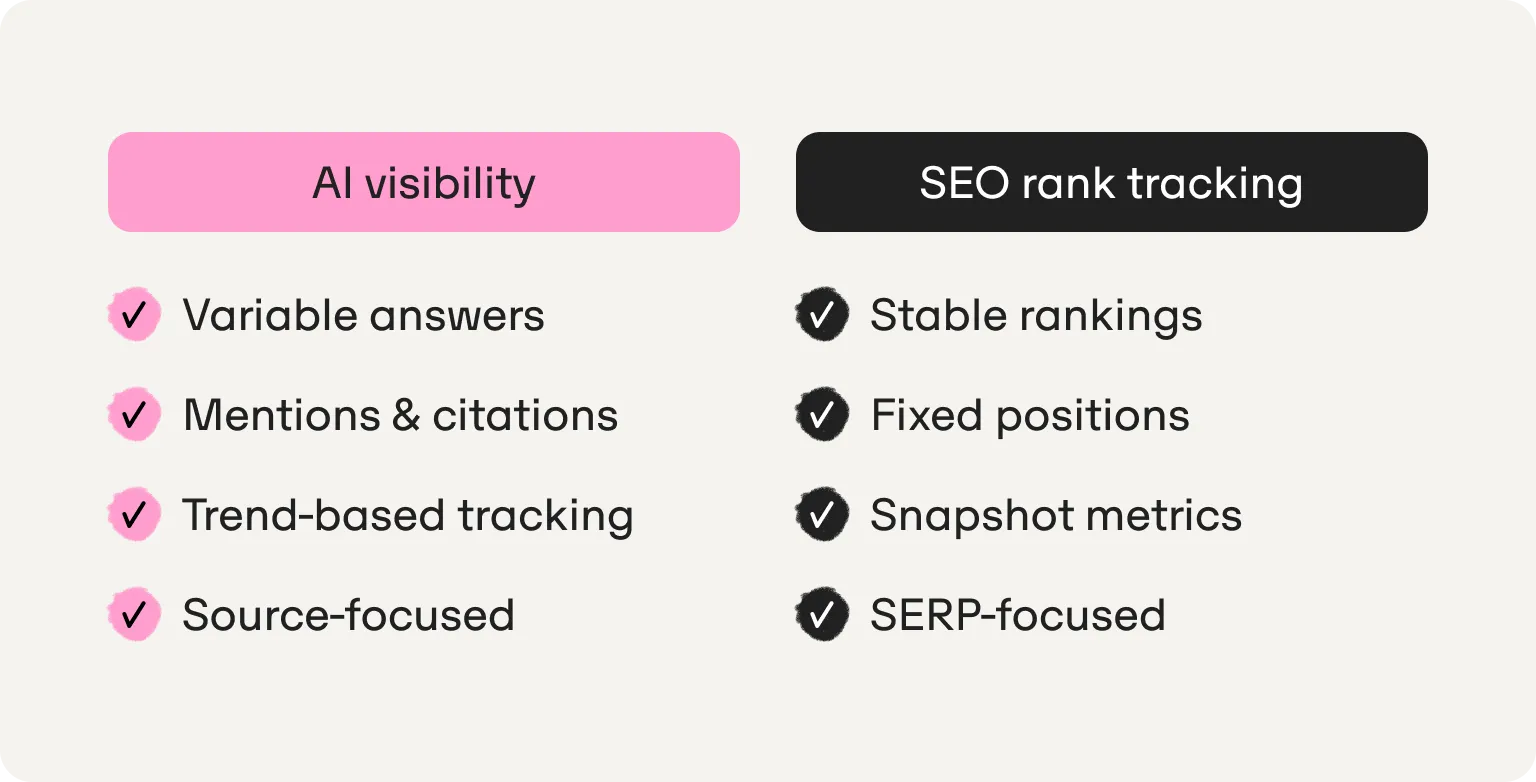
This variance is inherent to how AI systems work. Major AI platforms synthesize information from multiple sources using generative models, meaning your brand performance varies across AI search engines and queries.
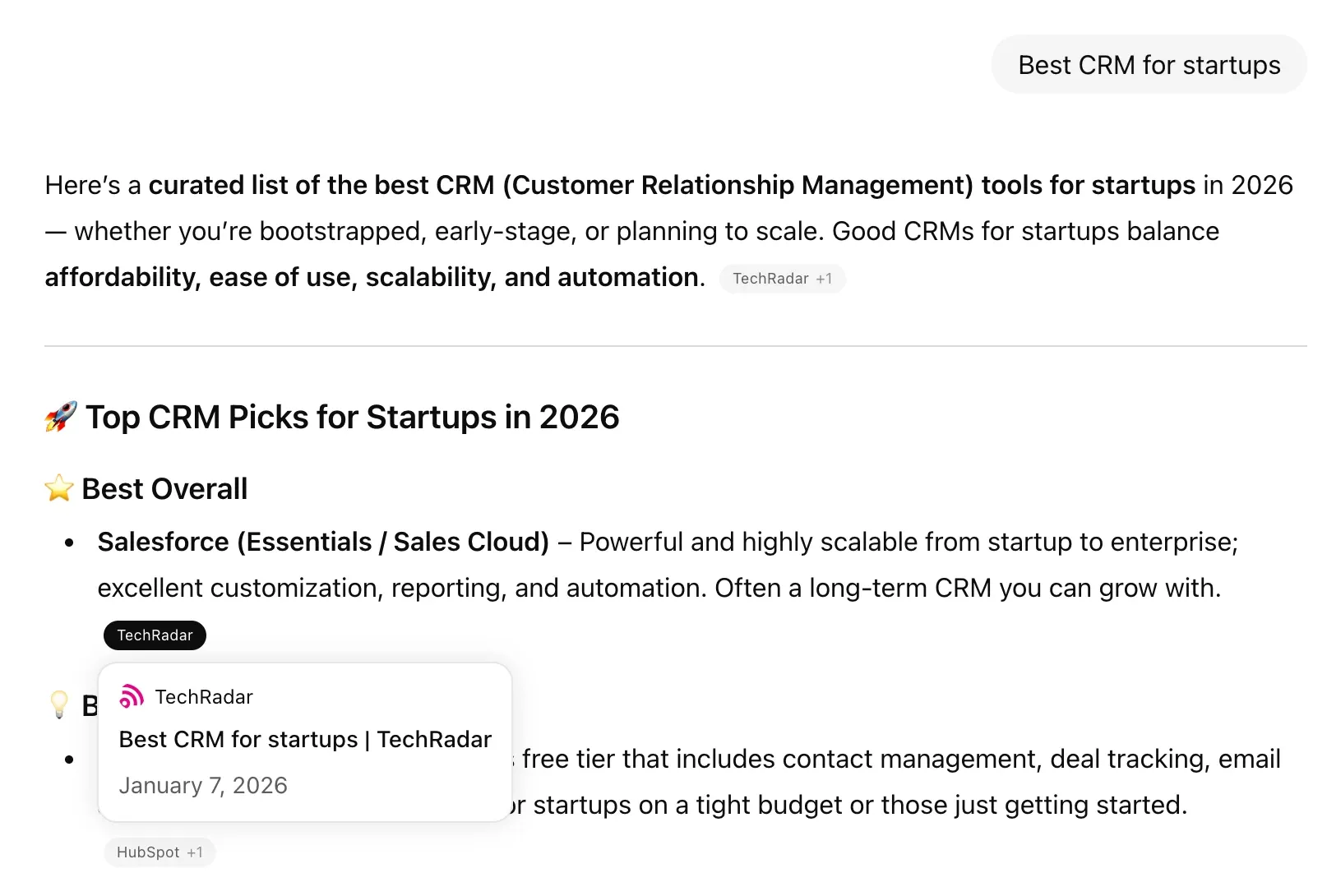
Search “best CRM for startups” on ChatGPT and Salesforce is the top-ranked pick.
Search the same phrase in a different chat, moments later, and now Salesforce isn’t even in the top two.
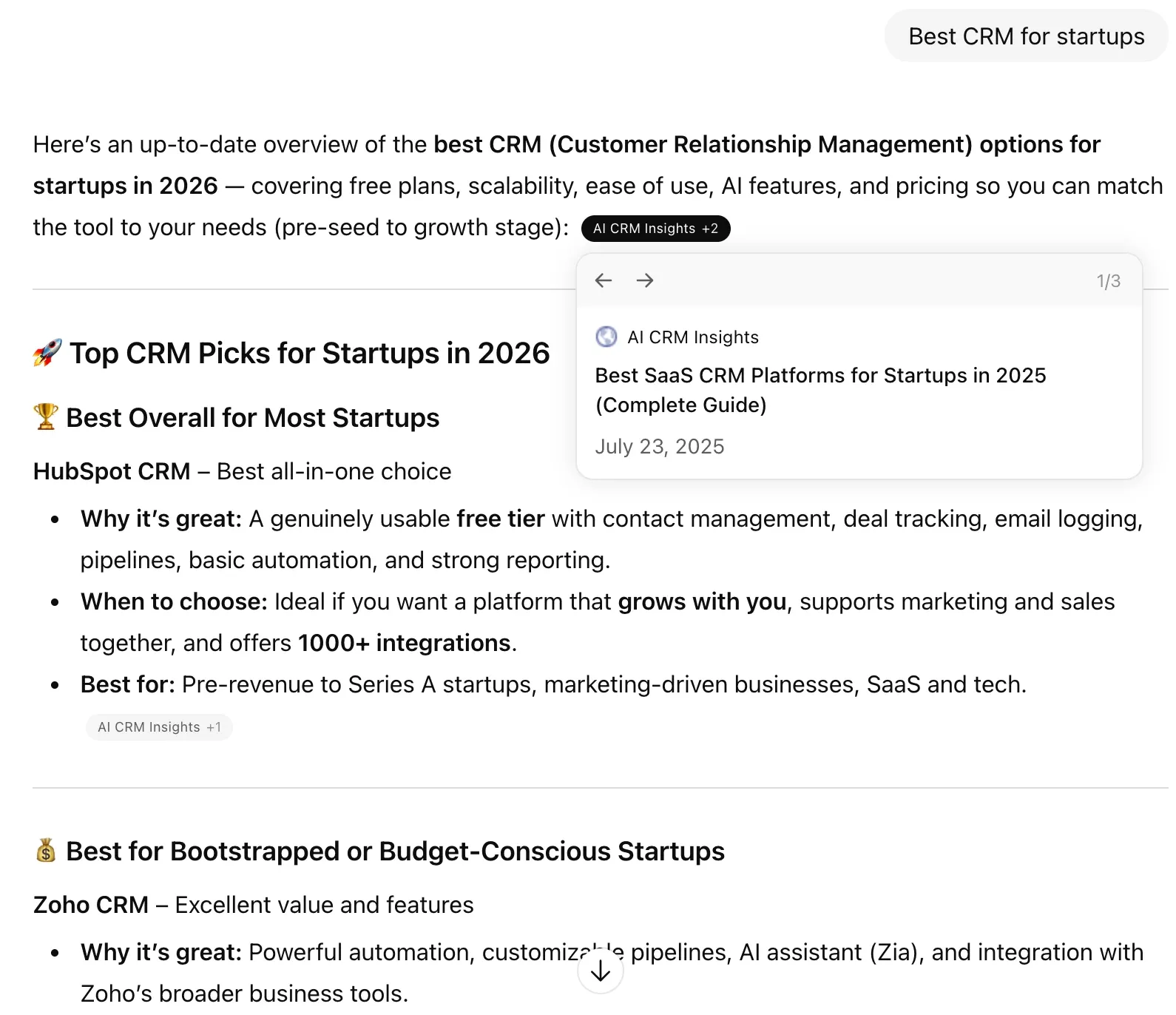
Both AI responses pull from different sources to reach these conclusions. It highlights the importance of repetition, baseline measurement, and trend interpretation — not one-time snapshots. Single queries tell you nothing about your actual AI search presence.
Datos and SparkToro also found the domains that dominate AI citations don’t match the top search rankings. Platforms like Canva, Anthropic and Github appear often in AI answers despite not ranking in traditional “top search destinations” — illuminating the difference in intent between AI searchers and traditional search users.
An automated AI visibility tool is one of the best ways to monitor AI brand visibility at scale. These platforms run prompts consistently, extract mentions and citations, and show trends over weeks.
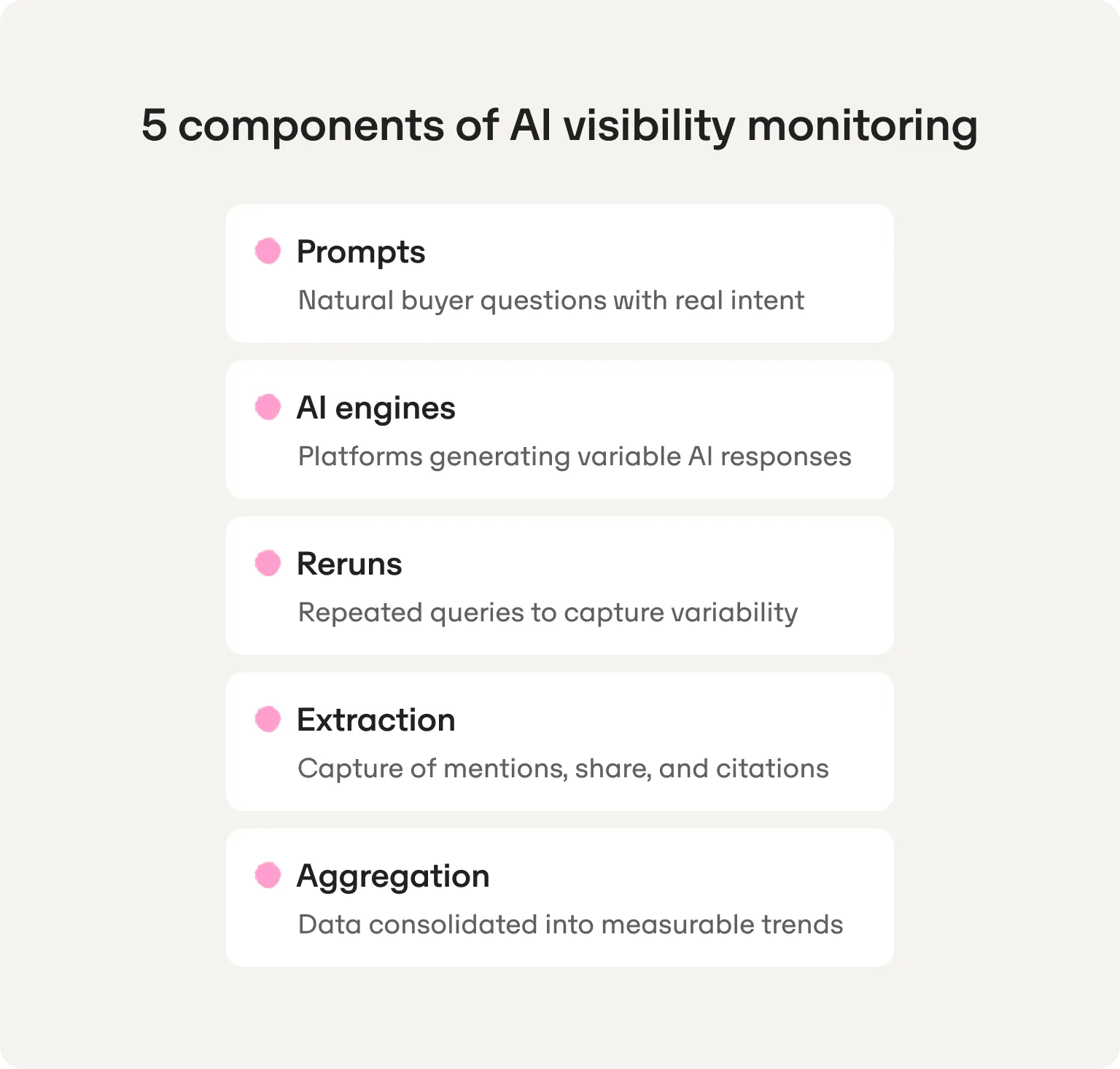
AI visibility monitoring operates through five interconnected components that turn buyer questions into intelligence you can act on:
Prompts are complete buyer questions, not keyword fragments. AI search engines respond to questions with context. Instead of optimizing for the keyword string “best CRM for startups” it would be more effective to target something like “what's the best CRM for a five-person sales team with a $500/month budget?”
Your monitoring set should come from real customer language found in sales calls, demo transcripts, support tickets, and community threads. Real customer questions reveal intent and criteria buyers use to evaluate solutions. Generic keyword tool exports miss this context entirely.
A mention is any brand reference in AI-generated responses. If ChatGPT lists five CRM tools and yours appears, you get one mention. If it doesn't mention you, that’s zero.
Share of voice measures visibility relative to competitors. If four brands appear and you're one, you hold 25% share of voice for that prompt. Marketing teams track both metrics. Mentions show inclusion frequency, share of voice shows dominance when you do appear.
Citations are where monitoring becomes actionable. When Perplexity or Google AI cites a source URL, that's a citation showing exactly where AI-powered search engines pull information from.
Citation tracking reveals what AI relies on and where you’re falling short: competitor comparison pages you lack, third-party review sites you're missing from, AI-optimized content formats (listicles, FAQs, docs) that AI search engines prefer.
AI visibility changes by country. The same prompt in Spain versus Argentina produces different brand mentions and citations because AI platforms prioritize local sources, language differences affect retrieval, and market-specific training data shapes responses.
For startups expanding internationally, geographical tracking is essential. You might dominate UK prompts with 60% share of voice but have zero visibility in Spain for identical buyer questions. The best AI visibility monitoring tools track prompts across multiple countries.
Monitoring AI visibility without a system produces dashboards no one acts on. Here's a complete workflow that should move you from tracking to execution.
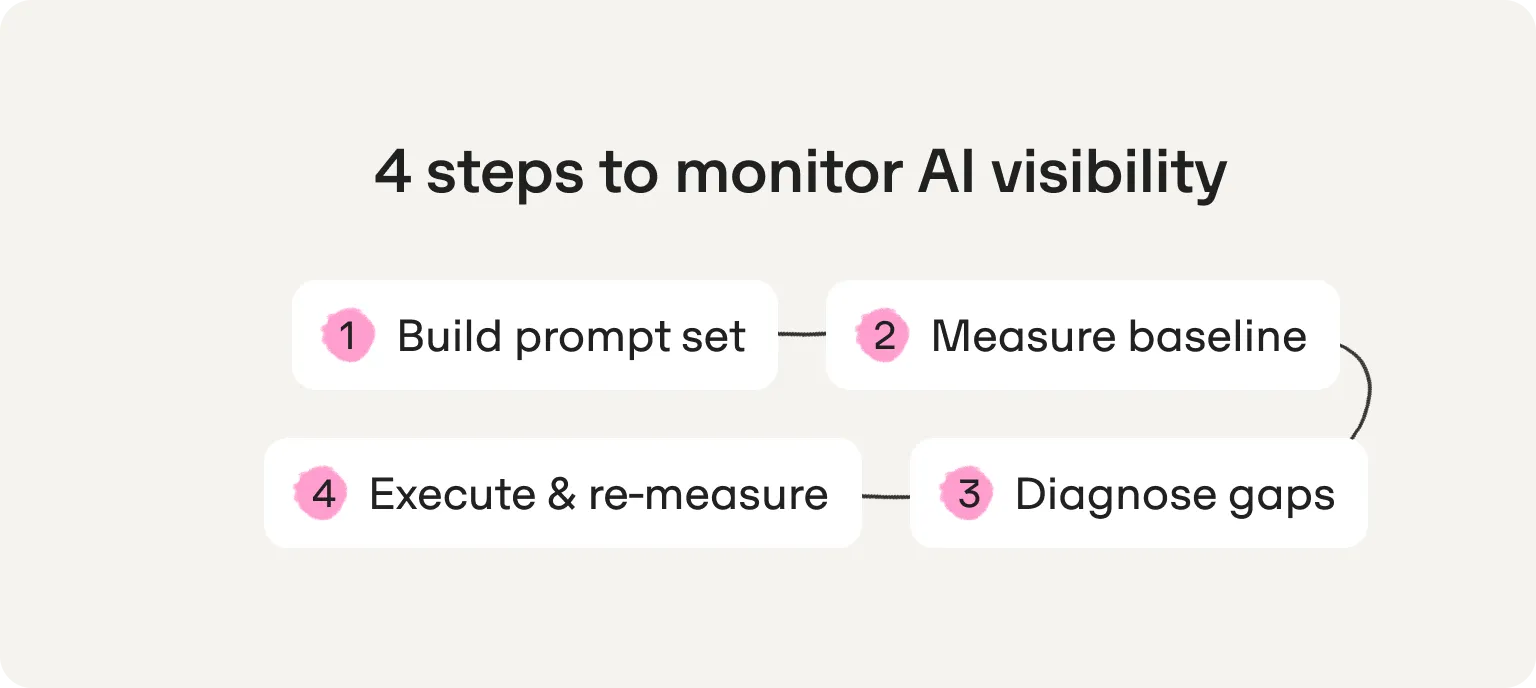
Building a monitoring set means finding the exact questions buyers ask AI platforms. These seven methods extract trackable prompts from existing customer data, competitor signals, and AI platforms themselves:
Organize prompts by buyer journey stage:
Not all prompts are winnable. Focus on long-tail questions where your ICP and positioning give leverage.
If you're a 10-person startup, "best CRM" isn't winnable. You can’t compete with the Salesforce and Hubspot titans of the industry. Instead, target “Best CRM for early-stage SaaS startups under $100/month.” Choose prompts where your constraints become advantages and where comprehensive AI search optimization means owning topics that matter.
Baseline measurement means running your prompt set, recording where you appear, tracking share of voice, capturing citations, and doing this consistently so you have a reference point.
To establish baseline, define four parameters:
For 10-20 prompts, you can monitor manually. Just open incognito Chrome (or VPN for geo), ask each prompt on each AI platform, then log this information in a spreadsheet: You can also start with a free AI visibility checker to establish a four-engine baseline before you build an ongoing monitoring system.
As prompts grow, this becomes too time-consuming. There might be inconsistent execution (fatigue, errors), you don’t see trend visualization, and it’s hard to calculate share of voice across 100+ data points. Manual checks also don’t capture variance — you need reruns for trends.
Manual works for baseline or testing AI visibility as a channel. It's not sustainable for serious search monitoring.
Automated tools run prompts consistently, extract data automatically, and show you trends. They have key capabilities you can’t afford to miss out on:
Learning to monitor brand visibility on AI engines starts with Omnia. The platform runs prompts via browser sessions that mirror real user experiences. That matters because AI platforms can respond differently via APIs than they do in consumer interfaces. Browser-based runs are a closer proxy for what buyers actually see.
Monitoring shows where you stand. Diagnosis turns data into decisions about what to fix and where to focus.
Review prompts where competitors appear but you don't. Filter your monitoring data for zero-mention prompts and low share of voice prompts.
Look at AI-generated answers for these prompts. What do competitors have that you lack? Comparison pages you haven't created? Use case pages missing from your site? Integration documentation for tools you support but don't document? Clearer positioning in homepage messaging?
Missing coverage often signals content gaps or positioning gaps. That means you either lack the page or your page doesn't clearly answer the buyer question.
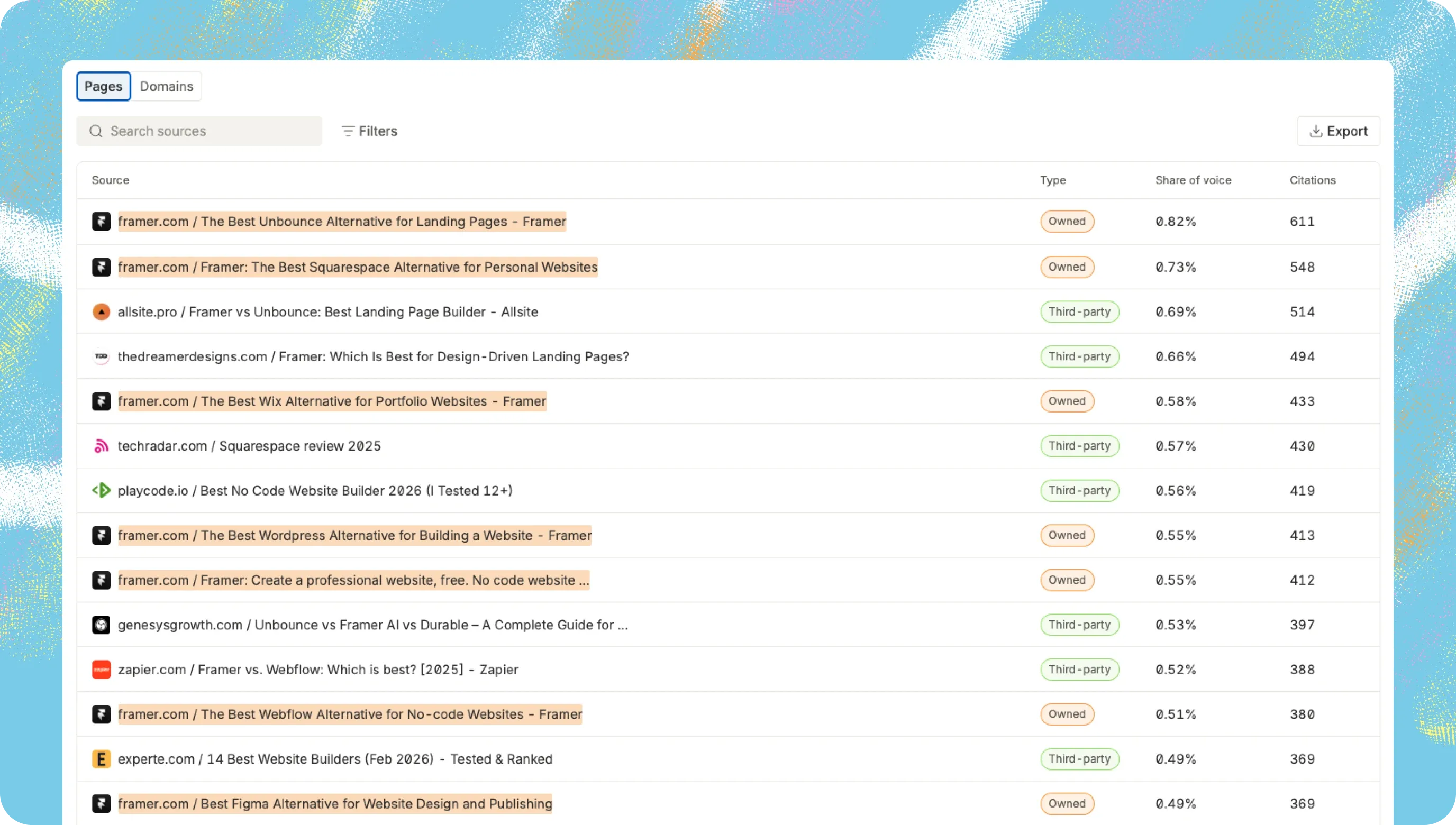
When AI engines mention competitors, which URLs and domains do they cite? This citation analysis becomes your action backlog.
Filter citation data by competitor to see patterns: competitor's own site, third-party review sites, listicles and roundups, Reddit or community discussions, news and press coverage.
These cited sources show you exactly what to create and where to publish. If competitors are cited from G2 reviews, strengthen your G2 presence. If roundup posts drive 30% of citations, earn placement in those.
Once you've analyzed citations and coverage, sort problems into three key categories:
Most brands have all three problems. Prioritize based on prompt coverage potential. If you're missing 20 pages, create content first. If pages exist but you have zero external authority, focus on placement.
Diagnosis is only valuable when it drives action. The point of monitoring is to ship improvements.
Your citation analysis reveals exactly what formats AI engines prefer and which domains they trust. Use this intelligence to prioritize what to create, what to optimize, and where to publish.
For comprehensive guidance on content optimization, placement strategies, and technical implementation, see our playbook on how to improve brand mentions and visibility in ChatGPT.
After shipping, rerun prompts weekly to catch real movement as AI engines index your changes. While traditional SEO takes 3-6 months to show results, AI visibility can move significantly faster — with the right platform. INDYA worked with Omnia and went from 16% to 53% visibility in their main topic within just 10 days. This 3.3x increase was achieved after publishing one well-structured listicle with decision frameworks, comparison tables, FAQs, and proper schema. They jumped from 5th to 2nd most-mentioned brand, outcompeting higher-authority competitors who hadn't built for AI yet.
To see if your brand is achieving similar results, track these metrics weekly: visibility rate trends, share of voice by prompt cluster, citation growth, top cited domains, and prompt-level changes showing which content works. This weekly cycle turns monitoring into a feedback loop—ship, measure what moved, iterate.
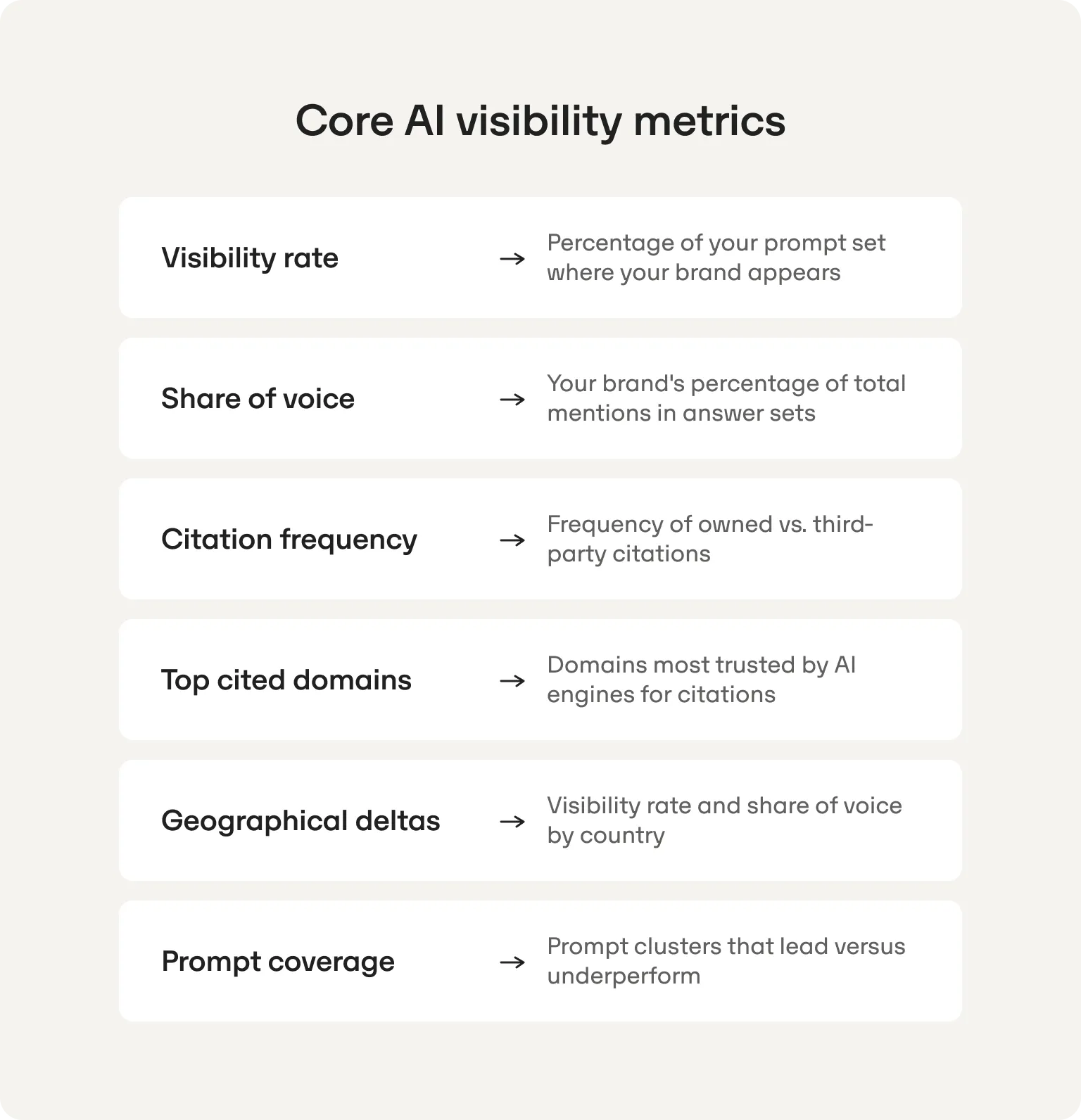
Most dashboards show too much. Here's the minimum viable set of metrics for lean teams running AI visibility tracking:
Focus on creating useful content, earning citations, and making your site parseable.
Use for decisions: Brand mention frequency (present/absent), citation URLs (specific and observable), share of voice percentages (math-based comparison), week-over-week deltas (showing movement).
Use for context: Prompt volume estimates (modeled, not measured), competitive positioning (qualitative), sentiment analysis (subjective interpretation).
Ignore completely: Single-day snapshots, “AI ranking” claims, tools promising guaranteed visibility.
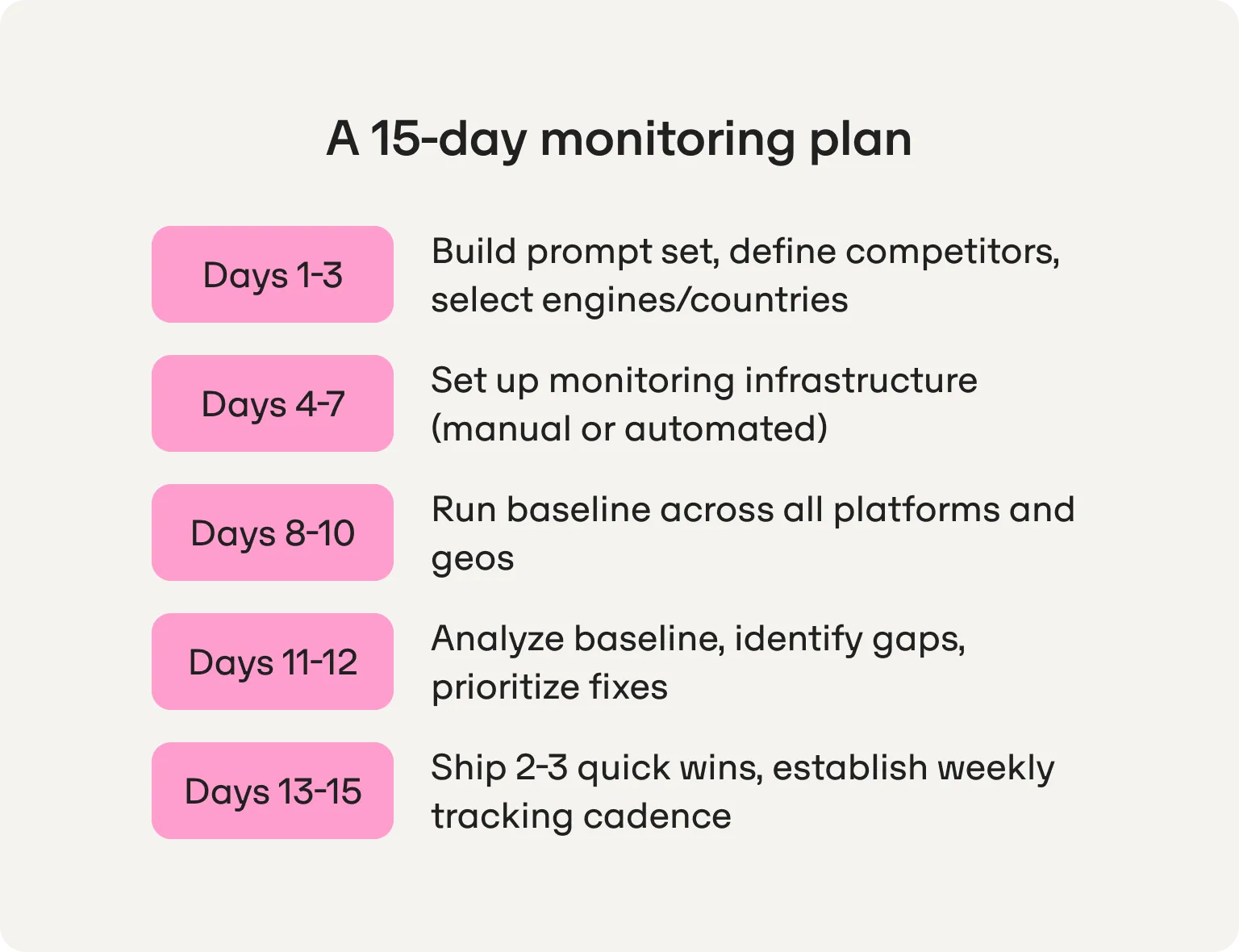
Here's an executable plan for teams with limited bandwidth — designed for 10-20 person startups shipping fast. This plan focuses on building AI search visibility monitoring infrastructure so you can start executing visibility improvements immediately.
Omnia exists to help brands win visibility in AI engines by turning real AI signals into action:
Book a demo to see how Omnia tracks brand visibility on AI platforms and surfaces citation opportunities. Start tracking your first prompts this week with a 14-day free trial on Omnia’s Growth plan.
Omnia offers a 14-day free trial on the Growth plan.
No credit card required. See exactly where your brand shows up (or doesn't) across AI engines, then let the platform's recommendations guide your next move.

Start by building a prompt set from real buyer questions, then use automated tools to track your brand across major AI models — measuring visibility rate, share of voice for competitor benchmarking, and citations that influence brand perception. The key is monitoring AI visibility across platforms consistently, then using that data for answer engine optimization (AEO): creating content AI engines cite and earning placements on domains they trust.
Both are key metrics for AI search optimization, but brands that earn both a mention and a citation are much more likely to resurface in future AI answers. Citations show you which sources AI answer engines trust, turning brand visibility tracking into a backlog of what to create and where to publish.
New content typically takes 2-4 weeks to appear in AI answers, so expect gradual improvement rather than overnight spikes in brand presence. Monitoring brand visibility on AI platforms with consistent reruns gives you AI search insights to measure progress weekly — track visibility rate and share of voice trends to see what's working.
Manual monitoring works for an initial baseline with 10-20 prompts, but it doesn't scale or capture variance in AI mentions across multiple reruns. For scalable brand monitoring, you need automated tools that rerun prompts consistently across Google AI mode, ChatGPT, Perplexity, and other platforms to establish reliable patterns.
Weekly reruns are standard for active brand presence monitoring, giving you enough AI search insights to spot trends without overwhelming your workflow. Daily reruns make sense if you're shipping content fast and testing changes, but monthly is too slow for teams executing systematic AI search optimization.
Written By
 Jose Luis García del RíoGrowthatOmniaJose Luis García del RíoGrowthatOmnia
 Jose Luis García del RíoGrowthatOmnia
 Jose Luis García del RíoGrowthatOmnia
 AndreiHead of GrowthatOmnia
 Jose Luis García del RíoGrowthatOmnia
No credit card required · Free for 14 days · See your AI visibility within 3 minutes