Alto&Claro
How a digital marketing agency turned AI monitoring into a scalable client service.
How a growth consultancy added AI visibility to their agency stack to deliver sharper strategies and measurable growth.
Industry: Growth and technology consulting
Company size: 30–50 employees
Description: Product Hackers is a growth consultancy that helps companies scale through technology, experimentation, and data-driven methodology. Their team works across the full funnel, applying scientific experimentation and analytics to drive measurable impact.
As generative AI platforms such as ChatGPT, Google AI Mode and Perplexity became a new discovery layer, Product Hackers identified a structural shift in the market. Industry reports showed exponential growth in LLM usage, with traffic increasing by more than 300% year over year.
Despite strong visibility in traditional search and solid positioning as a leader in growth consulting, they had no clear understanding of:
This blind spot meant both their internal strategy and client recommendations risked missing high-impact opportunities, while competing agencies were already beginning to optimise for AI search, capturing strategic prompts tied to discovery and purchase intent.
Product Hackers realized that falling behind in AI visibility could directly limit both their own growth and the value they delivered to clients.
To address this gap, Product Hackers integrated Omnia into their workflow to measure, understand and act on AI visibility.
They used Omnia to build structured industry reports organised by industry, use case and prompt clusters, allowing them to benchmark visibility against competitors and quickly identify emerging opportunities for both their own brand and their clients.
Within the first quarter, Product Hackers began offering AI visibility analysis as part of their core services, making AI positioning a natural extension of their growth methodology.
For the first time, the team had structured visibility into how leading LLMs positioned brands. Understanding that each model operates differently, favours different trends, and can shift its citation patterns over time.
They moved beyond traditional SEO advice and began guiding clients on how to compete for high-intent prompts, nuanced positioning statements (e.g. "best quality for the price"), and competitive prompt clusters with measurable Share of Voice.
What previously required hours of manual research across AI tools was reduced to minutes using Omnia.
The team began systematically addressing content gaps directly aligned with prompts and themes that drive AI engine answers.
Omnia became the system Product Hackers relies on to understand and influence how AI engines talk about their brand and their clients.
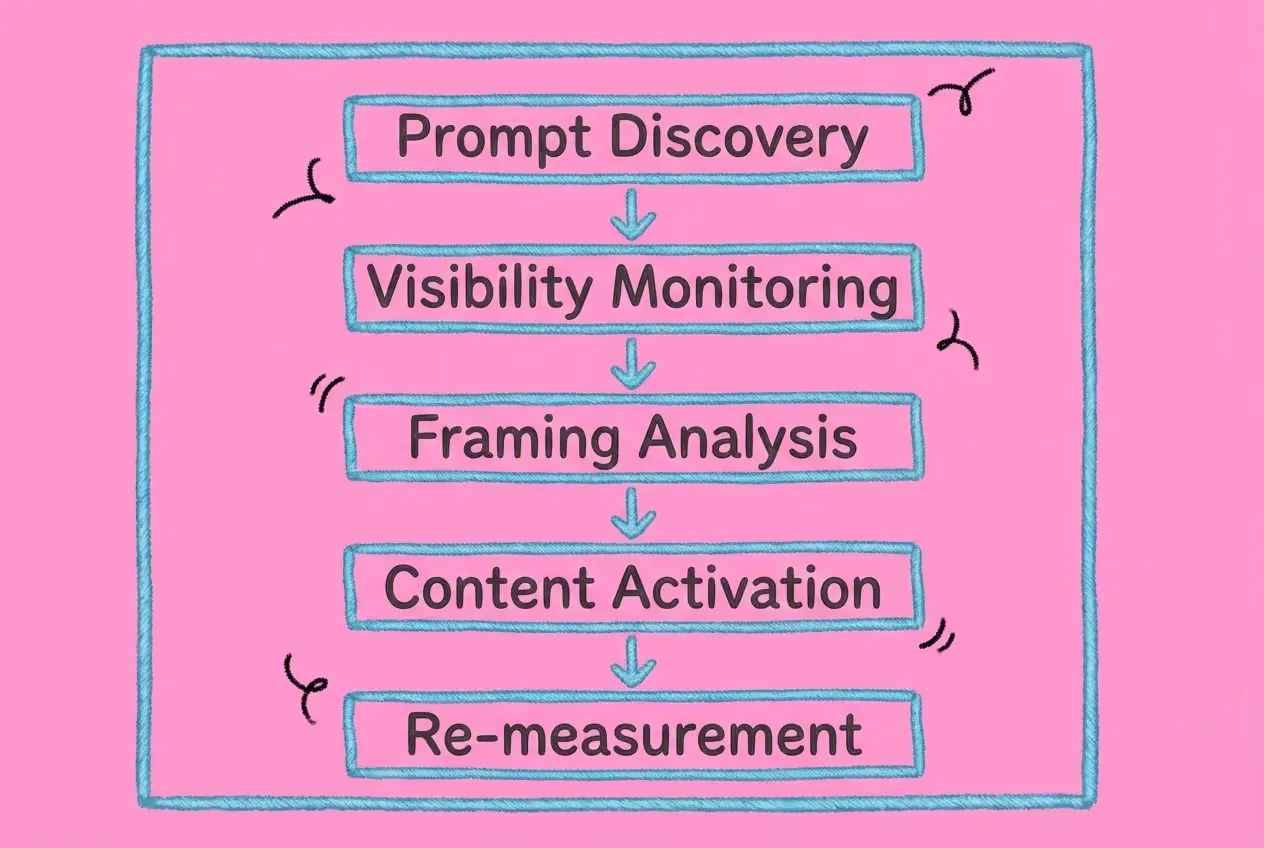
Over time, their implementation evolved into a clear, repeatable framework built on four pillars:
1. Topic and Prompt Identification
The team defined prompt clusters for each vertical — ecommerce, growth strategy, experimentation and analytics. With Omnia, they identified which brands were mentioned for specific use cases, which prompts showed higher intent, and where competitors were more visible. This replaced assumptions with real prompt-level data.
2. Ongoing Monitoring and Industry Reporting
Using Omnia Monitor, they built recurring reports tracking Share of Voice by engine, brand mentions across prompts, and competitive overlap inside AI answers. What previously required manual testing across platforms became a structured, scalable process.
3. Positioning and Insight Extraction
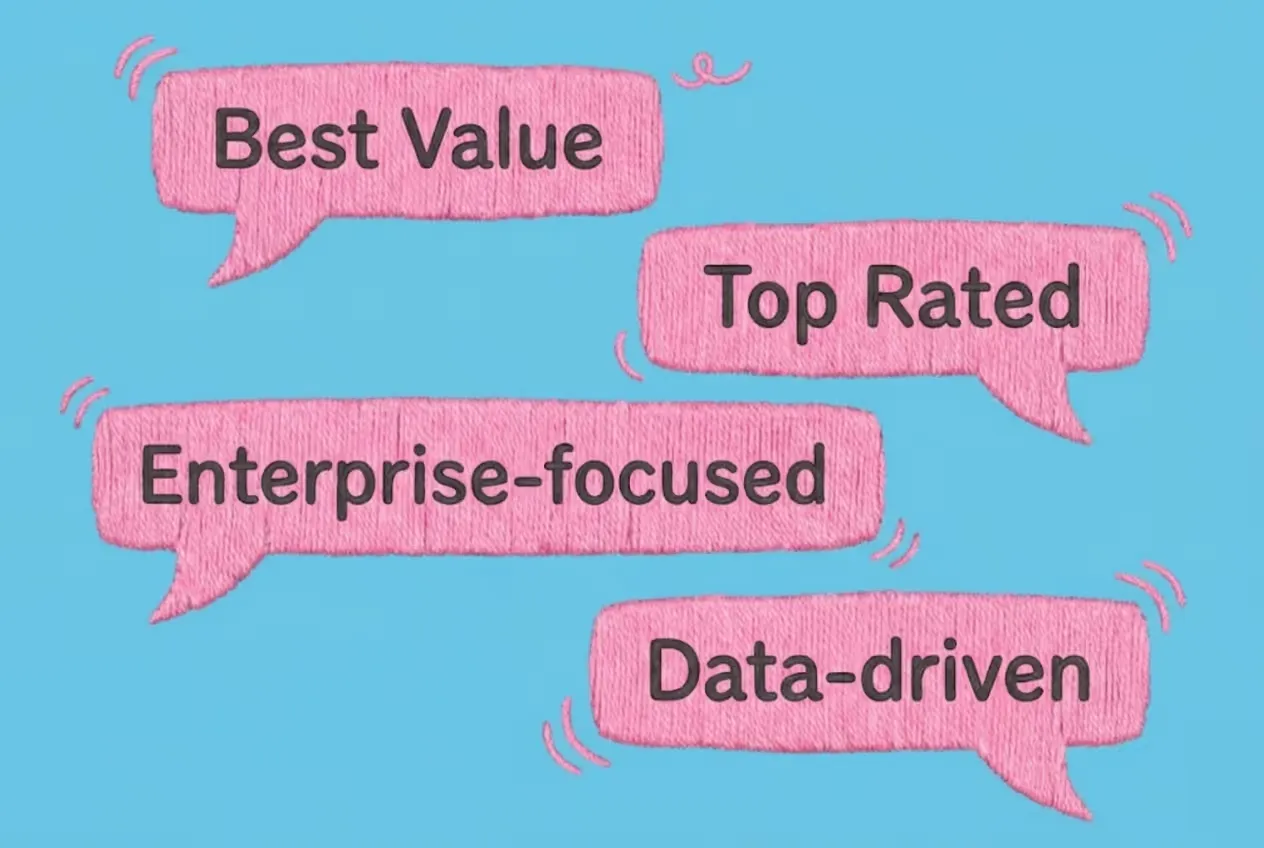
Beyond counting mentions, the team analysed how brands were described inside AI responses — identifying patterns such as "best value", "top rated", "enterprise-focused" or "data-driven".
They paid close attention to extreme positioning claims. Many users formulate questions in superlative terms ("the best", "the cheapest", "the fastest"). By analysing these prompts, the team identified which extreme use cases were relevant and attainable and where they should not compete.
4. Content and Strategic Activation
Insights from Omnia informed their own content strategy, client recommendations, and how articles were structured to improve retrievability in AI engines. The team prioritised content gaps directly linked to high-impact prompts and real user questions.

"With Omnia, we finally have visibility into how AI engines see our brand and our clients. It's helped us move from guesswork to clear, data-driven strategy. We believe LLM tracking tools will soon become a baseline capability for any company."
Ricardo González, Partner, Product Hackers
As AI engines increasingly shape discovery and decision-making, Product Hackers is positioning AI visibility as a core component of any modern growth strategy.
Ready to boost your brand visibility in AI? Start for free or get a demo.
How a digital marketing agency turned AI monitoring into a scalable client service.

Discover how a fintech company improved their AI visibility to generate more inbound qualified leads from AI with Omnia.

AI-attributed sales grew 95% a single month after adopting Omnia

From manual prompt tracking in spreadsheets to a system clients can act on.
How a nutrition SaaS went from invisible to top-ranked in AI search with Omnia.
How a edtech scale-up invested in AI visibility and grew 150% in a year.
How PLEO turned AI visibility into a measurable organic growth channel.

How a small insurer outranked industry giants across AI search engines.

How a travel credit card company used AI visibility data to dominate Avios prompts and turn recommendations into sign-ups.
How Answer Engine Optimisation helped TUIO dominate AI-driven insurance discovery
No credit card required · Free for 14 days · See your AI visibility within 3 minutes