

This guide ranks 13 Writesonic alternatives that cover the most important functions for scaleups: content quality, SEO support, workflow, and AI search visibility tracking. For most content teams in 2026, figuring out how to show up in AI search is the missing piece of the puzzle. Omnia ranks first as the only purpose-built tool to tell you whether your content is being seen in AI answers, and what to do when it isn't.
You can publish “AI-optimized” content all day. The only question that matters is whether it increases your visibility in ChatGPT, Perplexity, or Google AI Overviews and what to do when it doesn’t.
Writesonic is good at generating content. But most B2B startups and scaleups have a different problem. They need proof their content is being pulled into AI answers and cited, they need to see which competitors are winning those citations, and they need a short list of actions a 1–2 person team can actually ship.
This guide covers 13 alternatives across the AI visibility stack, from tools that help you structure content for AI engines to tools that track citations and turn them into execution plans. We grouped tools by the problem they solve, checked pricing on official pages, and called out messy positioning so you can pick fast using clear good fit and not a fit criteria.
If you want content volume, Writesonic is fine. If you want AI search to drive growth, start here.
What “Writesonic alternatives” actually means in 2026 (AI writer vs AI search performance stack)
Search “Writesonic alternatives” and you'll land in a category with no clean edges. What used to mean “tools that help you write faster” now spans four jobs: generating AI content, optimizing it for search, managing the workflow around it, and tracking whether it surfaces when your buyers use AI search.
Teams searching for a Writesonic alternative AI tool are often feeling a different pain than the search term suggests. They're producing content. But organic clicks from Google are declining, AI Overviews are absorbing traffic that used to reach their pages, and they have no visibility into whether their content is being cited.
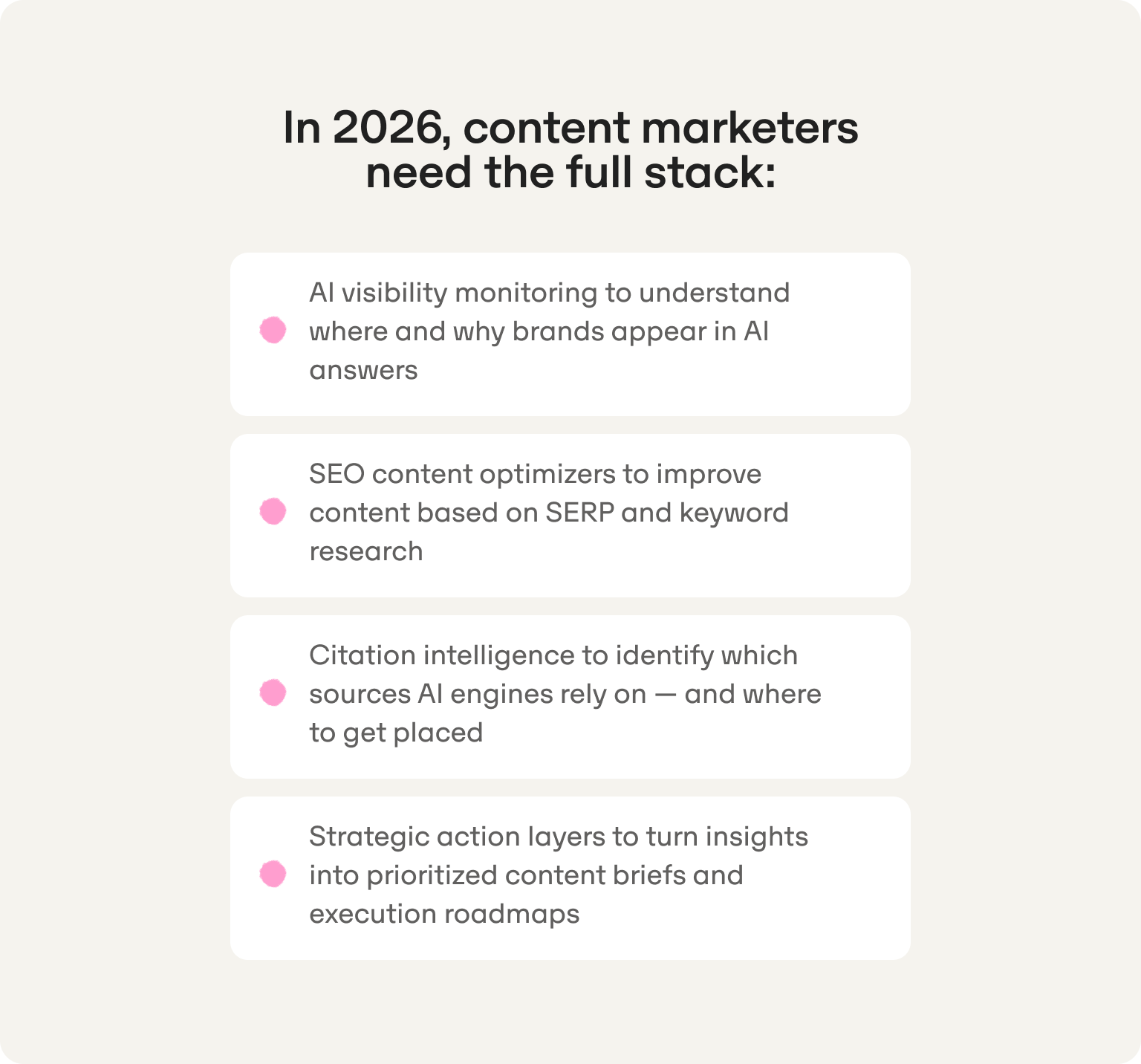
In 2026, content marketers need the full stack:
- AI visibility monitoring to understand where and why brands appear in AI answers
- SEO content optimizers to improve content based on SERP and keyword research
- Citation intelligence to identify which sources AI engines rely on — and where to get placed
- Strategic action layers to turn insights into prioritized content briefs and execution roadmaps
Knowing which layer you're missing is the starting point. Most teams have the first two covered. The third is where the gaps start to show. And the fourth is becoming harder to ignore.
How Writesonic AI search optimization alternatives go beyond publishing
Half of consumers today use AI-powered search to discover brands and products. ChatGPT, Perplexity, and Google AI Overviews are now a real discovery channel for B2B buyers, so the metric that matters is whether your content gets pulled into the answer and cited as a source.
That's why the AI visibility platforms category in the stack matters more than it used to. Some AI writing platforms are optimized around output, and that’s still useful. But that treats publishing as the finish line, when for most B2B teams, publishing is just the start.
When you don’t need an alternative to Writesonic (and when you absolutely do)
Not every team needs to switch. Here's how to tell if you’re outgrowing Writesonic you're in.
Keep Writesonic if:
- Short-form content at volume is your primary need and the credit system works for your output level
- You’re seeing improved AI search visibility even with limited action items
- You want a single subscription that covers AI-powered content generation and AI visibility without adding tools
Switch if:
- The long-form output feels inconsistent and you want more control over structure and depth
- Your team has grown and collaboration has become a bottleneck
- You need deeper AI visibility tracking with more engines, more countries, or a more developed action layer than your plan gives you
If the second group sounds more like you, here’s the framework we used to evaluate what other tools might be a better fit.
The evaluation criteria we used for Writesonic alternatives
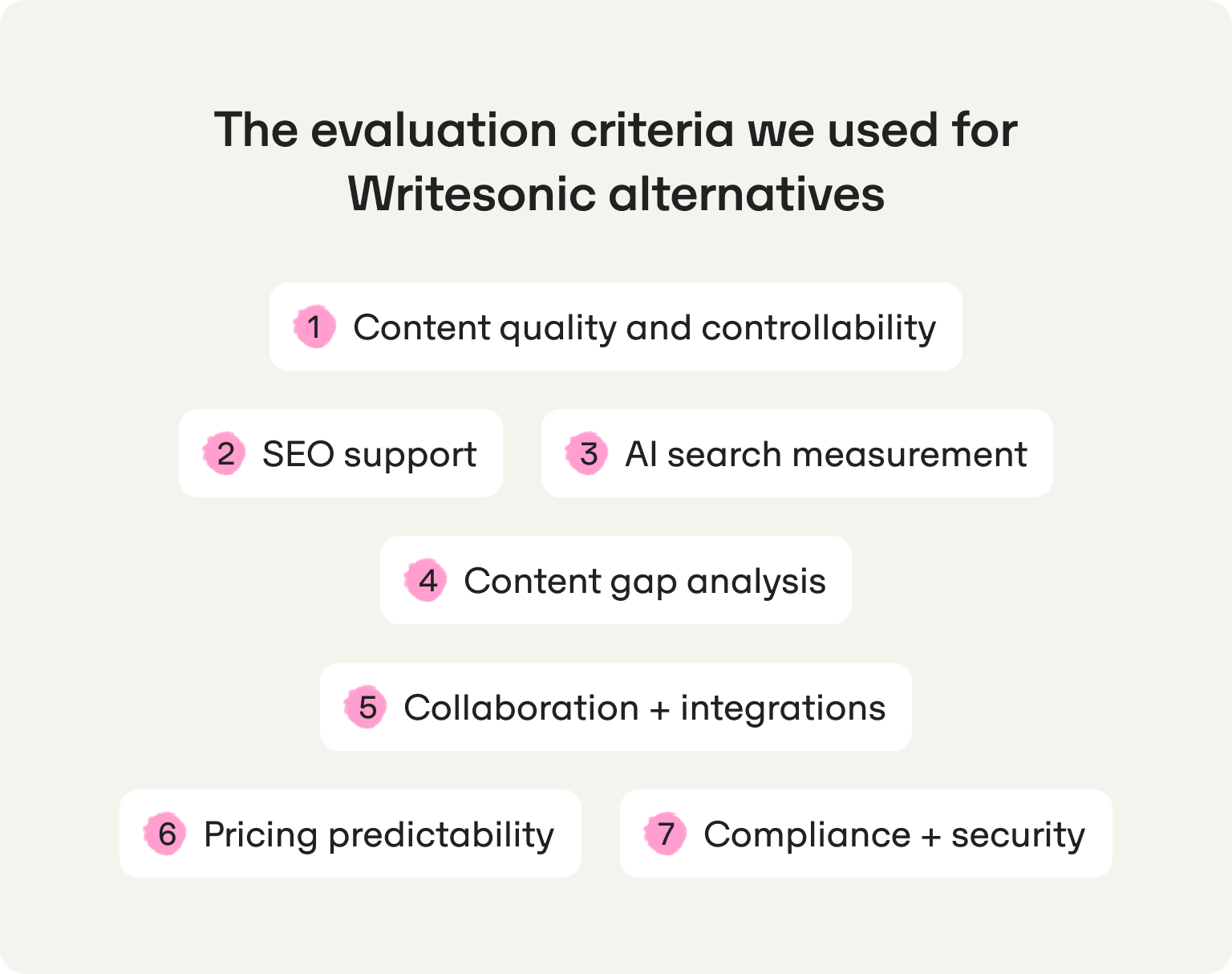
To weigh up the Writesonic competitors on this list, we looked at the following criteria:
- Content quality and controllability: Does it write in your brand voice, or does it write like AI?
- SEO support: Will it help you rank, or just give you more content to publish?
- AI search measurement: Will it show you if your content shows up when buyers ask AI engines questions?
- Content gap analysis: Does it help you find the most high-impact topics?
- Collaboration + integrations: Can your whole team use it without creating a new silo?
- Pricing predictability: Will you know what you're paying next month?
- Compliance + security: Can you safely use the tool for client or regulated content?
One of those criteria, content gap analysis, deserves a closer look before we get to the tools, because what it means is different in 2026.
Content gap analysis effectiveness
With AI search transforming brand visibility, the meaning of “content gap analysis” has changed. For most tools, what they really mean when they say content gap analysis is simply what keywords competitors are ranking for that you aren’t. That’s helpful to an extent, but it’s not the full picture.
A useful gap analysis should tell you which topics competitors are getting cited for in AI answers that you're missing, which prompts you're losing by engine and by country, which citation sources AI engines trust in your category that you don't appear in, and what the execution backlog looks like.
The difference in business terms is significant. Keyword gaps cost you traffic, while citation gaps cost you consideration when prospects are shortlisting new tools.
A simple “citation-driven gap analysis” workflow you can run weekly
Before you can act on a gap, you need to find it. Here's a simple weekly workflow to make that repeatable.
.png)
- Build a prompt set by intent cluster: Start with 20 to 30 prompts that reflect how your buyers actually search, grouped by topic or use case
- Track winners and losers by country: Run the same prompts across your key markets and note where visibility differs
- Extract citations and patterns: Identify which domains and URLs are getting cited for the prompts you're losing, and look for patterns in format, depth, and source type
- Turn findings into actions: Map gaps to specific outputs: new pages to create, existing pages to refresh, and third-party publications to target for placement
- Measure impact after publishing: Track whether visibility rate moves for the prompts you acted on, and feed that back into the next cycle
Omnia is purpose-built to operationalize this workflow so you're not spending hours in spreadsheets.
All Writesonic alternatives at a glance
Use this table to shortlist 3 tools, then read the detailed reviews below.
The best Writesonic alternatives ranked
These 13 tools are the strongest alternatives to Writesonic on the market right now. For each one, we've looked at what it does well and where it falls short, so you can pick the best platform for your team.
1. Omnia
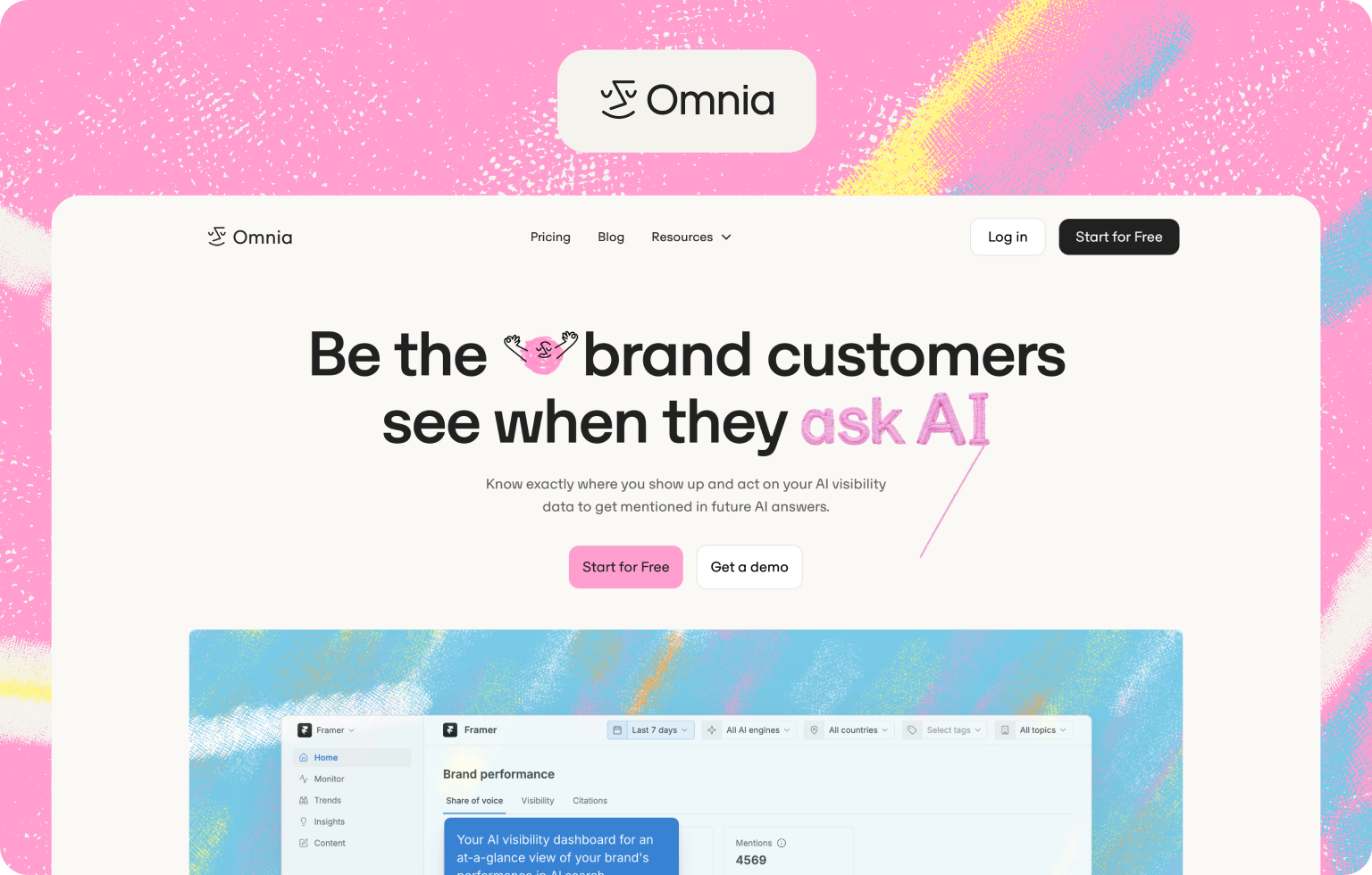
Omnia tracks brand visibility across ChatGPT, Perplexity, Google AI Overviews, and Google AI Mode. It tells you whether your content is showing up in AI answers, which URLs and domains AI engines are citing in your category, and what to create next to close the gap.
Best for
Startups and scaleups tracking AI search visibility across countries who need execution support, not just dashboards, to turn citation intelligence into content.
What it does well
Omnia is good at making AI search measurable and actionable for lean startup and scaleup teams. It shows whether you appear in real AI answers across engines and countries, reveals which sources are getting cited instead of you at the URL level, and turns that into a clear set of next actions so you can improve visibility without guessing or hiring a big team.
Alone, Omnia helps you find prompt clusters where you can gain visibility fast. That's the gap Writesonic doesn't close. Writesonic gates its Action Center to upper tiers, so entry-level users get visibility data without the execution layer to act on it. Omnia’s execution layer isn’t an add-on, it’s the whole point.
Example Omnia workflow
Say you're Deel, a global HR platform, looking to improve brand visibility in ChatGPT for global payroll services. You set up a prompt cluster in Omnia and start tracking “What are the best global payroll services for UK companies managing remote teams?”
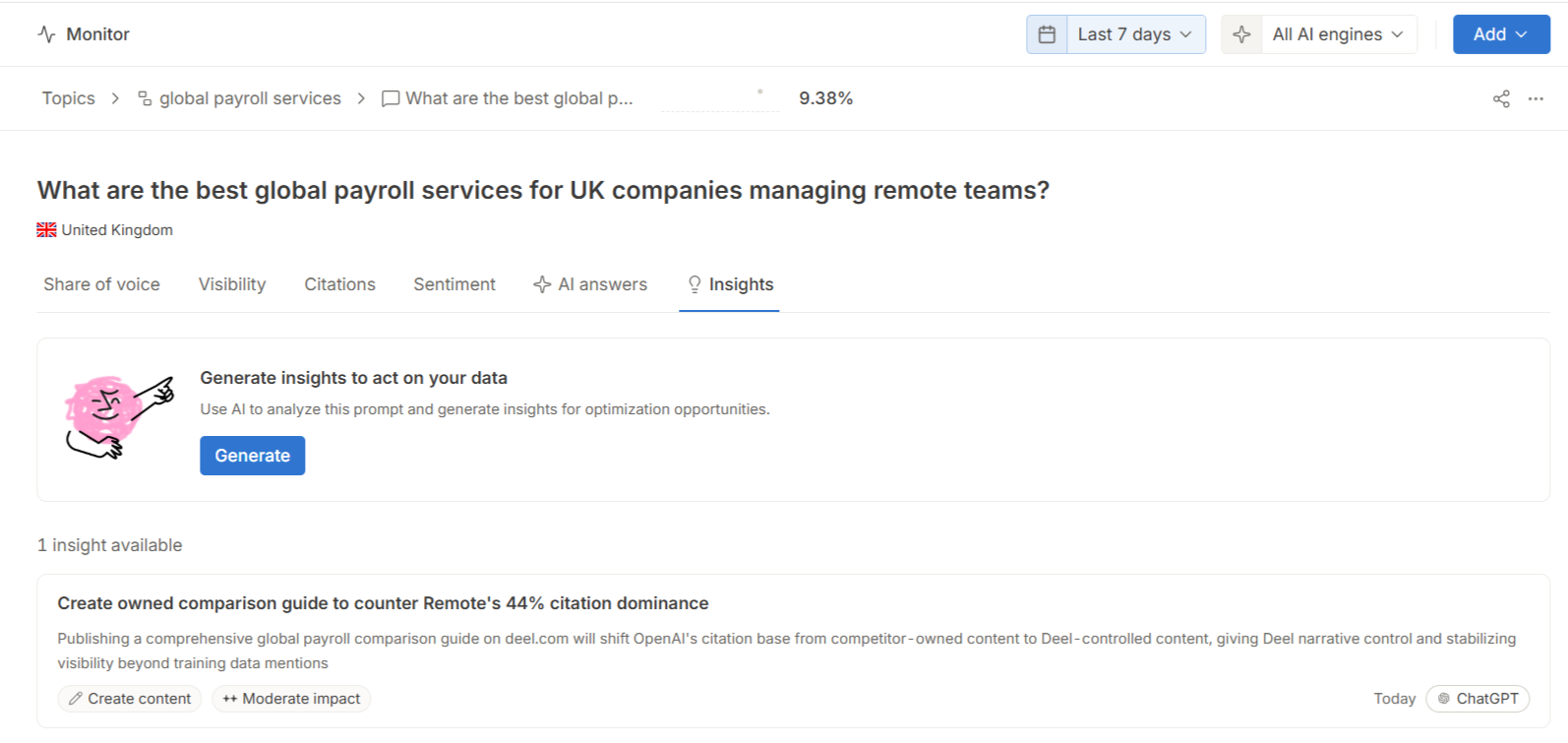
Omnia shows Remote is dominating citations for that prompt. The action layer generates a concrete next step: Publish a comprehensive global payroll comparison guide.
Key features
- Daily prompt tracking: Monitors your visibility across ChatGPT, Perplexity, Google AI Overviews, and Google AI Mode every day so you always know where you stand
- Country-level tracking: Runs prompts from browsers in actual locations, so you see how your visibility differs by market
- Citation intelligence: Every tracked prompt shows which specific URLs and domains AI engines are citing, so you know exactly which sources are getting the credit you're not
- Competitor benchmarking: See which brands are winning visibility in your category and where the gaps are
- Action layer: Turns citation data into content briefs, outlines, and a prioritised list of domains to target for outreach
- Publisher prioritization: Identifies which publishers AI engines trust most in your category so you know where to focus your efforts
- Visibility rate trending: Tracks your AI answer presence over time so you can see whether published content is moving the needle
- Sentiment analysis: Tracks how AI engines describe and frame your brand in answers, so you can spot negative or off-brand positioning before it influences buyers
Watch-outs
Omnia isn't for teams that hand marketing execution to agencies or need extensive approval workflows before acting on recommendations. It's built for founders and small teams that own execution and move fast.
Good fit if
- You publish at least twice a month and want to know which content to prioritize based on real AI citation data, not guesses
- You're expanding internationally and need country-specific visibility tracking to see where your brand shows up (or doesn't)
- You have one or two people on marketing and can't afford to waste effort on content that won't move visibility
Not a fit if
- You need a tool to generate hundreds of AI articles automatically
- You're still figuring out how to publish consistently — fix your publishing engine first, then optimize for AI search
- Growth: €79/mo
- Pro: €279/mo
- Enterprise: From $499/mo
2. Jasper
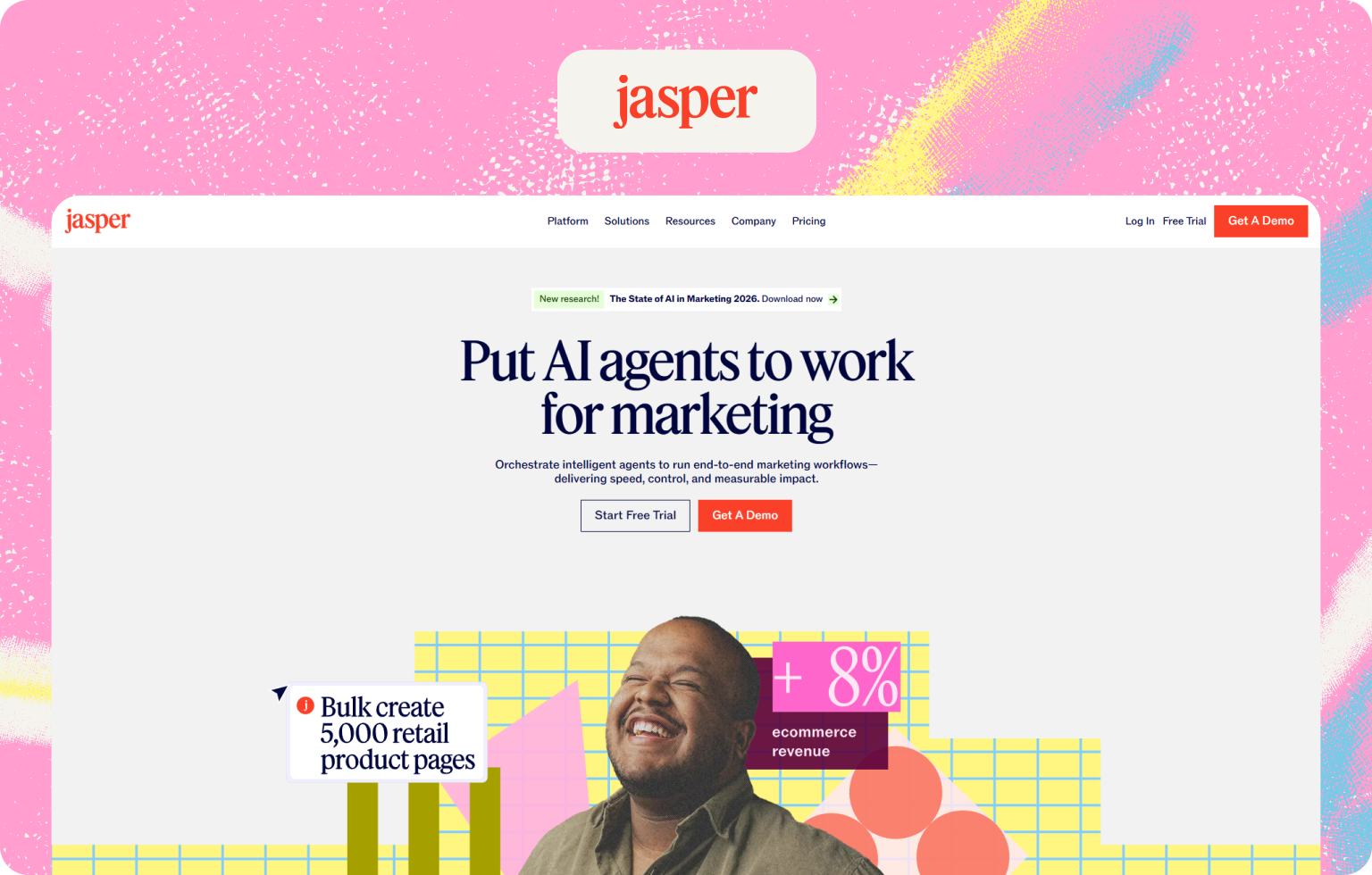
Jasper is an enterprise content platform for creating automated, end-to-end marketing workflows with 100+ AI agents.
Best for
Enterprise marketing teams that want to produce content across different functions at scale.
What it does well
Jasper embeds brand governance at the model level, rather than applying it as an afterthought. Brand alignment doesn’t drop as the output volume increases, which is exactly the problem some AI writing tools create when teams start producing at scale.
Key features
- Jasper IQ brand governance applies your voice, tone, and style guide across every output automatically
- Grid workflow automation means you can create content in bulk from structured inputs like briefs and keywords
- Canvas gives your team a place to collaborate on content with real-time co-editing and commenting
Watch-outs
Jasper doesn’t have any AI search tracking capabilities. If you’re publishing at volume but not showing up in AI search answers, that’s a problem that compounds fast.
Pricing
- Pro: $69/mo/seat
- Business: Custom
3. Copy.ai
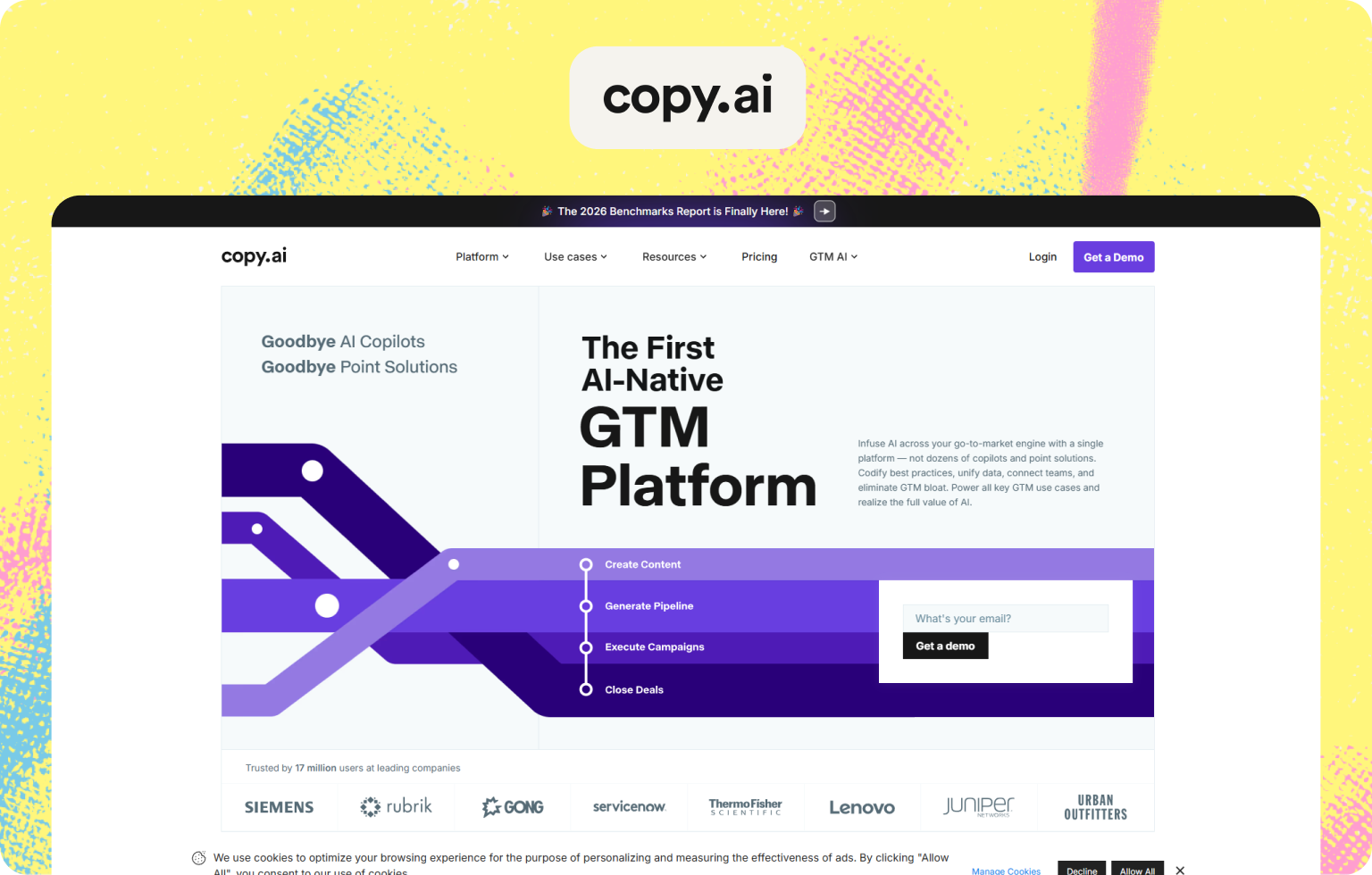
Copy.ai is a marketing platform with a built-in AI writing tool, designed to consolidate your entire go-to-market plan and operations in one place.
Best for
Marketing teams whose content needs to feed directly into sales enablement and managing it across separate tools is slowing you down.
What it does well
Rather than positioning AI as a replacement for writers, Copy.ai’s workflows involve human input at the strategy and final polish stages. This setup means writers can get faster output without handing over creative control, which is where a lot of AI writing tools fall down.
Key features
- Workflow automation codifies how briefs, drafts, and approvals move through your team to speed up content production
- Infobase grounds content in your actual company knowledge and product context
- Localisation and translation automates the process of adapting content for different markets
Watch-outs
Copy.ai covers a lot of ground across GTM functions, so if long-form content generation is your primary use case, a more focused tool might serve you better. There’s nothing to monitor AI search visibility, so you won't know whether your content’s being cited or surfaced after you hit publish.
Pricing
- Self-serve: $29/mo
- Enterprise: Custom
4. Rytr
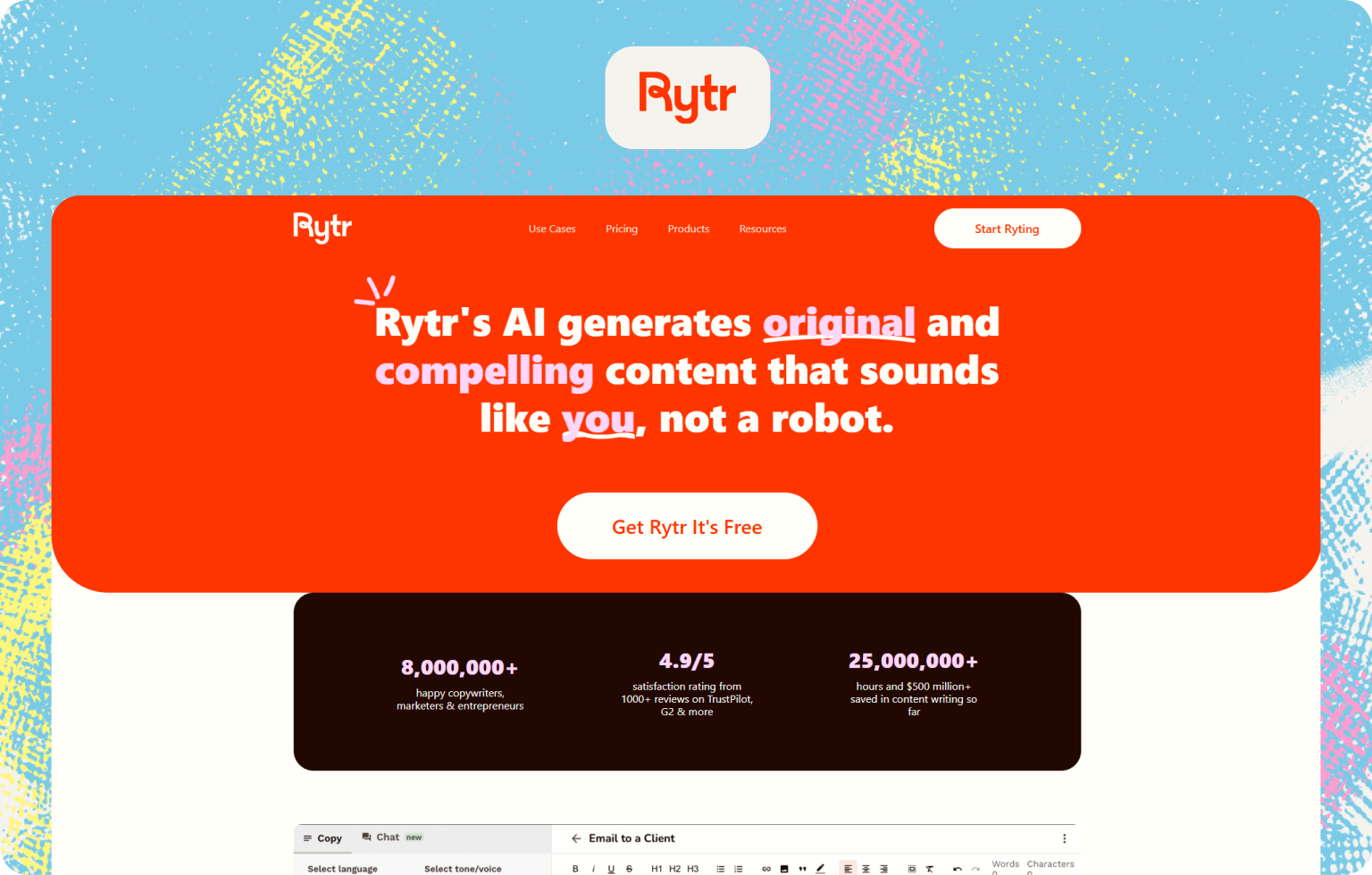
Rytr is a simple AI writing tool focused purely on content creation, with 40+ content use cases and templates including social media posts and Google ad copy.
Best for
Solo marketers or small teams that need quick first drafts without a steep learning curve or a high price tag.
What it does well
Rytr removes the blank page problem fast. You pick a use case, set a tone, add a prompt, and get content instantly, without complex features or add-ons muddying the process.
Key features
- Tone matching generates content in your voice across 20+ preset or custom tones
- In-line editor lets you expand, shorten, or rephrase outputs without leaving the tool
- Plagiarism checker flags duplicate content before you publish
Watch-outs
Rytr has a long-form SEO article use case, but as you’re limited in how much context and input you can give it the result might feel too generic.
Pricing
- Free
- Unlimited: $9/mo
- Premium: $29/mo
5. Wordtune

Wordtune is an AI writing assistant focused on rewriting, editing, and improving existing content rather than generating it from scratch.
Best for
Marketers who struggle to get the output quality they want from AI writing tools and want to refine and shape their own ideas instead.
What it does well
Many AI writing tools will confidently produce a fact that turns out to be wrong. Wordtune cross-references at least five sources before surfacing a claim, which cuts out a big chunk of the manual editing process.
Key features
- AI continuation picks up sentences or paragraphs from where you left off when you get stuck
- Templates across different content types and business functions to generate drafts to edit
- Rephrasing helps you make complex sentences or ideas easier to understand
Watch-outs
Because Wordtune is more of an editing and refinement tool, if your goal is to rank in Google or AI search it’s not the right starting point.
Pricing
- Basic: Free (10 rewrites and AI suggestions)
- Advanced: $13.99/mo
- Unlimited: $19.99/mo
6. Frase
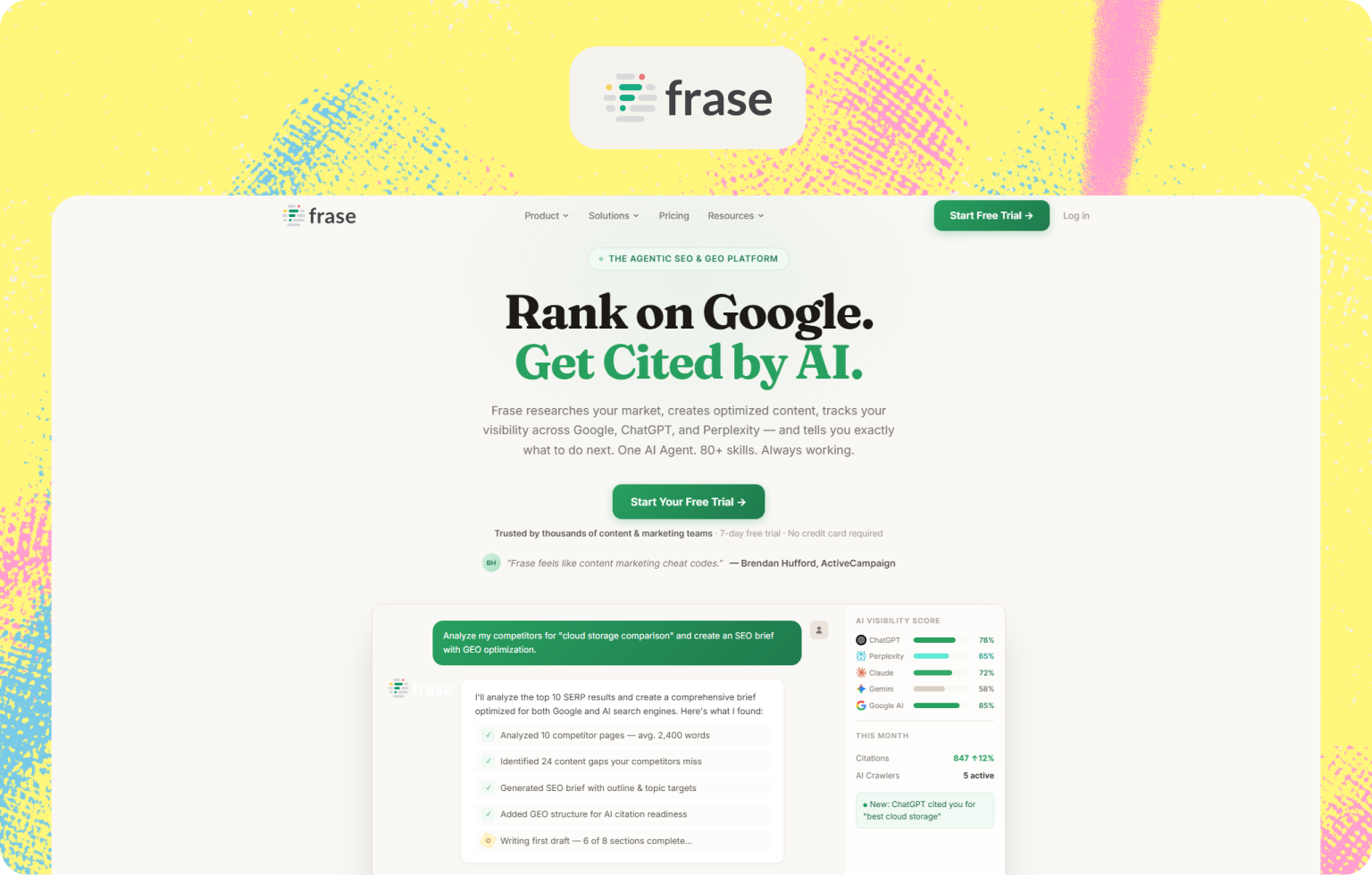
Frase is a conversational AI agent for content operations. You tell it what you need, it handles the research, writing, optimization, and tracking.
Best for
SEO-led content teams who quickly need to prove performance across Google and AI search and would prefer one platform over multiple tools.
What it does well
Frase operates through a conversational agent rather than a dashboard. You tell it what you need in plain language and it chains together the relevant steps automatically, from keyword research to content creation.
Key features
- AI search tracking monitors your brand across eight platforms with daily updates and competitor share of voice
- Content opportunities flags declining pages and surfaces prioritised fixes before they affect performance
- Programmatic SEO generates location pages, comparisons, and directory listings at scale
Watch-outs
The AI-generated content ticks all the SEO boxes but can lack depth. The time you save on planning and research you might need to spend on manual editing to reach the quality you want.
Pricing
- Starter: $49/mo
- Professional: $129/mo
- Scale: $299/mo
7. Surfer SEO
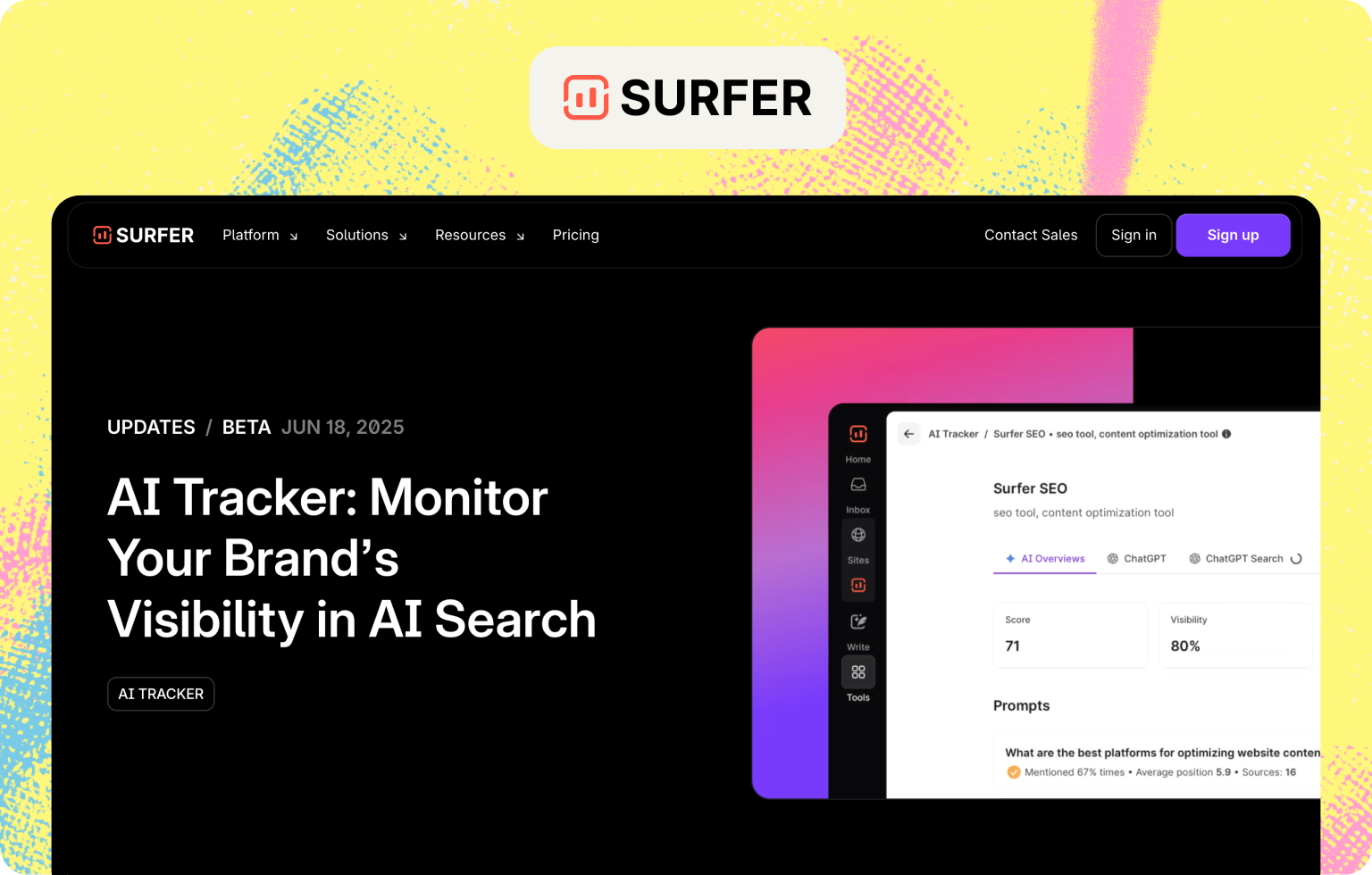
Surfer SEO is a content optimization platform that helps you improve Google rankings and AI search visibility through real-time scoring, keyword analysis, and SERP insights.
Best for
Existing Surfer SEO users managing multiple clients who want optimization built into the writing.
What it does well
By the time you hit publish, Surfer has already helped you take care of keyword coverage and topical gaps. You get a better chance of ranking from day one without having to go back in and optimize.
Key features
- Auto-Optimize boosts your Content Score automatically by adding relevant terms and missing sections without breaking the flow
- AI Tracker monitors brand visibility across five major AI platforms with competitor share of voice and mention gap analysis
- Auto internal links scans your domain and inserts relevant links automatically
Watch-outs
Surfer only includes ChatGPT visibility tracking in its base pricing. If you need insight into more LLMs or your output is lower volume, the cost might be harder to justify against simpler optimization tools.
Pricing
- Standard: $99/mo
- Pro: $182/mo
- Peace of Mind: $299/mo
8. Scalenut

Scalenut is a GEO platform for creating and tracking content visibility across AI search engines.
Best for
Content teams who don’t want to choose between traditional search engines and AI search.
What it does well
Beyond just analyzing competitor rankings, Scalenut monitors Reddit threads to give you relevant topic ideas that keyword tools alone would miss.
Key features
- GEO Action Center turns visibility insights into content briefs and optimization tasks
- Content audit maps existing pages to AI prompts and identifies which ones are failing visibility tests
- Backlinks marketplace builds high-trust links without manual outreach
Watch-outs
Scalenut's AI visibility tracking only covers three platforms on the most expensive plan (ChatGPT, Google AI Overviews, and Perplexity). If you want broader reach in AI search, it might fall short.
Pricing
- Starter: $59/mo
- Plus: $89/mo
- Professional: $199/mo
9. Contentpen
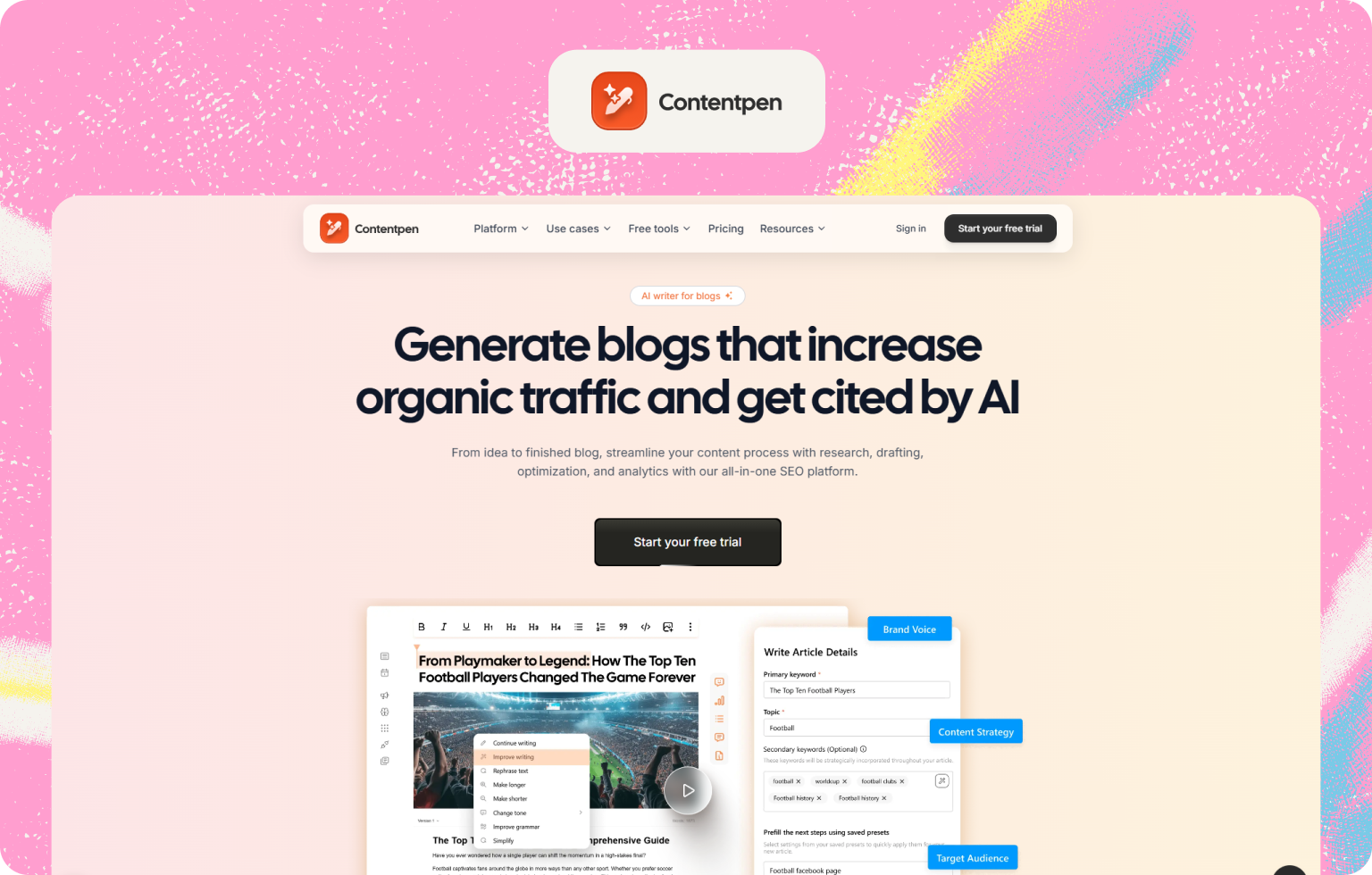
Contentpen is an AI platform for blog content workflows, designed to help you increase organic search traffic.
Best for
Solo marketers and small teams where SEO is one of your primary inbound marketing channels.
What it does well
Contentpen removes the guesswork from blog operations. You can see which content needs optimizing first, what’s scheduled, and easily understand why certain pieces aren’t performing.
Key features
- Content opportunity detection flags quick wins and decaying across your existing posts
- Built-in media library generates contextual images and alt text inside the editor
- One-click publishing to WordPress, Ghost, Shopify, and other CMS platforms
Watch-outs
Though Contentpen promotes both GEO and AI visibility, its AI visibility measurement is more limited than specialized platforms. If showing up in AI search analytics is your top priority, a dedicated GEO tool may serve you better.
Pricing
- Starter: $39/mo
- Premium: $79/mo
- Agency: $199/mo
10. AirOps
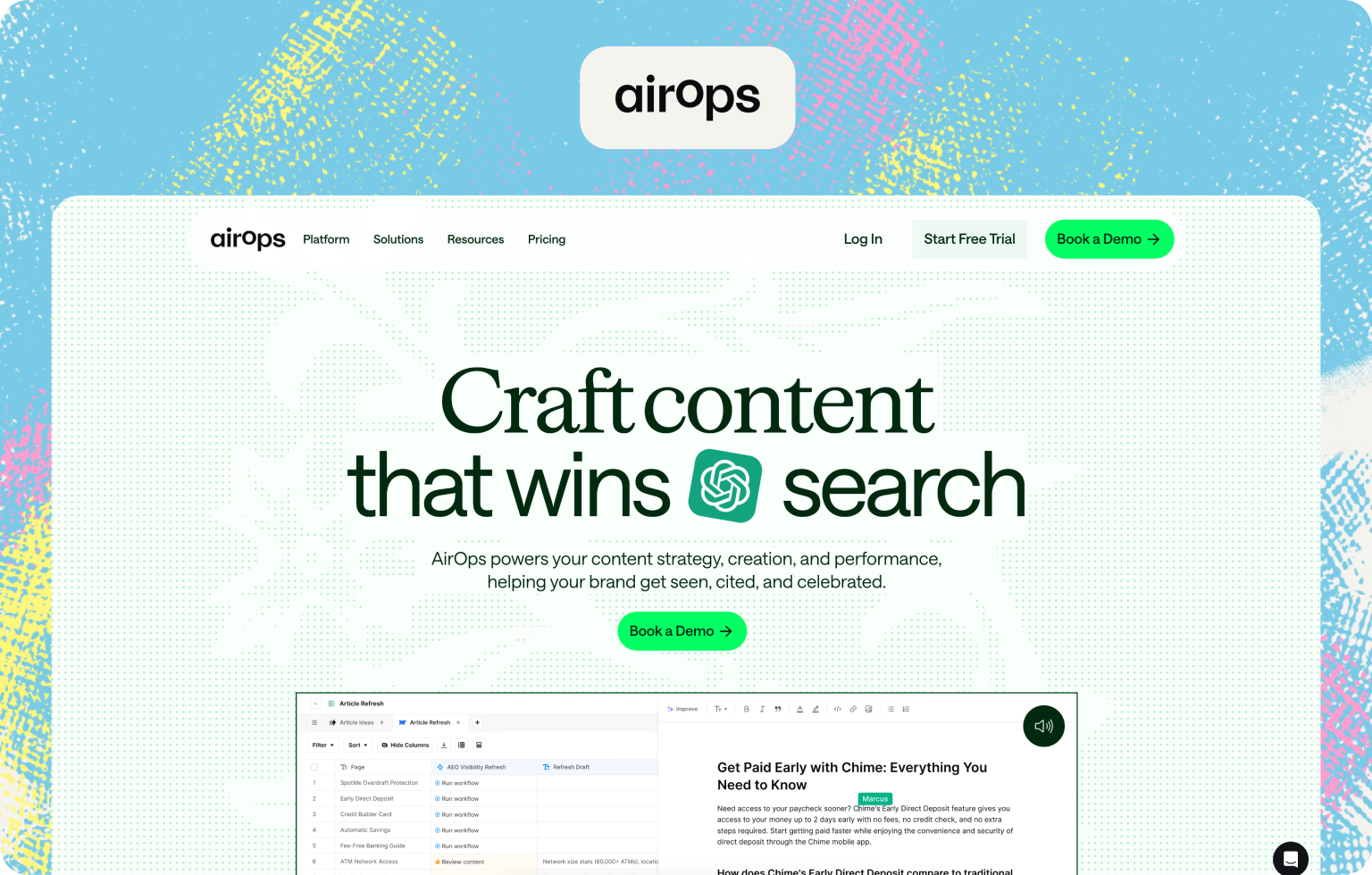
AirOps is a content engineering platform where you can use custom or pre-defined workflows to get seen and cited in AI search.
Best for
Content marketers and strategists who don’t want to be forced into a rigid content production system and have the technical appetite to get the most out of it.
What it does well
AirOps treats you as the brain of the operation rather than a button-pusher. The output always reflects your expertise and content strategy rather than using generic templates.
Key features
- Grids let you run multiple content workflows in one view, with stages for human review so you stay in control
- Knowledge Bases feed your product context and first-party data into every workflow for brand consistency
- Integrations connect your full stack, including your CMS, SEO tools, project management and 40+ AI models
Watch-outs
AirOps pricing is steeper than other competitors’ on the list. Some of its features may be too complex for smaller teams just looking to replace Writesonic.
Pricing
- Solo: $200/mo
- Pro: $2000/mo
- Enterprise: Custom
11. Article Forge

Article Forge is a fully automated AI article writer with a straightforward interface. You enter a keyword and target length and get a complete article in under sixty seconds.
Best for
Teams who need to produce high volumes of SEO content quickly and at low cost, without a writer in the loop.
What it does well
Article Forge is one of the few AI tools that genuinely automates the entire process for content creation from a single keyword input, without separate stages for research and briefing.
Key features
- Real-time topic research means articles can cover current events and breaking topics
- Bulk generator and API access for high-volume automated content pipelines
- Automatic WordPress posting schedules and publishes content without manual uploads
Watch-outs
Even though Article Forge is trained on data, it’s built for volume, not depth. If your content needs to demonstrate expertise, a unique brand voice or writing style, you’ll likely need to make significant edits.
Pricing
- From $27/mo: Includes 25,000 words/mo and one user
- Business: Custom
12. Anyword
Anyword is an AI writing platform that covers blog content, ads, email, and social, to improve the performance of AI-generated content.
Best for
Marketing teams who want to train their AI writing tool on their own best-performing content rather than relying on generic outputs.
What it does well
Anyword scores your headlines and intro paragraphs with a Predictive Performance Score before you publish. You can see which angle is likely to land rather than going off gut instinct.
Key features
- Blog Wizard's Research Panel pulls facts, statistics, and reader questions directly into your draft without leaving the editor
- Plagiarism-free content checker scans every piece against the web before publishing
- Talking Points pulls your best-performing messaging from past marketing campaigns to inform your content
Watch-outs
Anyword's performance prediction is strongest for short-form copy and paid marketing channels where there’s loads of A/B data to pull from. For long-form SEO content, the scoring adds less value.
Pricing
- Starter: $49/mo
- Data-driven: $99/mo
- Business: Custom
- Enterprise: Custom
13. Juma
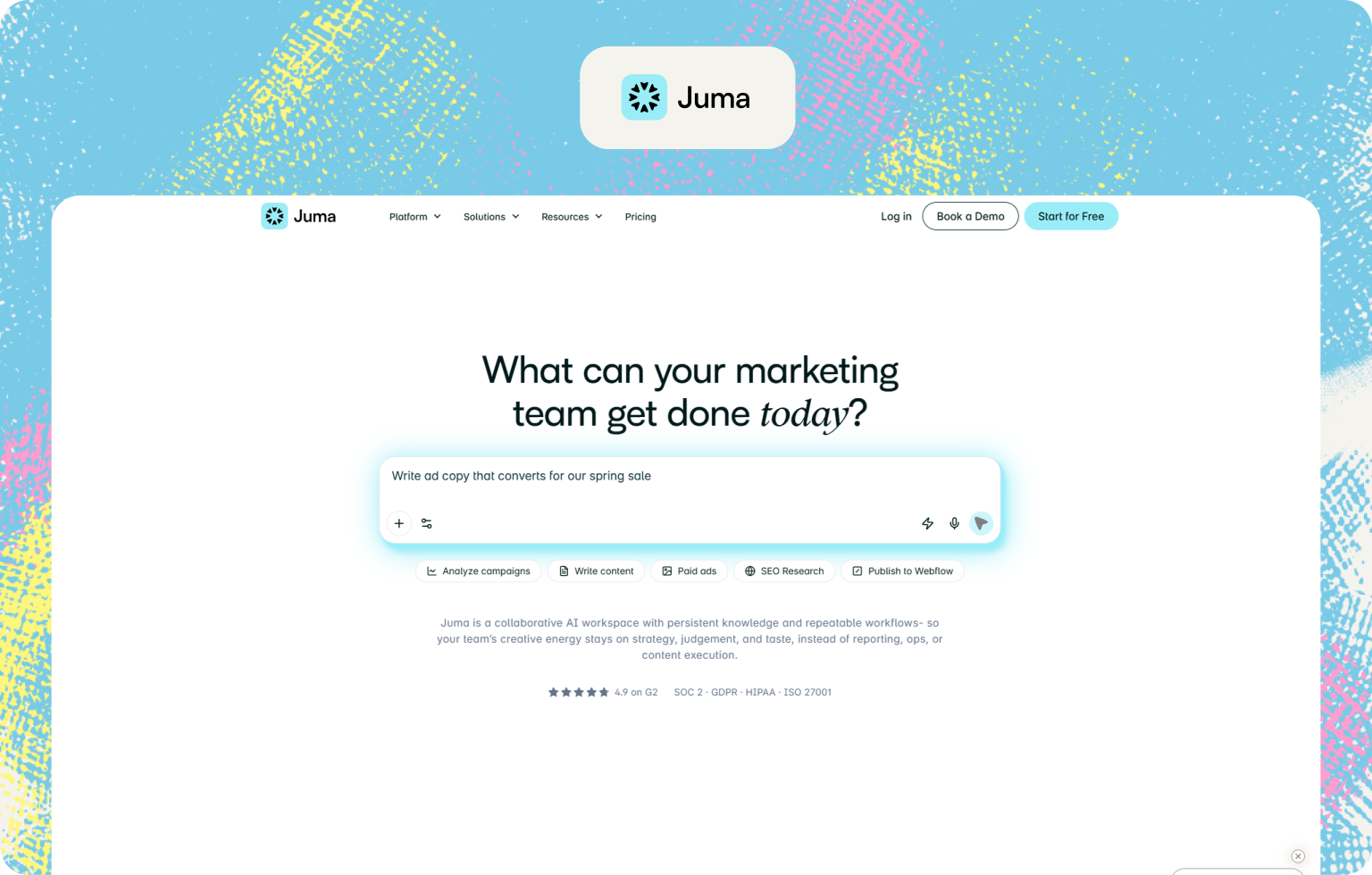
Juma (formerly Team-GPT) is an AI marketing workspace that executes complete AI content workflows with a collaborative editor built for teams.
Best for
Marketing teams who want pre-built SEO workflows they can run without building prompts from scratch every time.
What it does well
Juma’s split view means you can run a chat and edit a document simultaneously on the same screen. It removes the back-and-forth between a writing tool and an AI assistant that slows most content workflows down.
Key features
- Model-agnostic, so you can choose from ChatGPT, Claude, Gemini, and more per task
- AI content automation allows you to draft blog articles from scratch
- Integrations with Google Drive, Notion, and HubSpot pull existing content directly into workflows
Watch-outs
Juma is a broad marketing workspace rather than a dedicated SEO content tool. If deep on-page optimization or AI search visibility are priorities, more specialized tools on this list will go further.
Pricing
- Free: 300 credits/mo
- Pro Starter: $49/mo (5,000 credits)
Pricing math that helps you switch (credits versus seats versus usage)
Most Writesonic alternatives price in one of three ways: credits, seats, or usage tiers. Here are some things to watch out for depending on your setup.
Why Omnia is the best fit for scaleups combining AI writing with GEO
Every team can crank out AI-written content now. That’s not the moat. The moat is knowing whether you show up in AI answers and having a clear plan to fix it when you don’t.
Omnia is built for startup/scaleup teams who need three things answered fast:
- Do we appear in AI answers today (and does it change by country/engine)?
- Who’s being cited instead of us (down to the exact URL)?
- What should we do next that will actually move visibility?
Most AI visibility tools stop at #1 and give you charts that don’t change anything. Omnia connects all three by tracking citations at the URL level, benchmarking you against competitors daily, and turning that into a prioritized execution plan you can run this week.
Omnia isn’t another AI writing tool. You already have a content workflow. Omnia is the measurement and action layer that tells you what AI engines trust, where they’re pulling from, and what to publish (and where) to earn more citations.
If you’re done guessing and want AI search to become a real acquisition channel, start a free trial on Omnia’s growth plan or book a demo today. You can also receive a free AEO report within 3 to 5 minutes with Omnia’s free AI visibility checker.
FAQs
What’s the best Writesonic alternative for long-form blog content?
If your goal with creating long-form content is to show up in AI answers rather than just publish more, Omnia paired with a human writer or your own AI writer workflow gives you something most popular AI writing tools can't. You get briefs built from real citation data and content in your brand voice that can't be replicated by everyone else. If you need to generate lots of articles at volume with unlimited content generation, Jasper and Copy.ai are the strongest alternatives to Writesonic for maintaining brand voice consistency across high output.
Is there a Writesonic alternative free option that’s actually usable for marketing teams?
You can potentially find a Writesonic AI free option or a free plan on several AI writers, but it will be extremely limited. The trade-off with all of them is depth and inconsistent content quality for SEO optimized content. None will produce long-form content that's research-backed and expert-level without significant human input. Rytr offers a free plan, which works for basic copy, but won't handle serious long-form blog posts.
What’s the best Writesonic cheaper alternative if I just need basic copy?
Rytr at $9/mo is the most affordable AI writer option for short-form content. Wordtune is comparable in price and better if you're editing existing copy. If you need long-form blog posts too, Contentpen starts at $39/mo and covers complete blog post production end-to-end with SEO optimization built in.
How do I know if my AI-generated content is showing up in ChatGPT or Perplexity?
The only reliable method is prompt tracking, which involves running a set of relevant queries across AI engines and recording whether your brand or content appears in the answers. Doing this manually at any scale is impossible. The solution is a purpose-built generative engine optimization tool like Omnia that runs prompts automatically across different countries and captures citations at URL level. This shows you whether your SEO optimized content created by AI writers is actually getting surfaced to your target audience.
Are there Writesonic AI search optimization alternatives that help with citations?
There are two distinct things here worth separating. Classic SEO optimization tools like Surfer and Frase help you structure AI-generated content with strong SEO capabilities so it's more likely to be cited. Generative engine optimization platforms like Omnia measure whether you're being cited in AI answers, identify which sources are getting cited instead of you, and tell you how to earn those citations. For teams serious about AI search visibility, combining an AI writer for content creation with a GEO platform for visibility tracking gives you the full stack.
Does country matter for AI answers (and should my team track by USA vs other markets)?
Yes, significantly. The same prompt can return completely different answers in ChatGPT depending on whether it's run in the US, UK, or Germany. For most teams, the practical starting point is 20 to 50 prompts per market. Unlike some other AI writer tools only running in the US, Omnia runs prompts from browsers in different locations. The visibility data reflects what your target audience in each market really sees rather than a simulated average.


.png)