Omnia vs MarketMuse
MarketMuse is a proven content planning tool for traditional SEO - it helps you decide what to write and how to structure it for Google rankings. But AI engines are pulling answers from a different layer of the web, and MarketMuse doesn't address that channel. If your traffic is shifting from blue links to AI-generated answers and you need to act on what's happening there, keep reading.

Trusted by teams building AI visibility across Europe






Both track AI visibility. The difference is how often, how deep, and what you get when the data comes back.

(Claude, Gemini, & CoPilot available as add-ons.)

Seven engines tracked daily, in every country your buyers are searching from
Omnia covers extensively four engines where buying decisions are made. Real browser sessions. Actual geographic locations. Citation data down to the URL. And an action layer that converts every gap into something your team can ship.
Your competitor is being cited instead of you. Omnia shows you the exact URL that's winning the slot — and what to publish to take it back.
Tracking tools show you a score. Omnia shows you the source. Every citation tracked to URL level, classified by page type, owned, third-party, or social. Then it reverse-engineers the pattern into a content brief, a placement target, and a task list your team can execute this week.
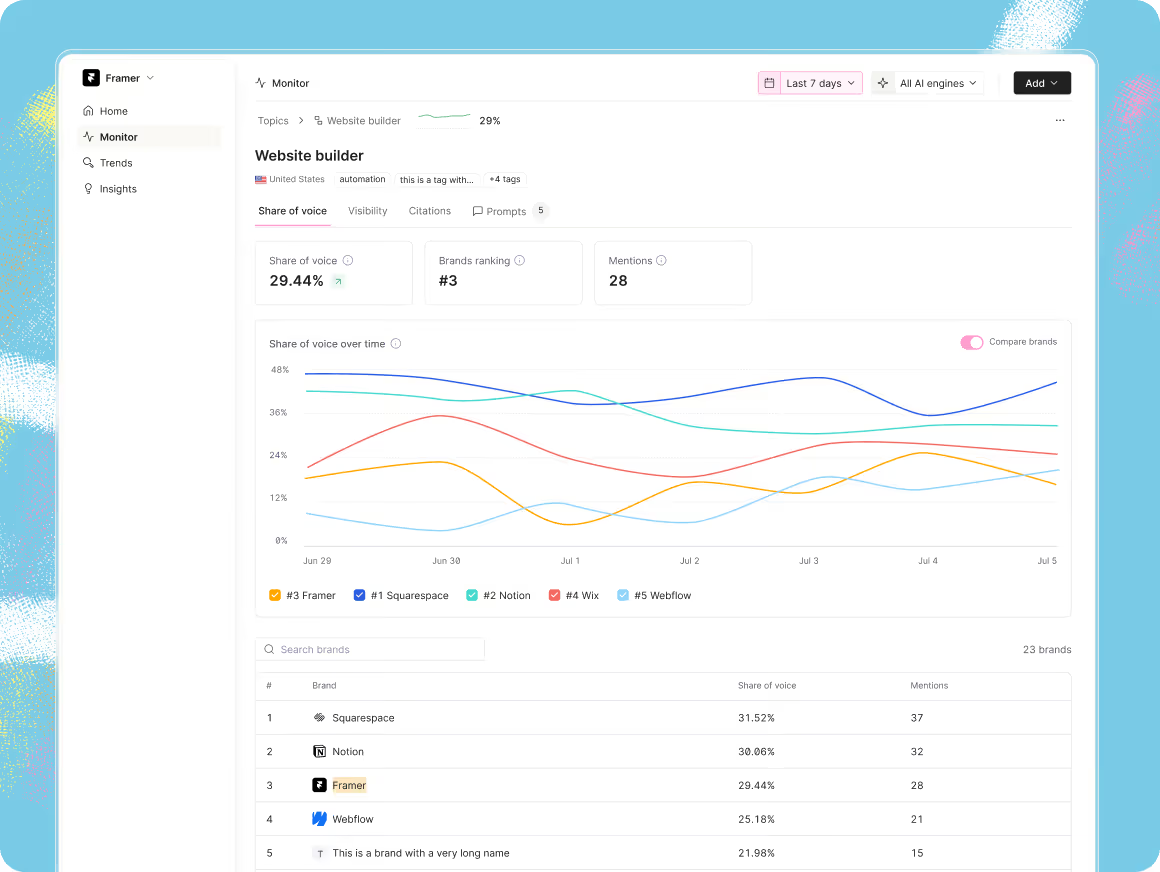

Daily monitoring with real-time alerts
Citations shift when new content is indexed, when competitors publish, and when models update. Omnia captures those changes that same day.

Execution roadmap, not a dashboard
Content briefs, outreach targets, and week-by-week task lists built from citation data so your team can plan and execute quickly.

Citation intelligence to URL level
Every source AI engines reference is tracked to the exact URL — yours, a competitor's, or a third-party domain you should be targeting for placements.
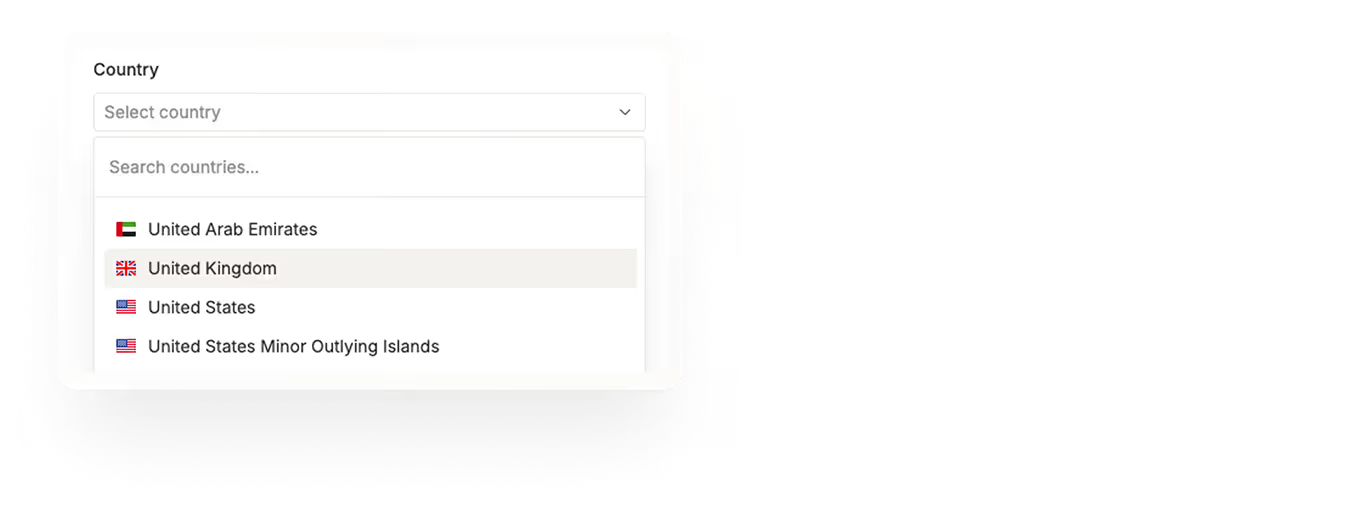
Real browser execution by country
Every query runs through a real browser session in an actual geographic location. The same prompt from New York and Madrid returns different recommendations. With Omnia, you can capture both.
Both tools solve real problems - they just operate in different channels. MarketMuse helps you plan content for traditional search rankings. Omnia helps you track and improve how AI engines represent your brand. The deciding factor is which channel matters more to your growth right now.
Choose Omnia if:

Read their stories
Choose {brand-name} if:



Omnia turns AI engine answers into an execution plan - across four engines
Traditional SEO tools track how Google ranks your pages. Omnia captures how four AI engines answer questions in your category and converts those answers into content actions. Each engine uses its own retrieval logic, citation sources, and ranking signals, so data from four engines reveals consistent patterns that a single engine cannot.



10x your AI visibility without being a GEO expert
Frequently Asked Questions
Not exactly. They address different channels. MarketMuse helps you plan content for traditional Google rankings. Omnia shows how AI engines cite and mention your brand - and gives you a prioritized roadmap to act on what it finds. Many teams use a content planning tool alongside an AI visibility tool - they solve different problems.
No. MarketMuse is built around topic modeling and content scoring for Google's traditional search results. It does not monitor ChatGPT, Perplexity, Google AI Overviews, or Google AI Mode.
Omnia's focus is different. Rather than scoring your drafts against a topic model, Omnia identifies which AI visibility gaps exist and gives you a prioritized execution roadmap to close them. It tells you what content to create or improve based on how AI engines are currently answering questions in your space.
Omnia starts at €79/mo with four AI engines included - ChatGPT, Perplexity, Google AI Overviews, and Google AI Mode. MarketMuse's Optimize plan is reported at approximately $99/mo for one user with limited content brief quotas. MarketMuse's higher tiers require contacting sales.
That's a common setup. You can use MarketMuse (or any content optimization tool) for editorial planning and Google rankings, and use Omnia to track how AI engines cite your content, measure your share of voice against competitors, and act on the gaps it finds.
Yes. Omnia supports multi-country, multi-language execution. You can track AI visibility across different geographic markets from a single account. MarketMuse supports English and Spanish only.