Omnia vs Semrush
Semrush is a comprehensive SEO suite that now includes AI visibility dashboards. Omnia is purpose-built for AI engine optimization - it tracks your visibility across ChatGPT, Perplexity, and Google AI Overviews, then generates the content plan to improve it. If your team needs to act on AI visibility data, not just read it, that's the difference that matters.
Trusted by teams building AI visibility across Europe






Both track AI visibility. The difference is how often, how deep, and what you get when the data comes back.

(Claude, Gemini, & CoPilot available as add-ons.)

Seven engines tracked daily, in every country your buyers are searching from
Omnia covers extensively four engines where buying decisions are made. Real browser sessions. Actual geographic locations. Citation data down to the URL. And an action layer that converts every gap into something your team can ship.
Your competitor is being cited instead of you. Omnia shows you the exact URL that's winning the slot — and what to publish to take it back.
Tracking tools show you a score. Omnia shows you the source. Every citation tracked to URL level, classified by page type, owned, third-party, or social. Then it reverse-engineers the pattern into a content brief, a placement target, and a task list your team can execute this week.
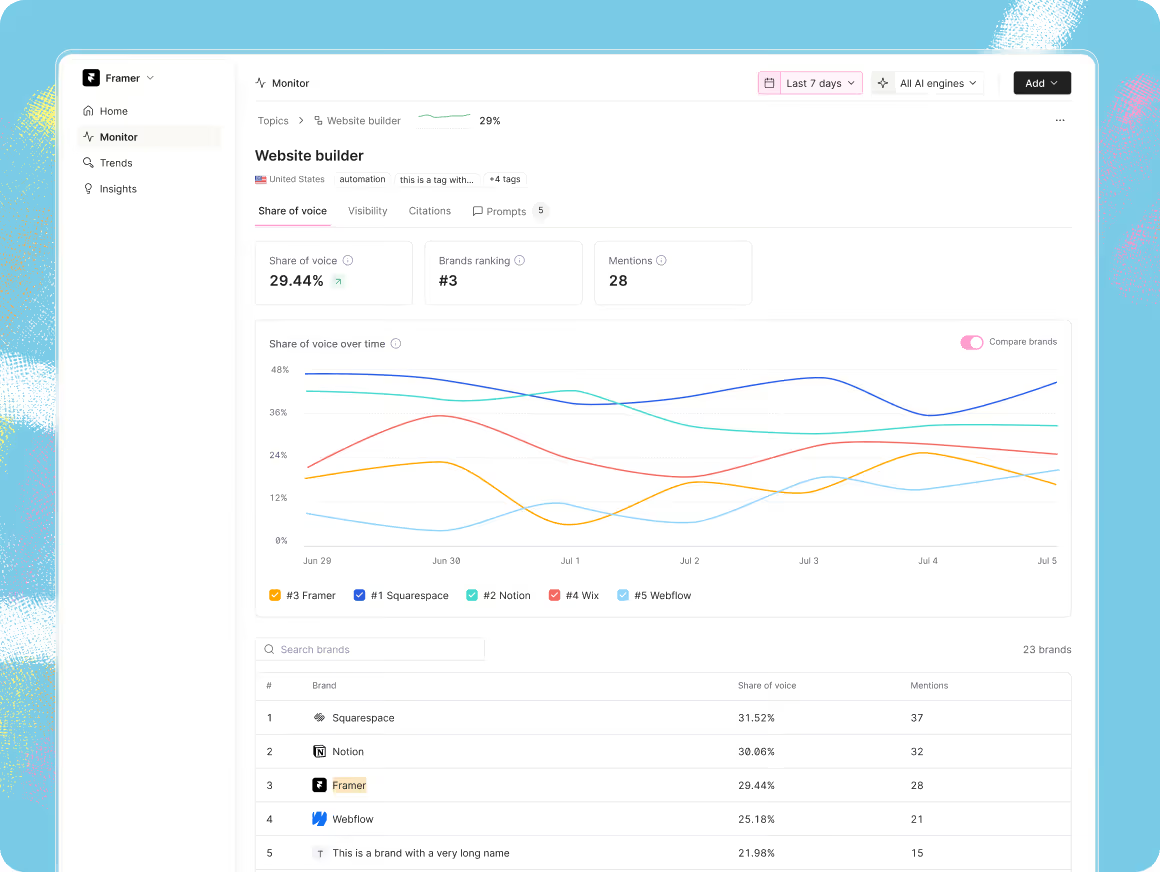

Daily monitoring with real-time alerts
Citations shift when new content is indexed, when competitors publish, and when models update. Omnia captures those changes that same day.

Execution roadmap, not a dashboard
Content briefs, outreach targets, and week-by-week task lists built from citation data so your team can plan and execute quickly.

Citation intelligence to URL level
Every source AI engines reference is tracked to the exact URL — yours, a competitor's, or a third-party domain you should be targeting for placements.
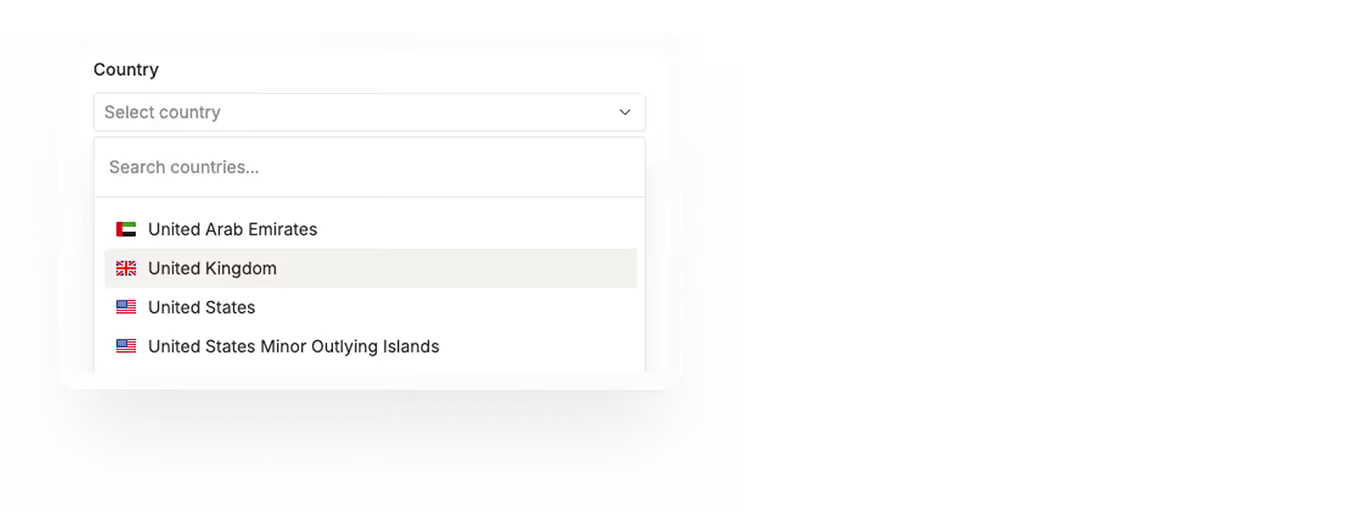
Real browser execution by country
Every query runs through a real browser session in an actual geographic location. The same prompt from New York and Madrid returns different recommendations. With Omnia, you can capture both.
Both tools track how your brand appears in AI-generated answers. The difference is what happens after you see the data.
Choose Omnia if:

Read their stories
Choose {brand-name} if:



Semrush covers more engines on paper, but not at the price you'd expect
Semrush includes ChatGPT, Google AI Overviews, Google AI Mode, and Gemini in its standard plans, with full LLM coverage (Claude, Grok) reserved for Enterprise. Omnia gives you four engines where high-intent AI search is already happening - ChatGPT, Perplexity, Google AI Overviews, and Google AI Mode - in every plan starting at €79/mo including the possibility of adding Claude, CoPilot, and Gemini as add-ons. And every prompt runs in a real browser session, not an API simulation, so the results reflect what your customers actually see.



10x your AI visibility without being a GEO expert
Frequently Asked Questions
Semrush includes Gemini in its standard plans, which Omnia offers as an add-on. Full LLM coverage (Claude, Grok) requires Semrush's Enterprise tier. Omnia's base plan covers ChatGPT, Perplexity, Google AI Overviews, and Google AI Mode - the engines where your audience is already asking questions about your category.
You can. It will show you where your brand appears in AI answers. What it won't do is tell you what content to create, which prompts to target, or push suggestions into your workflow. If monitoring alone is enough, the add-on works. If you need to act on the data, Omnia fills that gap.
No. Omnia is purpose-built for AI engine optimization. It does not include keyword research, backlink analysis, PPC tools, or site audits. If you need those, keep Semrush. Omnia replaces the need to bolt AI visibility onto a tool that wasn't designed for it.
Omnia starts at €79/mo with four engines, daily tracking, content suggestions, and an execution roadmap included. Semrush's AI Visibility Toolkit starts at $99/mo for one domain with 25 custom prompts. Adding a second domain costs $99/mo. Adding a second user costs $99/mo. Adding 50 more prompts costs $60/mo. The costs scale differently.
Yes. Both Omnia and Semrush offer MCP connectors. The difference is what flows through them. Omnia's MCP connector delivers content suggestions and execution data. Semrush's connects your AI visibility dashboards to other tools - useful for reporting, but it doesn't add an action layer.
Yes. Many teams keep Semrush for traditional SEO - keyword tracking, backlinks, site audits, and competitive PPC analysis - and use Omnia specifically for AI visibility execution. The tools solve different problems and don't overlap much.