AI Search Visibility
How We Fixed Our Own AEO in a Single Day by Leaving Webflow for Astro

 Miguel FernándezFounder & CTOatOmnia
 Daniel EspejoFounder & CEOatOmnia
TL;DR
Only 8–15% of brands that rank well on Google also appear in AI-generated answers, meaning traditional SEO is no longer sufficient for discovery. Acting now, before AI adoption reaches mainstream levels, gives brands a compounding head start. This post outlines a three-step framework to get started.
Not long ago, the rules for online visibility were simple: if you weren’t on Google’s first page, you didn’t exist.
Today, those rules are gone. Search is no longer a list of blue links. GPT-5, Gemini, Claude, and other AI-powered search engines now respond with answers, not links. And those answers are built by combining from dozens to hundreds of sources into a single, conversational reply.
This changes everything.
In this new reality, visibility isn’t about ranking. It’s about being cited.
When a generative search engine answers a user’s question, it’s essentially playing the role of a journalist:
It collects information from multiple sources.
It decides which ones are trustworthy and relevant.
It synthesises that information into a final, coherent response.
If your brand isn’t present in those trusted sources, it won’t make it to the answer, no matter how good your website looks or how much you’ve invested in SEO.
Even more challenging: the sources that matter for AI aren’t always the same as the ones that matter for Google. Recent research shows the overlap between what ranks on Google and what appears in ChatGPT’s answers can be surprisingly low, often between 8% and 15%.
Traditional SEO focuses on optimising your own site and building a handful of backlinks.
But in an AI-driven search environment, the “search result” is a synthetic answer where:
The source list is invisible to the user.
Positioning is determined by authority and relevance across the entire information ecosystem.
The AI may pull from content it has ingested in the past, without visiting your site at all.
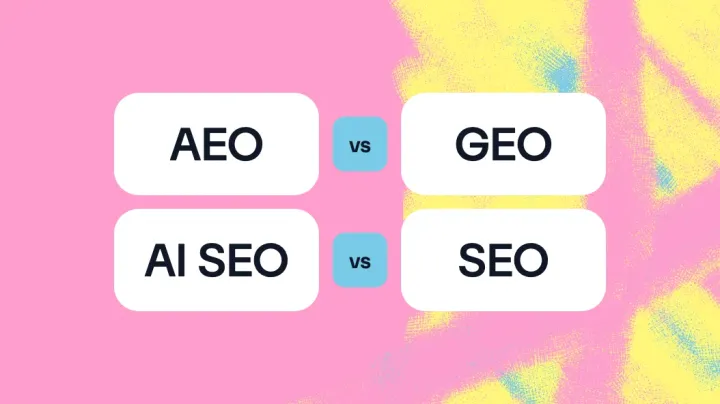
That’s why Answer Engine Optimization (AEO) (the art of being cited in AI-generated answers) is fast becoming the new competitive advantage.
To see this in action, we decided to run an experiment, not with a brand, but with a personal trip.
With just a few days off and no time to plan, we asked AI to create a complete itinerary for me.
My instructions were simple:
3 days outside Spain
No car
Find flights, hotels, and restaurants
After a quick clarification to my prompt (yes, even prompts need fine-tuning), the AI delivered in 37 seconds: Rome.
The plan included:
Flights: Direct Madrid–Rome (Fiumicino) round trip with Wizz Air Malta.
Hotels: Chapter Roma (modern, Trastevere), Nerva Boutique (Monti, next to the Colosseum), G-Rough (historic, Piazza Navona).
Food: Roscioli (carbonara), Felice a Testaccio (cacio e pepe), Da Enzo al 29 (Trastevere classic), Pizzarium Bonci (pizza al taglio), Trapizzino (stuffed pizza pockets).
At first, it seemed like magic: an itinerary that felt personal and spot-on, delivered in seconds. But the real value came when we used Omnia to trace exactly why those recommendations appeared, and to see which brands made it to the answer, which didn’t, and where the AI was pulling its data from.
This is the kind of visibility mapping that’s impossible to do manually. Omnia showed us the citations, the competitive context, and the distribution of mentions across sources.
The AI’s choices fell into two clear categories:
Expert sources — Michelin, Gambero Rosso, The New Yorker, respected local guides…
Public opinion — TripAdvisor, Google Maps, Yelp, influential food blogs, Reddit communities…
This insight was only possible because we could audit the AI’s “knowledge graph” with Omnia, seeing not just what it answered, but why.
In other words:
If you want to be part of AI’s answer, you need to appear where it’s looking. And you need to appear in ways that are:
Accurate: correct, up-to-date details.
Consistent: the same facts across platforms.
Credible: supported by trusted third-party mentions.
That’s the core of being AI-citable.
You might think this problem only affects small brands.
But It doesn’t.
We ran a similar test with Lush, the global cosmetics giant.
Here’s what happened:
In one query (“best bath products from sustainable brands?”), Lush didn’t appear at all.
In another (“best bath and body gifts for my friend?”), it appeared, but two competitors ranked higher in the AI’s response.
The takeaway is clearly uncomfortable: Generative AI doesn’t care how famous you are in the real world.
If you’re not in the trusted sources it uses for that topic, you’re invisible in its answers, even if millions of people know your brand.
For big brands, this means your offline awareness might create a false sense of security. You could be dominating paid campaigns and organic rankings, yet losing the AI conversation entirely.
Even if you’re visible in one country, you might be invisible in another.
Generative engines adapt their answers based on:
User location: tailoring recommendations to the local market.
Cultural references: citing brands, products, and terms familiar to that audience.
Local competition: replacing global names with strong local players.
The same prompt can produce very different answers in Madrid, Berlin, or Paris.
We’ve seen agencies that dominate visibility in Spain vanish completely in UK results for identical queries. Or sneaker brands that own Italy but barely appear in France.
The implication is clear: AI visibility strategies must be localised, not just translated. AEO has to account for the search language, the cultural context, and the competitive set in each market.
Right now, 10–25% of consumers use AI as a primary tool for planning travel, finding products, or researching purchases (McKinsey 2024, PwC Future of Search report).
But projections show 70–90% adoption in the next 3–5 years.
This is the window:
Today: Low competition, easier to claim top AI citations.
Soon: Saturation, with every brand chasing AI visibility.
Later: The cost and difficulty of breaking in skyrockets.
Early movers will lock in an advantage that compounds over time, because generative engines tend to reuse previously trusted sources, meaning the brands cited now are more likely to be cited later.
This framework comes from running dozens of AI visibility tests with Omnia and real brands across industries:
Discover what users really ask AI
Identify the prompts where you want to appear. Knowing the exact questions people ask AI about your sector lets you focus on the searches that matter most to your brand.
Analyse how you’re mentioned
Check if AI recommends you, references you, or just mentions you in passing, and compare your presence to competitors.
Act on the insights
Use the data to target high-value, low-competition prompts, building both visibility and trust where it counts.
These steps are the way Omnia maps AI search behaviour, understands how your brand is perceived, and turns that insight into visibility growth.
In AI-driven search, you don’t get ten blue links worth of chances. You get one answer.
If you’re not in it, you don’t exist. And the brands that will dominate tomorrow’s AI answers are already working on their visibility today.
The good news? The window is still open.
You can audit, adjust, and claim your space before the competition makes it harder.
The question is no longer “How do I rank on Google?”
It’s “What would AI say about me right now, and is that the answer I want?”
Omnia offers a 14-day free trial on the Growth plan.
No credit card required. See exactly where your brand shows up (or doesn't) across AI engines, then let the platform's recommendations guide your next move.
Written By
 Daniel EspejoFounder & CEOatOmniaMiguel FernándezFounder & CTOatOmnia
 Jose Luis García del RíoGrowthatOmnia
 Jose Luis García del RíoGrowthatOmnia
 Miguel FernándezFounder & CTOatOmnia
 Jose Luis García del RíoGrowthatOmnia
No credit card required · Free for 14 days · See your AI visibility within 3 minutes