AI Search Visibility
Best Answer Engine Optimization Tools (AEO) for 2026

 Jose Luis García del RíoGrowthatOmniaJose Luis García del RíoGrowthatOmnia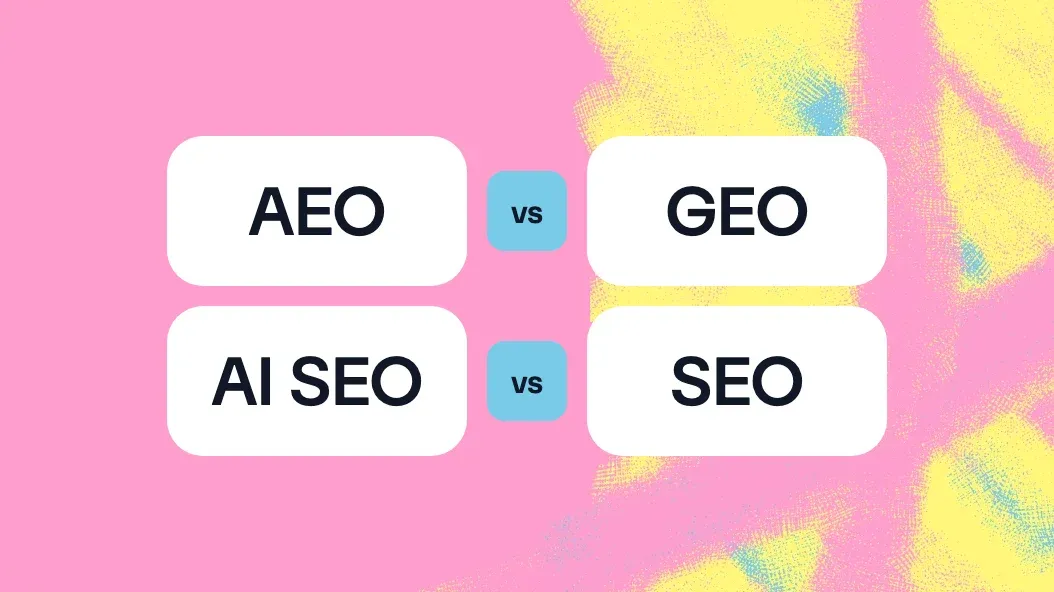
TL;DR
AEO (answer engine optimization), GEO (generative engine optimization) and AI SEO are three names for the same practice today: getting your brand mentioned and cited inside AI-generated answers on ChatGPT, Perplexity, Google AI Overviews and AI Mode. AEO is the oldest label, born in the featured-snippet and voice-search era; GEO was coined in 2023 for engines that write new answers; AI SEO is the name SEO teams use for the same work. SEO is not a fourth alternative: it is the foundation all three sit on, because AI engines can only cite pages they can crawl, index and trust.
Every few months the industry gets a new acronym for getting found in AI answers. First it was AEO, then GEO, and now "AI SEO" and even LLMO show up in job posts and agency pitches. Each new label sounds like one more discipline your team is behind on, and each comparison article seems to draw the lines differently.
The good news: the lines are simpler than the vocabulary suggests. Three of these terms describe the same work today, and the fourth is the ground that work stands on. This guide gives you a one-line definition of each, where each name came from, how they compare side by side, and which one to use.
If you only remember one thing: AEO, GEO and AI SEO are three names for one practice, and SEO is the foundation underneath it.
The terms differ less in what they mean today than in when they were coined, and that history explains most of the confusion.
SEO dates back to the late 1990s, when search engines started ranking pages and businesses started competing for those rankings. Its unit of success has always been a position on a results page and the click that follows.
AEO appeared in the late 2010s, when Google's featured snippets, "People also ask" boxes and voice assistants started answering questions without a click. Winning "position zero" meant getting your text pulled into that single direct answer. The answers were excerpts of existing pages, so AEO was mostly about formatting: concise definitions, question-shaped headings, lists and tables an engine could lift.
GEO was named in a 2023 research paper from Princeton and collaborators, written when large language models started generating answers instead of excerpting them. A generative engine reads several sources, writes a new answer and cites a few of them. GEO studies what makes a source more likely to be used and cited in that synthesized answer.
AI SEO (and its cousin LLMO, large language model optimization) came from practitioners rather than researchers. SEO teams that took on AI search kept the name they already had and added "AI" to it.
Then the answer engines became generative. ChatGPT, Perplexity and Google AI Overviews are answer engines and generative engines at the same time, so the AEO work and the GEO work collapsed into the same job.
| Dimension | SEO | AEO | GEO | AI SEO |
|---|---|---|---|---|
| Full name | Search engine optimization | Answer engine optimization | Generative engine optimization | SEO for AI search |
| Coined | Late 1990s | Late 2010s | 2023 | 2020s, by practitioners |
| Original target | Ranked list of links | One direct answer (featured snippets, voice assistants) | Answers that AI engines write from several sources | AI answers, from an SEO team's point of view |
| Where it shows up today | Google and Bing results pages | ChatGPT, Perplexity, AI Overviews, AI Mode, voice | ChatGPT, Perplexity, AI Overviews, AI Mode, Gemini, Copilot | Same as AEO |
| Unit of success | Ranking position and click | Being the answer | Being mentioned and cited in the answer | Being mentioned and cited in the answer |
| Main metrics | Rankings, organic traffic, CTR | Visibility, citations, share of voice | Visibility, citations, share of voice | Visibility, citations, share of voice |
| Relationship today | The foundation the other three need | Same practice as GEO | Same practice as AEO | Another name for AEO/GEO |
Historically, scope. AEO aimed at a single extracted answer: one snippet, one voice response, one winner. GEO aimed at synthesized answers, where an engine blends several sources and you can win a mention without being the only source. That is why some tool comparisons still describe AEO as the "narrower" discipline.
In practice, that difference is gone. When someone asks ChatGPT for the best CRM for a 20-person startup, the answer is generated, it names several brands and it cites a handful of sources. Optimizing for that answer is AEO and GEO at once. Teams debating whether to "do AEO or GEO" are arguing about vocabulary, not strategy. Our AEO guide covers the term on its own; GEO has its own guide too.
SEO wins a position in a list and counts on the click. AEO wins a place inside the answer, whether or not anyone clicks afterward. That changes what you measure: rankings and organic sessions on one side; mentions, citations and share of voice across AI engines on the other.
It does not change the foundation. AI engines find content through search indexes and their own crawlers, so a page that can't be crawled, indexed or trusted won't be cited either. AEO builds on SEO; it doesn't replace it.
The same split applies: SEO optimizes for ranked links, GEO for presence in generated answers. A page can rank first on Google and still be missing from ChatGPT's answer to the same question, and the reverse also happens. The two share infrastructure (crawlability, authority, useful content) but reward different things on top of it, such as citations on trusted third-party sites and answers an engine can extract cleanly.
Whether to invest in one, the other or both depends on your stage and your buyers. Our GEO vs SEO guide walks through that decision company stage by company stage.
When "AI SEO" means SEO for AI search, it is AEO under another name, and the AEO vs SEO comparison above applies. When it means SEO done with AI tools (AI-written briefs, AI keyword clustering, AI content), it is still traditional SEO, just produced faster. The two meanings are often mixed in the same article, so check which one a vendor or agency is selling before you compare offers. LLMO, large language model optimization, belongs to the first group: one more name for AEO.
Use one name for your own planning and reporting, and use it consistently. Then, in public content, name the others once so readers searching for any of them, and the AI engines summarizing your page, connect them. A first mention such as "answer engine optimization (AEO), also called generative engine optimization (GEO)" does the job.
Don't let the acronym decide the budget. The work behind every label is the same:
That last step is the one most teams skip. Omnia tracks how often ChatGPT, Perplexity, Google AI Overviews, AI Mode and other engines mention and cite your brand, and recommends what to fix. To see where you stand today, run a free AI ranking check.
Omnia offers a 14-day free trial on the Growth plan.
No credit card required. See exactly where your brand shows up (or doesn't) across AI engines, then let the platform's recommendations guide your next move.

In current practice, yes. Both describe optimizing content and brand signals so that AI engines such as ChatGPT, Perplexity, Google AI Overviews and AI Mode mention and cite you. The terms started with different scopes. AEO targeted the single direct answer of featured snippets and voice assistants, and GEO targeted engines that synthesize new answers from several sources. Once answer engines became generative, the two scopes merged.
Mostly. "AI SEO" usually means SEO for AI search, which is the same goal as AEO and GEO. The term is ambiguous, though, because some people use it for doing SEO with AI tools, such as AI-written content or AI keyword research. When you read "AI SEO", check which of the two it means.
No. AI engines retrieve pages through search indexes and crawlers, so crawlability, indexing, site structure and authority still decide whether your content can be found and trusted in the first place. AEO and GEO add a layer on top of that foundation, which is structuring content and earning third-party mentions so engines pick your brand for their answers.
Pick one for your own reporting and use it consistently, then mention the other once in public content so readers and AI engines connect them. Write the full name on first use, for example "answer engine optimization (AEO), also called generative engine optimization (GEO)". The work, the metrics and the tools are the same whichever acronym you pick.
Rankings and clicks are not enough, because many AI answers produce no click. Track how often AI engines mention your brand for the prompts your buyers ask (visibility), which of your pages they cite (citations), how your mentions compare with competitors (share of voice) and the sentiment of those mentions. AI visibility tools such as Omnia run those prompts across engines and report the results over time.
Written By
 Jose Luis García del RíoGrowthatOmniaJose Luis García del RíoGrowthatOmnia
 Jose Luis García del RíoGrowthatOmnia
 AndreiHead of GrowthatOmnia
 Jose Luis García del RíoGrowthatOmnia
 AndreiHead of GrowthatOmnia
No credit card required · Free for 14 days · See your AI visibility within 3 minutes