How PLEO Grew AI-Driven Traffic 10x in Six Months

About the Company
Industry: B2B fintech / expense management
Company size: ~1,000 employees
Description: PLEO is an all-in-one spend management platform that gives companies virtual and physical cards, automated invoice processing, and real-time expense visibility. As AI engines became a primary discovery channel for finance teams evaluating software, understanding how PLEO appeared in those answers became a direct line to pipeline.
The Challenge
For years, Google was PLEO's number-one source of organic traffic. The SEO strategy was working, the content engine was running, and the results were predictable. Then, over the course of 2024, something shifted: Google traffic started falling. Quietly at first, then unmistakably.
At the same time, the team noticed a different signal moving in the opposite direction. Traffic from ChatGPT and Perplexity was climbing month over month. The message was hard to ignore: buyers were no longer just searching only on Google. They were asking AI engines which expense management tool to use, and PLEO needed to know how it was showing up in those answers.
The problem was that PLEO had no reliable way to find out. Previous attempts to monitor AI visibility involved custom Python scripts and direct API calls, but as Alfredo, the SEO lead, quickly discovered, API responses behave very differently from the real experience a user gets when asking ChatGPT or Perplexity in a browser. The data was unreliable, the tooling broke constantly, and the insights were too thin to act on.
Without a clear view of AI visibility, the team faced a compounding risk. They didn't know how LLMs were describing PLEO. Were they positioning it as affordable, or as expensive? As a fit for mid-market companies, or only for enterprise? Meanwhile, well-funded competitors like Ramp and Revolut Business were actively investing in this space. Every week without clarity was a week those competitors could be owning the prompts that mattered most to PLEO's growth.
The Solution
PLEO adopted Omnia to bring structure and reliability to its AI visibility work.
The first step was building a prompt library. Rather than guessing which queries mattered, the SEO team extracted long-tail searches from Google Search Console and used regex patterns to identify questions that real users were already asking. This gave the team a grounded starting point: prompts rooted in actual search behaviour, not assumptions.

From there, the team set up ongoing tracking across the key prompts and categories relevant to PLEO's positioning, including expense management, virtual cards, accounting integrations, and spend policy compliance. Each week, the SEO team reviewed the dashboard to monitor Share of Voice, citation patterns, and visibility shifts, using that data directly in internal reports to the VP of Marketing.
One of the most valuable early discoveries came through the citations export. For the first time, the team could see exactly which external sources LLMs were pulling from when generating answers that mentioned PLEO. That visibility unlocked a clearer picture of how AI engines perceived the brand and where the narrative could be shaped.
On the content side, PLEO used structural insights to implement FAQ schema and structured data directly within their HubSpot-based blog, without relying on engineering support. Insights that previously required either manual experimentation or engineering tickets could now be acted on quickly by the SEO team alone.
The team also shared Omnia dashboards with the content team to shift how they thought about writing. Rather than optimising purely for editorial quality and sales enablement, writers began to understand how LLMs extract and surface content, and started incorporating that thinking into their work.

The Results
10x Growth in AI-Driven Traffic
PLEO went from roughly ~1,800 monthly visits from ChatGPT and Perplexity in April to nearly ~18,000 by January, a ten-fold increase in under ten months. The growth accelerated from August onwards, when the team adopted Omnia and made AI visibility a core part of its SEO strategy.
A New Competitive Signal
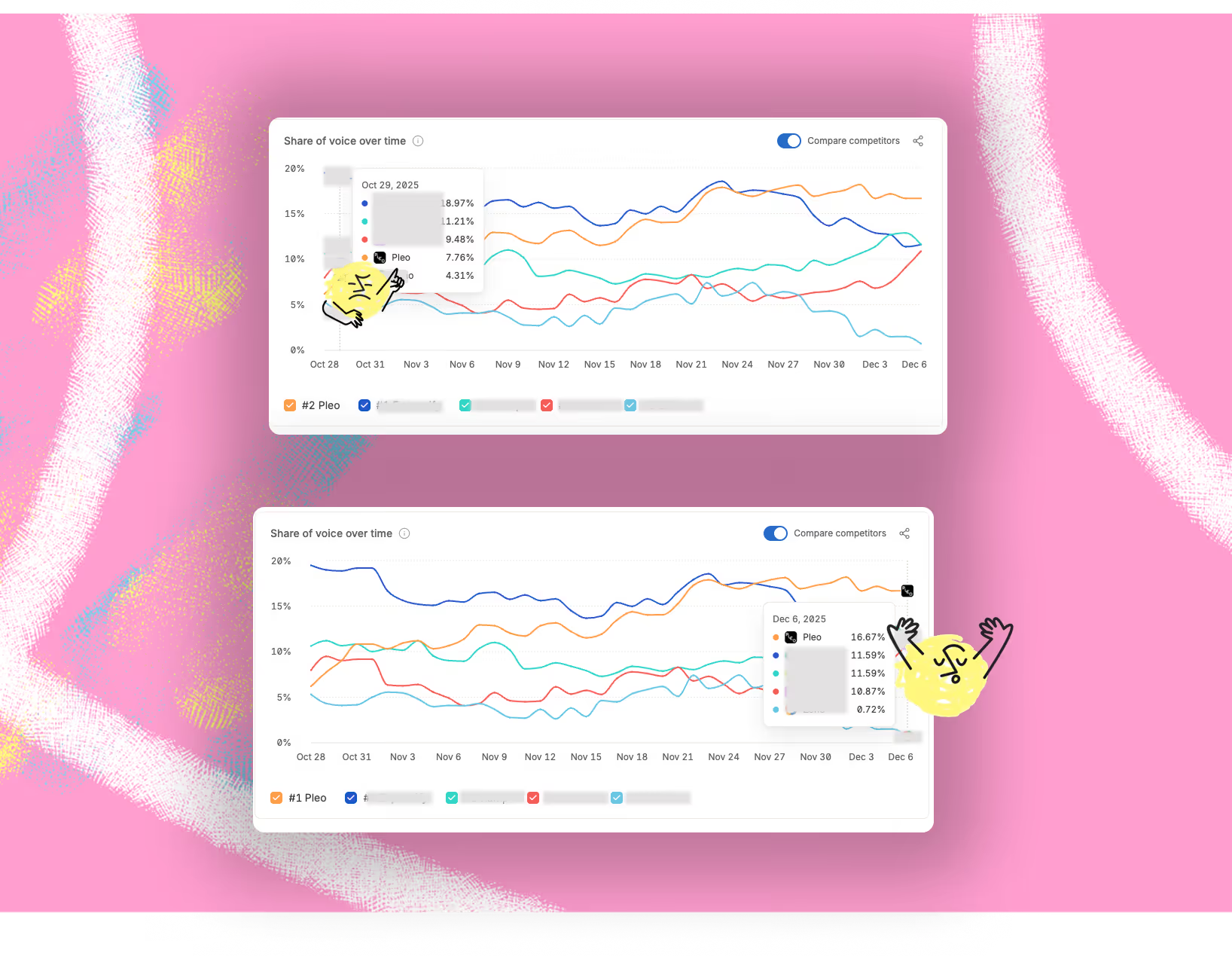
The team now tracks head-to-head visibility against Ramp, Revolut Business, and other key competitors across high-intent prompts. Winning a prompt that had been dominated by Revolut or Ramp is treated as a meaningful milestone, one worth sharing across the company.
Faster, More Reliable Reporting
Weekly AI visibility reporting to leadership went from a fragmented, manual process to a consistent, data-backed workflow. Omnia data now feeds directly into VP-level reporting, making AI search a measurable pillar of organic strategy.
Structural Improvements Without Engineering Dependency
Actionable insights around FAQ schema and structured data were implemented directly by the SEO team through HubSpot, removing a common bottleneck and accelerating time to impact.
Within six months of adopting a structured approach to AI visibility, PLEO turned an emerging blind spot into a measurable growth channel. Omnia became the system the team relies on to understand how AI engines describe PLEO, track competitive positioning in real time, and align content decisions with what actually drives AI-generated answers.
The Strategy
1. Grounding prompt selection in real search data
Rather than building a prompt list from scratch, PLEO extracted long-tail queries from Google Search Console using regex filters to identify the questions users were already asking. This anchored the monitoring work in genuine user intent and gave the team a defensible starting point for tracking the prompts that mattered most to the business.

2. Tracking traffic first, then diagnosing visibility
The team developed a workflow that starts with traffic data in Amplitude, filtering by UTM source to isolate sessions from ChatGPT, Perplexity, and other LLM platforms. When traffic dips or spikes, that's the trigger to investigate what changed in Omnia: Share of Voice, citation sources, or visibility on specific prompts. This top-down approach ensures effort goes where it has real business impact, not where it's just interesting.
3. Structured data as a low-effort, high-impact lever
PLEO's website runs on Prismic (with HubSpot for the blog), which means most structural changes require engineering involvement. The team found a practical workaround: using Omnia's recommendations to implement FAQ schema and structured data directly within HubSpot, without opening a single engineering ticket. For a lean SEO team, this made a meaningful difference in the speed of execution.
4. Bringing the content team into the AI visibility picture
One of the more durable changes was cultural. The SEO Lead walked the content team through the Omnia dashboards, showing them how PLEO was appearing inside AI-generated answers and which citation sources LLMs were drawing from. For a team trained to write for editorial quality and sales alignment, seeing the AI perspective directly changed how they approached structure, framing, and topical coverage.
Customer Quote

"The moment I exported all the citations, I finally understood where PLEO was showing up, how we were being described, and what we could change. Before that, we had no idea."
Alfredo, SEO Lead, PLEO
What's Next
PLEO's focus for the coming months is maintaining the weekly monitoring rhythm that has driven results so far, reviewing prompt performance, sharing findings with the agency that supports content optimisation, and continuing to act quickly on shifts in AI visibility. As AI-driven discovery becomes an increasingly significant part of the buying journey for finance teams, the team sees AI visibility not as an experiment but as a core component of organic growth strategy.
Ready to boost your brand visibility in AI? Start for free or get a demo.

Omnia offers a 14-day free trial on the Growth plan.
No credit card required. See exactly where your brand shows up (or doesn't) across AI engines, then let the platform's recommendations guide your next move.








.avif)
.avif)
.avif)
.avif)
