LLMs
How To Run an AEO (Also Known as GEO) Audit Step by Step in 2026

 AndreiHead of GrowthatOmnia
 Jose Luis García del RíoGrowthatOmnia
TL;DR
A Gemini visibility tracker shows whether your brand appears in Google Gemini's AI-generated responses, which sources it cites, and how your visibility changes across prompts and countries. Unlike traditional SEO tools, the best platforms track Gemini rankings, citations, competitor visibility, and localized results, then turn those insights into action. If you're trying to reduce tool sprawl instead of adding another dashboard, Omnia combines Gemini visibility tracking, citation intelligence, competitive intelligence, and content recommendations in one place.
Your competitors are showing up in Gemini. You might not be, even if you're ranking well in Google Search.
The bigger problem is that most marketing teams assume Gemini behaves like Google's other AI search experiences. It doesn't. Omnia's analysis of more than 300,000 Gemini citations in their proprietary data, found that Gemini cites YouTube a fifth as often as AI Overviews and AI Mode do, and has cited LinkedIn nine times in four weeks of tracking. The overlap between what Gemini trusts and what Google's other AI surfaces trust is far smaller than most teams assume, and we'll put a number on it below.
That makes manual checks and traditional SEO reporting unreliable. Instead of relying on screenshots, spreadsheets, and scattered AI tools, Omnia helps teams track Gemini visibility, understand why competitors get recommended, and prioritize the content that can actually change future AI answers.
A Gemini visibility tracker measures whether your brand appears in Google Gemini's AI-generated answers, which sources Gemini cites, and how that visibility changes over time. Instead of tracking blue-link rankings, it monitors the prompts, citations, and brand mentions that influence how buyers discover companies through AI search.
For most marketing teams, this has become surprisingly difficult to do manually. Gemini responses change by country, prompt wording, and time, so checking a handful of searches in your browser doesn't give you a reliable picture of your AI search visibility.
Omnia's proprietary data shows how quickly that picture moves. Across 1,795 tracked prompts, only 19.8% kept the same top-cited source for a full month. The other 80% changed, and nearly half swapped their lead source three or more times in four weeks. A spreadsheet you update by hand is stale before you finish filling it in.
Imagine you're tracking the prompt "best HRIS for startups." In the U.S., Gemini might recommend one set of vendors. Run the same prompt in the UK, and the recommendations and cited domains can change. Without localized tracking, it's easy to think your brand appears consistently when it only shows up in certain markets.
The best Gemini tracking software replaces guesswork with repeatable measurement. It tracks the same prompt sets on a schedule, compares your visibility against competitors, and surfaces the citation analysis you need to understand why certain brands keep getting recommended.
Traditional SEO tools answer one question: Where do we rank for this keyword?
Gemini visibility tracking answers a different one: Does Gemini recommend us, and why?
The difference between these matters because Gemini doesn't simply rank web pages. It generates answers by pulling together information from multiple sources, deciding which brands to mention, and choosing which citations to trust. That means success isn't just about climbing Google rankings anymore. It's about understanding whether your brand appears in AI answers, which competitors are getting recommended instead, and which sources are shaping those responses.
Here's how those two approaches compare:
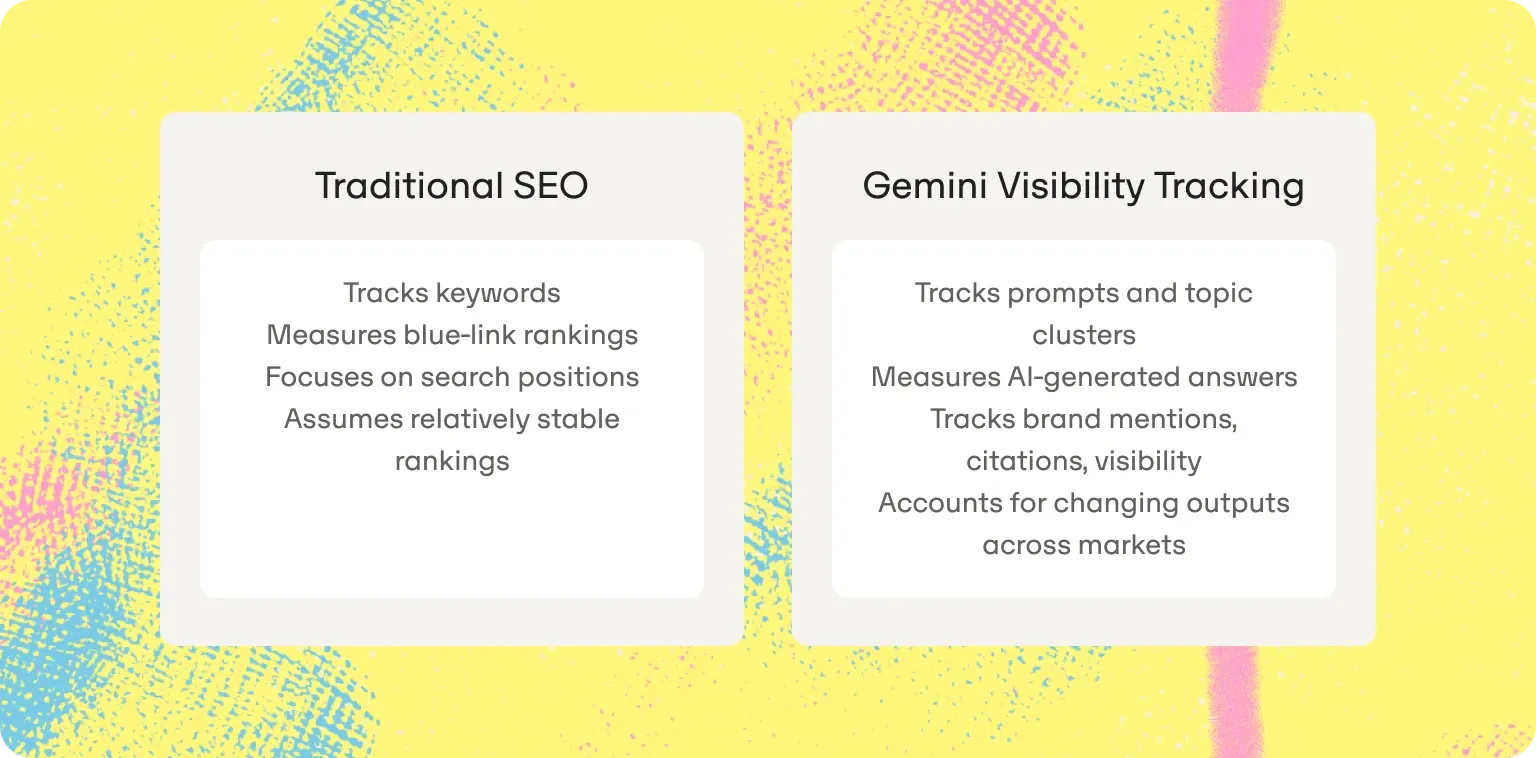
That doesn't make traditional SEO obsolete; you still need keyword research, technical SEO, and Google Search rankings as your foundation.
But those tools can't tell you whether Gemini recommends your brand for a high-intent comparison prompt, which competitor keeps getting cited instead, or which third-party domains influence Gemini's responses.
One of the biggest misconceptions in AI search is that Gemini behaves the same way as Google's AI Overviews because both come from Google.
Omnia's proprietary citation database tells a different story. Looking at a like-for-like four-week comparison across major AI engines, AI Overviews and AI Mode share 87% of their top 200 cited domains, making them near-twins. Gemini shares just 38.5% with AI Overviews and 37% with AI Mode, barely more than it shares with Perplexity or ChatGPT.
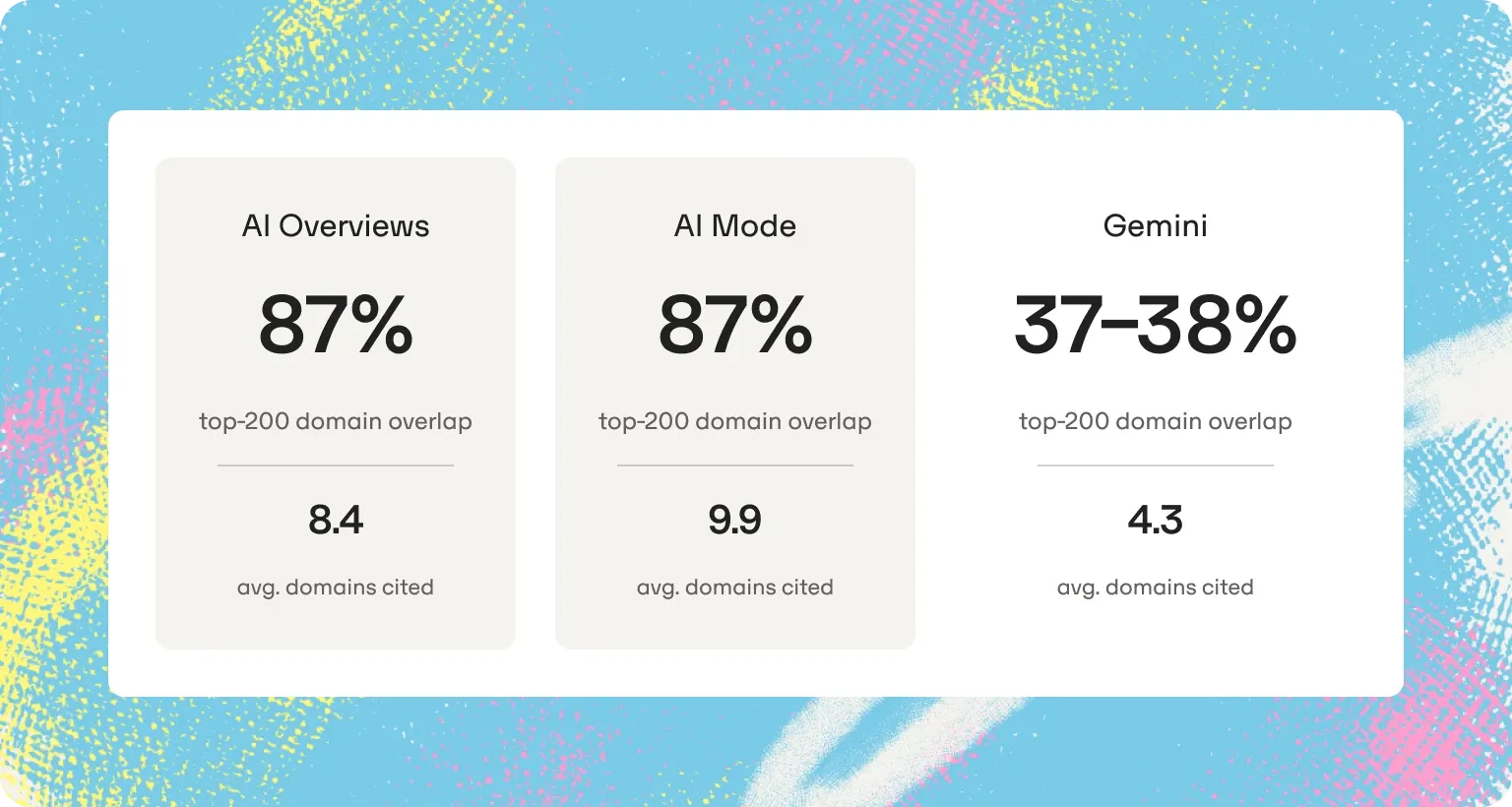
The overlap data is only part of the story. During the same four-week comparison window, Gemini cited an average of 4.28 distinct domains per answer, the lowest citation budget of any major AI engine. AI Overviews averaged 8.37 domains per answer, while AI Mode averaged 9.86.
The practical takeaway is simple: if you're only tracking Google Search rankings or AI Overviews, you're missing a separate AI search ecosystem with its own citation patterns, visibility shifts, and competitive landscape. That's why Gemini visibility tracking deserves its own workflow instead of being treated as another Google metric.
Knowing that Gemini behaves differently is only useful if you can measure it consistently. The challenge isn't finding another AI dashboard, it's finding a platform that tracks Gemini as its own search engine, explains why competitors get recommended, and helps you act on those insights.
Use this table to shortlist three tools, then read the detailed reviews below to pressure-test them. Metrics coverage and alerting vary enough between platforms that they're worth reading in full rather than reducing to a checkmark.
| Tool | Best for | Countries/locales | Gemini tracked separately | Citation intelligence | Action layer | Pricing |
|---|---|---|---|---|---|---|
| Omnia | All-in-one AI visibility | Multi-country tracking | Yes | URLs + domains | Yes | Tiered |
| Peec AI | AI visibility monitoring | 80+ countries | Yes | Yes | Partial | Tiered |
| PromptRush | Prompt-level tracking | Multi-country | Yes | Partial | No | Tiered |
| GEOflux | Citation research | One country per project | Yes | Yes | Limited | Tiered |
| SE Ranking | Existing SEO teams | Multiple countries and languages | Partial | Limited | No | Tiered |
| aiclicks.io | AI search monitoring | Country filtering; unlimited on Pro+ | Yes | Yes | Yes | Tiered |
| Rankability | AI search optimization | Local pack only; 1–25 locations | Not documented | Not documented | Limited | Tiered |
| Scrunch AI | Enterprise AI reporting | All countries; tier limits unclear | Yes | Yes | Partial | Tiered |
| AirOps | Content operations | Region filters; multi-region on Enterprise | Limited | Limited | Yes | Tiered |
| Semrush | Traditional SEO teams | Varies by report; 15–220+ | Limited | No | Partial | Tiered |
Not every platform measures Gemini the same way, and that is where buying decisions go wrong. A tool that treats Google's AI surfaces as a single channel will misread your Gemini visibility from day one.
Before you shortlist, check that each platform can answer three questions:
Those three questions are enough to cut a longlist down to three contenders. The full capability checklist, including the methodology questions worth putting to every vendor, comes after the reviews.
Want to see where Gemini mentions your brand? Stop guessing. Omnia tracks Gemini visibility, citations, competitor share of voice, and localized AI answers, then turns those insights into actionable content recommendations. Start for free today.
Now that we've established why Gemini needs to be tracked separately, the next question is simple: which platform gives you the clearest picture of your AI search visibility and helps you improve it?
We ranked these tools based on four factors that matter most for Gemini specifically: visibility tracking, citation intelligence, competitive insights, and execution. Rather than rewarding the biggest feature list, we prioritized platforms that help marketing teams understand why they're winning or losing prompts, then turn those insights into measurable action.
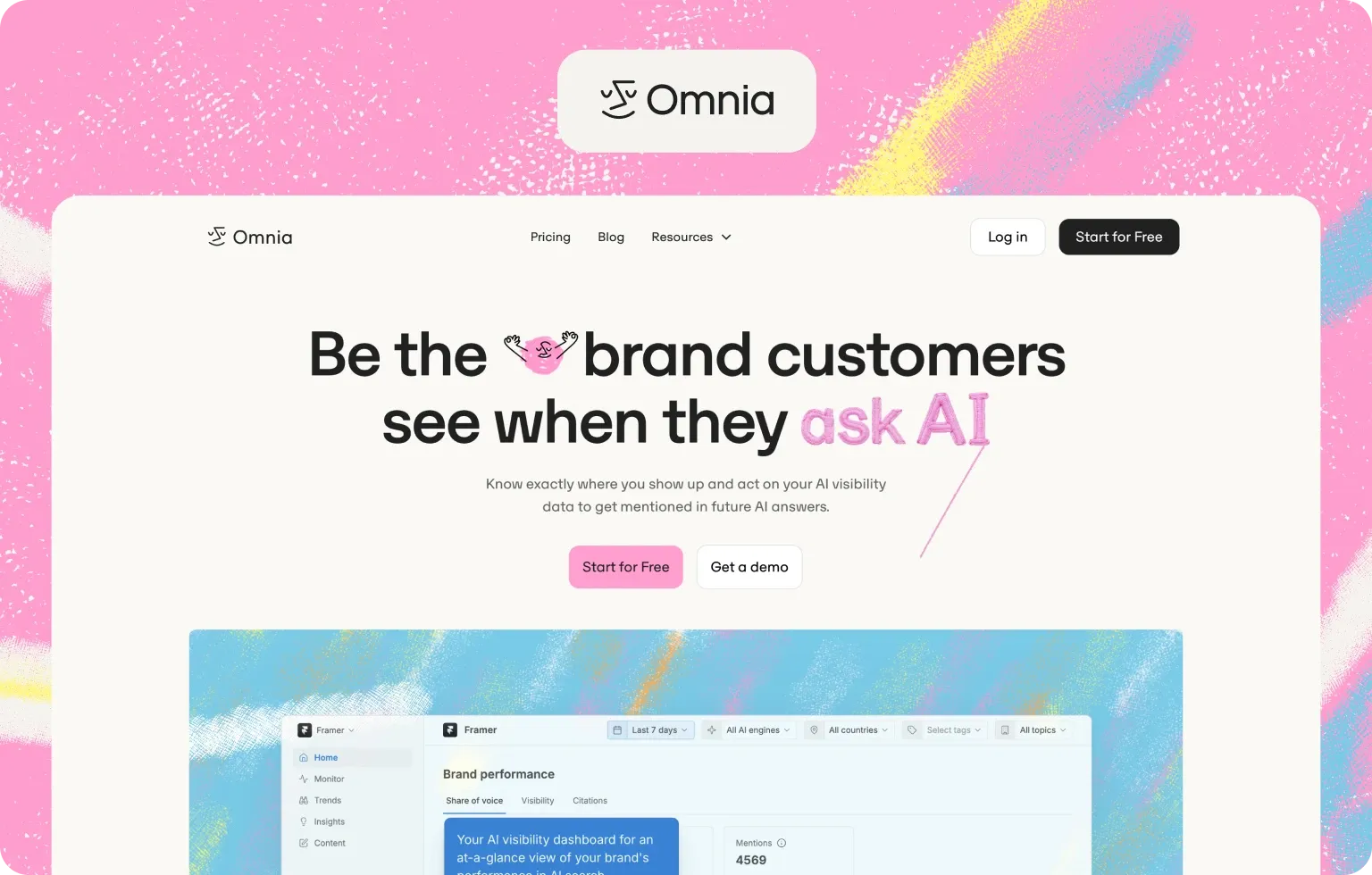
Best for: Lean marketing teams, startups, and scale-ups that want one platform to track Gemini rankings, brand mentions, citations, and competitive visibility without stitching together multiple AI tools.
The biggest challenge with Gemini visibility tracking isn't collecting data, it's turning that data into something your team can actually use. Most platforms stop at rankings or brand mentions, but Omnia treats AI visibility as a discovery channel that needs to be measured, explained, and acted on.
Its approach reflects how Gemini actually behaves. Omnia's research found Gemini runs the leanest citation budget of any major engine, about 4.3 domains per answer against 8.4 for AI Overviews, and that blog, article, and comparison pages account for roughly 45% of what it cites. Fewer slots, and a clear preference for editorial content, means marketers need prompt-level visibility, localized tracking, and citation intelligence that treats Gemini as its own engine.
Where Omnia separates itself is what happens after tracking. Instead of simply telling you a competitor owns a prompt, it surfaces the cited URLs and domains behind that answer, highlights visibility shifts across markets, and feeds those insights into the Omnia Agent, its execution layer. In practice, that means a weekly report can identify a competitor's comparison page winning a high-intent Gemini prompt, turn that gap into a content brief built around the types of sources Gemini already rewards, and let you track whether visibility improves after publishing.
Key features
Watch-outs: If your team relies on highly specific enterprise integrations or governance requirements, it's worth confirming those capabilities during a demo.
Good fit if you want one platform instead of multiple AI visibility tools, you're tracking Gemini rankings, citations, and competitors together, you want content recommendations that help your team ship work, and you care about localized visibility across markets.
Not a fit if you only care about traditional Google rankings, or you need enterprise-specific capabilities that aren't publicly documented.
Pricing: Omnia offers transparent, tiered pricing, with the Growth plan starting at €79/month and Pro at €279/month. A 14-day free trial is also available with no credit card required.
Start for free with an Omnia account or book a demo to see how it tracks Gemini visibility, citations, and competitive insights in real time.
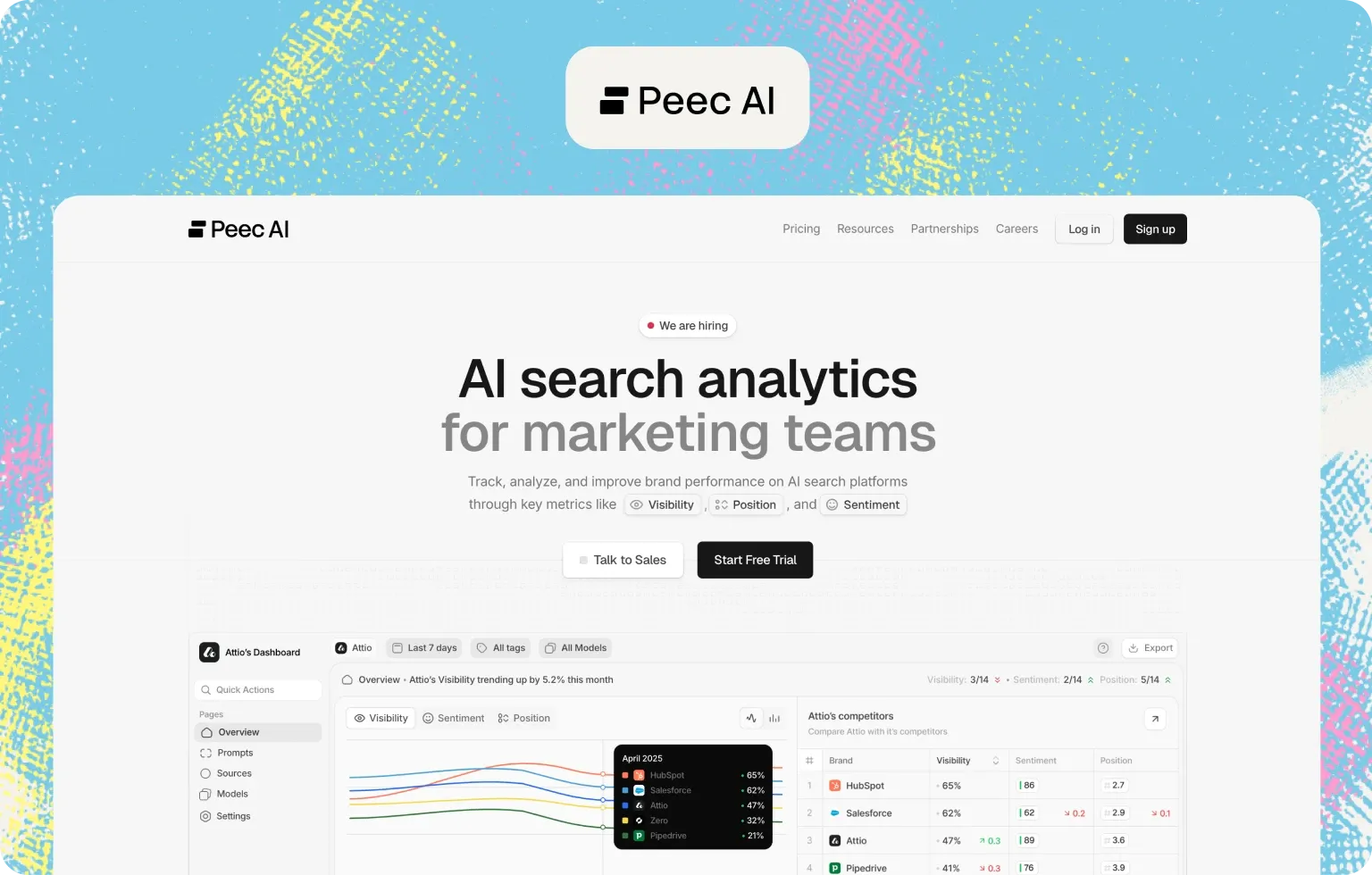
Best for: Marketing teams that want AI visibility monitoring paired with recommendations, sentiment insights, and competitor benchmarking. Peec AI positions itself as more than a visibility tracker. Alongside monitoring brand mentions across AI search engines, it emphasizes helping teams understand why competitors appear in AI answers and where new opportunities exist.
One of Peec's stronger differentiators is its focus on citation intelligence and earned media visibility. Rather than looking only at owned content, it highlights which third-party domains influence AI-generated answers.
Key features: Gemini and AI search visibility monitoring, citation intelligence, competitor benchmarking, sentiment and framing insights, earned media visibility, content recommendations.
Watch-outs: Public documentation is lighter on methodology and pricing than some competitors. Ask how Gemini results are captured and how frequently prompts refresh.
Pricing: Peec AI offers tiered pricing starting at €70/month based on annual billing, plus custom enterprise pricing.
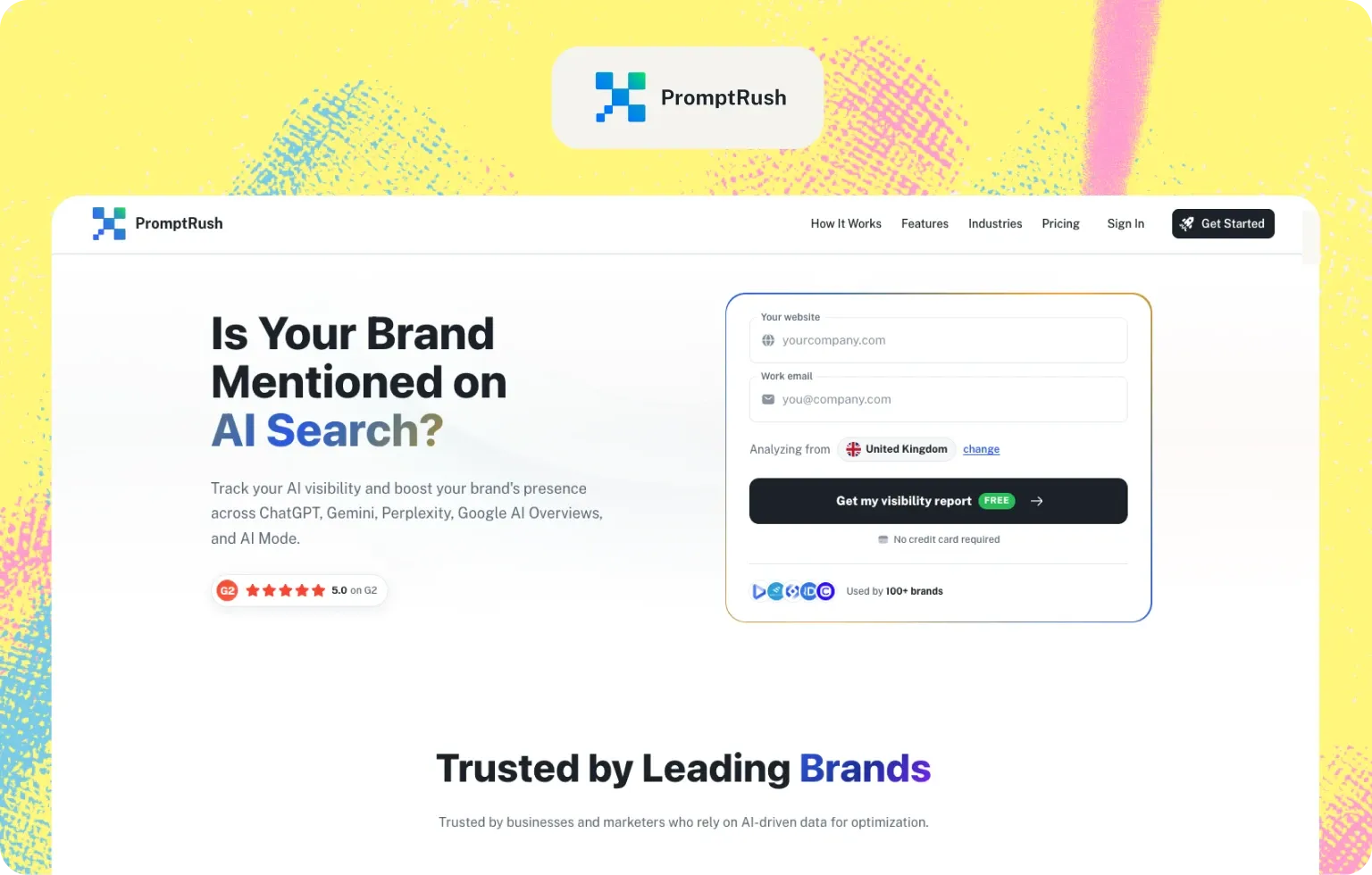
Best for: Teams that want to monitor how their brand appears across specific AI prompts and compare performance against competitors.
PromptRush has built much of its positioning around prompt-level tracking. Instead of focusing primarily on traditional keyword rankings, it encourages marketers to track the prompts buyers actually ask AI engines.
Key features: Prompt-level Gemini tracking, competitor benchmarking, brand visibility monitoring, structured prompt libraries, historical visibility reporting.
Watch-outs: Public documentation provides less detail about pricing, refresh frequency, and exactly how Gemini tracking is collected than some buyers may want.
Pricing: PromptRush plans start at $19/month for Lite, with Growth at $99/month and Scale at $279/month.
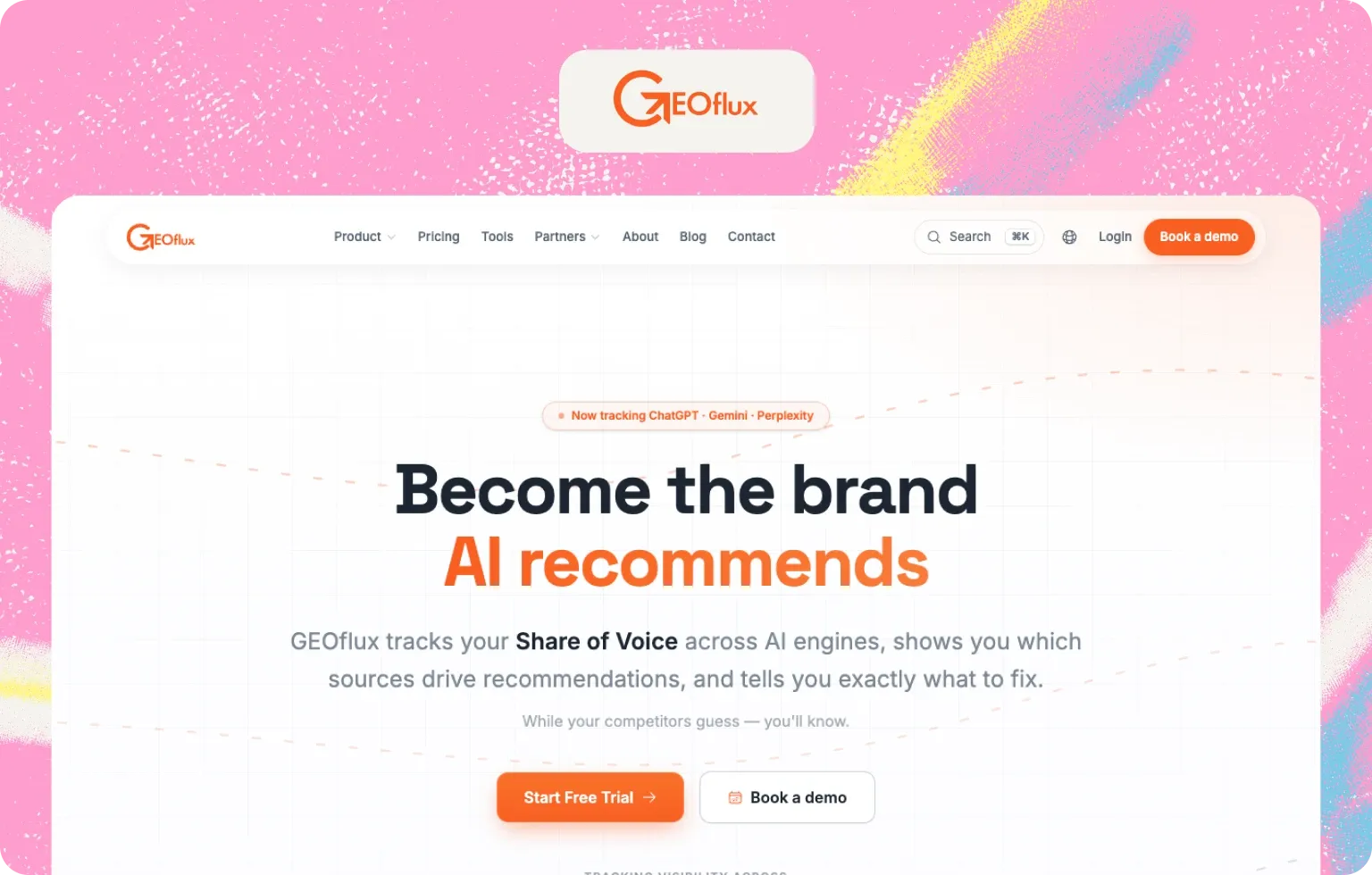
Best for: Teams that want detailed visibility tracking backed by a transparent methodology narrative.
GEOflux stands out for explaining how its tracking works, rather than simply presenting dashboards. Its public positioning emphasizes capturing real Gemini sessions instead of relying solely on simplified simulations.
Key features: Gemini visibility tracking, session-based tracking methodology, citation monitoring, competitor comparisons, prompt-level reporting.
Watch-outs: Confirm refresh frequency, historical reporting limits, and pricing before committing.
Pricing: GEOflux plans start at $99/month for Starter, with Growth priced at $199/month.
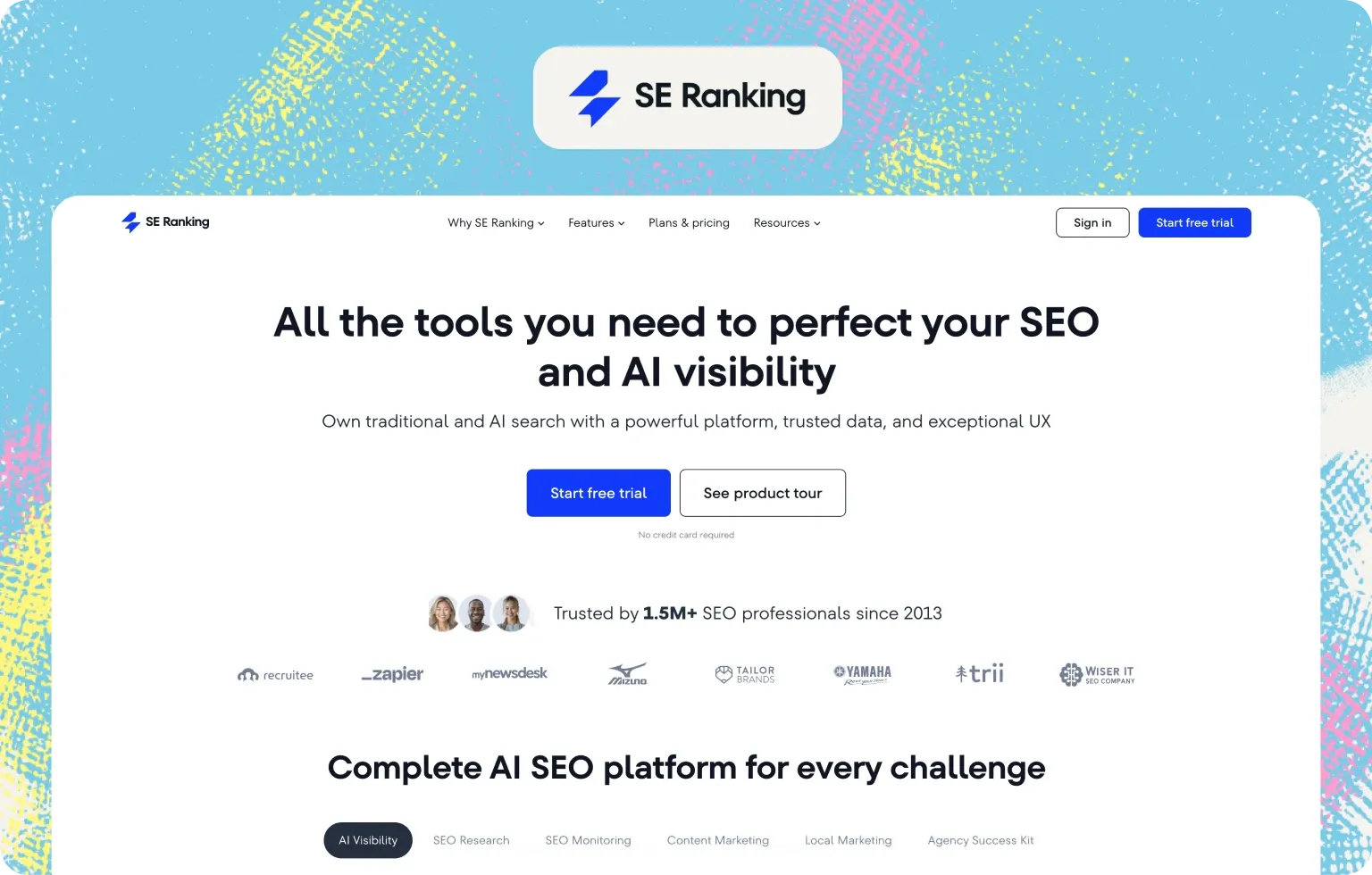
Best for: Teams that already use an SEO platform and want Gemini visibility tracking inside a broader search toolkit.
SE Ranking approaches Gemini differently from purpose-built AI visibility platforms, incorporating AI search monitoring into its wider SEO toolkit.
Key features: Gemini tracking within a broader AI Search Toolkit, traditional SEO and keyword research, competitive analysis, integrated reporting.
Watch-outs: Ask whether Gemini is tracked independently from AI Overviews and AI Mode.
Pricing: SE Ranking's Core plan starts at €109/month, or €87.20/month with annual billing.
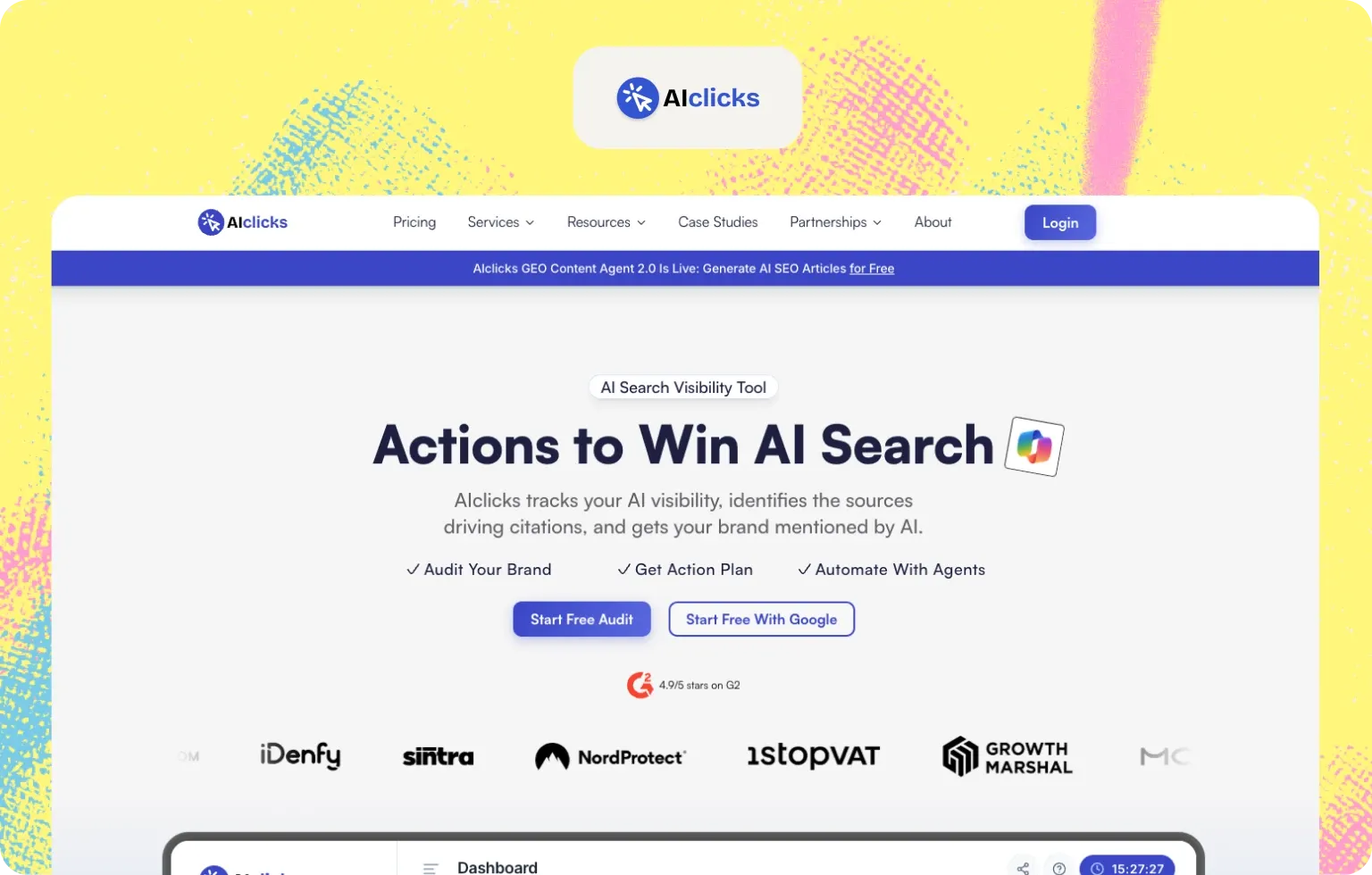
Best for: Marketing teams looking for AI search visibility monitoring across multiple brands and prompts. aiclicks.io positions itself around helping brands understand how they appear across AI search experiences.
Key features: AI search visibility monitoring, brand visibility tracking, prompt-based reporting, competitive visibility insights, multi-brand monitoring support.
Watch-outs: Public feature documentation provides limited detail on Gemini-specific reporting depth.
Pricing: AIclicks starts at $59/month for Starter, with Pro at $189/month and Business at $499/month.
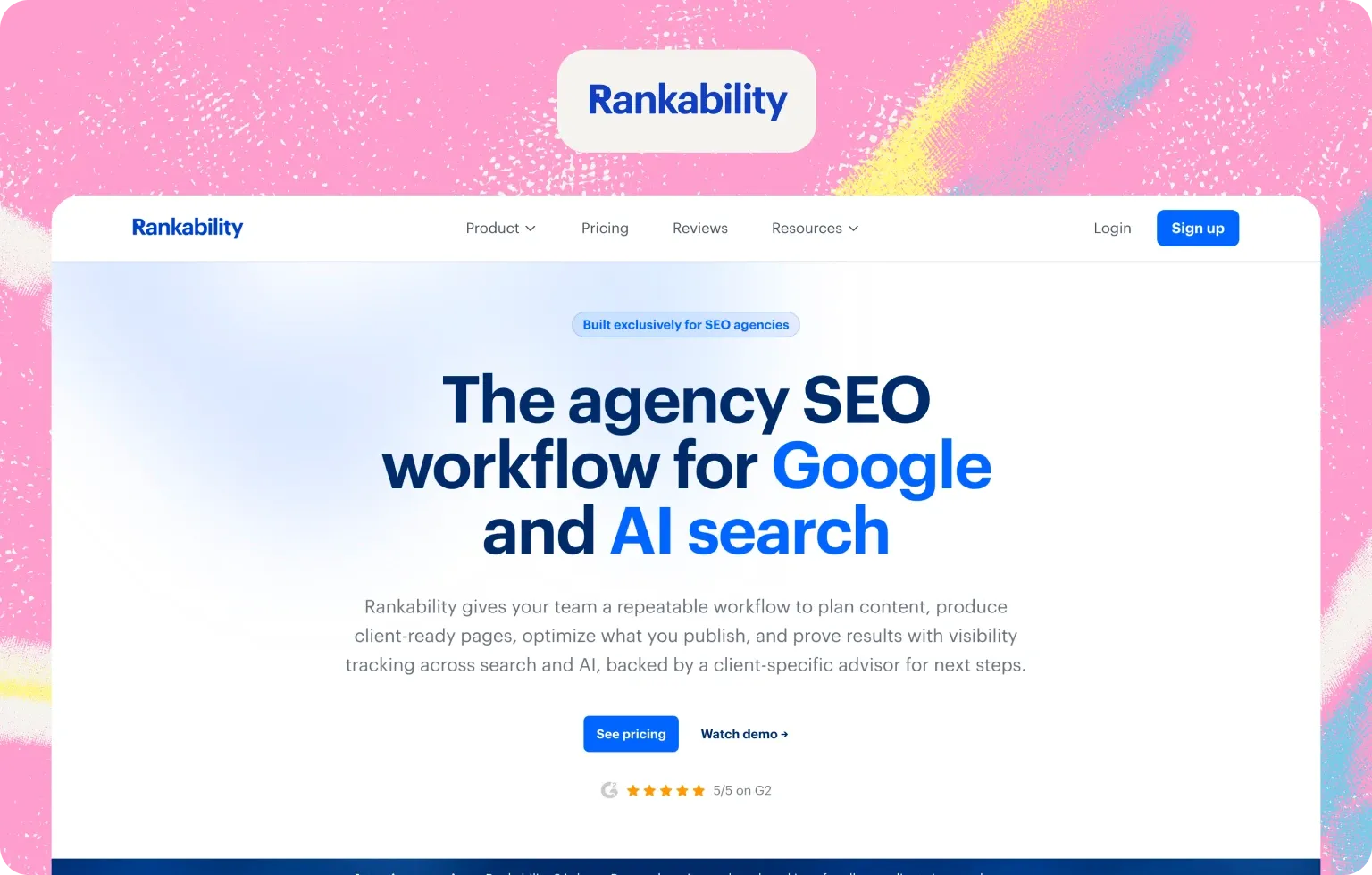
Best for: Teams that want AI search optimization alongside broader content planning. Rankability has expanded beyond traditional optimization workflows into AI search.
Key features: AI search optimization support, content planning workflows, visibility reporting, competitive insights, content opportunity discovery.
Watch-outs: Gemini-specific tracking capabilities aren't as clearly documented as some dedicated platforms.
Pricing: Rankability starts at $99/month for Starter, with Growth at $199/month, Scale at $399/month, and Agency at $799/month.
Best for: Organizations that want AI visibility monitoring and reporting across multiple AI platforms.
Scrunch AI positions itself as an enterprise-focused AI search visibility platform.
Key features: Multi-platform AI visibility reporting, brand monitoring across AI answers, competitive benchmarking, executive reporting.
Watch-outs: Buyers should clarify how much Gemini-specific reporting and citation intelligence is available.
Pricing: Scrunch starts at $300/month, or $250/month with annual billing, for Starter.
Best for: Content teams that want AI-assisted content production and workflow automation alongside their existing SEO processes.
AirOps isn't primarily a Gemini visibility tracker. Instead, it's an AI-powered content operations platform.
Key features: AI-powered content workflows, content brief generation, research and drafting automation, workflow automation.
Watch-outs: Don't assume AirOps provides the same Gemini-specific tracking depth as dedicated visibility platforms.
Pricing: AirOps offers tiered pricing (unpublished) based on usage and features.
Best for: Marketing teams that want industry-leading SEO research alongside evolving AI search capabilities.
Semrush remains one of the strongest SEO platforms available for research rather than dedicated Gemini tracking.
Key features: Industry-leading keyword research, competitive SEO analysis, content planning tools, backlink intelligence.
Watch-outs: Semrush shouldn't be treated as a complete replacement for dedicated Gemini answer and citation tracking.
Pricing: Semrush's AI Visibility toolkit starts at $99/month per domain.
By now you've seen the biggest differences between the leading Gemini visibility trackers. The next question is whether those differences actually matter.
The answer depends less on the dashboard and more on how each platform collects, interprets, and scores Gemini's responses.
A good Gemini visibility tracker doesn't monitor random searches. It builds a repeatable prompt library that reflects how real buyers search, then checks those prompts consistently over time.
Not every vendor collects Gemini data the same way. Some publicly describe browser or session-based capture designed to reflect real user interactions, while others use simulated queries or proprietary collection methods.
Gemini doesn't just return a ranking, it builds an answer from multiple sources. A strong Gemini tracker should turn those raw responses into structured insights by extracting brand mentions, citation URLs, cited domains, competitor mentions, and citation positions where available.
Position tracking deserves special attention because Gemini exposes a surprisingly measurable ranking system. Omnia's proprietary research found 100% of Gemini citations carry a numbered position, the most complete of any major engine measured during the same comparison window, with roughly 85% of citations appearing within positions 1–10.
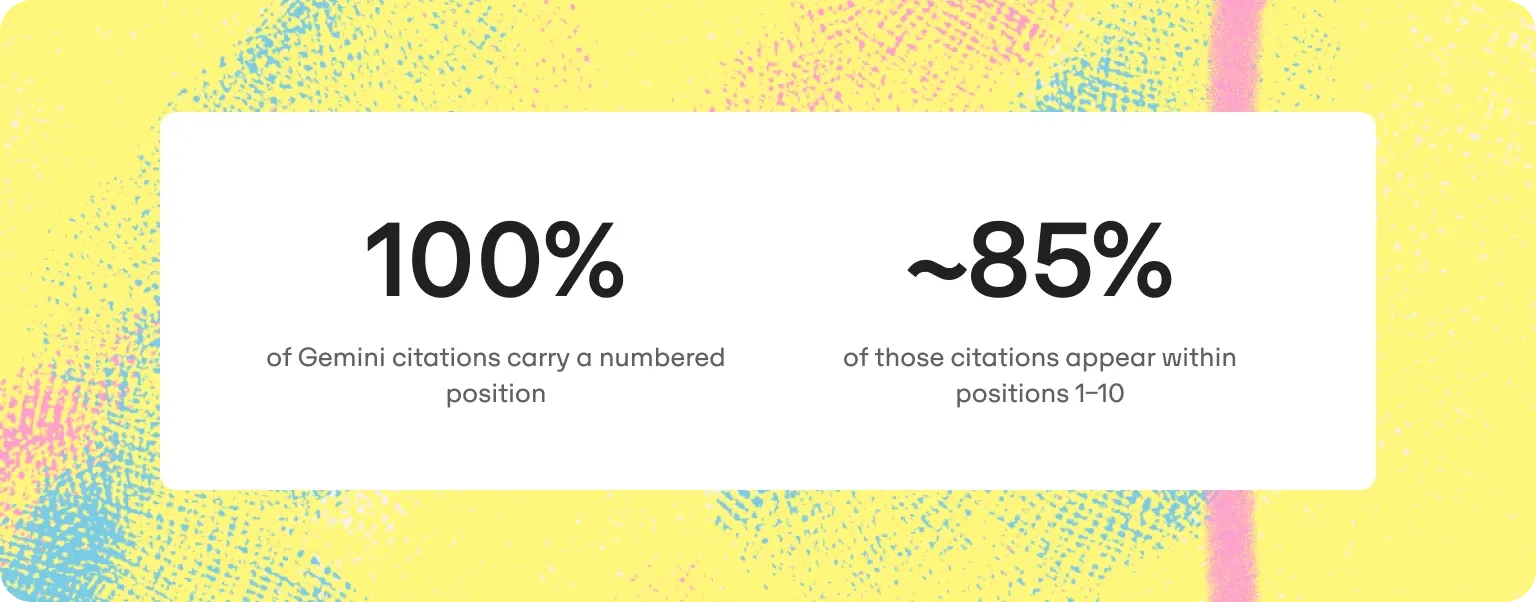
That makes position a genuine performance metric, not just a directional guess.
Citation URLs, brand mentions, and Gemini's numbered positions are measurable signals you can track consistently. Sentiment framing and cross-session personalization can still provide useful context, but they should be treated as directional insights rather than absolute measurements.
Omnia's research found Gemini is the most editorial AI engine it tracks. Blog, article, and news pages account for 32.7% of Gemini's citations, while review and comparison pages contribute another 12.2%. Meanwhile, product pages, pricing pages, and FAQs together account for less than 0.6% of citations.
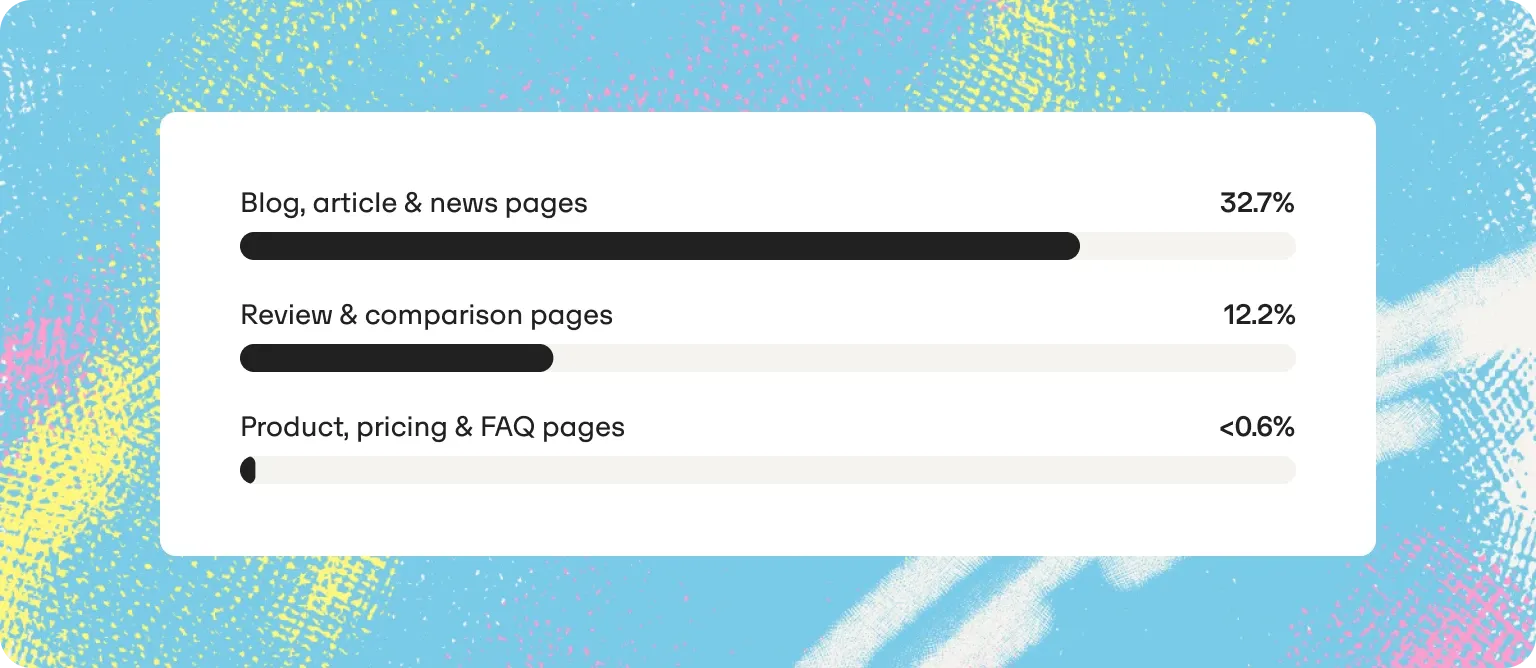
Instead of spending weeks polishing another product page, teams should prioritize editorial and comparison content that matches the types of sources Gemini already trusts.
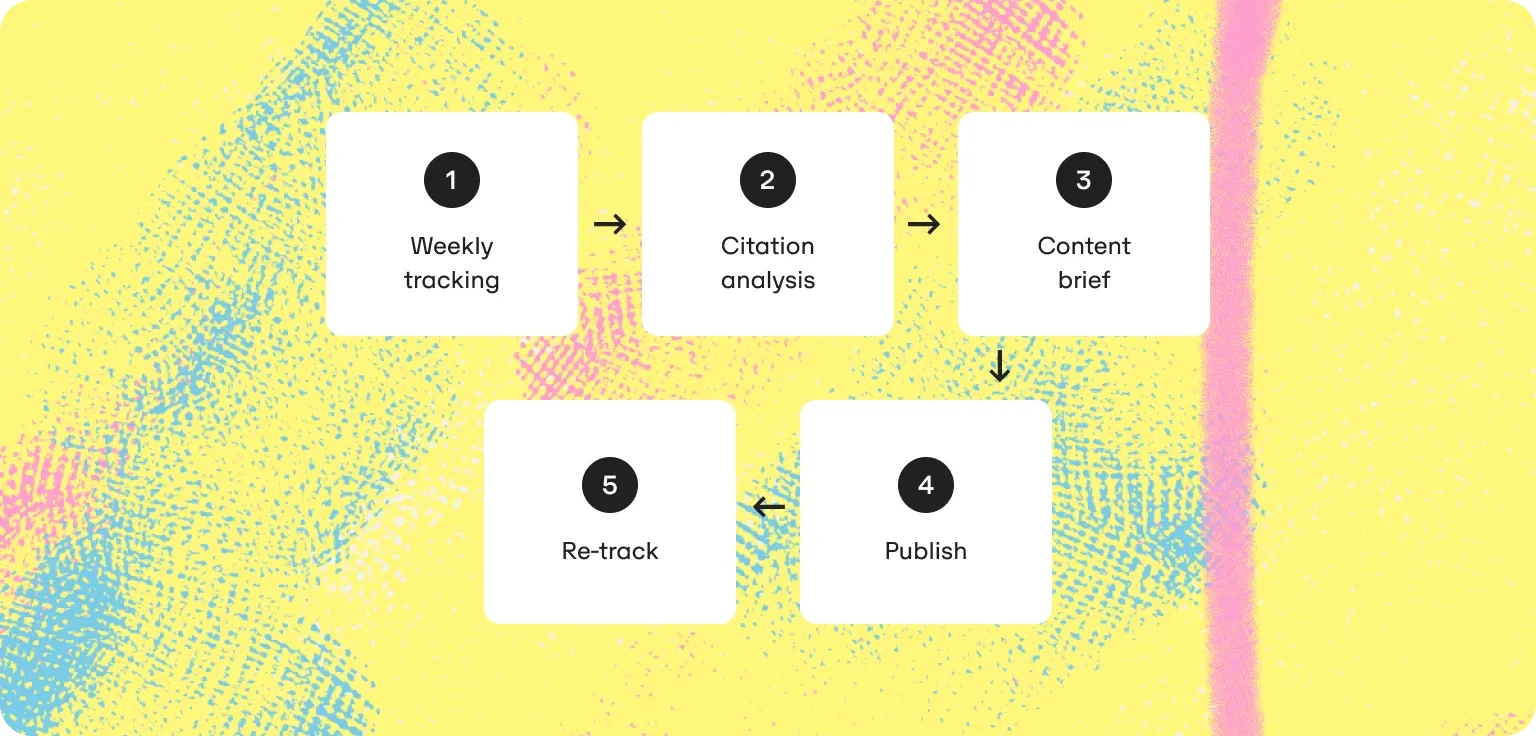
A practical workflow looks like this: weekly tracking identifies a high-value prompt you're losing, citation analysis reveals which competitor's comparison page is winning, your Omnia Agent turns that insight into a content brief shaped around the citation patterns Gemini already rewards, the content gets published, and the same prompts continue to be tracked, making visibility improvements measurable over time.
Omnia brings Gemini rankings, brand mentions, visibility, citation URLs and domains, competitor share of voice, and localized tracking into one platform. It also treats Gemini as its own AI engine rather than folding it into Google AI Overviews or AI Mode.
The final piece is the Omnia Agent, the execution layer. Once Omnia identifies a citation gap, the workflow doesn't have to end with a report for someone else to interpret. Your Omnia Agent can turn those insights into content briefs and recommendations shaped around the sources Gemini already cites.
Ready to see where your brand stands in Gemini? Start for free and sign up for an Omnia account.
Omnia offers a 14-day free trial on the Growth plan.
No credit card required. See exactly where your brand shows up (or doesn't) across AI engines, then let the platform's recommendations guide your next move.

The most reliable approach is to track a consistent prompt set across different countries and languages, then establish a baseline for your Gemini visibility. Only about 1 in 5 tracked prompts keeps the same top-cited source across a month, so a snapshot tells you almost nothing about next week.
No, Omnia's proprietary research found Gemini shares only 38.5% of its top cited domains with Google AI Overviews, while AI Overviews and AI Mode share 87% with each other.
Yes, unlike most major AI search engines, 100% of Gemini's citations include a numbered position, the most complete of any major engine, making position a genuinely trackable metric instead of a rough estimate.
Start by creating the kinds of content Gemini already rewards. Omnia's research found editorial articles and comparison pages account for nearly 45% of Gemini's citations, while product and pricing pages are rarely cited.
Citation URLs, cited domains, Gemini positions, share of voice, prompt coverage, competitor benchmarking, and visibility trends over time.
Traditional SEO measures where web pages rank for keywords in Google Search. Gemini visibility tracking measures how AI-generated answers respond to prompts, which brands get recommended, and which sources Gemini cites.
Keep your existing SEO platform for keyword research and traditional search rankings. Then add a dedicated Gemini visibility tracker to monitor AI-generated answers, citations, positions, and share of voice.
Weekly reporting is the right cadence for most marketing teams. In one recent week, 40.5% of the domains Gemini cited had never appeared before, and roughly 80% of tracked prompts change their top-cited source within a month.
Written By
 Jose Luis García del RíoGrowthatOmniaAndreiHead of GrowthatOmnia
 Jose Luis García del RíoGrowthatOmnia
 AndreiHead of GrowthatOmnia
 AndreiHead of GrowthatOmnia
 Jose Luis García del RíoGrowthatOmnia
No credit card required · Free for 14 days · See your AI visibility within 3 minutes