Alternatives
Best MCP Servers for AI Visibility in 2026: 9 Compared

 Alfredo BernalOrganic Growth LeadatOmniaAlfredo BernalOrganic Growth LeadatOmnia
TL;DR
You know buyers ask ChatGPT and Perplexity for tool recommendations. You don't have an enterprise budget, and you don't have time to test fifteen platforms. You need a tool that shows whether AI engines mention you, at a price a small team can justify.
This guide compares ten affordable AI visibility tools for startups and small teams. Every price and plan limit below was checked on the vendor's own pricing page, with the date.
We included AI visibility tools with a paid entry plan at or under about $100 a month that track brand mentions in AI answers on a schedule. We then compared each entry plan on six points:
Omnia is our product, and we rank it first. Every other tool is described from its own website, with its real strengths and limits, so you can judge the fit yourself.
| Tool | Entry price (as listed) | Prompts on entry plan | AI engines on entry plan | Refresh | Best for |
|---|---|---|---|---|---|
| Omnia | €79/mo (€63/mo yearly) | 25 | ChatGPT, Perplexity, Google AI Overviews, Google AI Mode (Claude, Gemini, Bing AI Mode on request) | Daily | Startups that want citations and next steps |
| HubSpot AEO | $50/mo ($45/mo yearly) | 25 | ChatGPT, Gemini, Perplexity | Daily | Teams that want a simple score |
| Otterly.AI | €29/mo (Lite) | 16 | 4 of 7 engines | Daily | Founders testing on a tight budget |
| Rankscale | $17/mo billed yearly (Essentials); $99/mo monthly (Pro) | 120 credits (up to 480 AI answers) | 17+ engines | Hourly to monthly | Teams that want many engines and pay per answer |
| Peec AI | $95/mo (Starter) | 50 | 3 models of your choice, from 8 | Daily | Small teams focused on share of voice |
| Semrush AI Visibility Toolkit | $99/mo per domain, billed yearly | 25 | ChatGPT, Google AI, Gemini, Perplexity | Daily | Teams already using Semrush |
| SE Visible | $89/mo (Basic) | 75 | ChatGPT, Gemini, AI Mode, AI Overview | Daily | Most prompts per dollar on daily tracking |
| LLMrefs | $79/mo | 500 | Multiple engines | Weekly | Wide keyword coverage on a budget |
| Waikay | $19.95/mo (Early Adopter) | 8 credits | ChatGPT, Gemini, Claude, Perplexity | Weekly to daily, by credits | Entity and brand-fact checks |
| ZipTie | From $25.65/mo (configurable) | You buy prompt slots | Up to 7 engines | Daily, weekly or monthly | Building a custom mix of prompts |
Prices checked on each vendor's pricing page on 13 November 2026, except LLMrefs (30 October 2026). Prices change often, so confirm before you buy.
AI engines lean heavily on a few well-known budget tools when startups ask for recommendations. Omnia monitored the US prompt "affordable ai visibility tools for startups" daily from 14 October to 12 November 2026. Across 112 AI answers, 98 different brands were named.
| Brand | Share of AI answers that named it |
|---|---|
| Otterly.AI | 97.3% |
| Peec AI | 72.3% |
| Semrush | 67.9% |
| Ahrefs | 56.3% |
| Rankscale | 51.8% |
| HubSpot | 41.1% |
The most cited sources for that prompt were roundups such as Business.com, Zapier and startup-focused tool lists, not vendor pricing pages. That is one prompt in one market over one month, so read it as a picture of what AI engines recommend today, not as a quality ranking.
Each review covers what the entry plan includes, its watch-outs and its listed price.
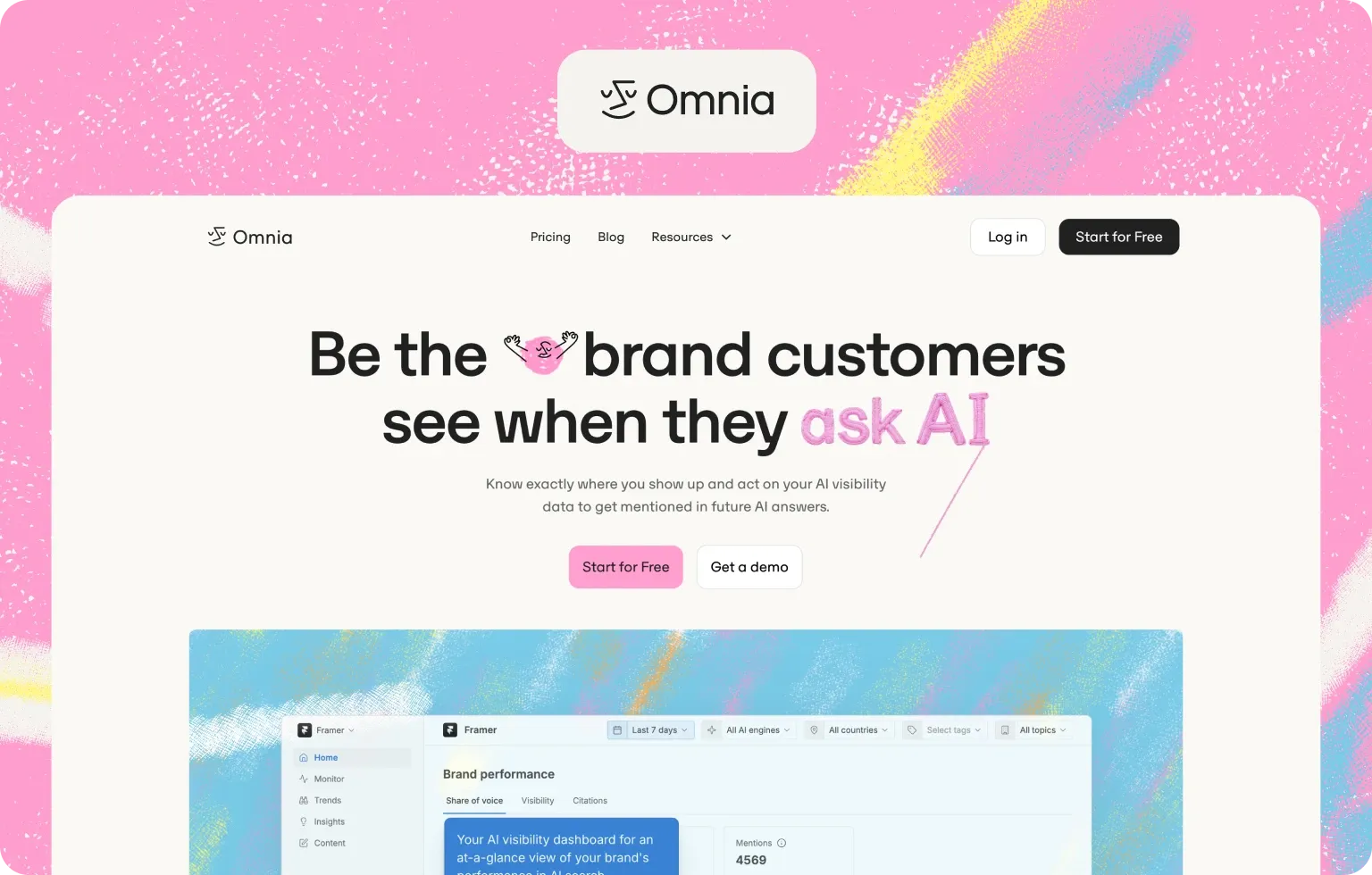
Omnia is an AI visibility platform for startups and small marketing teams that monitors your prompts daily and, through the Omnia Agent, turns visibility gaps into work you approve.
Best for: startups and teams of 1 to 5 with no AEO specialist, who need to know whether AI engines recommend them and what to change next.
What you get: Omnia runs your prompts every day in real browsers on ChatGPT, Perplexity, Google AI Overviews and Google AI Mode. Claude, Gemini and Bing AI Mode are available on request, for up to 7 engines. It stores every complete answer and shows the exact URLs each engine cites, split into owned, third-party and social sources. You also get share of voice and sentiment against competitors, Prompt Discovery, unlimited countries and languages, and API and MCP access on every plan.
The Omnia Agent works from that data. It suggests projects, such as a page to rewrite or a cited source to earn a place in, and drafts the work. Omnia does most of the work; you make the calls and approve what ships.
Watch-outs: Growth covers 25 prompts, so a startup tracking several product lines may need Pro (100 prompts). Claude, Gemini and Bing AI Mode are on request, not on by default.
Pricing (vendor site, 13 Nov 2026): Growth €79/mo (€63/mo billed yearly), 25 prompts. Pro €279/mo (€223/mo yearly), 100 prompts. 14-day free trial on Growth, no credit card required. See Omnia pricing.
HubSpot AEO is a standalone AI visibility tracker from HubSpot that scores how often ChatGPT, Gemini and Perplexity mention your brand.
Best for: small teams that want a simple daily score at a low price, especially if they already use HubSpot.
What you get: 25 prompts tracked across ChatGPT, Gemini and Perplexity, with a score that updates daily. It does not require a HubSpot subscription, and you can buy more prompts.
Watch-outs: three engines only, with no Google AI Overviews or AI Mode. Each brand needs its own instance at $50 a month.
Pricing (vendor site, 13 Nov 2026): $50/mo, or $45/mo billed yearly. Free trial tracking 25 prompts, no credit card required.
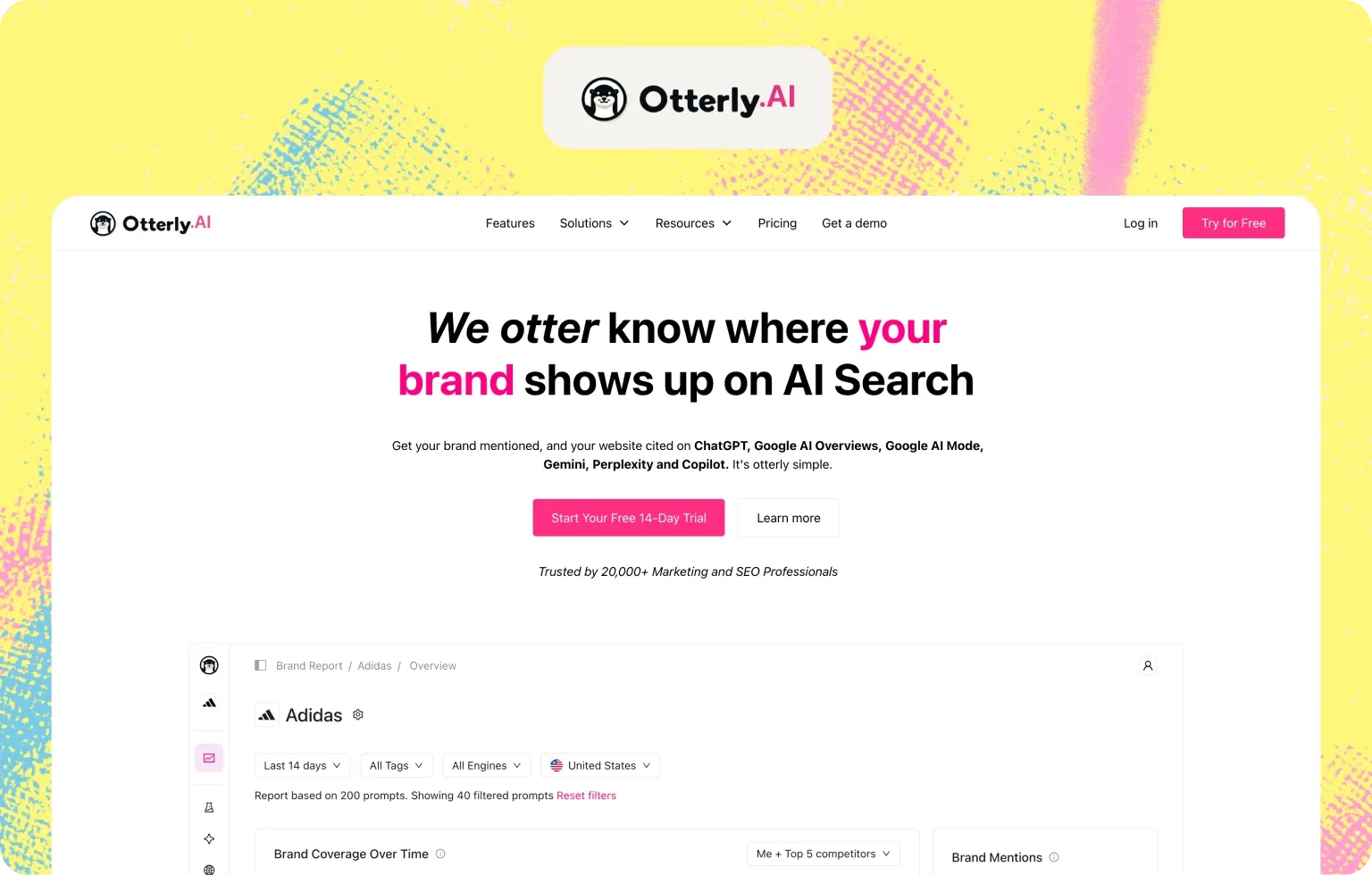
Otterly.AI is a low-cost AI search monitoring tool, and the brand AI engines named most often in Omnia's monitoring of the startup budget prompt above.
Best for: founders and solo marketers who want to start tracking for the lowest monthly price.
What you get: the Lite plan tracks 16 prompts daily, with 2,000 credits a month. It runs on 4 of Otterly's 7 supported engines: ChatGPT, Google AI Overviews, Perplexity, Microsoft Copilot, Google AI Mode, Gemini and Claude.
Watch-outs: 16 prompts is a small sample. The jump from Lite (€29) to Standard (€189) is steep, and Claude queries use three credits each.
Pricing (vendor site, 13 Nov 2026): Lite €29/mo, Standard €189/mo, Premium €489/mo; 15% off yearly. Free trial available.
Rankscale is a credit-based AI visibility tool that tracks a wide range of AI engines and lets you set how often each prompt runs.
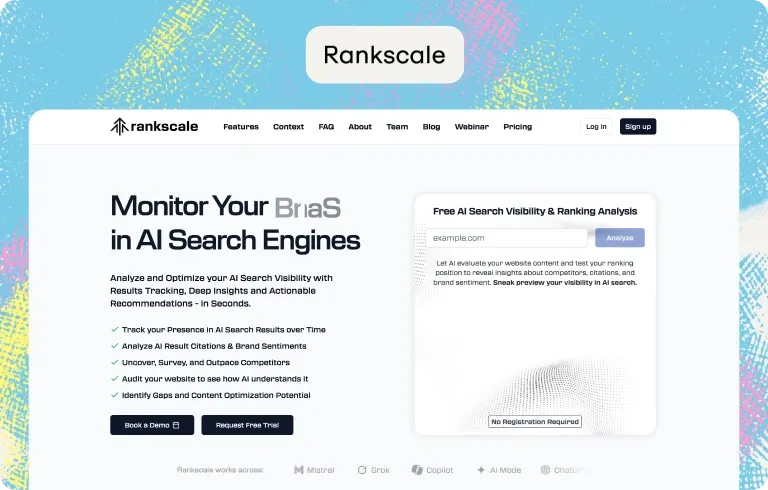
Best for: technical marketers who want many engines and are comfortable budgeting by credits.
What you get: 17+ AI engines on every plan, including ChatGPT, Perplexity, Google AI Mode, AI Overviews, Gemini, Claude and Copilot, with scheduling from hourly to monthly.
Watch-outs: the cheapest plan, Essentials, is yearly only and includes 120 credits (up to 480 AI answers) a month with no rollover. Credits run out fast with many engines or frequent runs. The monthly entry option is Pro at $99.
Pricing (vendor site, 13 Nov 2026): Essentials $17/mo billed yearly; Pro $99/mo monthly or $84/mo yearly (1,200 credits).
Peec AI is an AI search analytics platform focused on visibility, share of voice and citation tracking for marketing teams.
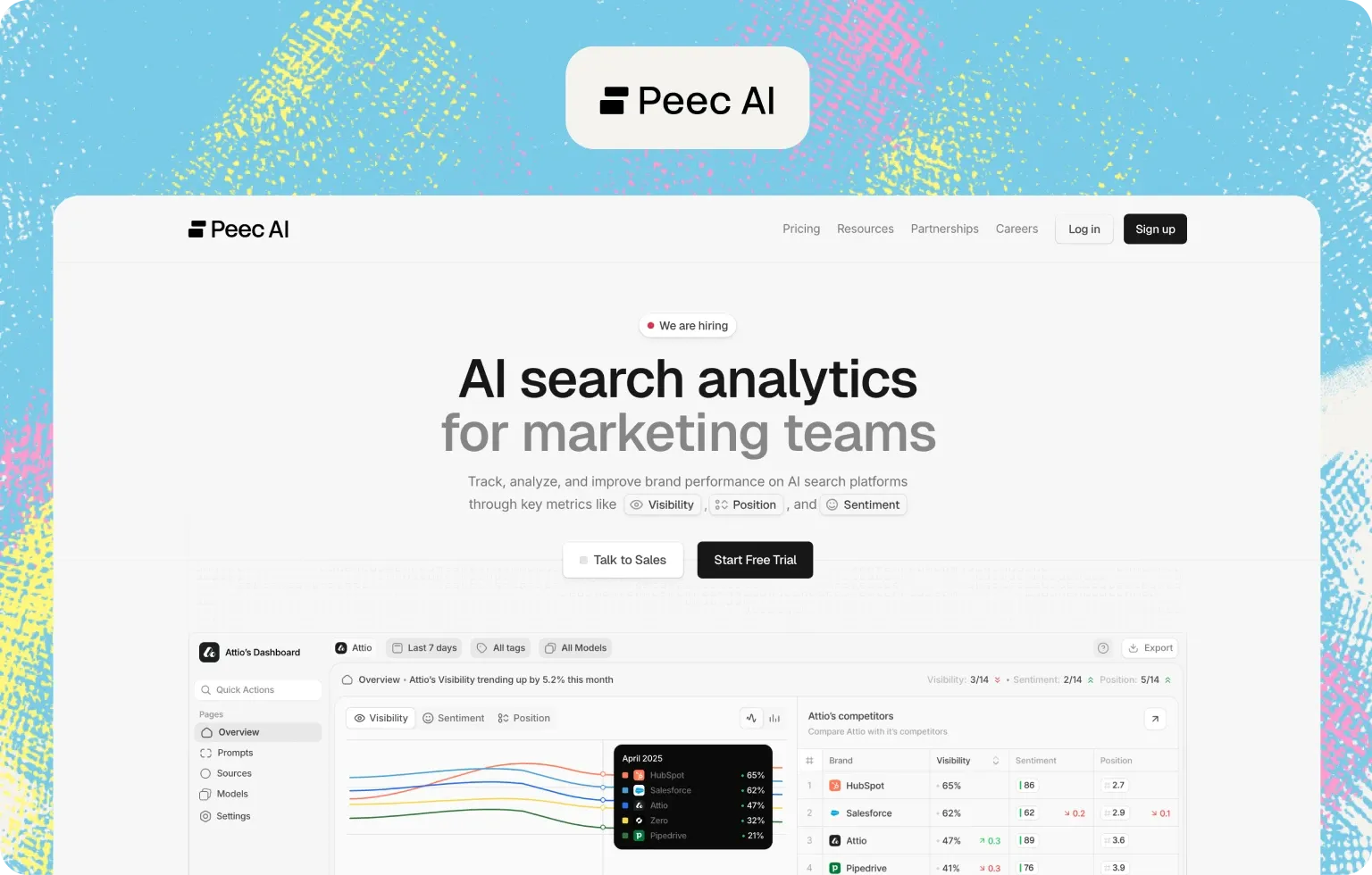
Best for: small teams that want clean share of voice reporting with unlimited users.
What you get: 50 prompts tracked daily on 3 AI models you choose from 8 (including ChatGPT, Perplexity, AI Overview, AI Mode and Gemini), unlimited users and one country.
Watch-outs: only three models on the entry plan; each extra model costs $30/mo on Starter. One country only on Starter.
Pricing (vendor site, 13 Nov 2026): Starter $95/mo, Pro $245/mo, Advanced $495/mo; 15% off yearly. Free trial available.
Semrush's AI Visibility Toolkit adds AI prompt tracking and brand performance reports to the Semrush platform.
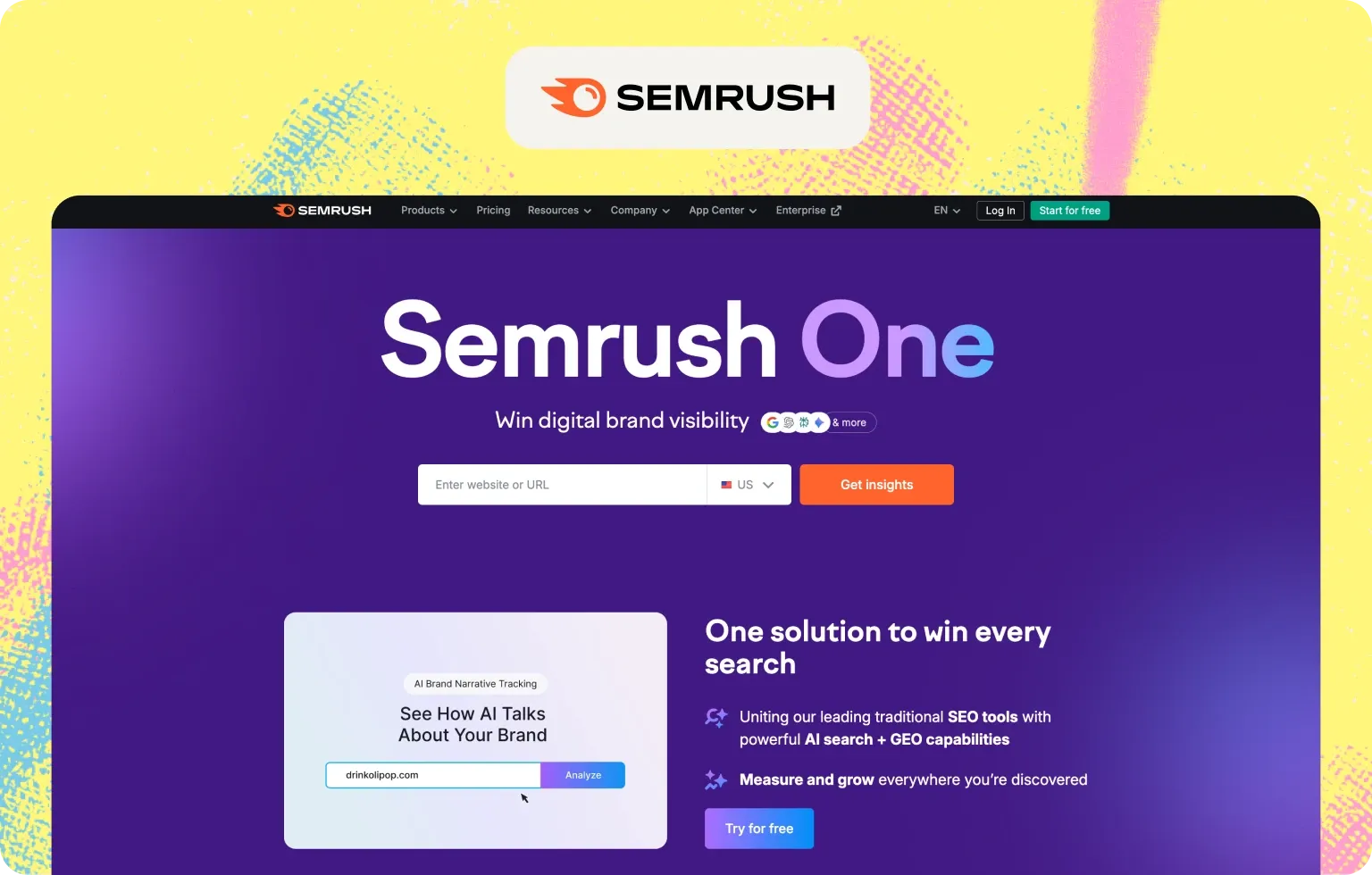
Best for: startups that already use Semrush for SEO and want AI data in the same place.
What you get: 25 custom prompts with daily AI rankings across ChatGPT, Google AI, Gemini and Perplexity, plus brand performance analysis for one domain.
Watch-outs: the listed price is per domain and billed yearly. Semrush's pricing page does not make clear whether a wider Semrush subscription is needed, so check before you buy.
Pricing (vendor site, 13 Nov 2026): $99/mo per domain, billed yearly. Seven-day free trial.
SE Visible is SE Ranking's AI visibility product, sold as its own subscription.
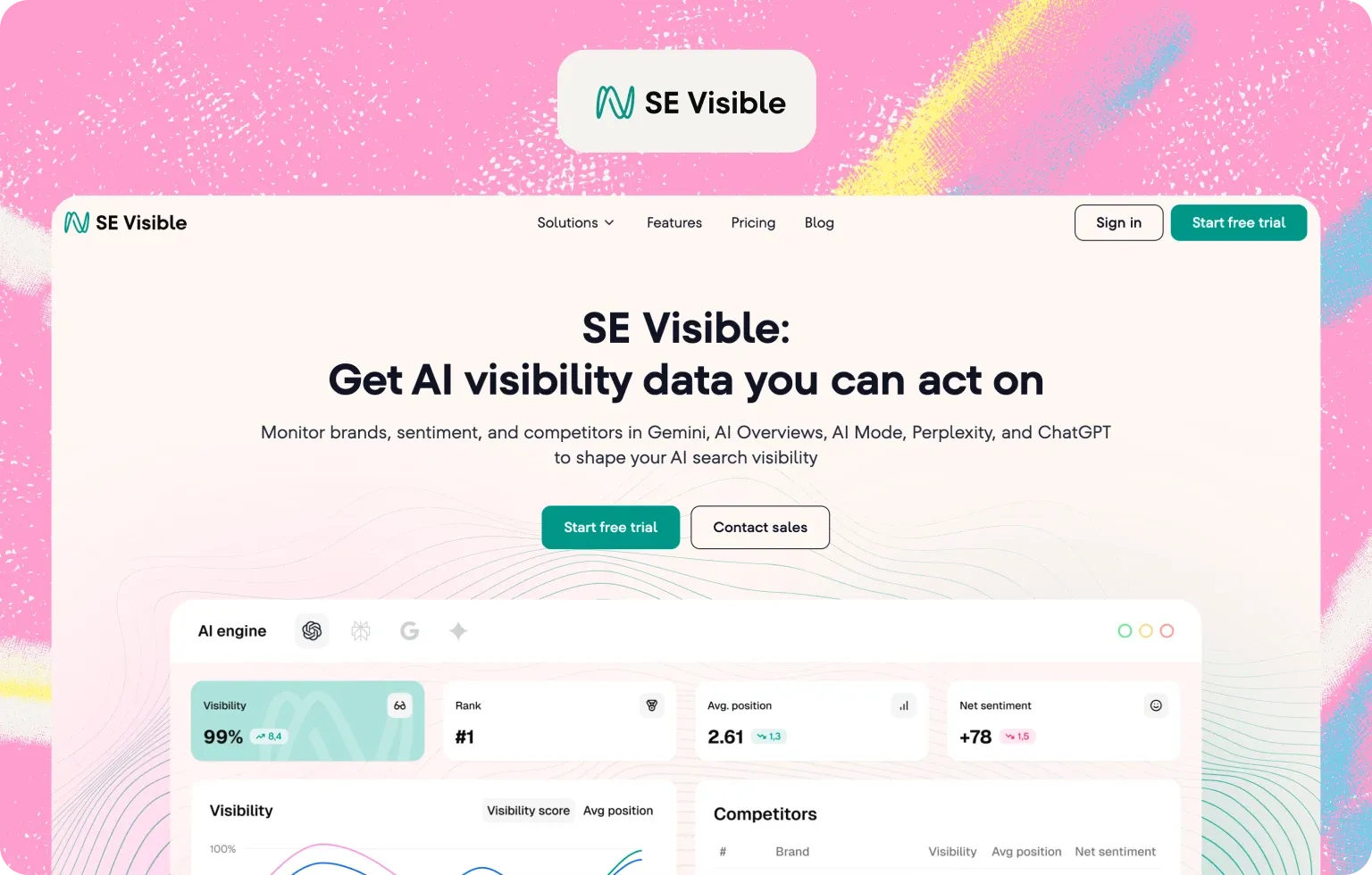
Best for: startups that want the most prompts tracked daily for under $100.
What you get: 75 prompts tracked daily on the Basic plan, across ChatGPT, Gemini, Google AI Mode and AI Overviews, with 5 projects.
Watch-outs: no Perplexity or Claude on the listed plans. The next plan, Core, is $189.
Pricing (vendor site, 13 Nov 2026): Basic from $89/mo, Core $189/mo, Agency $399/mo; 20% off yearly. 10-day free trial.
LLMrefs is an affordable AI search tracker that maps keywords to the prompts behind them and reports trends weekly.
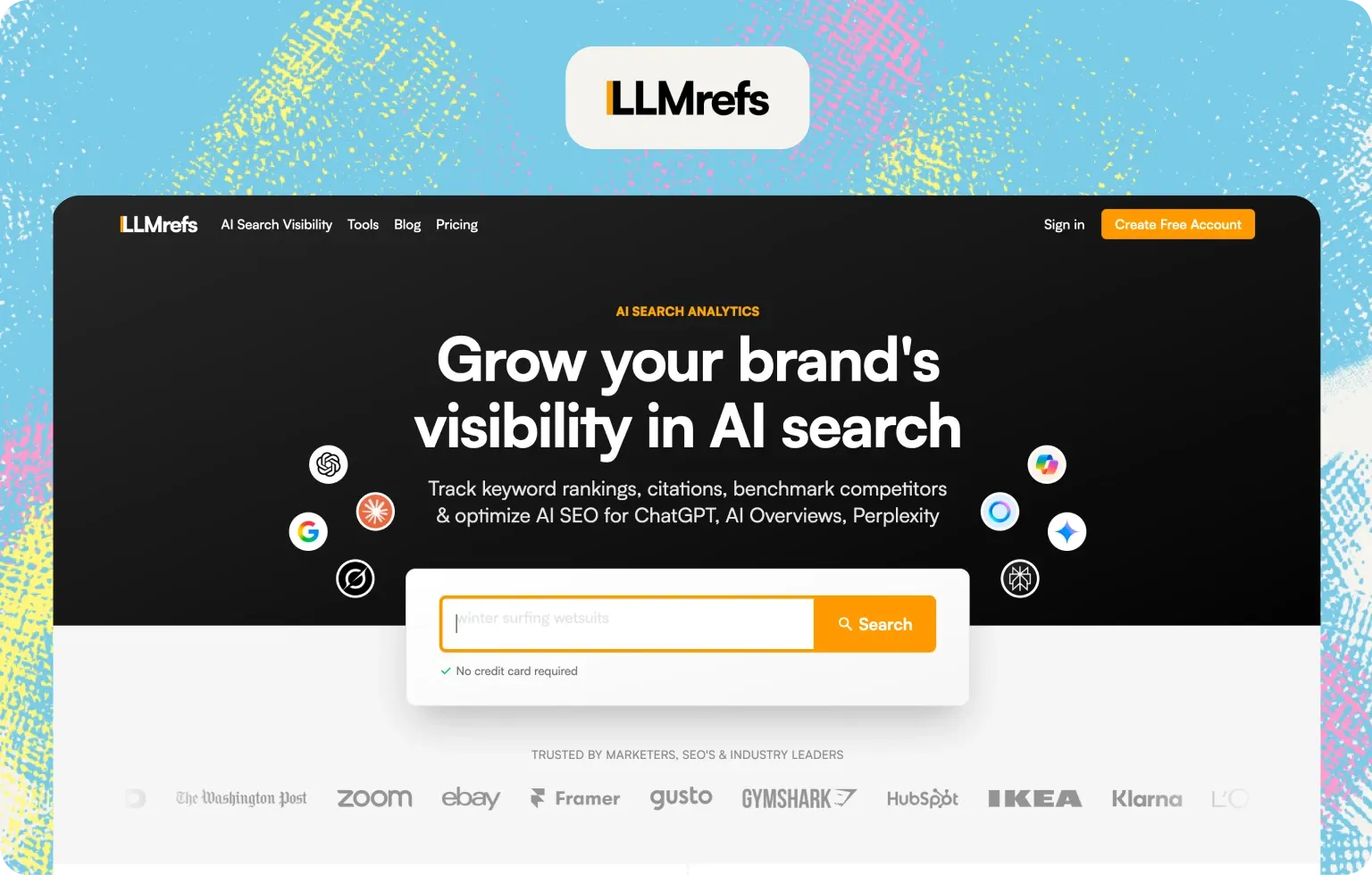
Best for: solo marketers who want broad coverage and can live with weekly data.
What you get: a large prompt allowance (500 prompts on the plan checked), an LLMrefs score and competitor benchmarking.
Watch-outs: weekly refresh, so short-term changes are hard to see. The $79 price was marked as a limited-time price when we checked.
Pricing (vendor site, 30 Oct 2026): $79/mo. Free account and 7-day trial.
Waikay is a credit-based tool that checks what AI engines know about your brand and tracks prompts across four engines.
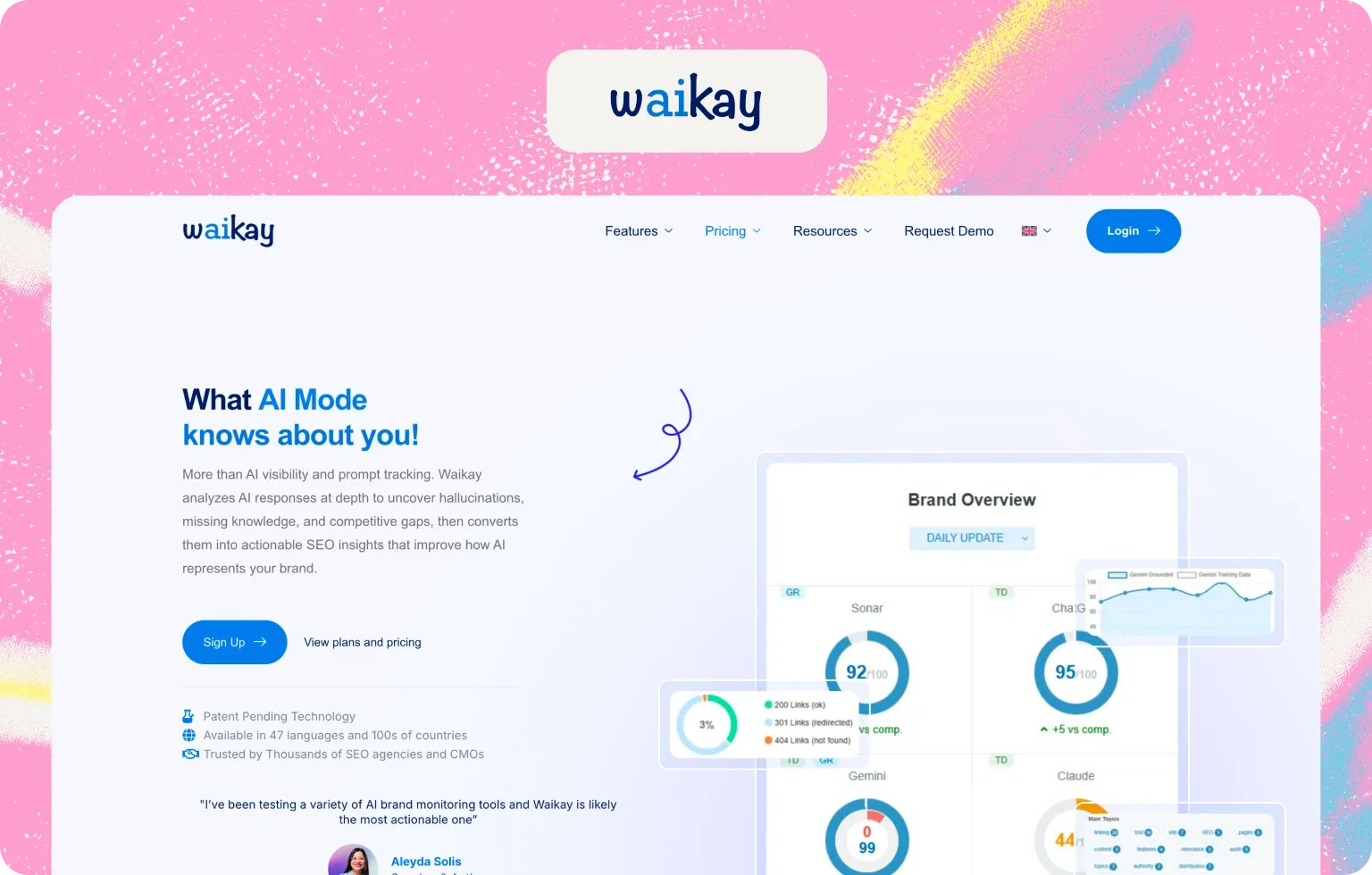
Best for: startups worried about wrong or outdated facts in AI answers.
What you get: brand reports and prompt tracking across ChatGPT, Gemini, Claude and Perplexity, at a weekly, every-two-days or daily interval paid in credits.
Watch-outs: 8 credits on the entry plan cover very little tracking; Waikay's own example uses 15 credits for 5 prompts on 3 models every 2 days. Most teams will need Small Teams at $69.95.
Pricing (vendor site, 13 Nov 2026): Early Adopter $19.95/mo (8 credits), Small Teams $69.95/mo (30 credits).
ZipTie is a configurable AI search tracker where you build your plan from daily, weekly and monthly prompt slots.
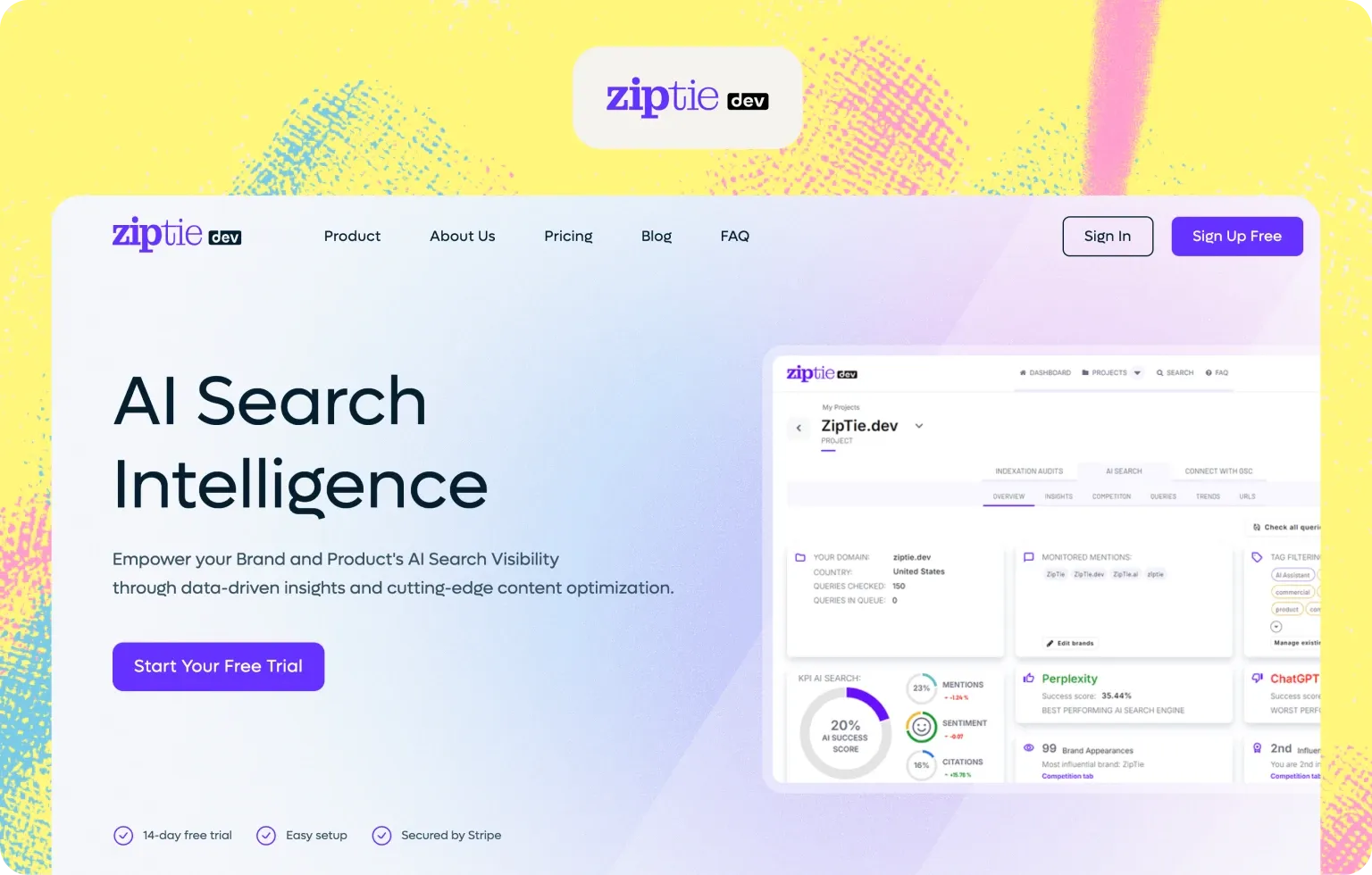
Best for: teams that want to pay only for the prompts and engines they use.
What you get: up to 7 engines, including ChatGPT, Google AI Overviews, Perplexity, Google AI Mode, Copilot and Gemini, with daily, weekly or monthly checks per prompt.
Watch-outs: there are no fixed plans, so the real price depends on your mix. ZipTie's pricing page gives an in-house example (50 daily, 300 weekly and 1,000 monthly prompts on all 7 engines) at $230.95/mo.
Pricing (vendor site, 13 Nov 2026): Starter configurations from $25.65/mo; 20% off yearly. 7-day free trial, no card required.
Under $100 a month you can get real AI visibility tracking, but every entry plan trades something away. The common trade-offs:
Free AI visibility checkers give you a one-off snapshot before you pay for tracking. They are useful for a first look, not for measuring progress.
A free check is one run on one day. AI answers change between runs, so move to daily tracking once you want to see whether your work changes anything.
Upgrade when the entry plan limits what you can learn, not when a vendor suggests it. Five signals:
For larger teams and agencies, see our full comparison of AI visibility platforms.
Omnia gives a small team what most budget tools split across several products. You get daily data on the four engines most tools track by default, the exact URLs AI engines cite, and a clear next step.
With Omnia, INDYA moved from #11 to #2 on a tracked AI prompt in under seven days.
Start with the free AI visibility checker, or try Omnia free for 14 days on the Growth plan, no credit card required.
Omnia offers a 14-day free trial on the Growth plan.
No credit card required. See exactly where your brand shows up (or doesn't) across AI engines, then let the platform's recommendations guide your next move.

AI visibility tools for startups cost from about $17 to $100 a month on entry plans, based on vendor pricing pages checked in November 2026. Plans for larger teams usually run from about $189 to $500 a month, and enterprise plans are quoted on request.
Among the tools above, Rankscale's Essentials plan ($17 a month, billed yearly) and Waikay's Early Adopter plan ($19.95 a month) have the lowest listed prices. Both are credit-based, so check how much tracking the credits cover before you compare them with flat-priced plans.
Yes. Free checkers from Omnia, Semrush and Ahrefs give a one-off view of your AI visibility, and most paid tools offer a free trial. Free checks show one moment, so they can't show trends.
Most startups can start with 20 to 50 prompts that cover their main category, problem and comparison questions. Add prompts by product line or market once the first set shows useful patterns.
A budget tool should cover at least ChatGPT, Perplexity and Google's AI Overviews or AI Mode. Those are the engines most AI visibility tools track by default, and the ones Omnia monitors on every plan.
Daily refresh is best for most teams, because AI answers vary between runs and daily data shows trends within weeks. Weekly data is cheaper but makes it harder to link changes to the work you did.
Written By
 Alfredo BernalOrganic Growth LeadatOmniaAlfredo BernalOrganic Growth LeadatOmnia
 Alfredo BernalOrganic Growth LeadatOmnia
 Alfredo BernalOrganic Growth LeadatOmnia
 Jose Luis García del RíoGrowthatOmnia
 Alfredo BernalOrganic Growth LeadatOmnia
No credit card required · Free for 14 days · See your AI visibility within 3 minutes