Alternatives
Ahrefs vs BrightEdge vs Omnia: Key Differences for 2026

 Jose Luis García del RíoGrowthatOmnia
 Alfredo BernalOrganic Growth LeadatOmnia
TL;DR
Free AI Overviews rank tracking tells you if your brand is showing up in Google AI Overviews today. That’s useful for a quick check. But free methods break fast when you need country-level coverage, URL-level citation data, competitor share of voice, or auditable SERP snapshots over time. If AI Overviews impact your pipeline, you need repeatable monitoring plus an action layer that turns findings into content you can ship. That’s where the best free AI Overviews rank tracker options end and where a purpose-built platform like Omnia begins.
If you’re still wrapping your head around AI visibility, there’s still time to take advantage of this discovery channel. A lot of marketing teams know AI search matters, they’ve typed their brand into ChatGPT or checked Google AI Overviews a few times, and they’ve gotten a feel for whether they show up. That manual approach is a reasonable starting point. You run a few test queries, see if your brand appears in the AI-generated answers, and get a rough sense of where you stand. But it breaks down fast. AI Overviews change with every model update, prompt rephrasing, or geolocation shift. A query that cites you today might not cite you tomorrow, and you won’t know why.
That’s where a free AI Overviews rank tracker comes in. It automates the checking so you don't have to babysit a spreadsheet, and it gives you a structured read on your AI presence across multiple AI engines instead of a single ad-hoc search. You won’t get the depth of a paid platform, but you’ll get a baseline that's more reliable than typing prompts into AI Overviews and hoping the AI-generated results are accurate. If you’re new to AI visibility and want to understand whether you have a problem worth solving before paying for ongoing monitoring, a free AI overview rank tracking tool is the right place to start. This article breaks down the 7 best options, what each one actually tracks, and where the free tier hits its ceiling.
A free AI Overviews rank tracker is a tool that shows whether your brand appears in Google’s AI answer boxes, without requiring a paid subscription or plan. But “rank” in the AI Overviews context doesn’t mean position 1 through 10 on a list of blue links.
Google AI Overviews generate answers dynamically, pulling from multiple sources and synthesizing them into a single response. So “ranking” really means three things:
AI overview tracking tools measure these signals, not traditional keyword ranking
Traditional rank tracking is deterministic. You type a keyword into Google Search, your page shows up at position 4, and it’s likely there tomorrow with minor fluctuations. AI Overviews rank is probabilistic. You might appear in 55% of checks for a given prompt over a month and 25% the next month, not because your content changed but because the model updated.
Traditional SEO tools can’t measure that variability. If you’re new to AI visibility, a paid plan might seem like a daunting decision. But trying to measure on your own with a bunch of spreadsheets and prompts also isn’t cutting it anymore.
That’s why we’ve compiled a list of the best free AI Overviews rank tracker tools. This way, you can try a few platforms and commit to a paid plan later when it makes sense.
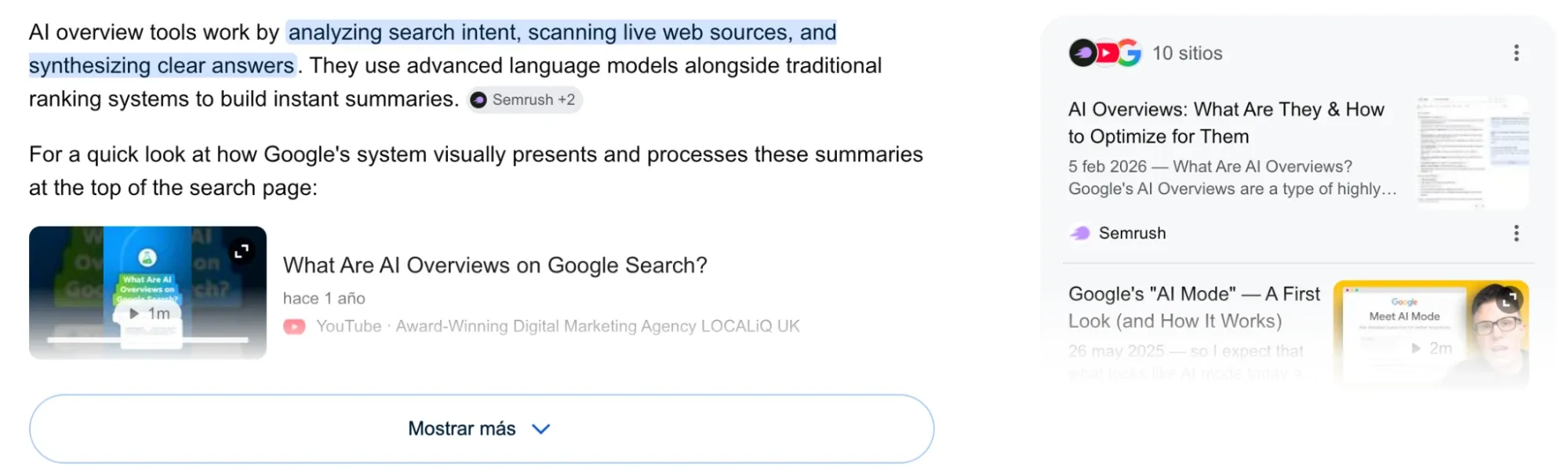
AI overview tracking tools emulate real queries, detect whether an AI module (the AI Overviews box) appears in the search results, extract any citations or brand mentions, and store the data with timestamps. Some tools also capture SERP screenshots as an audit trail.
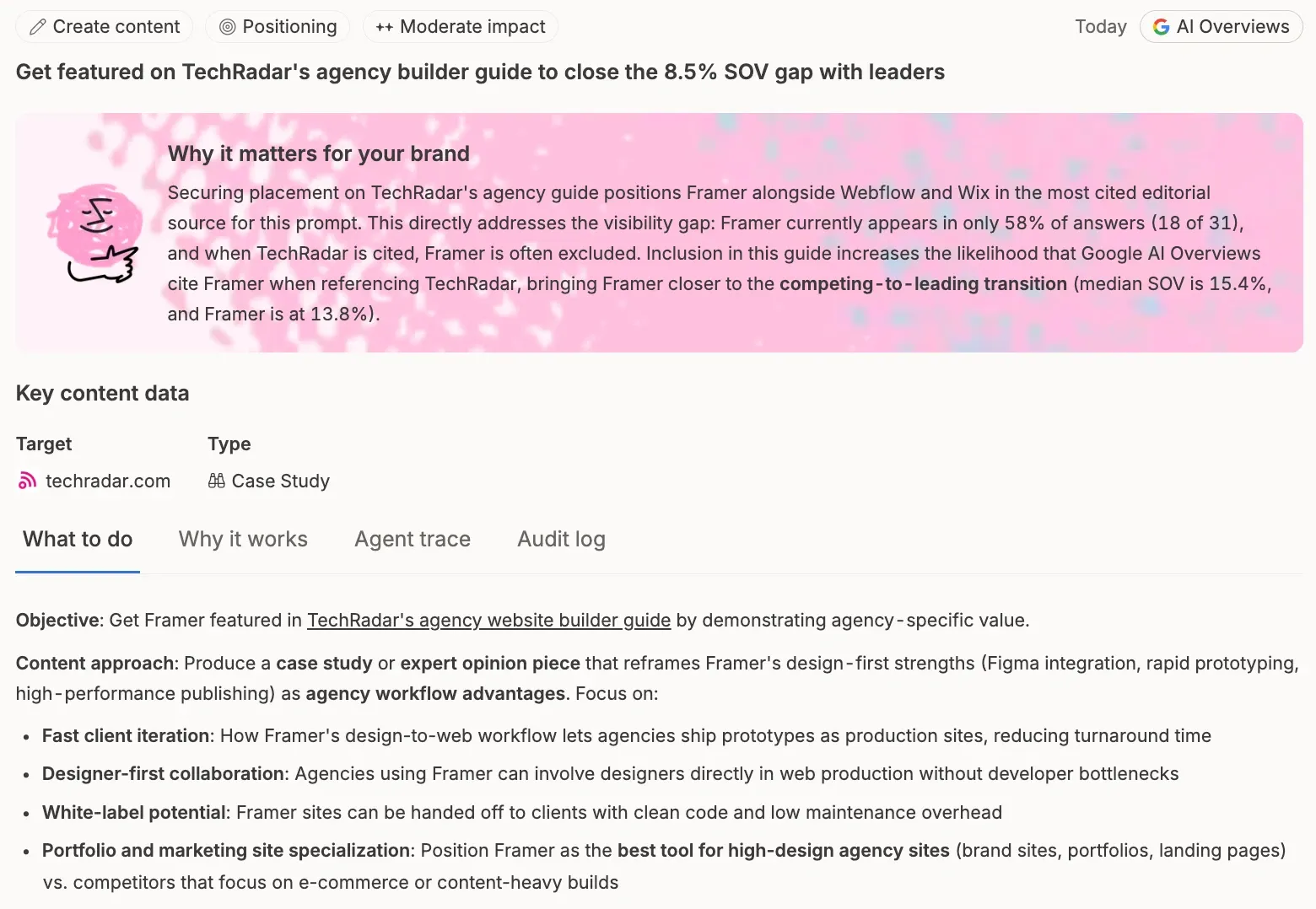
Here’s an example AI Overview snippet for the prompt “How do AI overview tools work.”
The quality of a rank tracking tool depends on how faithfully it simulates real user behavior, how granular its citation extraction is, and whether it stores historical data so you can track trends.
SERP snapshots are your evidence in a volatile search environment. A snapshot should include the timestamp, locale, device, query string, and the full AI Overviews box content. Without snapshots, you’re trusting a dashboard’s interpretation of what happened.
With snapshots, you can verify exactly what Google’s AI answers looked like at a specific moment in a specific country. Most free AI overviews rank tracking tools skip this step entirely, which means you can’t audit their claims or show proof to stakeholders.
Omnia keeps the full answer behind every tracked prompt, so you can see exactly what each AI engine said. The free AI Visibility Checker shows them prompt by prompt for ChatGPT and Google AI Mode.
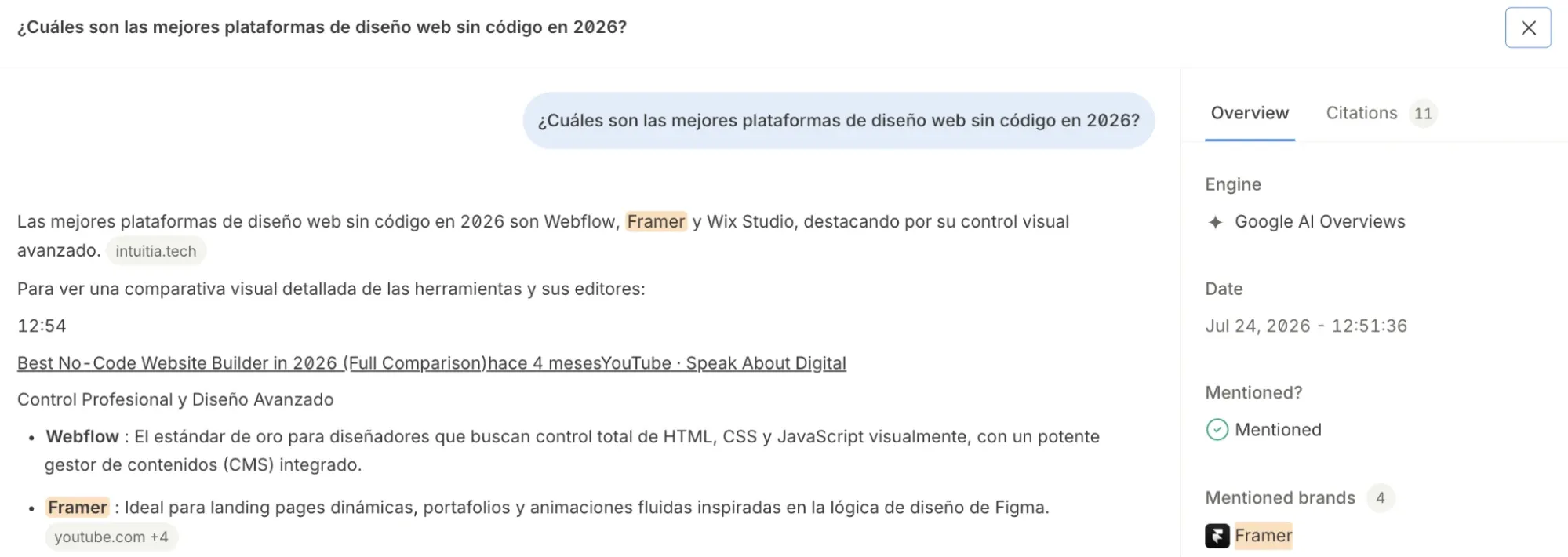
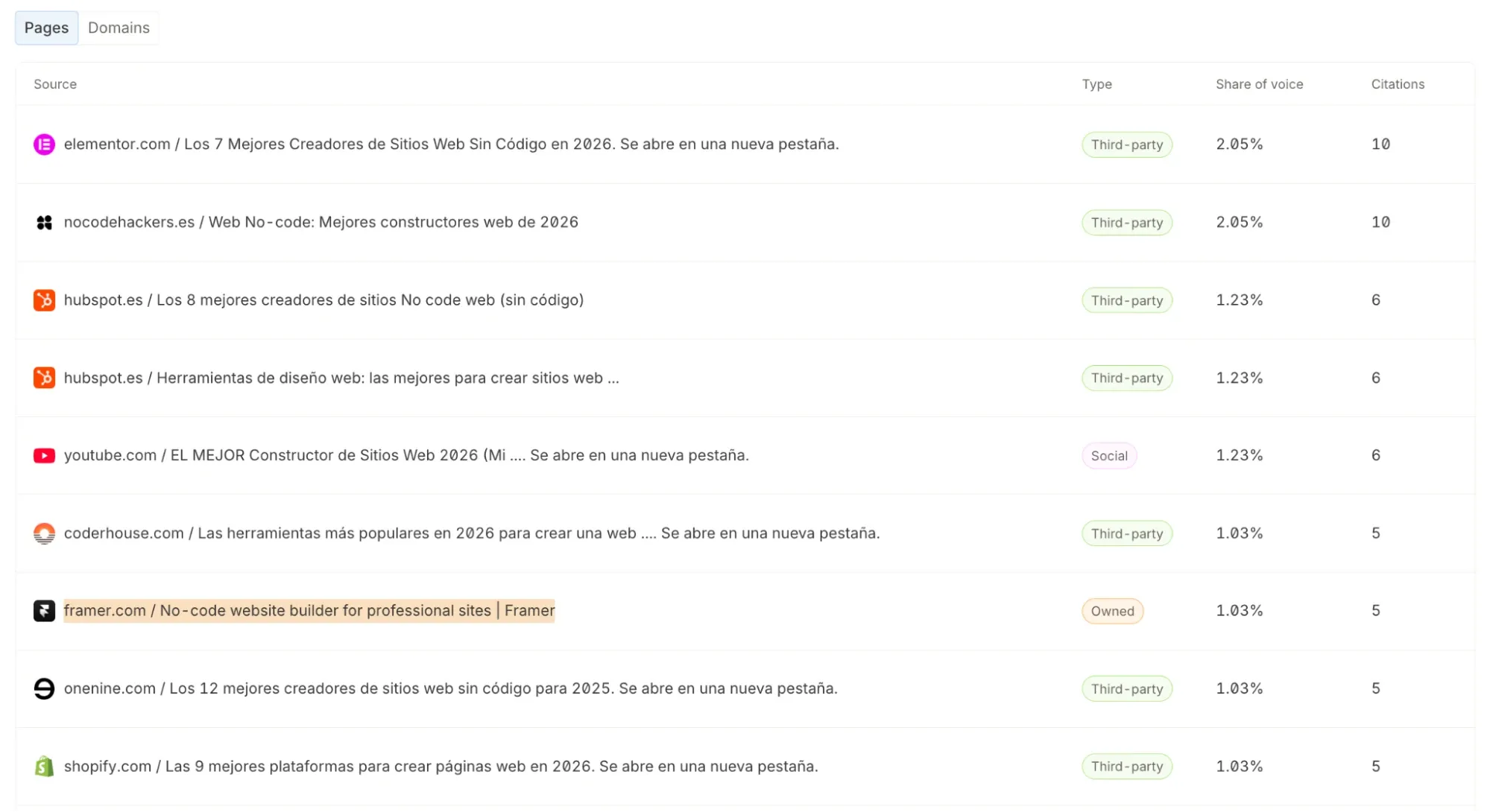
There’s a big difference between domain-level and URL-level citation extraction. Domain-level tells you “your domain was mentioned.” URL-level tells you “this specific page was cited as a source.” That distinction matters because it tells you what to do next.
If a competitor is cited via their comparison page and you’re not cited at all, then you know to build or refresh the page that AI systems actually need to cite. Citation gap analysis at the URL level is what turns monitoring into execution. Tools that only report domain-level presence can’t give you that signal.
Omnia shows you specific pages rather than domains.
AI Overviews appearance and citations vary significantly by country. A query that triggers an AI Overview with your brand in the US might show no AI Overview at all in the UK, or might cite a completely different set of sources in Germany.
Free AI overview rank tracking that only checks one locale gives you a false picture of your global AI visibility. For companies selling into multiple markets, country-level tracking is essential. Google AI Overviews tracking that doesn’t segment by country is effectively a single-market tool.
One check indicates you show up, but that’s not any real measurement. AI Overviews are volatile. The AI generated summaries change with model updates, index refreshes, and query fan-out patterns. A rank tracker tool that runs once and reports a position is giving you a single frame of something that’s constantly rotating.
Position tracking in AI Overviews requires reruns and sampling over time to produce a presence rate, which is a more honest KPI than a one-time rank. Google AI overviews tracking that doesn’t handle volatility will mislead you into thinking a position is stable when it’s not.
For SEO teams justifying budget to leadership, exports and clean reporting matter. A Google AI Overviews tracker should let you export data with fields like keyword, locale, AI Overview present Y/N, brand cited Y/N, cited URLs, competitors cited, and snapshot link.
API access matters for teams that need to pipe AI overview data into dashboards or Google Analytics. Most free AI Overviews rank tracking tools don’t offer exports or API access, which means you can’t build stakeholder-ready reports without manual work. Integrating with Google Search Console for search analytics and search visibility benchmarking is also limited on free tiers. If either of these are a must, you may want to consider paid AI visibility tools.
Use this table to shortlist 3 tools, then read the detailed reviews below.
| Tool | Best for | Truly free? | Paid plan pricing |
|---|---|---|---|
| Omnia | Companies scaling from free checks to paid monitoring | Free AI visibility report | From €79/mo |
| Otterly AI | Free AEO tools and audits | 7 free tools | From $29/mo |
| Profound | Free AEO report + agent trial | Free tool (one-time) | From $99/mo |
| Scrunch | Free AI visibility audit | Free tool (one-time) | From $250/mo |
| SEOptimer | Free SEO/AEO audit | Free tool (one-time) | From $29/mo |
| Ahrefs | Free AI visibility preview | Free preview | From $199/mo |
| BrandPeek | Free plan with credits | Yes (free plan) | From $29/mo |
Omnia offers a free AI visibility checker that runs your brand through ChatGPT and Google AI Mode, plus a 14-day free trial on the Growth plan for ongoing monitoring, AI Overviews included. It’s the only tool on this list that takes you from free check to paid monitoring to execution-ready recommendations without switching platforms.
Best for
Companies testing if AI Overviews visibility is real in their category, then scaling to country-level monitoring and competitor benchmarking.
What it does well
Omnia’s free AI visibility checker uses Omnia Agent to pick 3 category-relevant prompts, the kind of questions buyers actually ask AI about your space, and runs them in ChatGPT and Google AI Mode. It does not check AI Overviews: that starts with the free trial. You enter your domain and email, and within 3–5 minutes you get a report that includes your brand visibility rating by engine and by prompt, share of voice versus competitors, citation insights showing which domains AI engines cite and whether yours is one of them, and two immediate actions to improve your visibility.
While the checker is a one-time tool, Omnia’s full platform helps teams learn how to turn AI signals into actions. It provides localized tracking by country and locale, citation intelligence at the domain and URL level, competitive share of voice analysis, and auditable SERP snapshots.
The action layer produces content recommendations, briefs, and placement targets, so you know what to publish next. Prompt Discovery surfaces real AI search queries with search volume and difficulty scores, so you can find winnable prompts instead of guessing.
The MCP connector lets you pull visibility data into Claude or Cursor. Omnia demonstrates the incremental value of paid AI Overviews tracking by surfacing insights that manual checks can’t replicate.
Key features
Watch-outs
Omnia isn’t a full SEO platform with backlink research or technical SEO audits. Also, the free checker is one-time, not ongoing. Access to the free, 14-day trial is only available on the Growth plan.
Good fit if
Not a fit if
Paid pricing
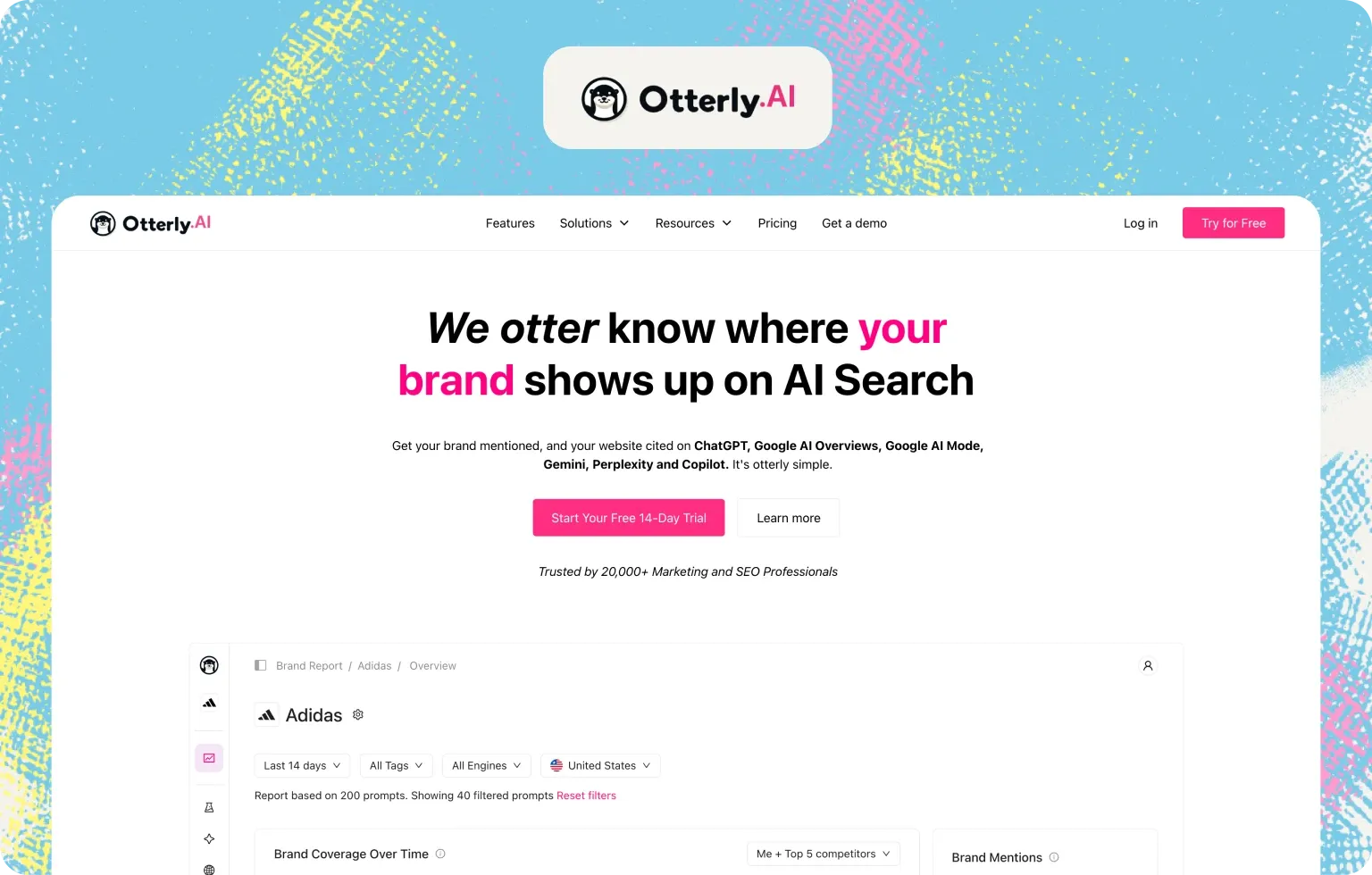
OtterlyAI offers one of the most generous collections of free AEO tools in the market. It has free tools, no account required, for:
Not all of these tools are relevant to AI Overviews, though.
Best for
SEO teams who want free AEO research tools to understand prompt landscapes and content readiness before paying for ongoing monitoring.
What it does well
The free tools cover a wide range of answer engine optimization tasks, from prompt research to crawlability checks to content audits. The query fan-out analysis is particularly useful for understanding how AI powered search engines expand a single query into multiple sub-queries. Otterly’s paid platform adds brand mentions tracking, sentiment tracking. Teams weighing Omnia vs Otterly or scanning top Otterly competitors will find that Otterly's strength is breadth of free research tools, while its paid tier doesn't offer placement targets or unlimited country-level tracking on every plan.
Key features
Watch-outs
The free tools are individual utilities, not an ongoing monitoring system. The paid platform starts at $29/mo but doesn’t include Google Looker Studio Connector or MCP access unless you pay for higher tiers.
Paid pricing
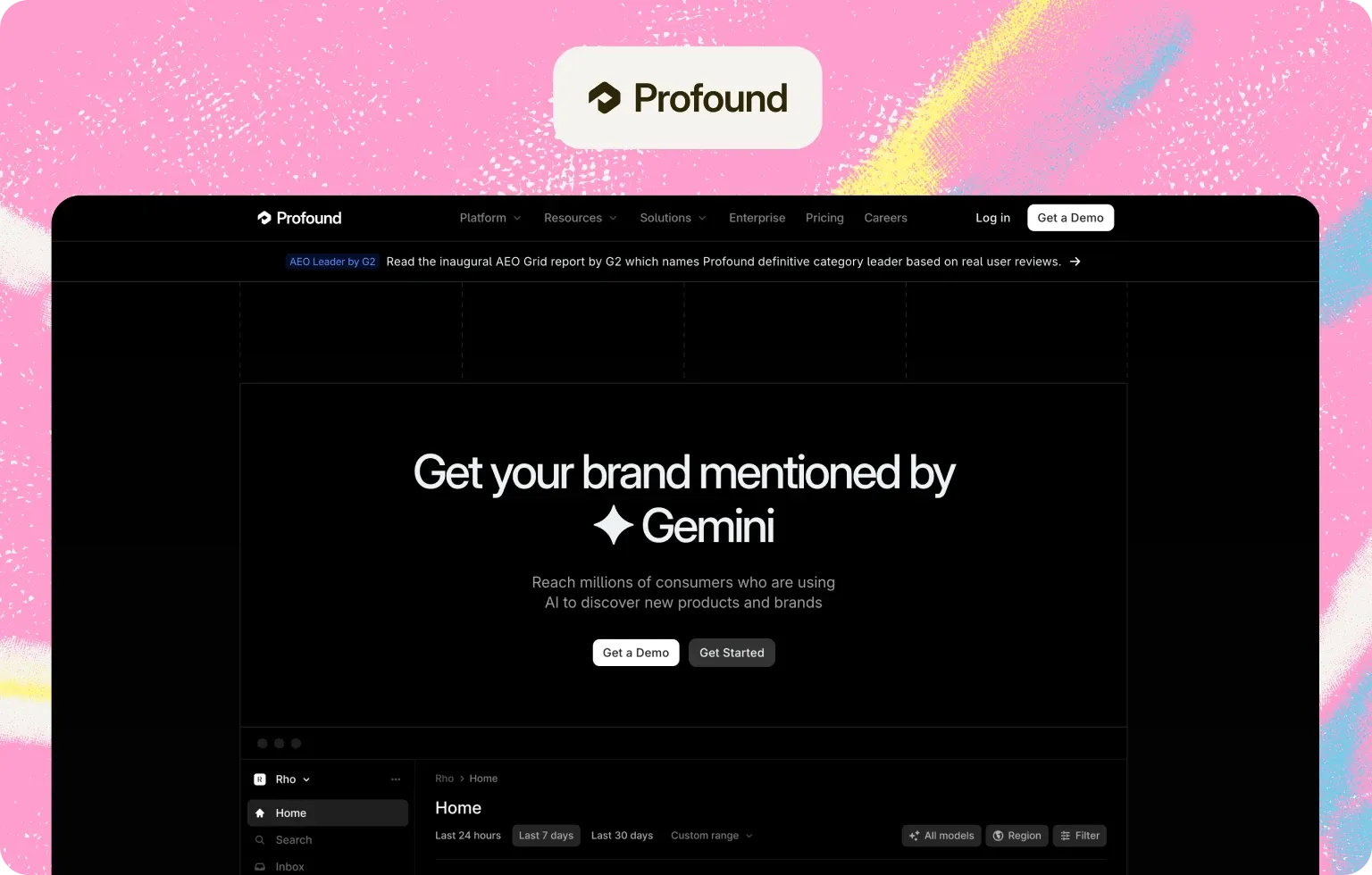
Profound offers a free AEO report that shows how your brand performs across major answer engines, plus free trial access to its AI marketing agents that generate AEO-optimized content.
Best for
Companies that want a free snapshot of their AI visibility across AI search engines and a taste of AI-assisted content execution.
What it does well
If you’re comparing options side by side, our Omnia vs Profound and Omnia vs Peec AI breakdowns go deeper. The free AEO report gives you a quick read on brand mentions, share of voice, top citation sources, and sentiment breakdown across major AI platforms. It also surfaces AI mentions and recommended prompts to target, making it a solid AIO research tool for initial benchmarking. The trial agents let you test AI-assisted content creation, which is more execution-oriented than most free tools offer.
Key features
Watch-outs
The free report is a one-time snapshot, not ongoing monitoring. The trial agents are limited in scope. The paid platform starts at $99/mo for ChatGPT-only tracking, and multi-engine coverage requires the $399/mo Growth plan. If you need cheaper tracking, consider Profound alternatives.
Paid pricing:
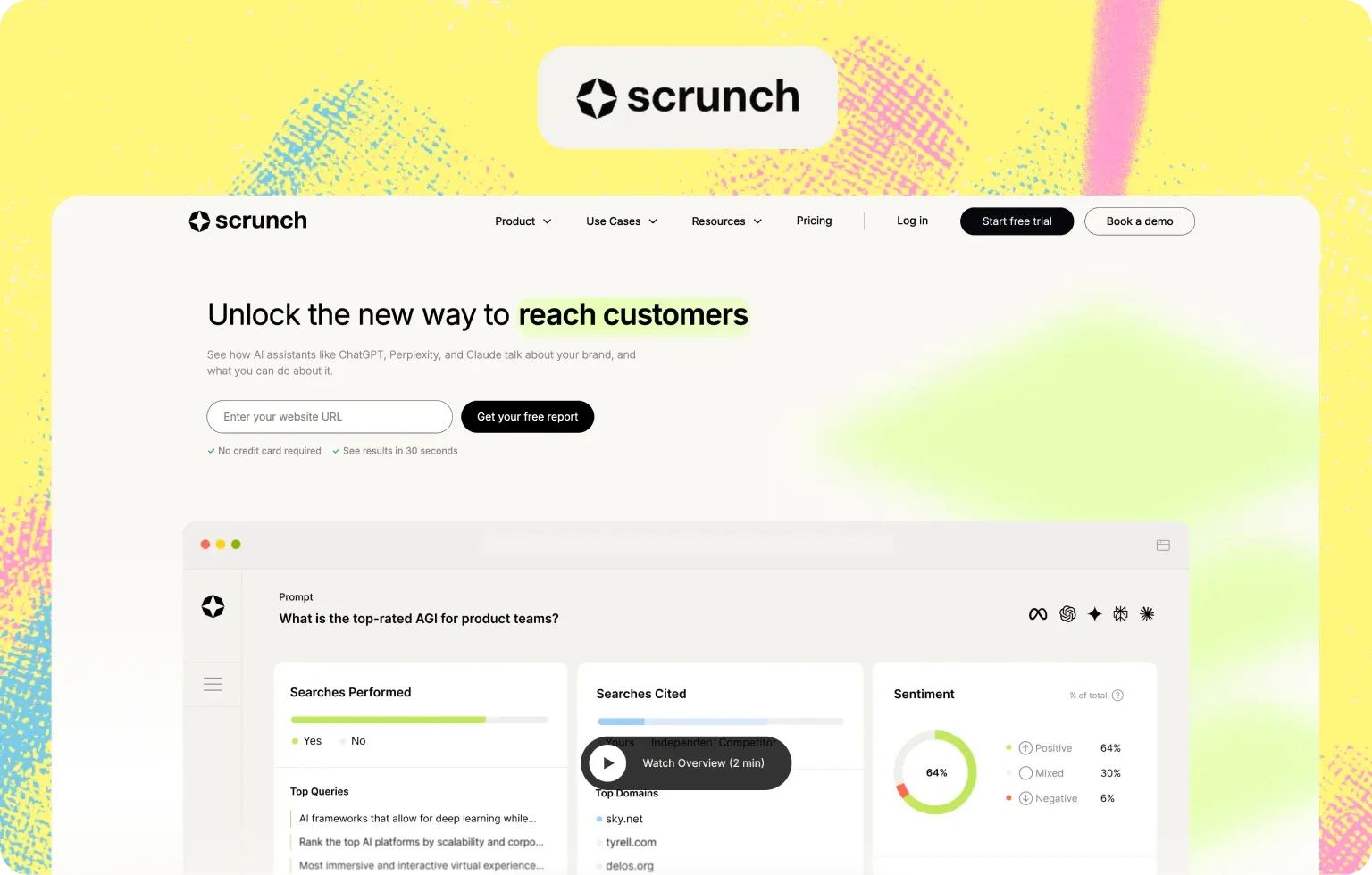
Scrunch offers a free AI visibility audit on its homepage that runs in 30 seconds with no credit card required. You enter your site and get a quick read on how AI search engines see your brand.
Best for
Companies that want a fast, no-commitment AI visibility audit to see if they have a problem worth solving.
What it does well
The free audit is genuinely quick and gives you a baseline read on your AI presence. Scrunch’s paid platform adds structured brand monitoring, site audit data, and the Agent Experience Platform (AXP) for deeper execution workflows. Scrunch’s core strength is speed and site-readiness checks rather than depth of tracking, so if you're deciding between it and similar tools, our Scrunch alternatives and Omnia vs Scrunch AI guides cover that ground.
Key features
Watch-outs
The free audit is a one-time check with no ongoing monitoring. The paid platform starts at $250/mo, which is steep for teams just exploring AI visibility. If you need a more budget-friendly tool, consider Omnia vs Scrunch.
Paid pricing
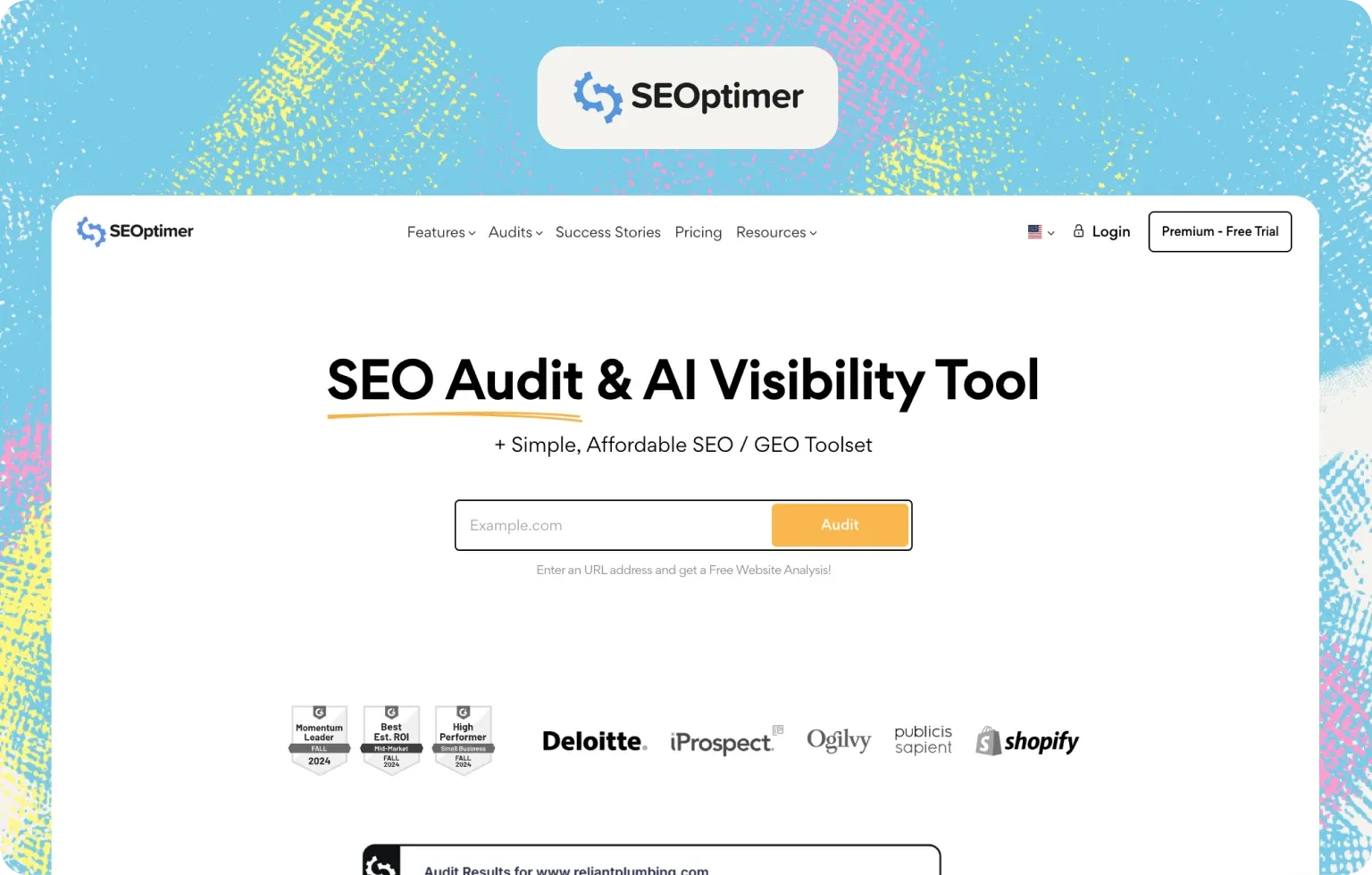
SEOptimer offers a free SEO audit that includes AI visibility checks alongside traditional SEO analysis. It analyzes websites across ~100 data points and reports current Google AI Search rankings.
Best for
Agencies and small teams that want a free SEO audit with AI visibility signals baked in, without paying for a dedicated AI monitoring tool.
What it does well
SEOptimer covers AI visibility factors like LLM accessibility, identity, and citability alongside standard SEO audit checks. It includes keyword tracking by country, language, search engines, and device type. The platform offers white-label reporting and embeddable audits for agencies. It’s one of the cheapest entry points into AI-adjacent SEO analysis.
Key features
Watch-outs
SEOptimer is primarily an SEO audit tool, not a dedicated AI Overviews tracker. The AI visibility checks are limited compared to purpose-built tools. There’s no URL-level citation extraction or ongoing AI Overviews monitoring.
Paid pricing
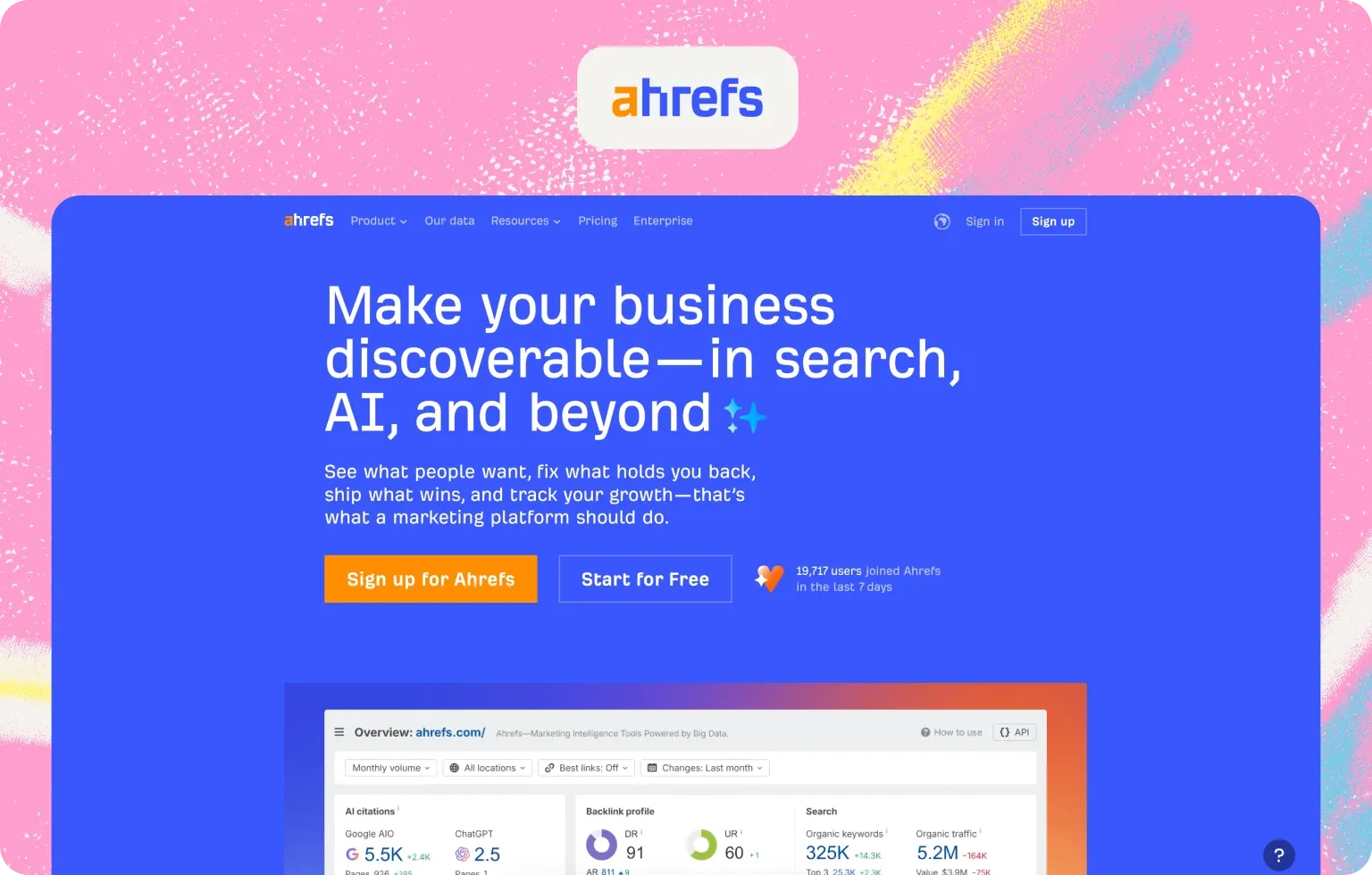
Ahrefs offers a free preview of your AI visibility through Brand Radar, its AI monitoring product. You can check your brand’s AI presence across six AI engines without paying.
Best for
SEO professionals who already use Ahrefs for backlink analysis and want a quick AI visibility preview within the same ecosystem.
What it does well
Brand Radar draws on 391M+ search-backed prompts, one of the largest AI visibility databases out there. The free preview gives you a snapshot of your brand mentions across AI answers. The paid platform ties citation data to Ahrefs’ existing backlink index, so you can see whether cited domains have strong authority.
Key features
Watch-outs
The free preview is a one-time check. Brand Radar’s paid tiers use per-engine pricing ($199/mo for 1 engine, $699/mo for all 6), which can cause teams to consider Ahrefs alternatives.
Paid pricing
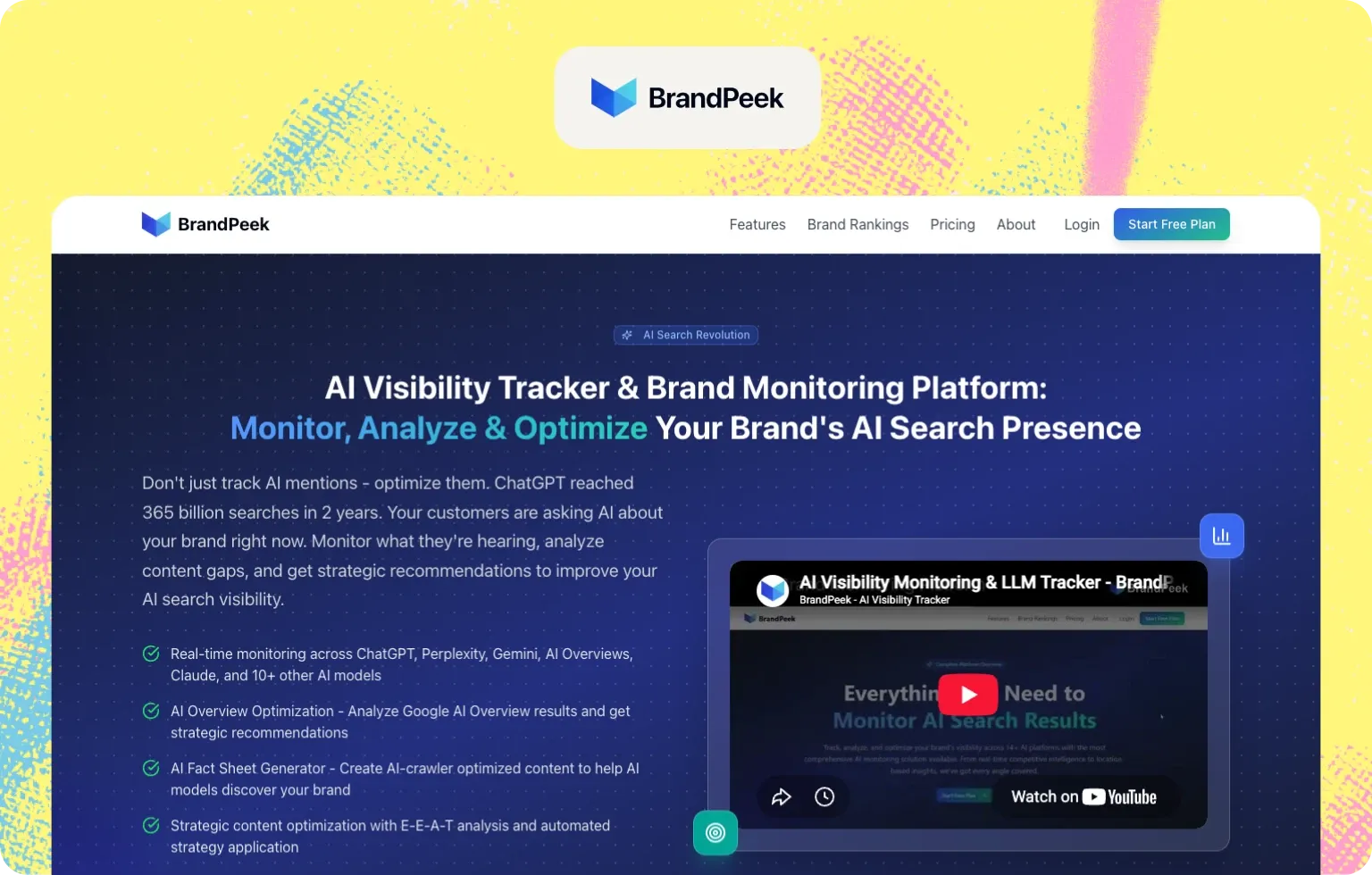
BrandPeek offers a permanent free plan with 25 credits per month, basic AI models, location-based tracking, and a 30-day data retention window.
Best for
Teams that want a free, ongoing AI visibility tracker with basic competitor monitoring and location-based tracking.
What it does well
BrandPeek’s free plan is one of the few that offers ongoing monitoring, not just a one-time check. The 25 monthly credits let you track a small prompt set over time, and location-based tracking gives you some geographic segmentation. The platform includes an AI Overviews analyzer (view-only) and an AI Fact Sheet Generator.
Key features
Watch-outs
25 credits per month is tight, roughly enough for a handful of prompts across a couple of engines. The 30-day data retention means you can’t build long-term historical data trends.
Paid pricing
If you’re budget-conscious, the things worth paying for first are country segmentation, URL-level citation extraction, and SERP snapshots. Those three features separate tools that give you actionable signals from tools that give you a dashboard to stare at.
Here’s a cheap but serious checklist on the minimum requirements for paid tracking:
Some tools may look cheap, but quickly outgrow your budget without you even realizing. These are the warning signs to watch out for:
Free AI overview rank tracking does work, but only up to a certain point. Here’s where it breaks:
If your AI Overviews visibility significantly impacts your pipeline, it's worth looking at a paid tool.
The tools in this article fall into a couple of camps. You have free one-time checkers that give you a snapshot and free plans with tight credit limits that work for a handful of prompts. When you advance to a paid platform that adds monitoring, many stop short of telling you what to do next.
Omnia spans all three. You start with the free AI visibility checker, move into a 14-day free trial of the full platform, and if you pay, you get access to 7 AI engines, country-level tracking on every plan, URL-level citation extraction, and an action layer that turns gaps into content briefs and placement targets.
Free tools tell you if your brand is showing up. Paid tools from most vendors let you know how often. Omnia answers both, and then tells you what to do next. The action layer produces content recommendations, briefs, and placement guidance, so your team ships work instead of staring at dashboards. URL-level citation data shows you the exact pages competitors won and the exact pages you need to match, which is the difference between knowing you have a gap and knowing how to close it.
Most platforms in this list gate features by tier or charge per engine and location. Omnia includes all 7 engines on every paid plan, with unlimited country and language tracking, so your coverage scales with your market instead of your budget.
Start for free and sign up for a 14-day trial on Omnia’s Growth tier. Or, get started with Omnia’s free AI visibility checker.
Want the action layer that tells you exactly how to improve your visibility? Book a demo with Omnia today.
Omnia offers a 14-day free trial on the Growth plan.
No credit card required. See exactly where your brand shows up (or doesn't) across AI engines, then let the platform's recommendations guide your next move.

To track AI rankings, you need a tool that runs your target prompts across AI search engines on a fixed cadence and logs whether your brand appears, at what position, and which URLs are cited. A single manual check is more of a sighting than real tracking information. Use a dedicated rank tracker that stores historical data so you can track brand mentions and see trends over time.
If you want to track AI Overviews, you need a tool that detects whether an AI Overview module appears in AI search results for your query, extracts any AI overview citations, and logs the data with timestamps and locale information. Ahrefs and similar SERP tracking tools offer basic AIO tracking, but purpose-built platforms like Omnia provide URL-level citation extraction and country-level segmentation.
Yes, several tools offer free AI overview checker functionality. Otterly’s free AEO tools provide some level of AI Overviews visibility. Omnia’s free AI visibility checker covers ChatGPT and Google AI Mode, and its 14-day free trial adds AI Overviews tracking. However, free tools typically limit the number of prompts, country coverage, or refresh cadence, so they’re best for initial exploration rather than ongoing monitoring.
An LLM rank tracker monitors your brand across multiple AI engines like ChatGPT, Perplexity, and Gemini. A Google AI Overviews tracker specifically monitors Google’s AI answer boxes in AI snippets. The best AI tools do both, but if AI Overviews are your primary concern, choose a tool that specifically tracks Google AI Overviews with country-level tracking and URL-level citation data.
There isn’t a free tool that does this well. AI overviews rank tracking tools that are free either don’t offer country-level tracking or limit it to one locale. For multi-country monitoring, you need a paid tool like Omnia that includes unlimited country and language search tracking on every plan. Manual checks across countries are possible but don’t scale and can’t store historical data for trend analysis.
Written By
 Alfredo BernalOrganic Growth LeadatOmniaJose Luis García del RíoGrowthatOmnia
 Alfredo BernalOrganic Growth LeadatOmnia
 Alfredo BernalOrganic Growth LeadatOmnia
 Jose Luis García del RíoGrowthatOmnia
 Jose Luis García del RíoGrowthatOmnia
No credit card required · Free for 14 days · See your AI visibility within 3 minutes