


Rankscale tells you where your brand stands in AI-generated answers, but it doesn't tell you what to do about it. For lean teams without a dedicated AI SEO function, that missing action layer is the real problem. This guide compares 11 Rankscale alternatives across engine coverage, citation intelligence, geographical tracking, share of voice, and execution features, so you can find a tool that moves the needle rather than just measuring it.
AI visibility tools are proliferating fast. Most of them do one thing reasonably well, which is show you a number. This is either your brand's mention rate, your share of voice, or your position across a handful of engines. Rankscale fits this pattern. It tells you where you stand in AI-generated answers, and then largely leaves you there.
For lean teams, using a tool without an action layer means every insight becomes a homework assignment nobody has time to complete. You know your brand isn't being cited on a cluster of high-intent prompts. You don't know which content to fix, which angle to push, or which source you need to land on to change it. The data stalls in a dashboard, and the people who could act on it are still trying to figure out what action to take.
Rankscale's credit-based model adds a secondary friction. Teams end up rationing queries, checking fewer prompts, and refreshing less often, using the tool less at exactly the moments they need the most signal.
The tools worth switching to flip both problems. They offer monitoring and execution in the same platform, with pricing that doesn't penalize you for using it seriously. This guide covers the best Rankscale AI alternatives for teams that need both.
Why are Rankscale users reconsidering their choice?
Rankscale is a legitimate AI search visibility platform that tracks rankings, sentiment, citations, and share of voice across a broad range of engines. It's built a real user base among startups and SMBs who want a centralized dashboard for AI search monitoring. But while it provides valuable data, it doesn’t tell you what to do with it.
Most teams that start looking for Rankscale alternatives run into a couple of friction points. The first is the credit-based pricing model. Each AI engine query costs 0.25 credits per prompt. So tracking 50 prompts weekly across multiple engines consumes around 162 credits per month. On the Essentials plan (120 credits at €20/mo) that's manageable at low volume for a select number of engines, but as you expand your prompt set, increase refresh cadence, or add engines, credit burn accelerates quickly. For teams trying to scale their monitoring, the cost structure requires careful management in a way that flat-rate tools don't.
The third is the absence of a true action layer. Rankscale surfaces “actionable recommendations” and site audit findings, but these are guidance-level observations. The platform lacks a system that generates specific content briefs, identifies third-party domains to target for citation placements, or produces a week-by-week execution backlog your team can run directly. The gap between seeing the insight and knowing exactly what to build next remains yours to bridge.
How to choose a Rankscale AI alternative: quick checklist
.avif)
To make it easier while you compare Rankscale AI competitors, here's a checklist of the top 10 things to look out for. Whichever Rankscale AI competitor you decide to go with, run through this list before committing:
- Engine coverage: ChatGPT, Perplexity, and Google AI Overviews are the minimum. If your audience uses other AI platforms, check they're covered.
- Country-level tracking: AI answers aren't the same everywhere. If you're running campaigns across multiple markets, you'll need country-level data, not a global average.
- Citation tracking at URL level: Domain-level citation data tells you whether your website is being mentioned. URL-level tells you which page and that's the signal that actually informs what to create or fix next.
- Citation history: A snapshot is useful once, but a trend line tells you whether things are getting better or worse, and when something changed.
- Refresh cadence: AI answers change constantly. If a tool only refreshes weekly, you could be acting on stale data.
- Inclusion rate and answer share: How often you appear across your tracked prompts, and how you compare to competitors. Rankings don't exist in AI search, but these metrics do.
- Exports and integrations: At minimum you want CSV or Google Sheets. A Looker Studio connector is worth having if you're reporting to stakeholders regularly.
- Seats: Some tools charge per user, others don't. Look closely at the pricing model before assuming you're covered.
- Pricing mechanics: Watch for prompt caps, overage fees, and what counts as a “refresh.” These can push costs well above the headline price.
- Actionable recommendations: The best tools include an action layer, like content briefs, recommendations, and optimization workflows, not just data.
The top Rankscale AI alternatives at a glance
Use this table to shortlist 2-4 tools. Then, read the detailed reviews below to make your final decision.
| Tool | Best for | Engines | Pricing | Action layer |
|---|---|---|---|---|
| Omnia | Startups/scaleups needing citations + action | 4 | From €79/mo |  |
| Peec AI | Multi-country teams wanting daily tracking | 7 | From $95/mo |  |
| Scrunch AI | Enterprise brand safety + bot crawling | 8 | From $250/mo | |
| AirOps | Content teams needing monitoring + publishing | 4 | From $200/mo | |
| AthenaHQ | Growing companies with a dedicated GEO team | 8 | From $295/mo | |
| Otterly AI | Lightweight entry-level monitoring | 6 | From $29/mo | |
| SE Ranking | Existing SE Ranking users | 4 | From $129/mo + add-on | |
| Semrush | Existing Semrush users | 6 | From $99/mo | |
| Ahrefs | SEO teams already using Ahrefs | 7 | From $398/mo (AI add-on) | |
| BrightEdge | Large enterprise SEO teams | 3 | No published pricing | |
| Surfer AI | Content writers | 4 | From $219/mo | |
The best Rankscale AI competitors
The best AI visibility tools do more than report where your brand appears. They give you a reason it's there and a path to change it. What follows are the platforms worth considering if you're combining AI visibility tracking with an actual need to act on what you find.
1. Omnia

Omnia is a purpose-built AI visibility platform that tracks brand presence across ChatGPT, Perplexity, Google AI Overviews, and Google AI Mode. It executes prompts via real browsers in actual geographic locations across unlimited countries and languages on every plan. It pairs citation-level monitoring with Insights, an action layer that converts monitoring data into a concrete, prompt-specific task list your team can execute this week.
Best for
SEO/GEO specialists and marketing generalists on lean teams who need to prove AI search visibility is improving — with the citation data to diagnose why specific prompts are underperforming and the execution guidance to fix them.
What it does well
Where Rankscale surfaces a visibility score and audit findings, Omnia closes the loop between measurement and execution. Omnia’s action layer analyzes four signals behind each tracked prompt: citation concentration, your current position, brand power, and category context.
From that it generates a prioritized task list tied to specific prompts, not vague topic buckets. Tasks include:
- Creating new content with guidance on format, placement, and length
- Optimizing existing pages with specific fixes like FAQ schema, comparison tables, or freshness signals
- Targeting third-party domains for citation placements.
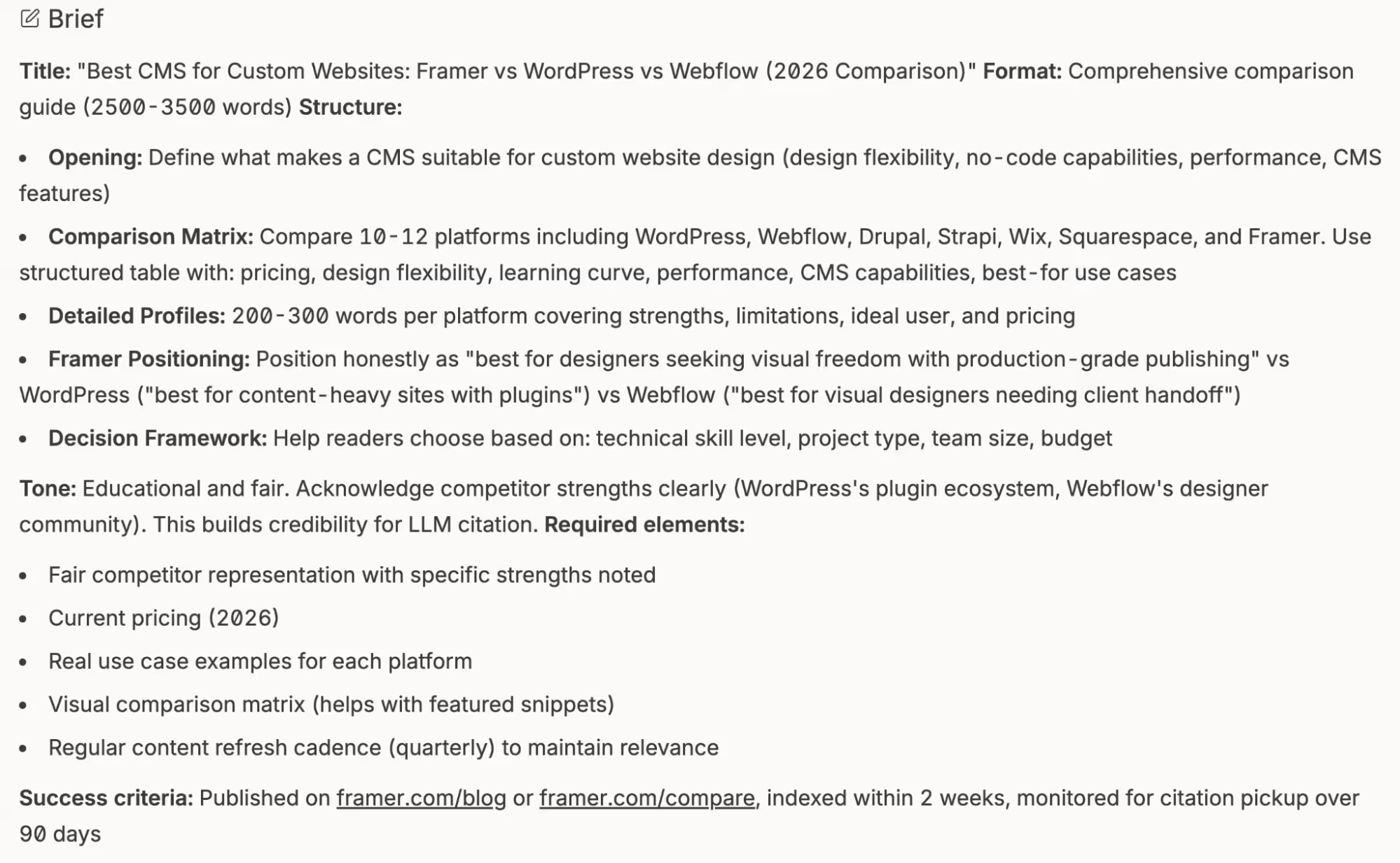
Every task comes with a brief telling you what to write, where to put it, what format to use, and why.
Because Omnia executes prompts via real browsers in actual geographic locations, you see what users in France, the UK, or Spain actually see rather than a blended global average. And unlike credit-based tools where geo scope drives cost, unlimited countries and languages are included on every plan at the same flat rate.
Key features
- Citation intelligence at exact URL level: Every tracked prompt shows which specific domains and pages AI engines cite for competitors, so you can identify and close the content gaps driving their recommendations
- Insights action layer: prompt-specific task list with content briefs, format and placement guidance, and on-page optimization steps
- Unlimited countries and languages on all plans: Via real browser execution in actual geographic locations with no per-market surcharges
- AI Sentiment Analysis: Scores your brand feature-by-feature (pricing, UX, support, integrations) to show how AI systems describe competitors and which positioning gaps are feeding it
- Prompt Discovery: Surfaces AI-native search prompts ranked by volume and difficulty across any country and language, clustered by topic so you prioritize content that captures real demand
- Omnia MCP: Connects your visibility data directly into AI assistants like ChatGPT so you can query citations, share of voice, and competitive benchmarks conversationally without switching tools
- Daily monitoring with trend view: So content changes can be measured within days, not at the next weekly cycle
Watch-outs
Omnia covers the four core engines that account for the large majority of AI search activity. If your workflow requires tracking across additional platforms beyond these four, you'll want to supplement. The action layer is also only as valuable as your team's capacity to execute on it. Omnia tells you what to build, but the building still requires human judgment and effort.
When to choose Omnia over Rankscale
- You're managing visibility across multiple countries and need real browser execution in actual geographic locations, not a blended global average
- You need an action layer that produces specific content briefs and placement targets, not guidance-level audit findings you have to interpret yourself
- Your cost planning needs to be predictable — Omnia's flat-rate pricing includes geos, engines, and prompts without per-query credit burn
- Growth: €79/mo
- Pro: €279/mo
Enterprise: Custom
2. Peec AI — best for multi-country teams wanting daily precision tracking
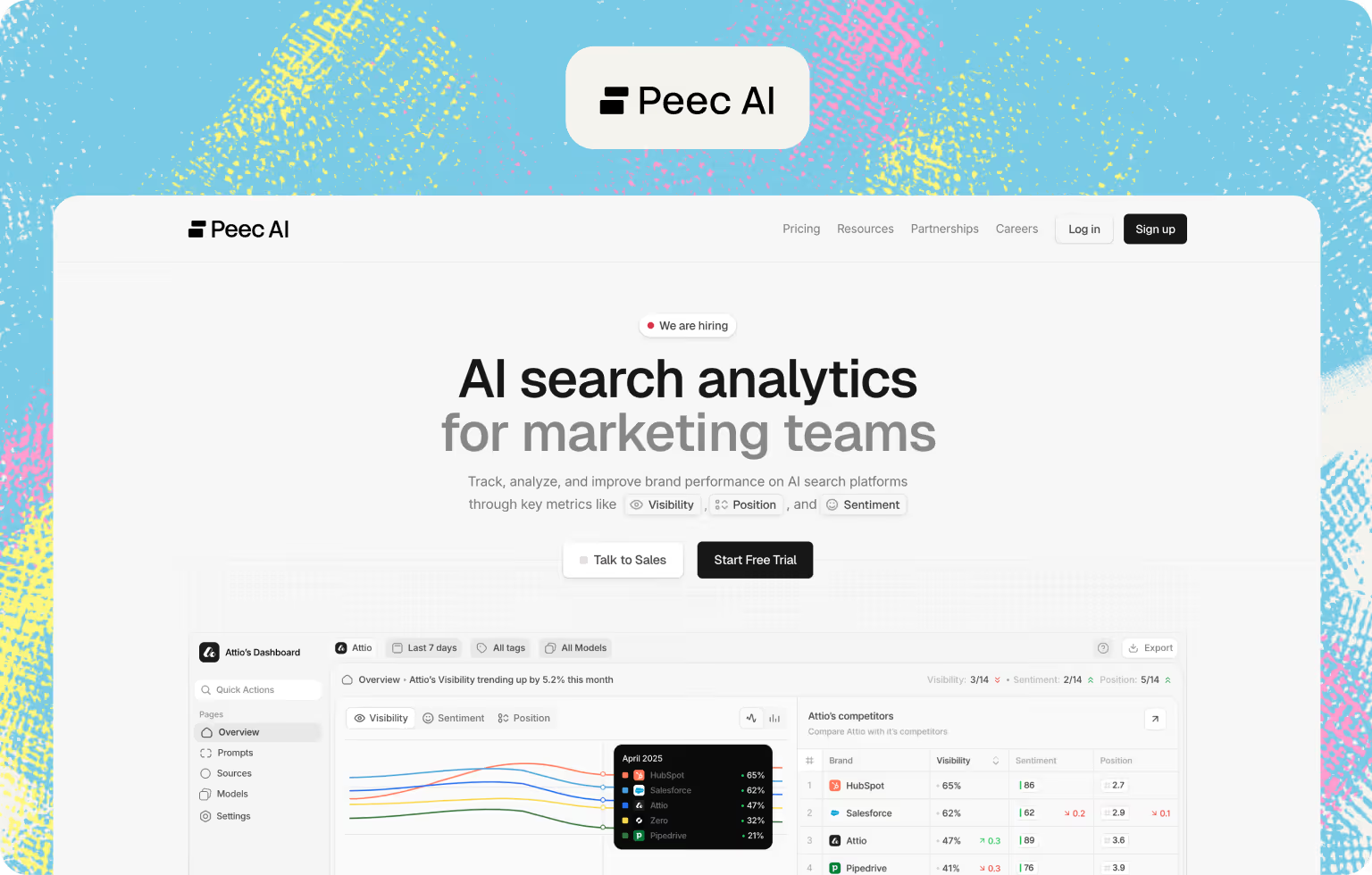
Peec AI is a daily AI visibility tracker covering 7 engines with URL-level citation classification, sentiment scoring, and 115+ languages across unlimited regions. All of this is offered at a flat rate with no per-language or per-market surcharges. It's a monitoring-first platform with a Looker Studio connector and unlimited seats on every plan, making it a strong fit for multi-country teams that need clean, predictable data without a complex pricing model.
Best for
B2B marketing teams and agencies with multi-country or multi-language exposure who need daily visibility data, URL-level citations, and sentiment — all at a predictable price point without per-language surcharges.
What it does well
Where most tools in this category force you to choose between broad engine coverage and granular citation data, Peec AI gives you both. The key differentiator for small teams is that Peec AI doesn't charge extra for geos or languages. If you're managing visibility across six European markets, you pay the same rate as a single-market team, which changes the math considerably when comparing it to tools with per-market pricing.
Key features
- Daily prompt monitoring across 7 engines with live dashboard
- Citation tracking at URL and domain level with classification by source type
- Sentiment analysis showing how AI engines reference your brand (neutral, positive, or negative sentiment)
Watch-outs
Peec AI is a monitoring-first platform. The citation data is detailed and the dashboards are clean, but there's no action layer. If you're looking for a tool that tells you what to do next, not just what's happening, you'll need to pair it with a workflow or choose a Peec AI alternative with content brief generation.
When to choose Peec AI over Rankscale
- You operate across multiple languages or countries and need daily tracking without per-language pricing penalties
- You want URL-level citation data and sentiment scoring combined in a clean dashboard at a predictable flat rate
- Your team needs unlimited seats across all plans
Pricing
- Starter: $95/mo
- Pro: $245/mo
- Advanced: $495/mo
- Enterprise: Custom
3. Scrunch AI
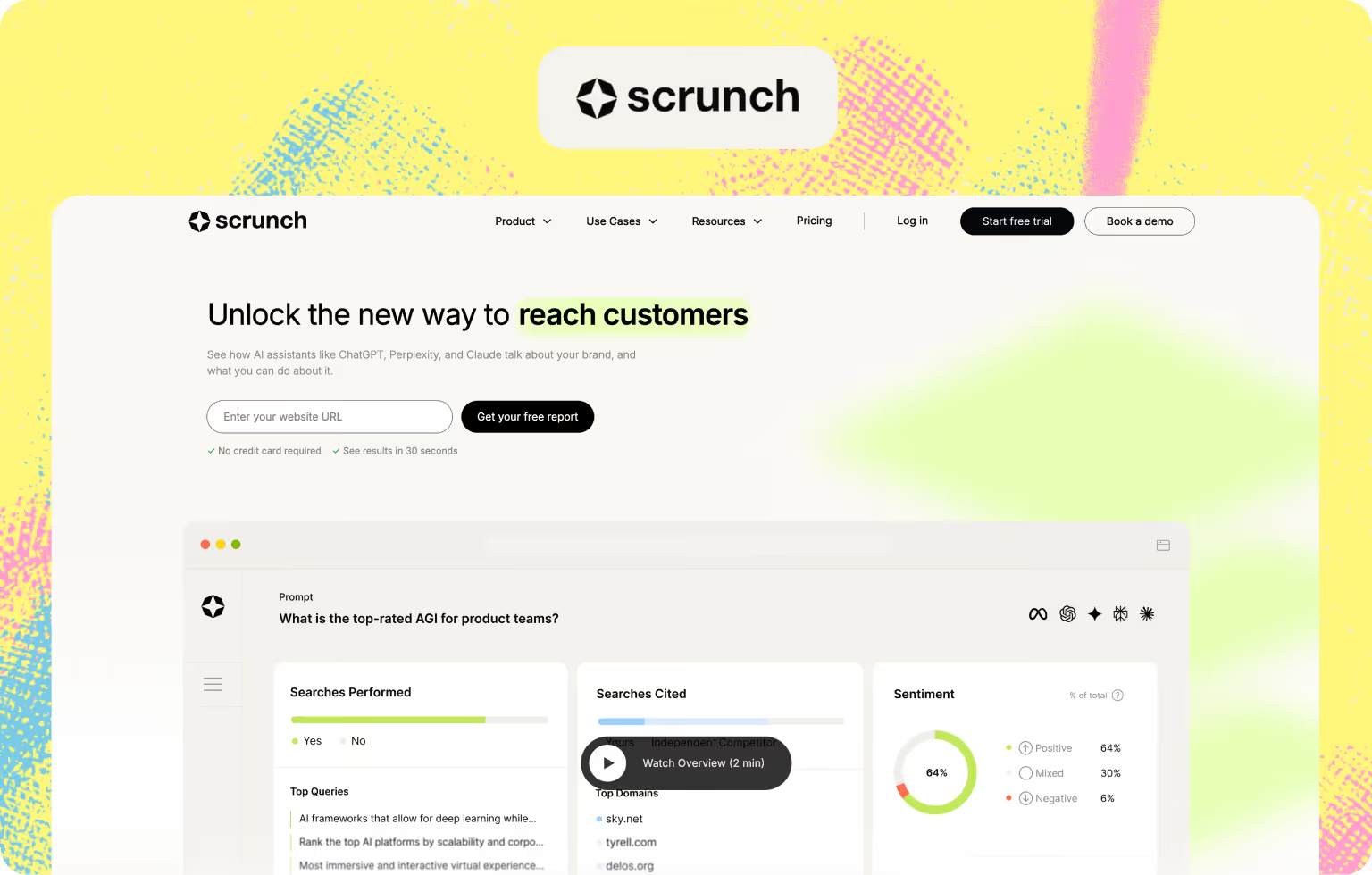
Scrunch AI is an enterprise-grade AI visibility platform that approaches the problem from the infrastructure layer. It builds a machine-readable content layer for AI crawlers via its Agent Experience Platform (AXP) while simultaneously monitoring brand presence across 8 engines with a real-time bot crawling feed. It's SOC 2 certified and built for teams that want to correlate citation wins with actual crawler behavior, not just track what appears across multiple AI engines.
Best for
Enterprise teams and agencies that want to understand how AI crawlers are actually navigating their site and use that data to make their content more accessible to AI engines.
What it does well
Most Rankscale AI competitors focus on measuring outputs, what appears in AI-driven search. Scrunch AI takes a different approach, focusing on inputs. This makes your content infrastructure easier for AI agents to process and cite in the first place. For GEO specialists who want to correlate citation wins with actual crawler behavior, this data is genuinely hard to find elsewhere.
Key features
- Real-time bot crawling feed tracks which AI bots visit your site, at what frequency, and which pages they're indexing
- Misinformation detection flags where AI engines are presenting inaccuracies about your brand
- Multi-dimensional competitor analysis by persona, topic, and geography
Watch-outs
Scrunch's core value is in technical infrastructure. It's built to make your content more crawlable, but it doesn’t generate content briefs or a prioritized task list. If your primary goal is understanding what to write next rather than how your site is being indexed, it won't be the right fit. It's also priced for enterprise, with the entry plan at $250/mo.
When to choose Scrunch AI over Rankscale
- Your organization has enterprise security requirements (SOC 2) that rule out smaller tools
- You want to correlate citation wins with real bot crawl behavior, which Rankscale doesn't surface
- Your team is focused on making content infrastructure more AI-readable rather than executing a content production roadmap
Pricing
- Core: $250/mo
- Enterprise: Custom
4. AirOps
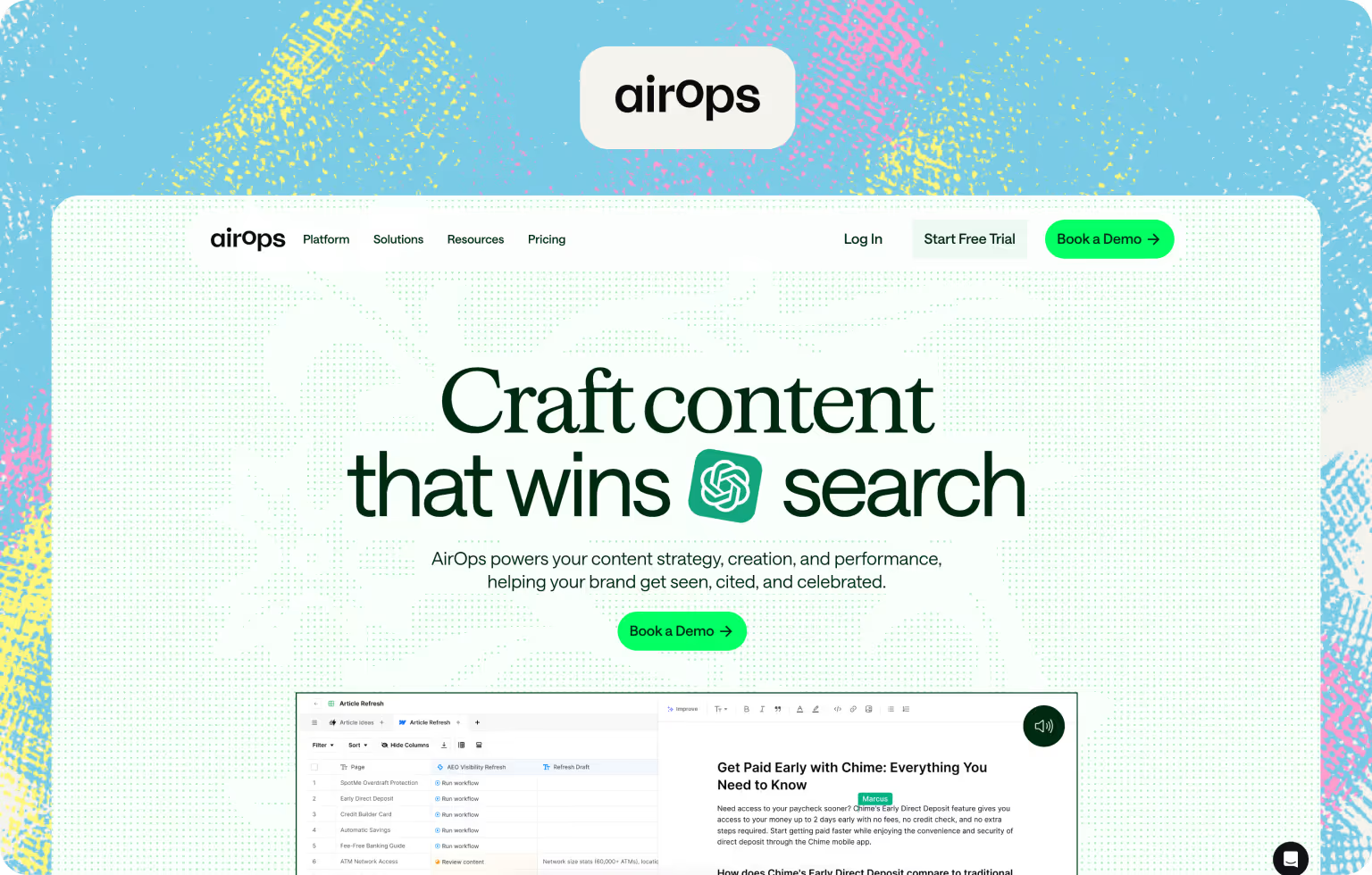
AirOps is an AI visibility and content operations platform that unifies AI citation analysis, Google Search Console, and GA4 through its Page360 analytics layer. Then, it connects that data to a full content workflow, from gap identification and brief generation through AI-assisted drafting to CMS publishing across 10+ integrations. It's the most operationally complete prompt-to-published-page pipeline in this category.
Best for
Content teams publishing at high volumes who want their AI visibility tool wired directly into their content workflow.
What it does well
Tools like AirOps sits at a different point in the stack than most Rankscale competitors. Where other tools stop at telling you what's missing, AirOps builds the workflow to fix it. Its Page360 analytics unify AI citation data with Google Search Console and GA4 in one view, and its workflow automation takes you from gap identification to brief generation, drafting, and CMS publishing without leaving the platform.
Key features
- Workflow automation goes from gap identification to brief generation to drafting to CMS publishing in one pipeline
- Publisher discovery and outreach identifies third-party domains driving competitor citations
- CMS publishing integrations across 10+ platforms and multi-engine coverage
Watch-outs
AirOps covers 4 engines and 1 region on its standard plans, which limits its usefulness if your business operates across multiple markets. The monitoring and diagnostics are tightly integrated with the content creation features, so if your primary goal is understanding AI-powered search visibility across geos without churning out content at scale, the platform may feel misaligned with your workflow.
When to choose AirOps over Rankscale
- You're ready to move beyond monitoring and need a tool that connects citation gaps directly to a content production pipeline ending at CMS publish
- Your team is scaling content operations and needs a full brief-to-publish system
- Your visibility work is primarily single-market and you want the most complete action layer available at your price point
Pricing
- Solo: $200/mo
- Pro: $2,000/mo
- Enterprise: Custom
5. AthenaHQ
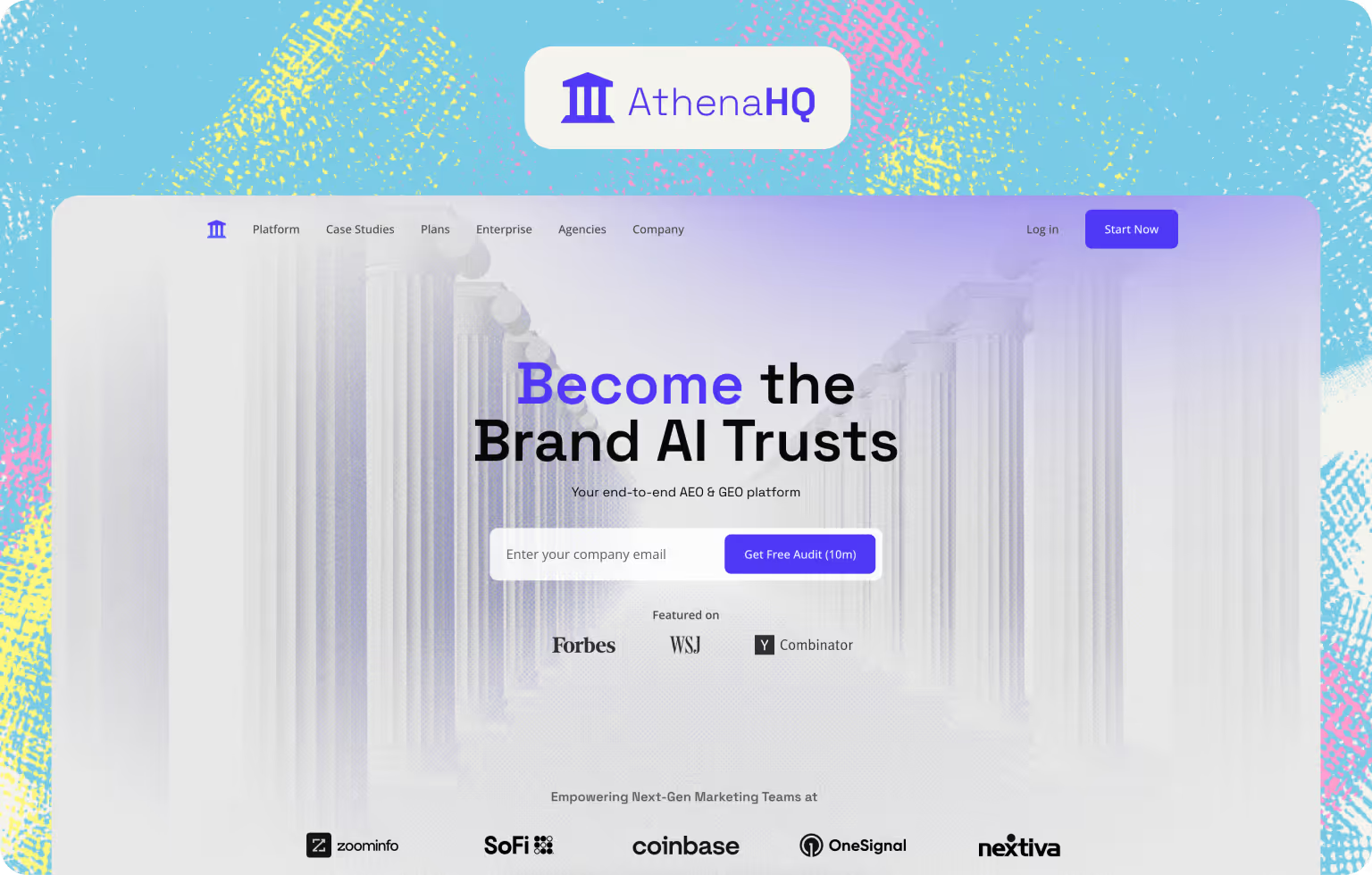
AthenaHQ is an AI visibility platform covering 8 engines with citation tracking designed to surface momentum shifts before they compound. It includes a GEO Action Center for on-page and off-page gap analysis, Shopify and GA4 integrations for revenue attribution, and a credit-based pricing model that scales with query volume.
Best for
Growing companies with a dedicated GEO function and the budget to match who want predictive citation intelligence rather than solely current-state monitoring.
What it does well
AthenaHQ was built by ex-Google and DeepMind engineers, and that pedigree shows in its approach to citation tracking. Rather than just surfacing where you appear today, AthenaHQ's daily citation tracking is designed to identify momentum shifts early. This helps teams get ahead of visibility changes rather than reacting to them after the fact.
Key features
- Daily citation tracking designed to surface momentum shifts before they compound
- GA4, Google Search Console, and Shopify integrations connect citation data to traffic and revenue
- GEO Action Center has on-page and off-page gap analysis (full Content Optimization AI Agent with Deep Research is Enterprise-only)
Watch-outs
The biggest barrier with AthenaHQ is similar to Rankscales’s: the credit model. $295/mo for 3,500 credits sounds substantial, but tracking 50 prompts across 8 engines burns through credits fast. The features that make the most difference (the full Content Optimization AI Agent) are Enterprise-only. That means the real cost for a team that wants deep recommendations could be significantly higher than the self-serve entry price suggests.
When to choose AthenaHQ over Rankscale
- Your team wants predictive citation intelligence designed to surface momentum shifts before they compound, rather than weekly or credit-gated snapshots
- You need Shopify or GA4 integration to connect AI visibility data directly to revenue and traffic attribution
- You're a growing company with a dedicated GEO function and budget to match, and you need the most comprehensive daily citation tracking available at self-serve pricing
Pricing
- Self-serve: $295/mo
- Enterprise: Custom
6. Otterly AI
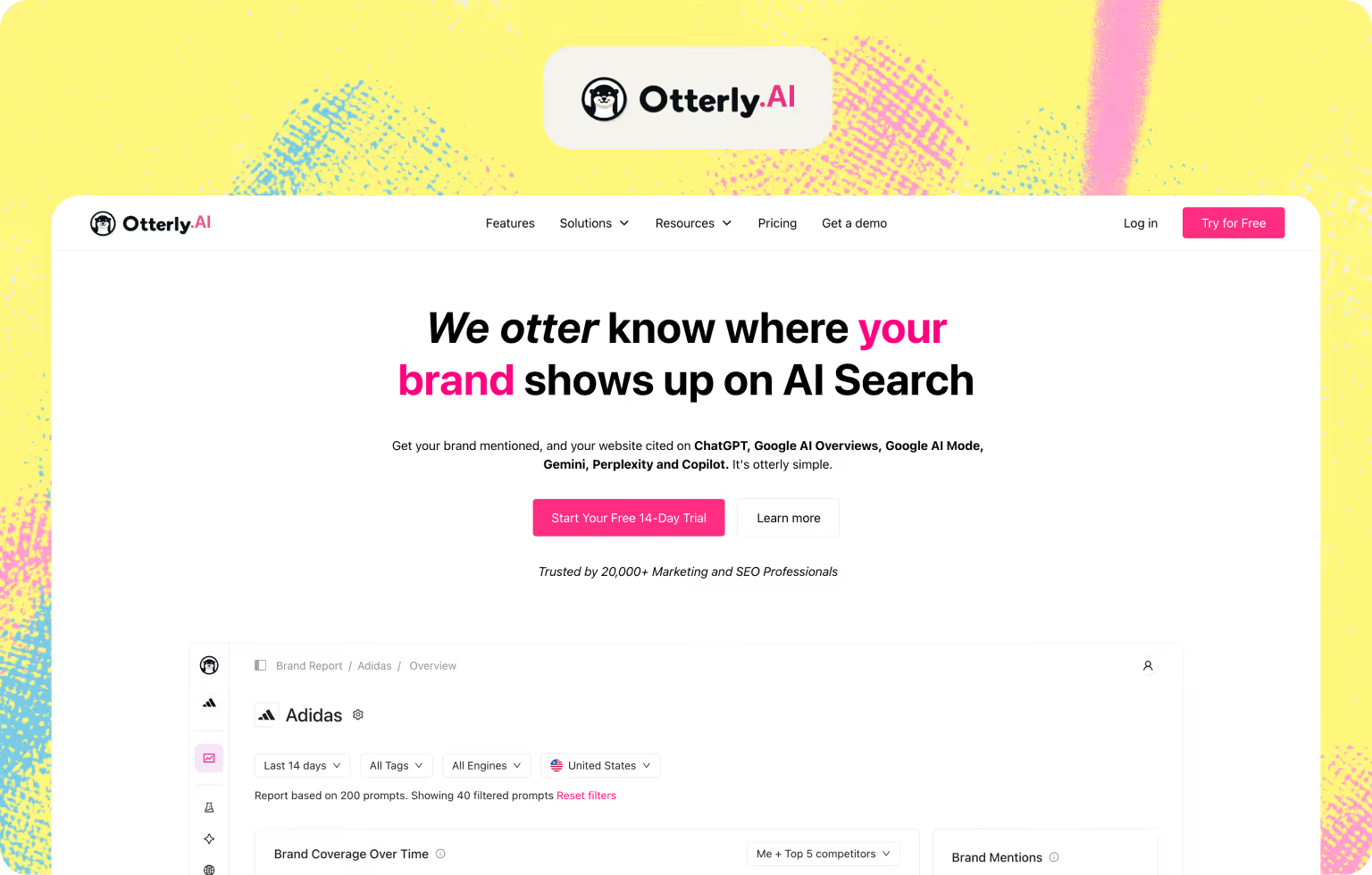
Otterly AI is an AI visibility platform covering 6 engines across 50+ countries with daily refresh, a GEO audit tool that checks 25+ on-page factors, and multi-client workspace management built for agencies. At $29/mo it's the lowest-cost serious entry point in this list.
Best for
Small teams that needs more than Rankscale's rank-only view but aren't ready to commit to a citation-depth platform. Also well-suited for agencies managing multiple clients who need a clean multi-workspace setup at a low entry price.
What it does well
Otterly AI is one of the easiest tools in this category to get running quickly. For teams just stepping beyond basic rank monitoring, Otterly answers the foundational question “Are we showing up at all?” across 6 engines with daily refresh and basic link citation tracking.
Key features
- GEO audit tool surfaces visibility gaps and issues across 25+ on-page factors
- Link citation audit shows which links appear in AI answers alongside your brand
- Brand Visibility Index gives high-level KPIs for tracking visibility over time
Watch-outs
Otterly AI has no action layer, so the gap between seeing the data and knowing what to do with it remains your problem to solve. It's a solid starting point, but most teams outgrow it and look at Otterly AI alternatives once the question shifts from monitoring to improvement.
When to choose Otterly AI over Rankscale
- You're new to AI visibility and want a fast, cheap way to establish a baseline before committing to a more complex platform
- You're an agency managing multiple clients who need a clean multi-workspace setup at a low entry price without per-client credit costs
- You need 50+ country coverage and daily refresh at a price point Rankscale's Pro plan doesn't match
Pricing
- Lite: $29/mo
- Standard: $189/mo
- Premium: $489/mo
- Enterprise: Custom
7. SE Ranking
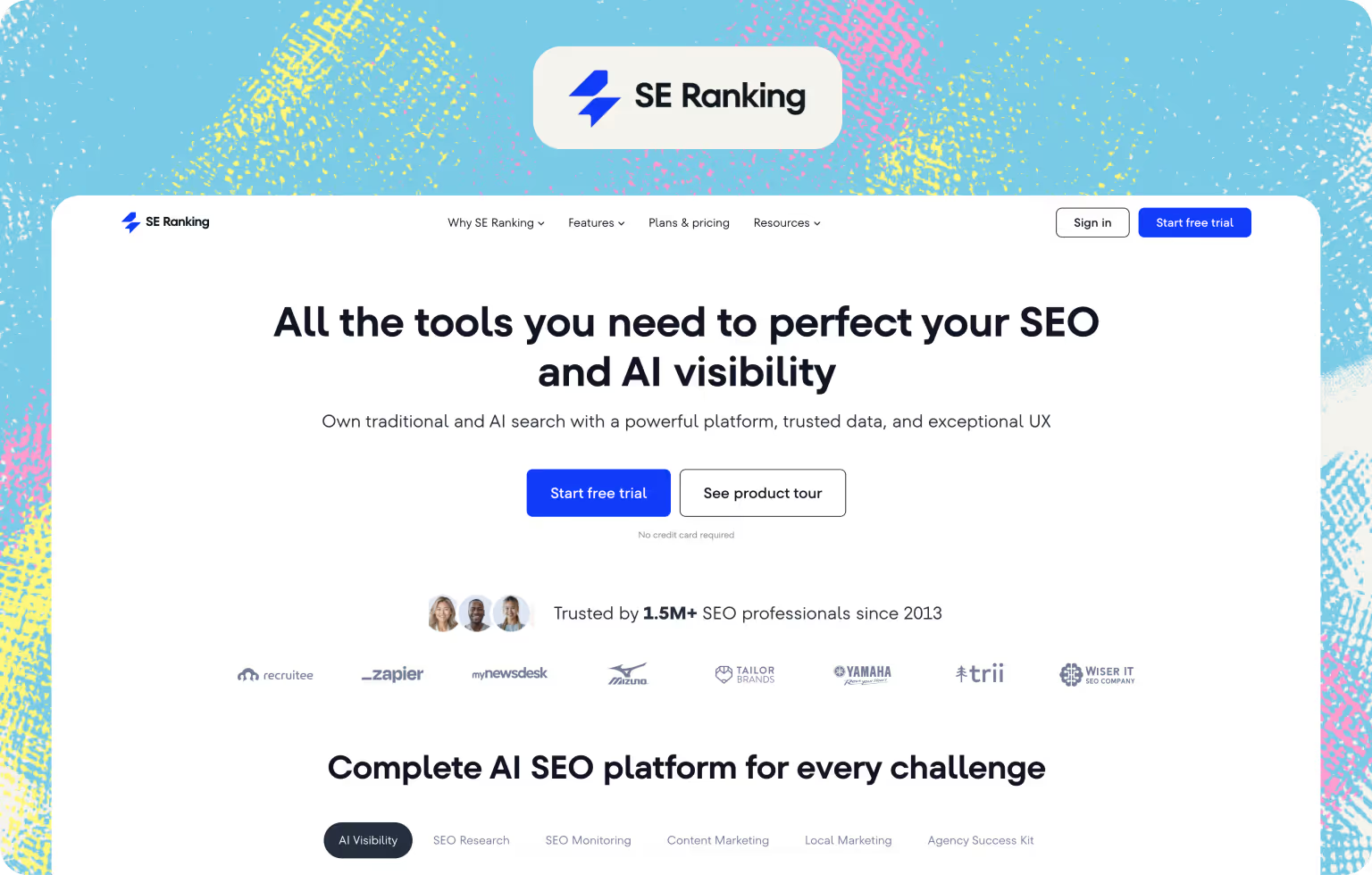
SE Ranking is a full SEO platform with rank tracking, site audits, and backlinks that added AI search tracking as a $89/mo add-on. It covers 4 AI answer engines with daily citation logs, an AI Mode Tracker integration, and a side-by-side organic vs AI Overview comparison view.
Best for
Teams already using SE Ranking for SEO who want AI visibility data in the same platform without switching tools.
What it does well
SE Ranking isn't an AI visibility tool — it's an SEO platform that added AI search result tracking as a paid add-on. The side-by-side organic vs AI Overview comparison is a practical feature for teams managing both traditional SEO and AI visibility from the same dashboard.
Key features
- Daily citation logs with historical snapshots for trend analysis
- AI Mode Tracker integration and source analysis with link prominence scoring
- Full integration with SE Ranking AI's SEO suite (rank tracking, site audit, backlinks)
Watch-outs
The AI Search monitoring features require the $89/mo add-on on top of your existing SE Ranking plan — making the real all-in cost approximately $218/mo on Core or $268/mo on Growth. There's no action layer in the AI visibility module, so you'll be interpreting and acting on the data yourself. If you're not already an SE Ranking customer, the combined cost and limited AI feature depth make it harder to justify over a purpose-built AI visibility tool.
When to choose SE Ranking over Rankscale
- You're already paying for SE Ranking and want AI visibility data without onboarding a second platform
- The incremental $89/mo add-on cost is lower than switching to a standalone AI visibility tool given your existing SE Ranking investment
- You primarily track Google AI Overviews and don't need coverage beyond the 4 AI search engines SE Ranking supports
Pricing
- Core: $129/mo
- Growth: $179/mo
- Enterprise: Custom
8. Semrush
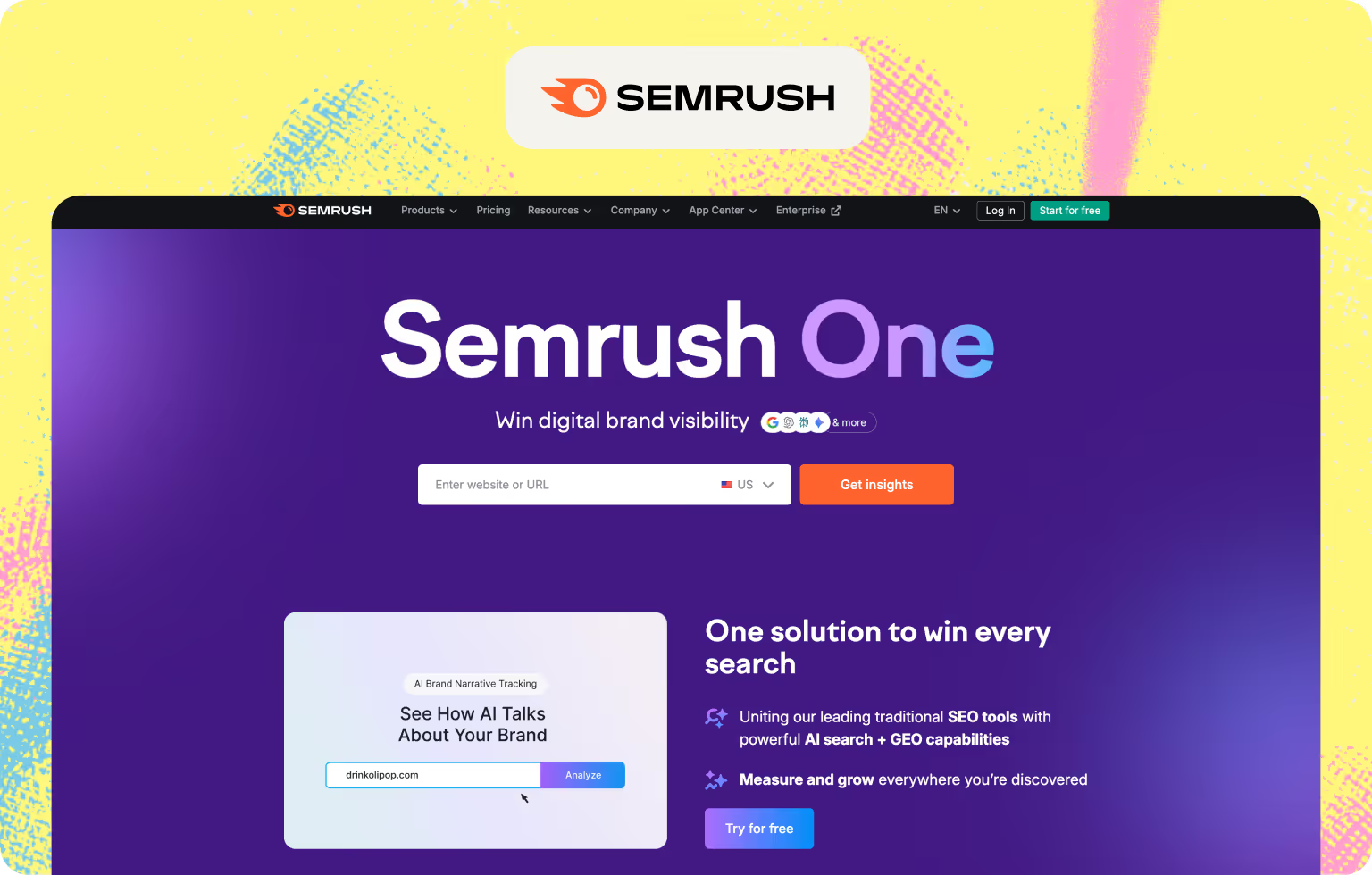
Semrush is one of the most widely used SEO platforms in the category, and its AI Visibility Toolkit adds prompt tracking, URL-level citation tracking, brand performance reports, and GA4 AI traffic channel integration across 6 major AI engines. All of this is inside the same interface where teams already manage keywords, backlinks, and site audits.
Best for
Teams already using Semrush for backlinks, site audits, and content marketing who want AI visibility in the same system.
What it does well
Semrush's AI visibility features are most valuable when used alongside its existing SEO suite. But where Semrush pulls ahead of other Rankscale AI competitors is its GA4 AI traffic channel integration and Domain Overview data make it easier to connect AI visibility improvement to organic traffic shifts, which is exactly the ROI case that CMOs want to see.
Key features
- Citation tracking at domain and URL level
- GA4 AI traffic channel integration for attribution
- AI Search Site Audit for technical visibility issues
Watch-outs
Even regular Semrush subscribers don't get the full AI search feature set by default as the AI Visibility Toolkit is an additional cost. And if you're not already a Semrush customer, the bundled Semrush One plans start at $199/mo, which is a significant outlay before you see whether the AI visibility features cover what you need.
When to choose Semrush over Rankscale
- You're already a Semrush customer and need AI visibility data in the same interface as your backlink, audit, and content marketing workflows
- You need GA4 AI traffic channel integration to attribute visibility changes to organic traffic shifts
- Your CMO needs consolidated reporting across SEO and AI visibility without managing two separate tools
Pricing
- Standalone AI Visibility Toolkit: +$99/user/mo
- Semrush One Starter: $199/mo
- Semrush One Pro+: $299/mo
- Semrush One Advanced: $549/mo
9. Ahrefs
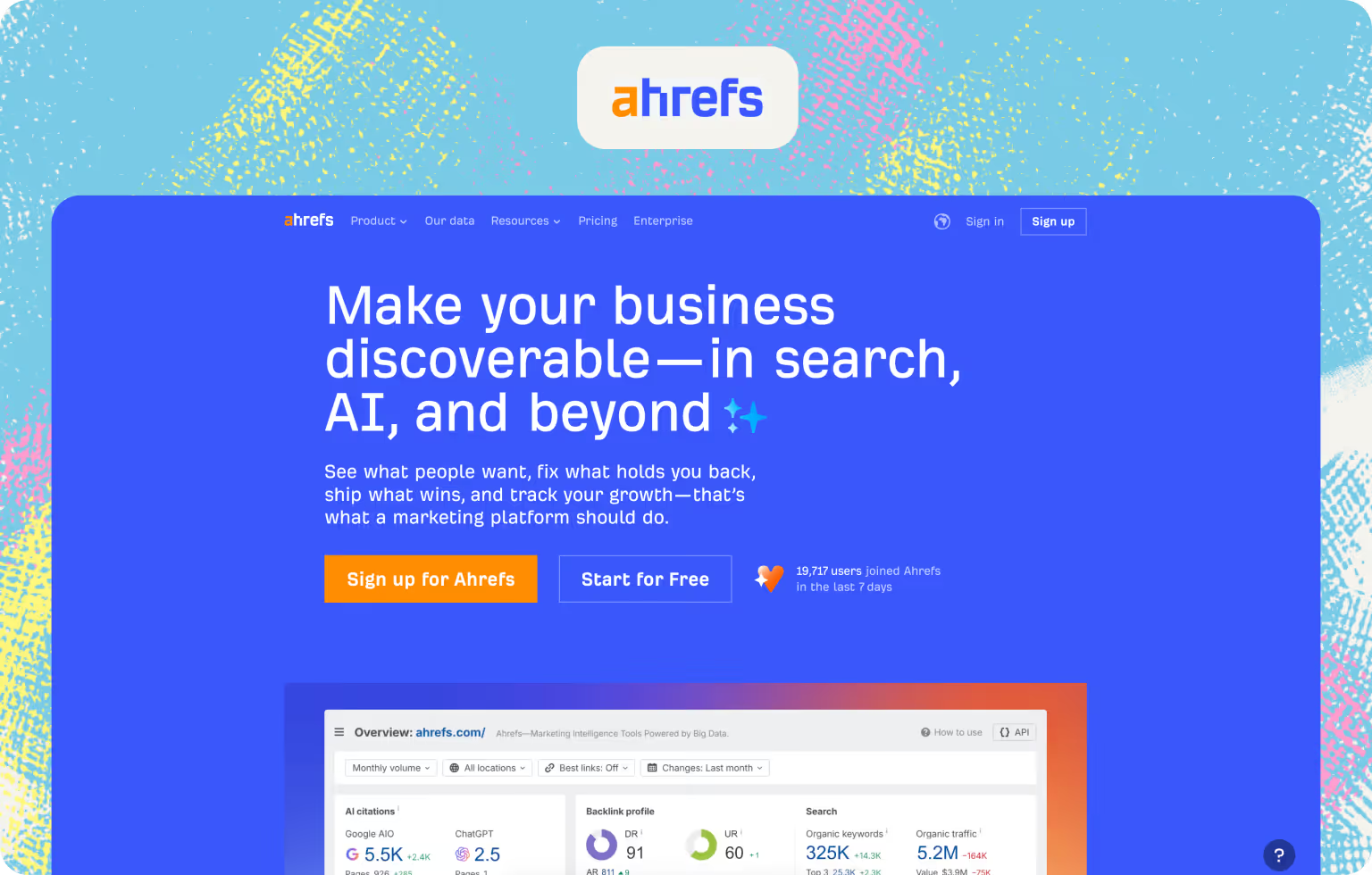
Ahrefs is another popular SEO platform. Its Brand Radar feature brings AI visibility tracking built on a database of 254M+ monthly prompts sourced from real user searches, not synthetic queries. It covers 3 AI models on the base AI plan and 7 on the extended plan, with historical trend data back to 2024 and custom prompt tracking launched in early 2026.
Best for
Enterprise SEO teams already invested in Ahrefs who need AI visibility data backed by a real-user prompt database — and can absorb the additional cost of the Brand Radar indexes.
What it does well
What makes Ahrefs distinct in this category is the data source behind its AI visibility tracking. Its Brand Radar is built on a database of 254M+ monthly prompts derived from real user searches. That means the prompts Ahrefs tracks reflect actual buyer behavior, which makes it the strongest evidence base in the category for proving to a CMO that your AI visibility work correlates to real demand.
Key features
- Custom prompt tracking across ChatGPT, Gemini, and Perplexity
- Historical AI visibility trends back to 2024
- YouTube, TikTok, and Reddit monitoring in beta
Watch-outs
The per-engine pricing model makes full coverage very expensive very quickly. AI visibility indexes start at $398/mo for select platforms or $699/mo for all AI-powered search engines. The full feature set is realistically an enterprise purchase.
When to choose Ahrefs over Rankscale
- You're already deep in the Ahrefs ecosystem and need AI visibility data that correlates directly with your existing backlink and organic search workflows
- You need Brand Radar's 254M+ real-user prompt database to prove to stakeholders that your tracked prompts reflect actual buyer behavior
- You want historical AI visibility trend data back to 2024 for long-term trajectory analysis
Pricing
- Select platforms: $398/mo
- All AI platforms: $699/mo
10. BrightEdge
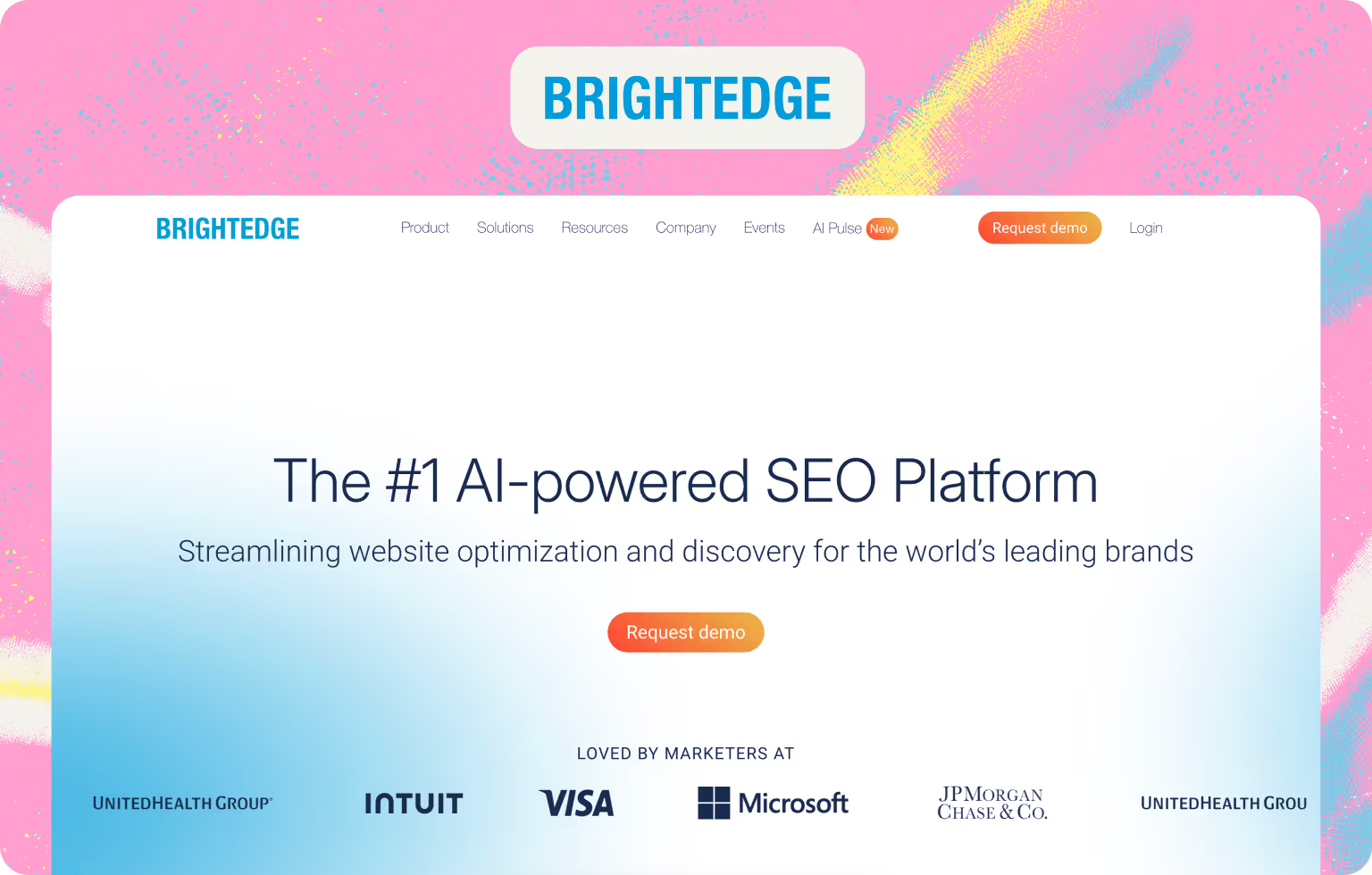
BrightEdge is an enterprise SEO platform that bundles AI visibility through its AI Catalyst suite, This covers 3 AI search engines with citation volatility analysis, industry benchmarks across nine verticals, persona development, and the Generative Parser™ for content-to-visibility correlation. It's built for Fortune 100 procurement cycles with no self-serve entry point and no published pricing.
Best for
Large enterprise SEO teams already committed to BrightEdge who get AI visibility through their existing subscription and don't need to evaluate standalone options.
What it does well
If you're already paying for BrightEdge for SEO, you have access to AI Catalyst — their AI visibility suite — without an additional purchase. BrightEdge covers 3 AI models with citation volatility analysis, industry benchmarks across nine verticals, and persona development features that are genuinely differentiated at enterprise scale. The DataCube X integration and Generative Parser™ make it one of the more technically sophisticated options in the category.
Key features
- Citation volatility analysis and industry-specific benchmarking across nine verticals
- Persona development and intent mapping
- BrightEdge Copilot for AI-assisted workflow guidance
Watch-outs
BrightEdge is built for Fortune 100 procurement cycles. The features, pricing model, and onboarding process all reflect this. There's no self-serve entry point, no published pricing, and the AI visibility features are bundled into a platform that's sized for large enterprise budgets. For a lean team evaluating this as a standalone AI visibility option, it's not realistic.
When to choose BrightEdge over Rankscale
- Your organization needs industry-specific AI visibility benchmarks across nine verticals that Rankscale doesn't provide
- You require enterprise procurement, dedicated support, and Fortune 100-grade SLAs that Rankscale's self-serve model doesn't offer
- Your team needs citation volatility analysis and persona development features at a scale only BrightEdge's data infrastructure supports
Pricing
- No published pricing
11. Surfer AI
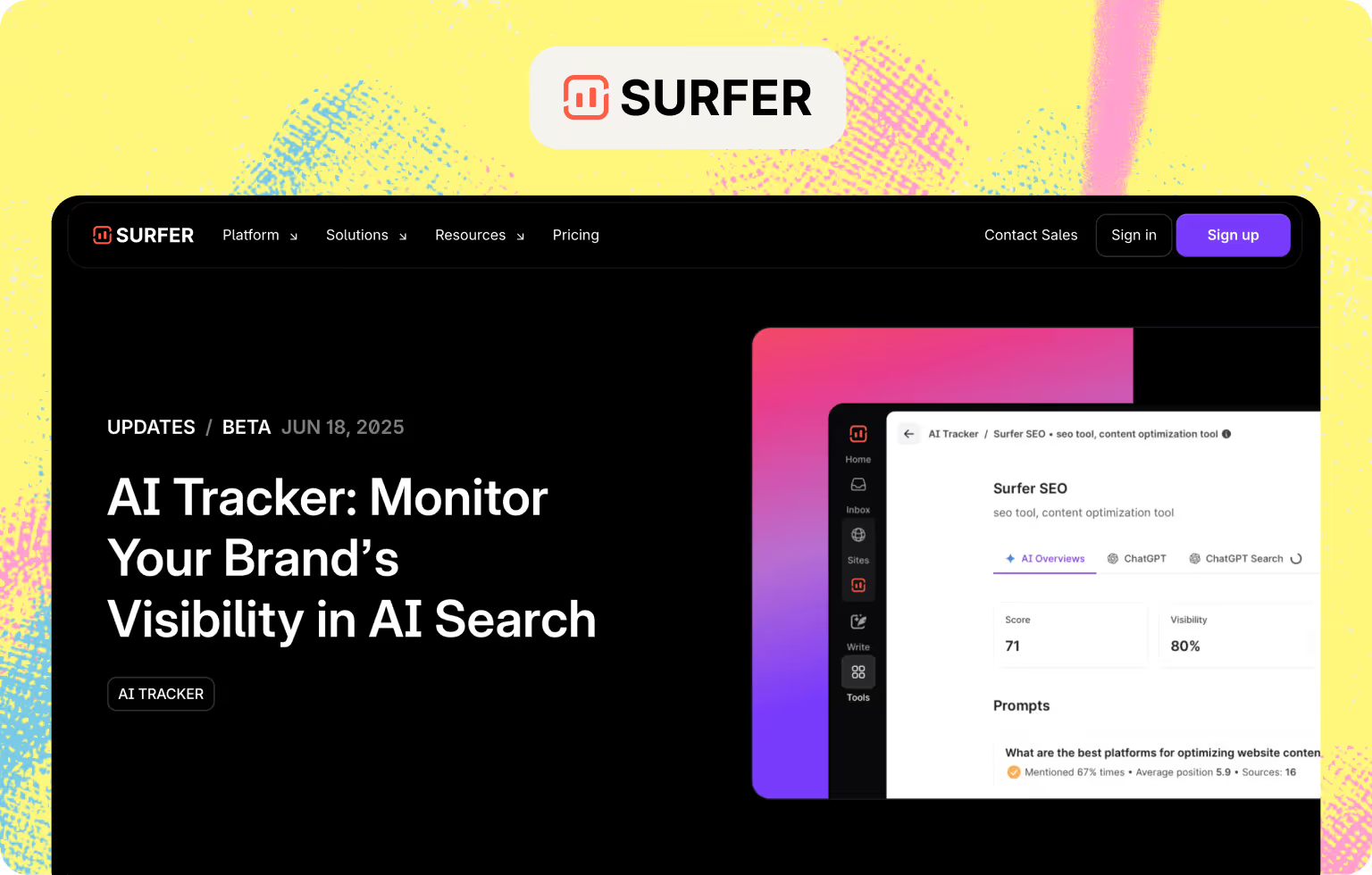
Surfer AI Tracker is built into Surfer's Pro and higher plans, monitoring brand visibility across 5 AI engines. It scrapes real-world interfaces rather than using APIs, so the data reflects what users actually see. It surfaces visibility score, mention rate, share of voice, sentiment, geography tracking, and the sources LLMs are pulling from.
Best for
Content and marketing teams who already use Surfer for SEO and want AI search visibility data feeding into the same platform.
What it does well
The visibility data that Surfer AI captures — share of voice trends, missing mentions, which sources LLMs are pulling from, sentiment, and which content types perform best in AI answers — integrates naturally with Surfer's content planning workflow. For teams already running Topical Maps or content calendars inside Surfer, AI visibility becomes another signal in a workflow they already know.
Key features
- One prompt tracks all 5 models simultaneously
- Source identification shows which domains and content types LLMs are pulling from when they mention your brand or competitors
- Gap identification surfaces missing mentions and off-brand framing to fix
Watch-outs
Surfer AI Tracker’s Standard plan only tracks ChatGPT. Full 5-engine coverage requires Pro ($219/mo) or Peace of Mind ($359/mo). If your primary goal is diagnosing why competitors win specific prompts and building an execution plan around it, this isn't the right tool.
When to choose Surfer AI over Rankscale
- You're already using Surfer and want AI visibility data inside the same platform without adding a new subscription
- You need all 5 major engines tracked from a single prompt rather than managing per-engine coverage separately
- Geography-level sentiment and share of voice data is sufficient for your use case
Pricing
- Standard: $119/mo
- Pro: $219/mo
- Peace of Mind: $359/mo
Pricing reality check: How AI visibility tools scale
Pricing in this category is less straightforward than it looks. The main cost drivers are prompts tracked, refresh cadence, AI systems covered, geo/language scope, and seat count. Sometimes these will be clear from the pricing page, but often you'll need to talk to the vendor to understand what you're actually getting.
Here's a simple reference table:
Switching from Rankscale: a 7-step migration playbook
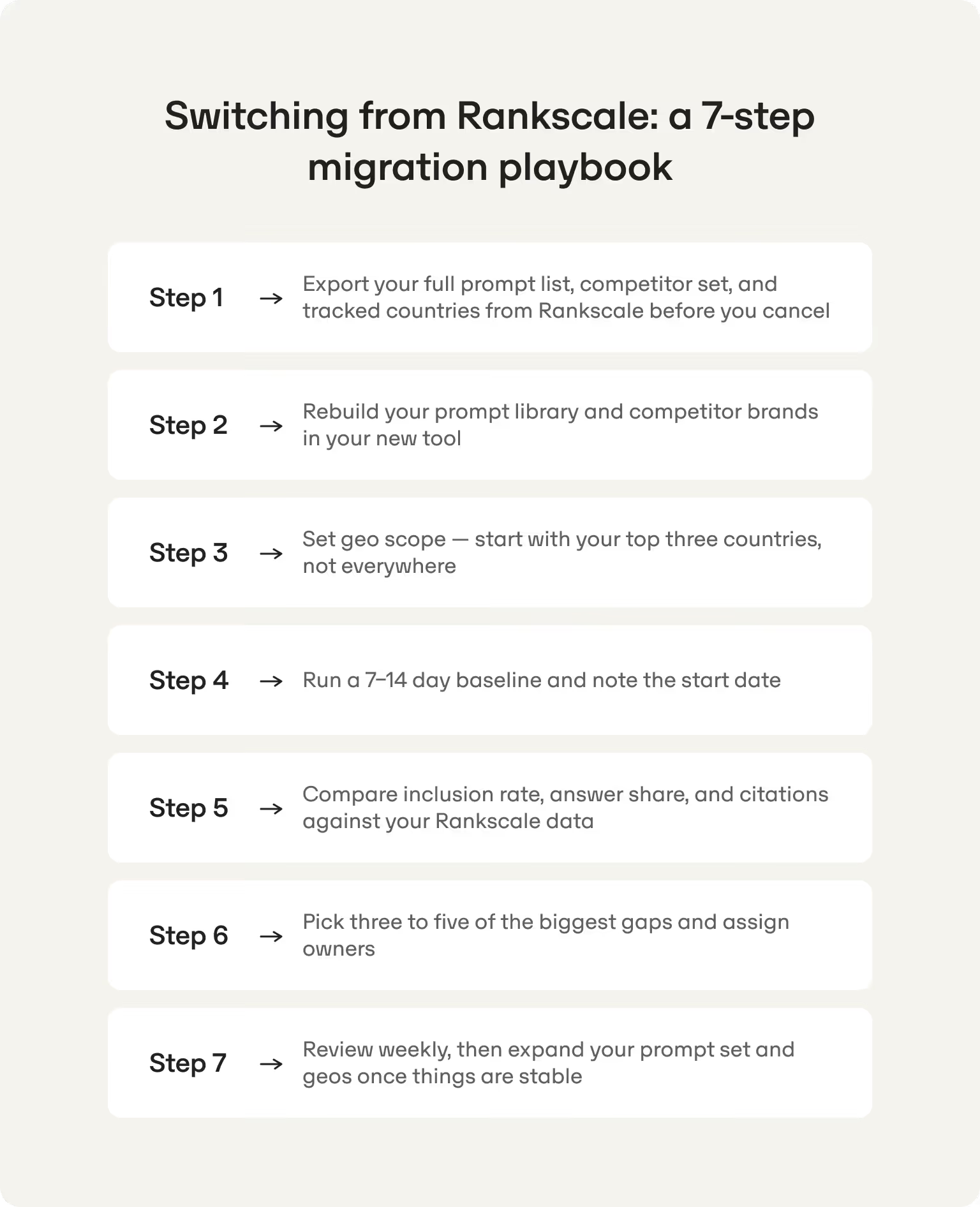
Switching to a new platform can feel like a big lift, but the process is simpler than it looks. Here's how to do it cleanly:
- Export your full prompt list, competitor set, and tracked countries from Rankscale before you cancel
- Rebuild your prompt library and competitor brands in your new tool
- Set geo scope — start with your top three countries, not everywhere
- Run a 7–14 day baseline and note the start date
- Compare inclusion rate, answer share, and citations against your Rankscale data
- Pick three to five of the biggest gaps and assign owners
- Review weekly, then expand your prompt set and geos once things are stable
Document your methodology throughout this process. Track which prompts you're monitoring, which competitors you've selected, and how you're measuring progress. This makes internal reporting easier and gives stakeholders a clear before-and-after when you need to justify the switch.
Why Omnia is the best fit for small teams measuring AI ranking impact
Most AI visibility tools in this list will give you a clear read on where your brand stands. The harder problem, and the one that separates tools from systems, is what you do with that data once you have it.
For lean teams without dedicated content ops or an in-house AI SEO function, the answer can't be “figure it out.” It needs to be built into the product.
Omnia is the top pick precisely because of that. The monitoring is serious, the citation intelligence is specific, and the action layer is real. Omnia gives you briefs, placement targets, and technical fixes. It’s not a recommendation engine that gestures at the problem and calls it done.
Book a demo to see it with your own data, or start a 14-day free trial on the Growth plan.
FAQs
What's the best Rankscale AI alternative for a 1–2 person marketing team?
Omnia is the top Rankscale AI competitor for small teams because it combines multi-engine monitoring with a built-in action layer. You're not just tracking AI visibility, you're getting specific content and outreach tasks you can execute without a dedicated AI SEO function. Unlike tools built for enterprise research workflows, Omnia is designed for teams that need to move fast with limited bandwidth. It's the most complete alternative to Rankscale AI for teams that can't afford to separate measurement from execution.
Are AI visibility tools accurate if answers change by country and day?
Accuracy depends entirely on how a tool executes its prompts. Tools that rely on APIs or run queries from a single location will return averaged or region-agnostic results that don't reflect what users in specific markets actually see. The most reliable tools scrape real interfaces from actual geographic locations, so when your brand appears in Google AI Overviews for a UK user, that's the answer being captured, not a blended proxy. Daily refresh cadence matters too. AI-generated responses shift frequently, and stale data can make stable trends look like noise.
What's the difference between optimizing for AI search visibility and traditional SEO?
Traditional SEO optimizes for crawlability, keyword relevance, and link authority so your pages rank in indexed results. AI search visibility is about whether your brand appears in AI-generated responses when a model synthesizes an answer, which is governed by what sources the model has learned to trust, not just what ranks highest. Google AI Overviews, for example, regularly cite pages that don't rank in the top 10 organic results for the same query. The implication is that content structure, citation frequency across authoritative sources, and brand consistency across the web matter as much as, and sometimes more than, on-page SEO signals.
How does generative engine optimization change the way brands should think about content strategy?
Generative engine optimization (GEO) shifts the goal from ranking for keywords to becoming a trusted source that AI models reference when building AI responses. That means the content you publish needs to be quotable, specific, and consistent across every surface where AI engines gather training signal. Multi-engine monitoring is essential here: Brand mentions in ChatGPT, Perplexity, and Google AI Overviews are governed by different retrieval logic, and a strategy that improves visibility in one engine won't automatically transfer to others. GEO is less about gaming an algorithm and more about systematically building the kind of credible, citable presence that LLMs learn to surface.

.png)