AI Search Visibility
LLM SEO: What It Is and How to Do It (2026 Guide)

 Alfredo BernalOrganic Growth LeadatOmniaAlfredo BernalOrganic Growth LeadatOmnia
TL;DR
Every AI visibility vendor now says it has an MCP server, and a growing number call it an AEO MCP server. Your assistant can connect to most of them in minutes. That is the easy part.
The hard part is that the server you connect decides what your assistant can know about your brand. A thin one still gives confident answers, just from thin data. You find out when a colleague types the same prompt into ChatGPT and gets a different story.
If you run AI visibility on a small team with no specialist, you need a way to judge these servers before you rely on one. Below you get a plain definition, six checks weighted for your situation, and a test you can run in one afternoon.
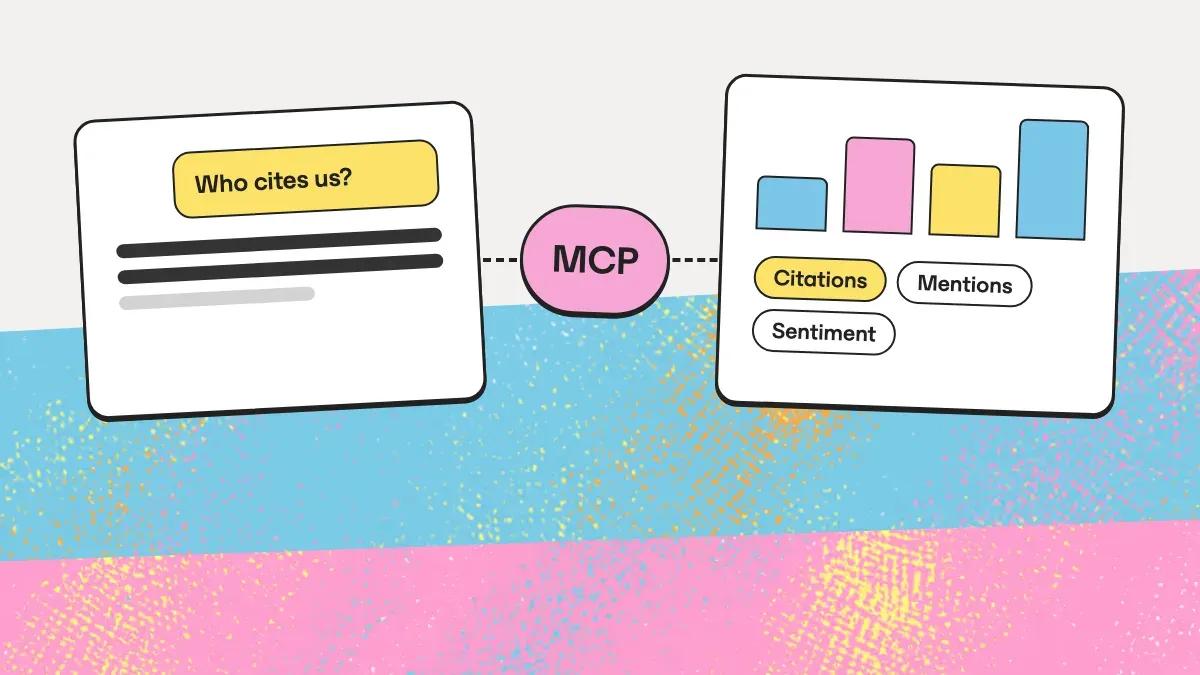
An AEO MCP server is a connector that lets an AI assistant read data on how AI engines mention and cite your brand. You can then ask questions about your AI visibility in plain language instead of opening a dashboard.
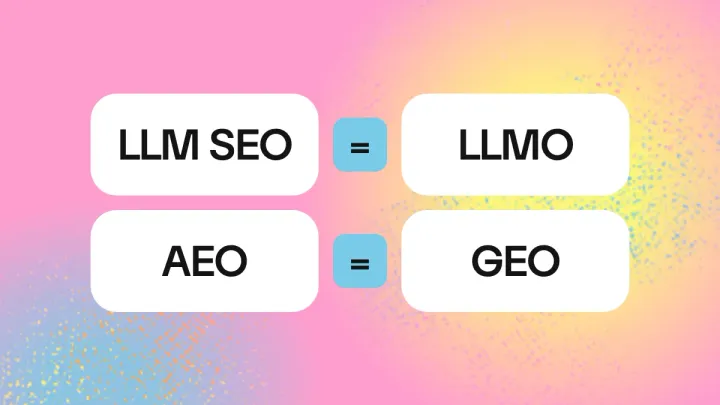
MCP (Model Context Protocol) is the open standard that lets assistants such as Claude, ChatGPT and Cursor call tools in other systems. AEO is answer engine optimization, also called generative engine optimization (GEO). It is the work of getting your brand mentioned and cited in AI answers. Put the two together and you get a server built for that work.
Conductor describes the category the same way in its guide (last updated 10 September 2026). It means servers built to track brand citations, mention share, sentiment and competitive benchmarks, not generic marketing or keyword data.
In practice, a server exposes mentions, cited pages, sentiment and competitors, split by AI engine and country. Some servers only read data. Others can also write, for example by creating a tracking prompt or a tag. Both kinds answer questions like "Which pages do AI engines cite when they recommend our competitors?"
An SEO MCP server returns Google data such as rankings, backlinks and traffic, while an AEO MCP server returns what AI engines actually answered and which pages they cited. The table below compares them with a third type, the web search or crawling server. Oppin (26 October 2026) separates that type from AI visibility servers because it retrieves live web content rather than analytics.
| SEO MCP server | Web search or crawling MCP server | AEO MCP server | |
|---|---|---|---|
| Data it returns | Google rankings, backlinks, keywords, traffic | Live web pages and search results | AI answers, brand mentions, cited pages and sentiment, by engine and country |
| Question it answers | "Where do we rank on Google?" | "What does this page say right now?" | "Which pages do AI engines cite when they recommend our competitors?" |
| What it cannot tell you | What an AI engine answered | How your brand appears across stored answers over time | Your Google rankings or backlinks |
Conductor's guide calls Semrush and Ahrefs MCP servers traditional-search tools with limited AEO functionality, and it sells an AEO server itself, so weigh that verdict accordingly. The practical point is simpler: keep your SEO server for the Google half, and add an AEO server for the AI half.
An AEO MCP server works in three steps. You ask your assistant a question, the assistant calls the server's tools, and the server returns stored data for the assistant to explain in plain language.
The server does not collect anything when you ask. It reads what its monitoring already gathered, so the data is only as good as that monitoring: how it collects answers, how often, and in which engines and countries. Conductor's first criterion makes the same point, that the protocol only delivers data and the quality of that data decides whether the insight is useful.
If you want to see this in an assistant, read how Omnia's MCP works inside an AI assistant.
Six criteria separate a useful AEO MCP server from a thin one, and they do not matter equally to everyone. These six are ours, not a standard: Conductor's guide lists six (data quality, AI-ready architecture, dynamic querying, AEO-relevant signals, actionable guidance and hallucination guardrails). Oppin's lists six too (data coverage, read versus write access, authentication, freshness, metric definitions, plan limits). We merged the overlap and weighted the result for two readers.
One warning before the list. Some checks demo well and some do not. Authentication and tool counts look good in a sales call. Data quality only shows when you open an answer, so give that check the most time.
Check which AI engines, countries and prompts the server covers, and whether you can open the full answer behind each number. A visibility percentage is only as trustworthy as the answers it was counted from. Many vendors show their engines as a logo strip, so ask for the list in writing.
Also check that the server separates branded prompts (the ones that name your brand) from non-branded ones. A strong number on branded prompts says little about whether strangers discover you.
Test it: ask for three non-branded prompts where you are absent, then open one full answer. The engine, the date and the cited pages should all be there.
Check when each answer was collected, and whether visibility, share of voice and citations are defined in words you could repeat to your boss. Oppin's checklist lists freshness and metric definitions as separate criteria, because a number without a date or a definition is easy to misread.
Three definitions to expect. Visibility is the percentage of AI answers that mention a brand. Share of voice is the percentage of all brand mentions in AI answers that belong to each brand. A citation is a reference to a source, such as a URL, included in an AI answer. Ask whether the data is collected daily and stored, or checked live on request, because the two behave differently when you compare weeks.
Test it: ask for the collection date of the answer behind one number, and ask how the server defines that metric.
Check whether the server helps you decide what to change, not only what the numbers are. Conductor lists actionable guidance as its fifth criterion for the same reason: a report tells you where you stand, and a decision tells you what to do on Monday.
Take an illustrative case. A report that says your visibility is 8% gives you a number. "These five prompts have no citation from your own site, and here are the pages competitors have instead" is a decision. Some servers stay read-only and leave the reasoning to your assistant, which is a fair design, but no server can publish the fix for you.
Test it: ask "Which three prompts should I work on first, and why?" The reasoning should point to data you can open.
Check what your assistant can change through the server, and whether anything that publishes, sends or deletes needs your approval. LLM Pulse (updated 16 November 2026) argues that write access determines what an agent can finish. That cuts both ways: more write tools let the assistant do more, and they let it break more.
Sort the writes by risk. Creating a tracking prompt or adding a tag is easy to undo. Deleting data or changing brand settings is not. If the vendor offers a read-only option, start there.
Test it: ask the vendor for the list of write tools and what each one does.
Check how you sign in, who can see what, and how you revoke access. LLM Pulse argues that authentication is no longer a differentiator, because most hosted servers now use OAuth. Spend your time elsewhere unless you connect client data or several brands, where scoping matters.
Test it: connect with a test account, confirm what the assistant can see, then revoke the connection and confirm access ends.
Check whether MCP access is included in your plan, and what limits apply to requests, markets and brands. Cost surprises usually sit here. Manifold's comparison notes that some servers charge per call: Ahrefs spends API units on every call, and SE Ranking spends credits (checked 17 November 2026).
Test it: ask three questions in writing. Is MCP included in my plan? What is the request cap? What happens when I hit it?
For a marketer or founder with no AEO specialist, data coverage and actionable output matter most. For someone who builds their own AI workflows, data coverage and write access matter most. The table uses three levels only, because a percentage weight would invent precision.
| Criterion | Marketer or founder with no AEO specialist | Builder of your own AI workflows |
|---|---|---|
| 1. Data coverage and quality | Most important | Most important |
| 2. Freshness and metric definitions | Matters | Matters |
| 3. Actionable output | Most important | Check once |
| 4. Write access and approvals | Check once | Most important |
| 5. Authentication and permissions | Check once | Matters |
| 6. Plan limits and total cost | Matters | Matters |
The marketer does not have an AEO specialist to turn raw data into a plan, so a server that stops at numbers leaves the hardest work undone. The builder wires the server into their own workflow, so what the assistant can write, and with whose permission, decides what they can build. Both depend on the data being right, which is why criterion 1 is the same in both columns.
AI engines cite third-party guides when you ask which MCP server to use for AI visibility. Several of the vendors who write those guides rank their own server first.
Conductor puts the Conductor server first and calls it the only server on its list built for AEO. LLM Pulse ranks LLM Pulse first and some of its criteria, such as metric glossaries and in-chat widgets, fit its own product well. Oppin profiles Oppin first. None of that makes the guides useless, but you should read them knowing who wrote them.
We checked what AI engines cite for six prompts about this topic in Omnia's own monitoring (US, 18 October to 17 November 2026). For each prompt, the table shows the most cited page, how many citations it got, and how many distinct pages were cited in total.
| Prompt | Most cited page | Citations | Share of all citations | Distinct pages cited |
|---|---|---|---|---|
| What's the best AI visibility platform with MCP support? | LLM Pulse's guide to the best MCP servers for AI visibility (llmpulse.ai) | 155 | 8.5% | 347 |
| Is there an MCP server for monitoring brand mentions across AI search engines? | An AI brand monitoring MCP repository (github.com) | 91 | 5.6% | 343 |
| best MCP servers for AEO | Conductor's guide to the best MCP servers (conductor.com) | 4 | 6.0% | 62 |
| best MCP servers for tracking brand visibility in AI answers | LLM Pulse's guide (llmpulse.ai), tied with a page on rankability.com | 3 | 4.1% | 65 |
| MCP servers for AI search analytics | Manifold's comparison (manifoldmcp.com), tied with two others | 2 | 3.3% | 58 |
| best MCP servers for GEO and AI search optimization | A guide to the best SEO MCP servers (nadiamohamed.me) | 4 | 4.9% | 74 |
None of the top 10 cited pages for any of the six prompts is on useomnia.com. Omnia is a vendor too, and that gap is part of why we wrote this article.
Treat the numbers as an early snapshot. Four of the six prompts were created on 16 November and hold about one day of answers, so the citation counts are small and will move. The other two prompts have the full 30 days. The table also does not say which engine produced each citation.
To check any list before you trust it, ask four things:
Connect the server and run five of your own prompts. Then check three things: you can open the full answers, the numbers match what you see by hand, and your assistant names your competitors correctly. You do not need a developer for any of it.
If you want a starting point, paste these three into your assistant:
Omnia's MCP server connects Claude, ChatGPT and Cursor to your Omnia data, so you can run this test on a 14-day free trial with no card. Omnia monitors ChatGPT, Perplexity, Google AI Overviews and Google AI Mode by default, with Claude, Gemini and Bing AI Mode available on request. The MCP server gives your assistant access to your data and you drive every step, while the Omnia Agent does the work inside Omnia and you approve what ships. The steps to connect each assistant are in Omnia's connection guide.
Omnia offers a 14-day free trial on the Growth plan.
No credit card required. See exactly where your brand shows up (or doesn't) across AI engines, then let the platform's recommendations guide your next move.

There is no single best one. The best AEO MCP server is the one that scores well on the criteria that matter to you. Start with the weighting table above, then use it to compare the servers you are considering.
Yes, there are several. GEO is another name for AEO, and the same six checks apply to any of them. Manifold's comparison alone lists nine AI visibility servers, including Peec AI, Profound, SE Ranking and LLM Pulse, and Omnia and Conductor publish one too.
Several major SEO suites do, including Ahrefs and Semrush, according to Conductor's guide (updated 10 September 2026). Those servers return Google data, so pair one with an AEO server if you also want to see what AI engines say about your brand.
Not always. Some servers only read data, and others can also create prompts or projects. Omnia's MCP server reads your data and can also create prompts, manage topics and tags, and work with Projects, so check each server's write tools before you connect it.
No. An AEO MCP server gives your assistant data and nothing more. Your AI visibility changes when you change your content and where your brand is mentioned, and the server helps you see which changes to make.
No. Hosted servers connect with a normal sign-in, and the steps for Claude, ChatGPT and Cursor are in Omnia's connection guide. A developer only matters if you want to build your own workflow on top.
An API is for code you write, and an MCP server is for assistants that call tools in plain language. Many vendors offer both, so check whether the MCP server and the API expose the same data.
Written By
 Alfredo BernalOrganic Growth LeadatOmniaAlfredo BernalOrganic Growth LeadatOmnia
 Alfredo BernalOrganic Growth LeadatOmnia
 Alfredo BernalOrganic Growth LeadatOmnia
 Alfredo BernalOrganic Growth LeadatOmnia
 Alfredo BernalOrganic Growth LeadatOmnia
No credit card required · Free for 14 days · See your AI visibility within 3 minutes