
AI Search Visibility
Generative Engine Optimization Services: What They Include and Cost in 2026

 Alfredo BernalOrganic Growth LeadatOmniaAlfredo BernalOrganic Growth LeadatOmnia
TL;DR
YMYL, short for Your Money or Your Life, is Google's label for topics where bad information can hurt people: health, money, safety and society. In YMYL SEO, these topics are held to a higher standard of trust, and that standard now matters inside AI answers too. When an AI engine summarizes a health or finance question, it does the comparing and the trusting on the searcher's behalf, and Google has already pulled AI Overviews from specific health searches after errors were reported. Brands in regulated categories can still be named and cited, but only with demonstrable expertise, primary sources, current facts and consistent third-party validation.
This article is about marketing and search visibility. It does not give medical, financial or legal advice.
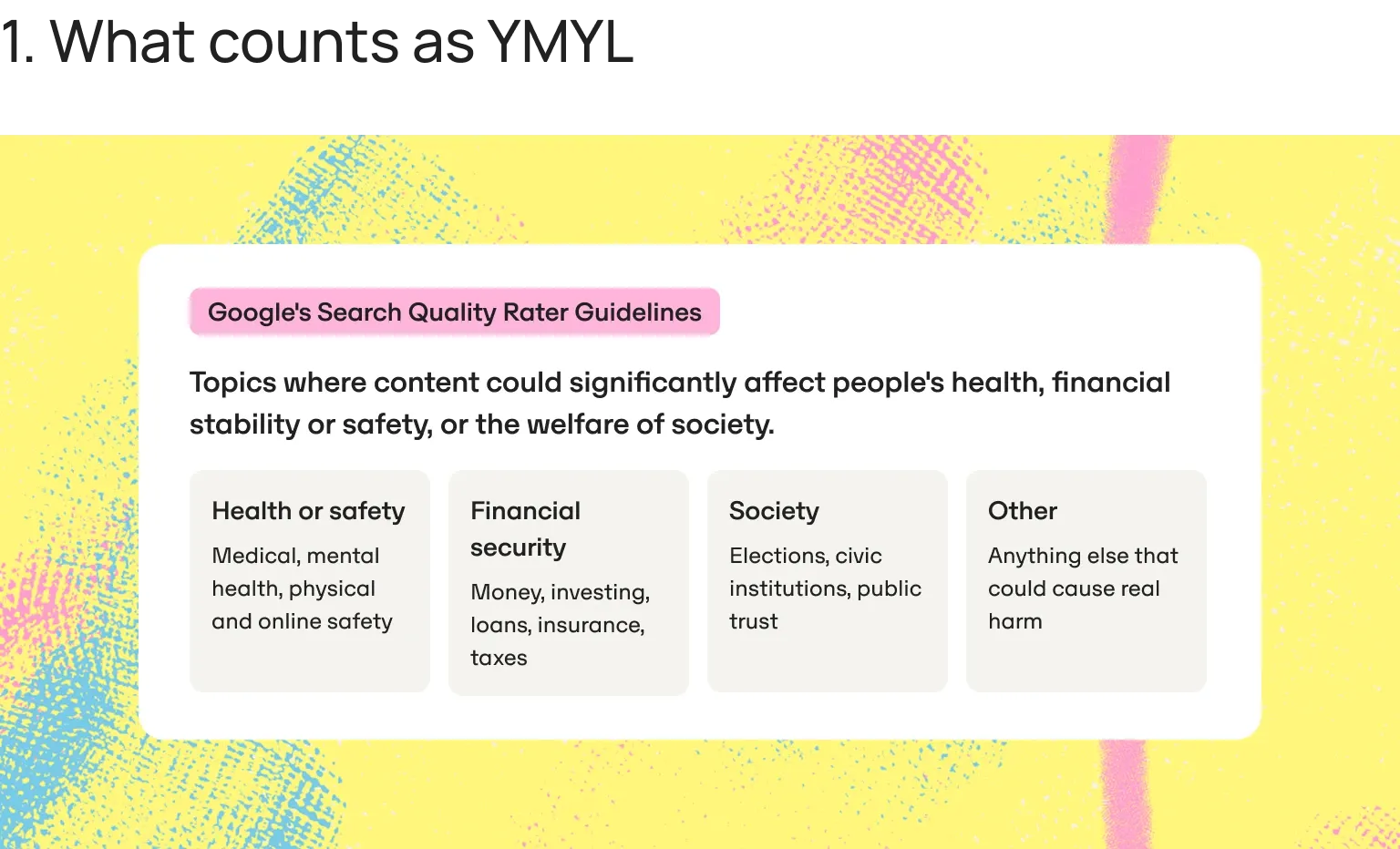
YMYL comes from Google's Search Quality Rater Guidelines, the manual Google's human evaluators use to judge the quality of search results. The current edition is dated 11 September 2025. It defines YMYL topics as those where content could significantly affect the health, financial stability or safety of people, or the welfare and well-being of society.
Google groups YMYL topics into four areas: health or safety, financial security, society (including elections and trust in public institutions), and other topics where content could cause real harm. Raters do not set rankings directly, but their judgments show Google what its ranking systems should reward.
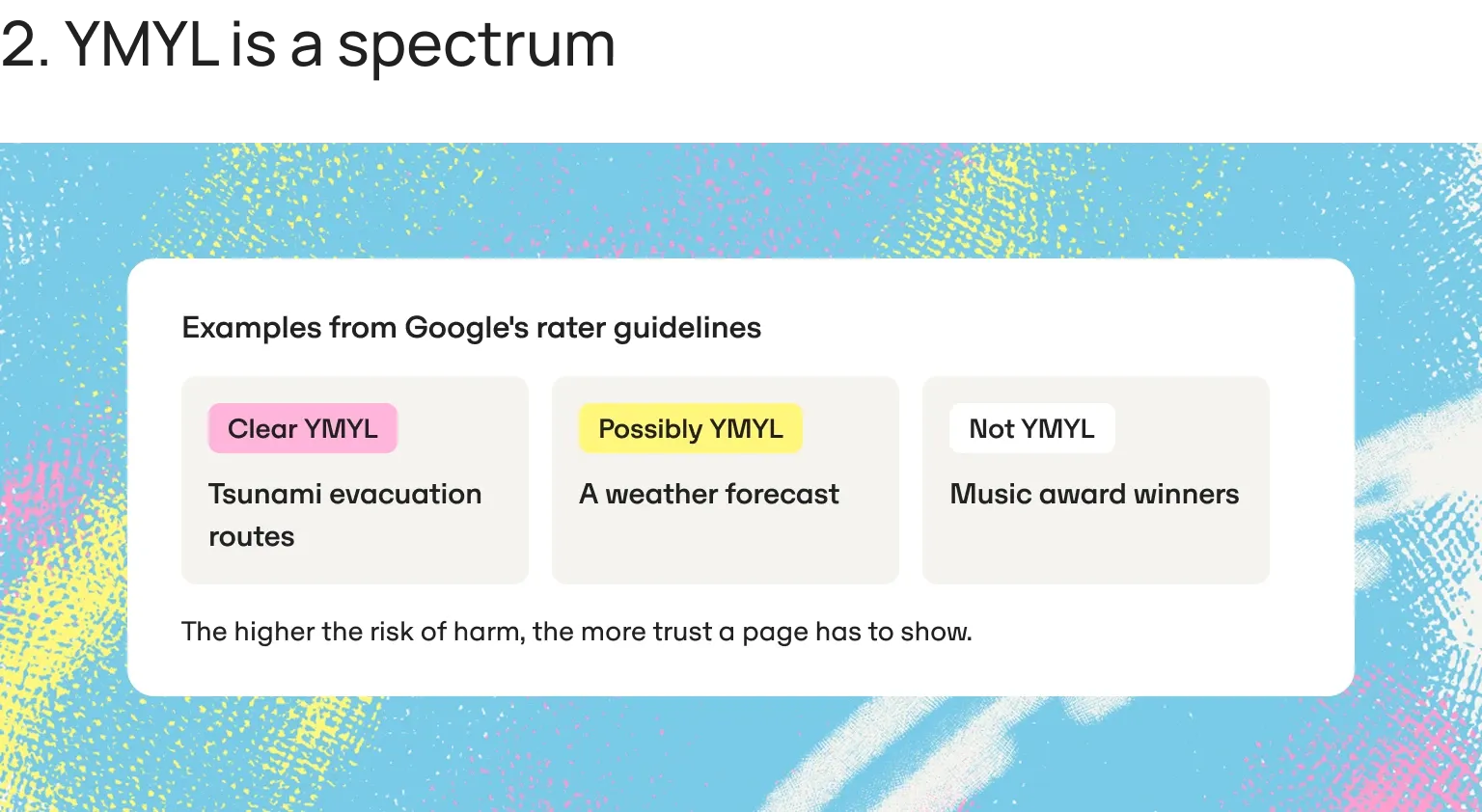
Two details in the guidelines are worth knowing. First, YMYL is a spectrum, and Google says most topics are not YMYL at all. The guidelines contrast tsunami evacuation routes (clear YMYL), a weather forecast (possibly YMYL) and music award winners (not YMYL). Second, the more harm a topic could do, the more trust a page needs to show. For clear YMYL topics, Google treats trust as the most important part of E-E-A-T (experience, expertise, authoritativeness and trustworthiness). If you are new to how this shift plays out beyond classic rankings, our guide on where GEO and SEO differ sets out the basics.
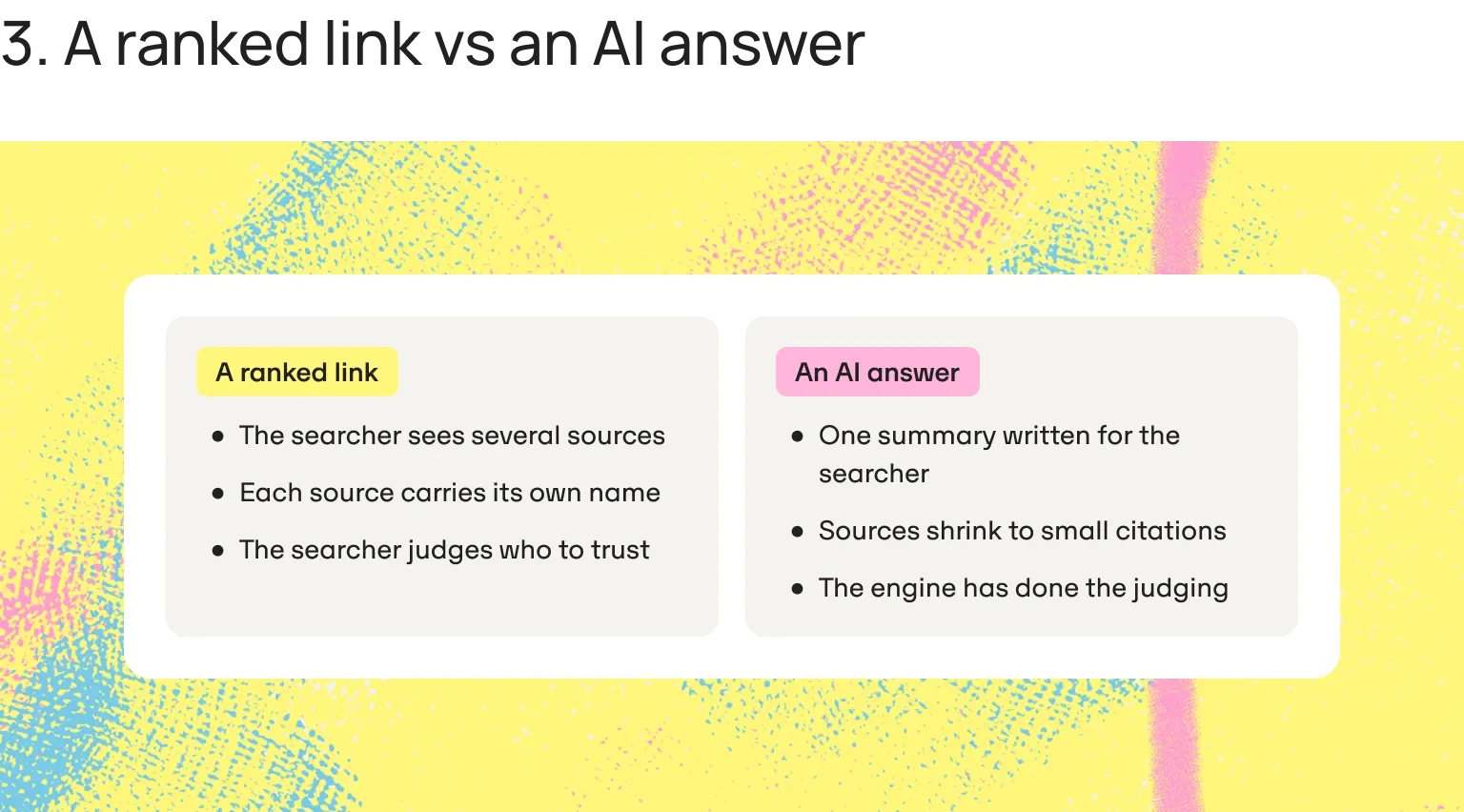
In a classic results page, a searcher sees several sources, each under its own name, and decides who to trust. An AI answer changes that. The engine reads the sources, writes one summary for the searcher, and reduces the sources to small citations. On a YMYL question, the engine has effectively done the judging.
That raises the stakes in both directions. An error in an AI answer about a medication, a loan or a legal right reaches the searcher without the context a list of sources would give them, and with the authority of a single, confident reply. For brands, being left out of that reply means being left out of the comparison altogether. This is the core of answer engine optimization: when the answer is the result, the sources it trusts are the ones that matter.
The clearest public evidence of how Google treats YMYL in AI features comes from what happened when its AI Overviews got health questions wrong.
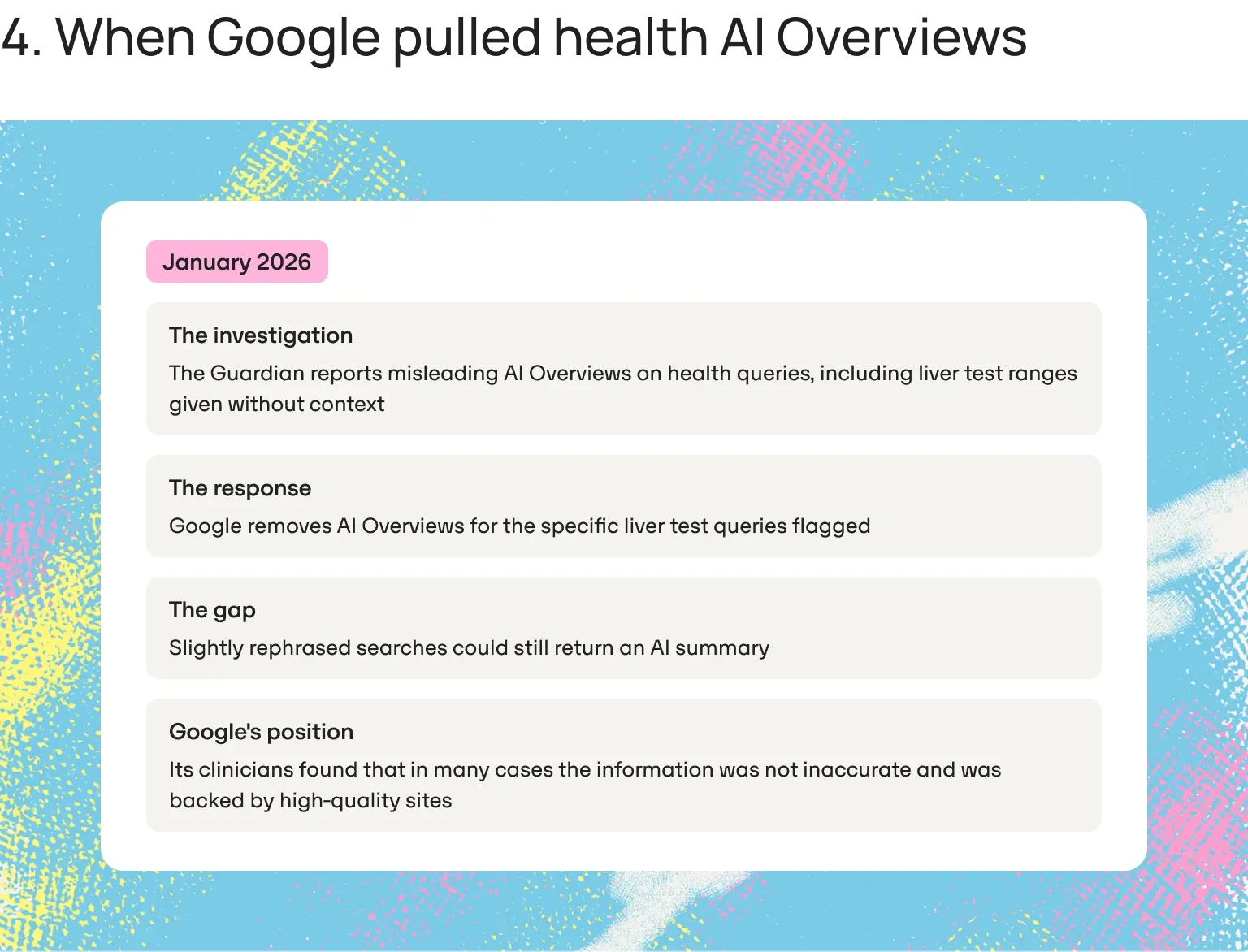
In January 2026, the Guardian published an investigation that found AI Overviews giving misleading health information, including normal ranges for liver blood tests shown without accounting for factors such as age, sex or ethnicity. Experts warned that people with serious liver disease could wrongly conclude their results were normal. The investigation also flagged problems with summaries about cancer and mental health.
Google's response was targeted. As TechCrunch reported, AI Overviews were removed for searches such as "what is the normal range for liver blood tests", while slightly rephrased versions could still return a summary. A Google spokesperson said the company does not comment on individual removals and works on broad improvements, and that an internal team of clinicians had found that in many instances the information was not inaccurate and was supported by high-quality websites.
Three lessons follow for marketers in regulated categories:
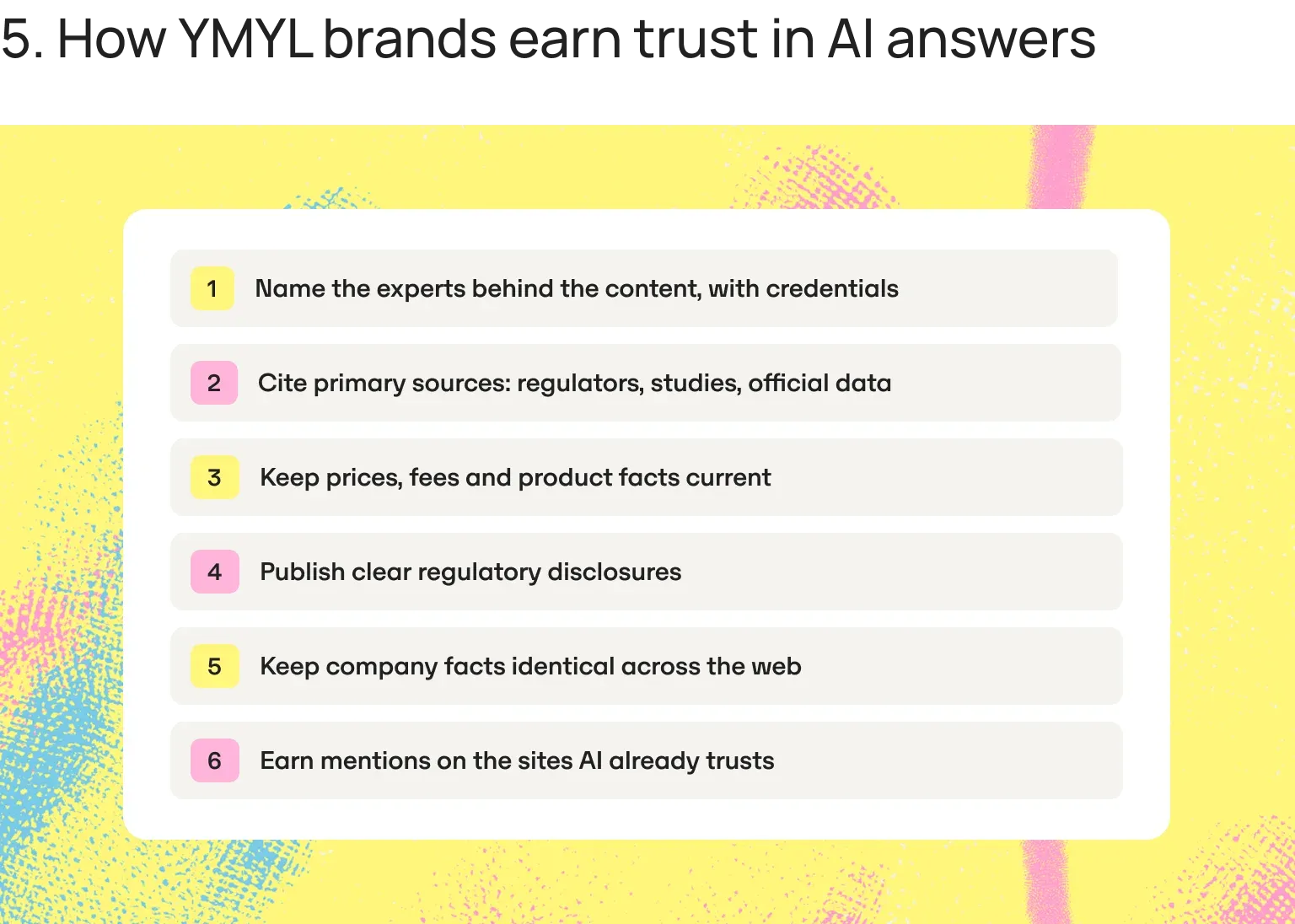
On high-stakes questions, AI answers tend to draw on sources whose authority is easy to verify: regulators and government agencies, hospitals and clinical bodies, nonprofit and industry associations, and established publishers with named, credentialed authors. Brands appear too, most often where the question is about choosing a product or provider, and where the brand's own pages answer the question carefully and with evidence.
The practical consequence for a fintech, insurer, health or legal brand is that you compete with institutions on trust as well as with competitors on relevance. That is a harder bar, and also a clear one. Our analysis of why AI engines choose some brands and not others covers the general pattern; in YMYL categories, the trust signals below carry more weight than anywhere else.
For the page-level tactics that apply to Google's AI features in general, see our guide to earning visibility in AI Overviews.
Thin or unreviewed AI-written content on high-stakes topics is the biggest risk. Google's guidelines warn against content produced at scale without care, and an AI engine has every reason to prefer a careful institutional page over a fast, generic one. Avoid unverified claims, figures without a date or source, and company details that differ between your site and your profiles.
In regulated categories, being mentioned is not enough to count as a win. Track whether AI answers recommend you, mention you neutrally or advise against you, and treat disclaimers and declined answers as a separate signal: an answer that refuses to recommend any provider is a different situation from one that recommends a competitor. Our guide on how to monitor AI search visibility sets out the full framework, and AI share of voice shows how to compare yourself with competitors.
Tracking these answers prompt by prompt, across engines and markets, is the work Omnia does every day, so YMYL brands can see whether they are trusted, ignored or warned against, and act on it.
Omnia offers a 14-day free trial on the Growth plan.
No credit card required. See exactly where your brand shows up (or doesn't) across AI engines, then let the platform's recommendations guide your next move.

Yes, for many of them, but Google applies extra care to these topics and has removed AI Overviews from specific health searches after errors were reported in January 2026. Rephrased versions of a removed query may still show a summary.
Yes, particularly for questions about choosing a product or provider. Brands with named experts, primary sources, current facts and independent validation are the ones AI engines can cite with confidence.
E-E-A-T is a framework from Google's rater guidelines rather than a direct ranking factor, but the signals behind it, such as clear expertise and trustworthy sourcing, are the same ones that make a page a safe source for an AI summary.
On high-stakes topics, AI engines often add caution or suggest consulting a professional. Track disclaimers and declined answers separately from brand mentions, because they change what visibility means in that category.
Google does not ban AI-assisted content, but it warns against content made at scale without care. On YMYL topics, expert review and accurate sourcing matter more than how the first draft was produced.
Run the questions your customers ask across the main AI engines and record whether you are recommended, mentioned neutrally or advised against, and which sources are cited instead of you. Repeat over time, since answers change.
Written By
 Alfredo BernalOrganic Growth LeadatOmniaAlfredo BernalOrganic Growth LeadatOmnia
 Alfredo BernalOrganic Growth LeadatOmnia

 Jorge HermoSoftware EngineeratOmnia
 Alfredo BernalOrganic Growth LeadatOmnia

 Miguel FernándezFounder & CTOatOmnia
No credit card required · Free for 14 days · See your AI visibility within 3 minutes