AI Search Visibility
YMYL in AI Search: How AI Engines Treat High-Stakes Topics

 Alfredo BernalOrganic Growth LeadatOmniaAlfredo BernalOrganic Growth LeadatOmnia
TL;DR
Schema markup for AI search is the most over-promised item on most AEO checklists. Structured data helps machines read your company and product facts reliably, and it still earns rich results in classic search. Microsoft has said schema helps its LLMs understand content, while Google says no special schema is needed for its AI features, and no published evidence shows schema on its own earns citations in AI answers. Add the standard types well, keep them accurate and server-rendered, and ignore anything sold as "AI schema".
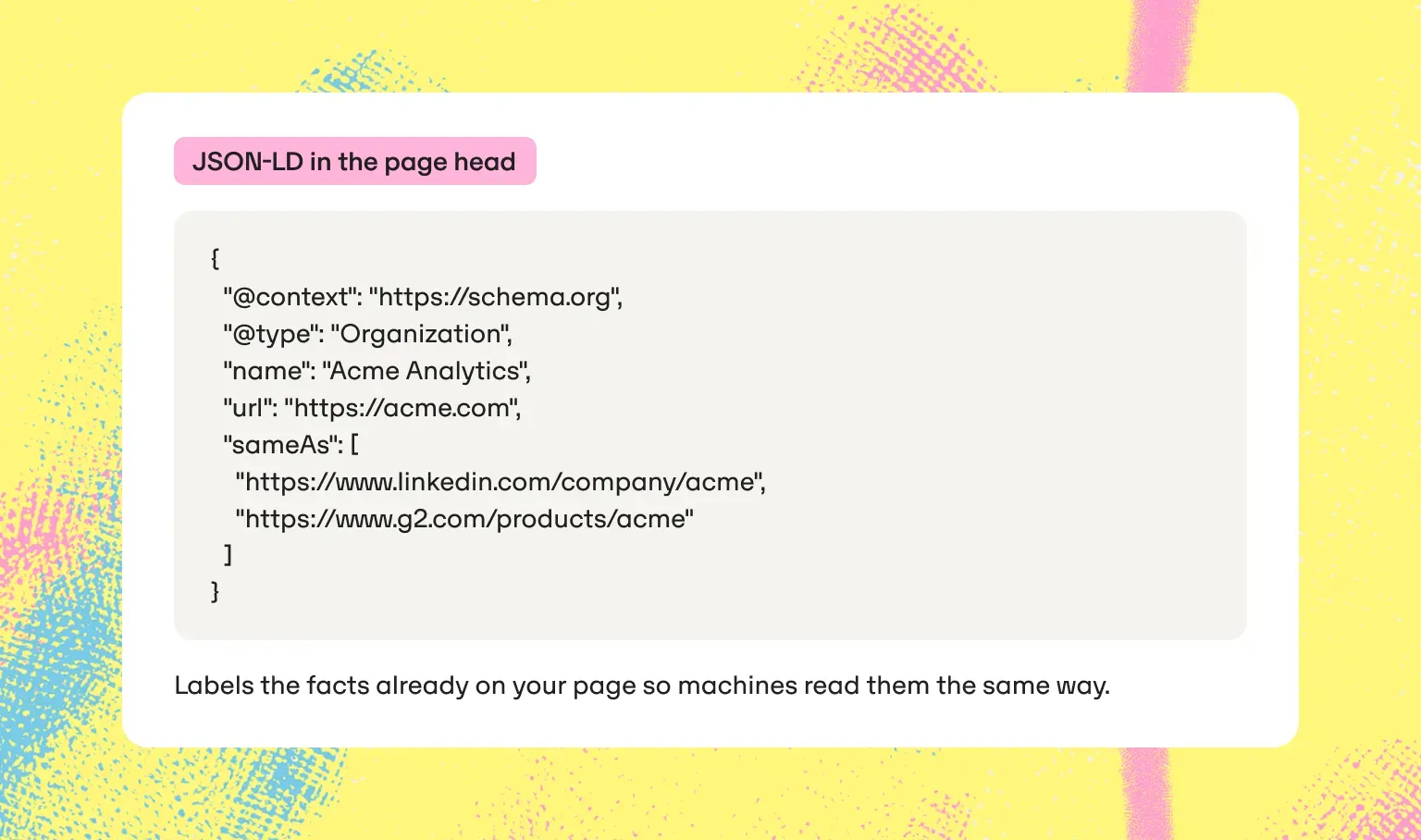
Schema markup is structured data added to a page, usually as a block of JSON-LD, that labels the facts already on it using the shared Schema.org vocabulary: this is an organization, this is its name, this is its product, this is the price. Search engines use it to understand a page with less guesswork, and Google uses some types to show rich results such as product details and breadcrumbs.
For answer engine optimization, schema matters because AI engines draw on the same understanding of entities that search engines build. Our Knowledge Base entry on structured data for GEO covers the concept; this guide covers what the evidence says and what to implement.
The two companies have said different things, and both statements are worth reading carefully.
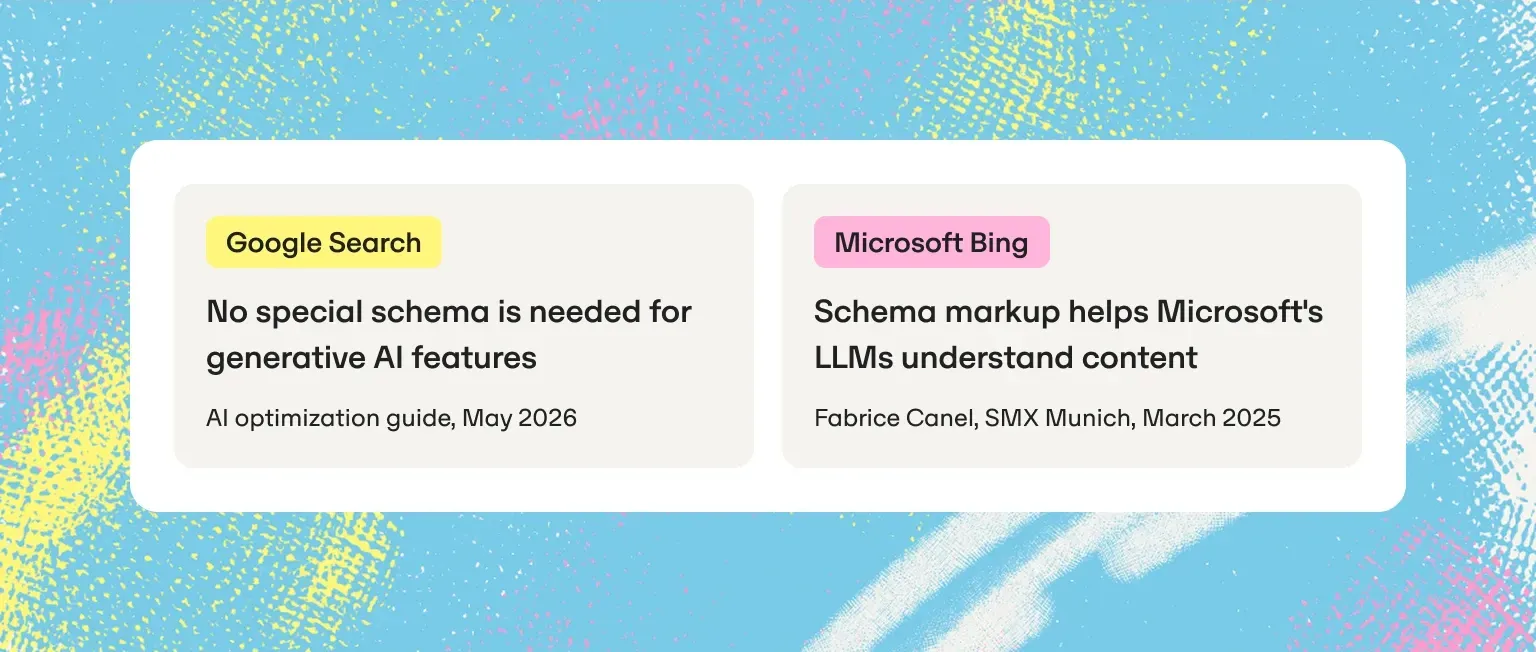
Google Search's guide to optimizing for generative AI features, published in May 2026, says structured data isn't required for generative AI search and that you don't need special Schema.org markup. It puts special markup alongside llms.txt files and content chunking among the things you don't need. That does not make structured data useless on Google. The same guide recommends keeping it for rich results, and Google's structured data documentation still explains how markup helps it understand pages. The guide's point is narrower: there is no special markup that unlocks AI Overviews or AI Mode.
Microsoft has been more positive. At SMX Munich in March 2025, Bing's Fabrice Canel said schema markup helps Microsoft's LLMs understand content, as Search Engine Land reported. In the same context, he advised publishers to push fresh content through IndexNow, because generative AI systems tend to value freshness.
No engine has said that schema earns citations, and no published study has shown that adding schema alone changes how often a brand is cited in AI answers.
The indirect case is stronger, and it is enough to justify the work:
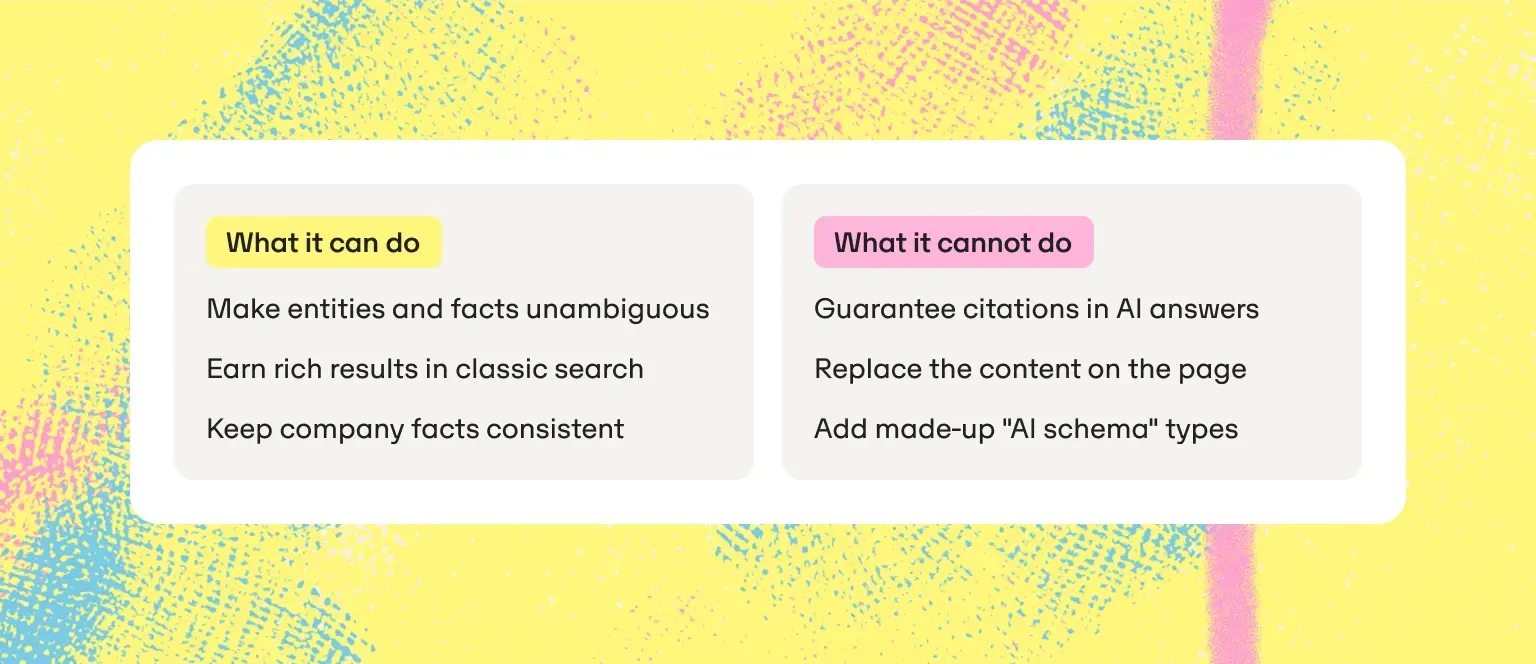
What schema cannot do is make a page worth citing. A citation still depends on whether the page answers the prompt better than the alternatives.
Start with the types that describe who you are and what you sell. Most SaaS sites need only a handful.
| Schema type | What it tells machines | Who should use it | Priority |
|---|---|---|---|
| Organization | Your name, logo, URL and official profiles (through sameAs) | Every company site | High |
| SoftwareApplication or Product | What your product is, what it does, which platforms it runs on | SaaS and software companies | High |
| Offer | Prices and plans | Sites with public pricing | Medium |
| Article with Person | Who wrote a piece, their role, and when it was published or updated | Blogs and resource libraries | Medium |
| BreadcrumbList | Where a page sits in your site structure | Larger sites | Low |
| FAQPage | Questions and answers on a page | Use sparingly: FAQ rich results are limited | Low |
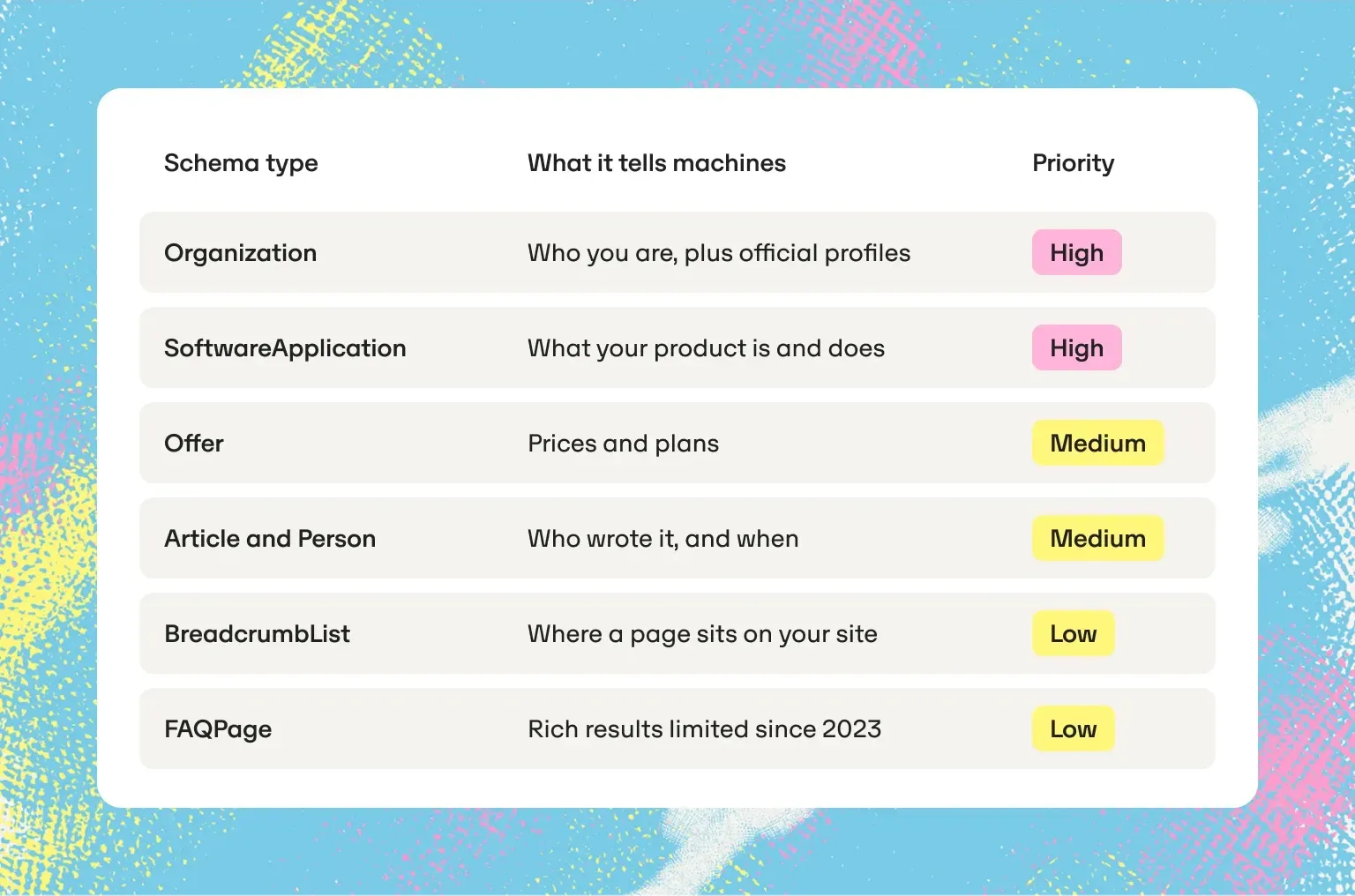
One change catches many teams out. In August 2023, Google limited FAQ rich results to well-known, authoritative government and health websites and stopped showing HowTo rich results. FAQ markup is still valid, but for most B2B sites it no longer earns a visual result, so it should not be the first type on your list.
A minimal Organization example, for a fictional company:
{
  "@context": "https://schema.org",
  "@type": "Organization",
  "name": "Acme Analytics",
  "url": "https://acme.com",
  "logo": "https://acme.com/logo.png",
  "sameAs": [
    "https://www.linkedin.com/company/acme",
    "https://www.g2.com/products/acme"
  ]
}
Entity work goes beyond schema. Our Knowledge Base entry on entity and knowledge graph optimization explains how consistent entity information helps engines recognize your brand.
Schema is one of three technical items that appear on every AI search checklist, and each does a different job.
| Item | What it does | What it cannot do | Priority |
|---|---|---|---|
| robots.txt | Decides which crawlers may fetch your pages | Make engines cite you | Check first: a blocked crawler sees nothing |
| llms.txt | Points AI tools to your key pages | Allow or block anything | Low for most marketing sites |
| Schema markup | Labels the facts on each page | Earn citations on its own | Medium: worth doing well once |
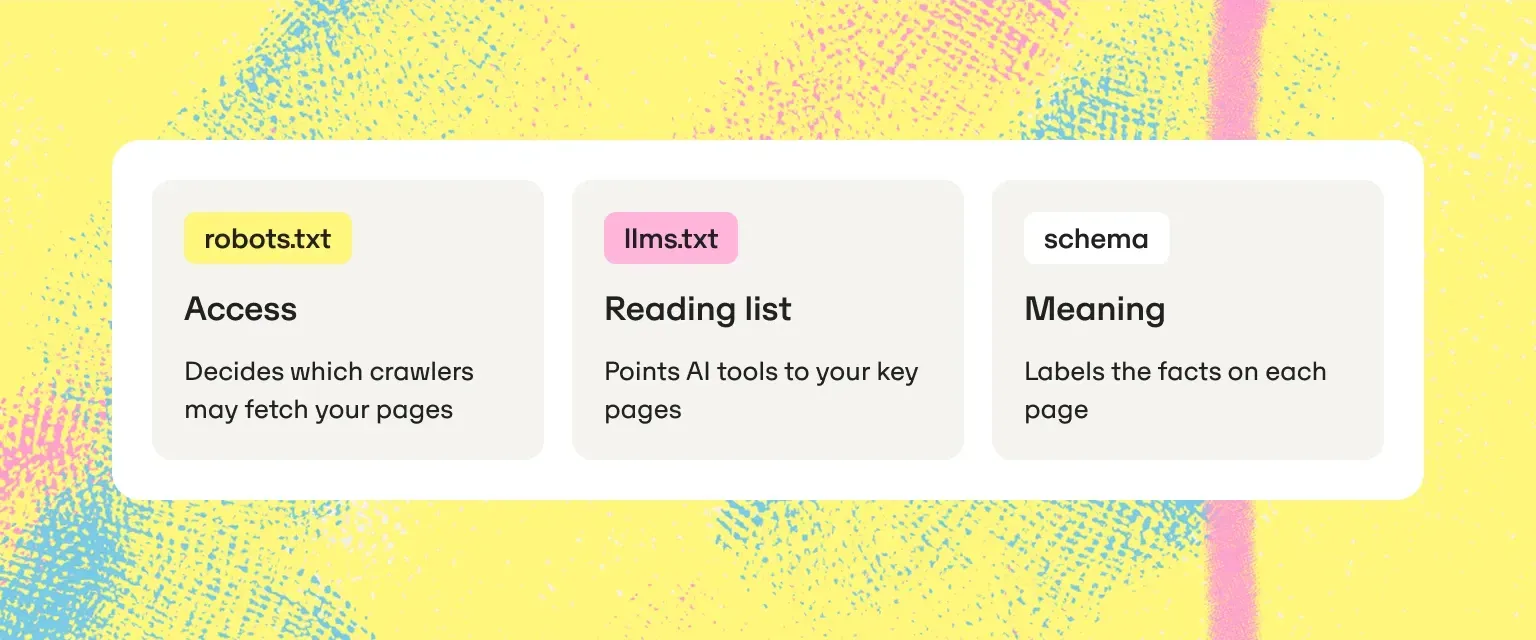
For the details on the other two, see our guide to what llms.txt does and doesn't do and the crawler access checks in our AEO audit guide.
Fix the basics once: Organization, your product, pricing and authorship, server-rendered, valid and identical to what your pages say. Then put your effort where AI answers are decided: pages that answer buyers' questions clearly, facts that match everywhere they appear, and mentions on the sites engines already trust.
Schema makes your facts easier to read. It cannot make them worth citing. If you want to see which of your pages AI engines cite today, and which sources they pick instead, that is what Omnia tracks, and what the Omnia Agent turns into work your team can ship. For the wider approach, see our guides to answer engine optimization and to earning visibility in AI Overviews.
Omnia offers a 14-day free trial on the Growth plan.
No credit card required. See exactly where your brand shows up (or doesn't) across AI engines, then let the platform's recommendations guide your next move.

OpenAI has not said whether it uses schema markup. Its crawlers do not render JavaScript, according to Vercel and MERJ's December 2024 analysis, so any markup they could read would need to be in the page's server-rendered HTML.
Google says no special schema is needed for its generative AI features. Standard structured data still helps Google understand your pages and can earn rich results in classic search.
No. AI engines use the standard Schema.org vocabulary at most; properties sold as "AI schema" are not part of any standard and are ignored.
Organization with sameAs links to your official profiles, then SoftwareApplication or Product, then Offer for public pricing. Article with author markup is next for blogs.
The markup is valid, but since August 2023 Google shows FAQ rich results only for well-known, authoritative government and health websites, so most B2B sites no longer get a visual benefit from it.
Use Google's Rich Results Test for rich result eligibility and the Schema Markup Validator for general correctness, and check that the markup appears in the HTML your server sends.
Written By
 Alfredo BernalOrganic Growth LeadatOmniaAlfredo BernalOrganic Growth LeadatOmnia
 Alfredo BernalOrganic Growth LeadatOmnia
 Alfredo BernalOrganic Growth LeadatOmnia

 Jorge HermoSoftware EngineeratOmnia
 Alfredo BernalOrganic Growth LeadatOmnia
No credit card required · Free for 14 days · See your AI visibility within 3 minutes