
MCP
Connect Omnia to Your AI Assistant: 208% More Work Done for Your AI Visibility

 Jose Luis García del RíoGrowthatOmnia
 Alfredo BernalOrganic Growth LeadatOmnia

TL;DR
AI SEO agents handle the data-heavy legwork of SEO: audits, keyword research, first drafts, internal linking and rank tracking. They fail when given too much autonomy without human checks, and no agent can own your strategy end-to-end. Before buying one, confirm it connects to your data, asks before publishing, remembers what it tried, ships work through your tools and measures its own results. Pairing traditional SEO with AEO matters more as AI search grows, since brand strength and authority signals increasingly decide who shows up. If you're talking with your team about adding an agent, the right one can enhance your output while keeping humans in control of what ships.
The old way of doing SEO meant manually working through audits, keyword research, content briefs and rank tracking one task at a time. You'd partner with an SEO agency or an in-house team, and spend weeks waiting to see whether your changes impacted revenue.
AI SEO agents are changing how teams approach organic growth by taking on that data-heavy work. Gartner found that as of late 2025, 81% of marketing technology leaders are either piloting or have already implemented AI agent initiatives across their organizations. These agents can explain what needs fixing and act on it, drafting optimized content, running audits and monitoring performance.
For clients and in-house teams alike, that means more efficiency in the day-to-day work. The challenge is that not every tool marketed as an "AI agent" actually is one, and the real ones still have limits. The same Gartner survey found that 45% of martech leaders say existing vendor-offered AI agents fail to meet their expectations of promised business performance. This guide covers what AI SEO agents actually do, where they fall short, and how to judge whether one is the right solution for your websites and your customers.
An AI SEO agent is autonomous software that can automate SEO tasks, from planning through execution. For a while, the space couldn't settle on distinct definitions for terms like chatbots, agents, agentic AI or workflow automation. Some are still used interchangeably, but these are the industry standard definitions for each:
Just because an AI agent is technically more powerful doesn't mean it's the best fit for every scenario. Agents are proactive and smart enough to adapt, which also means they come with a low level of predictability. For fixed, repetitive tasks, chatbots and workflow automations are often the better choices.
| Chatbot | Workflow automation | AI agent | |
|---|---|---|---|
| Purpose | Answer questions | Run repeatable processes | Reach an end goal |
| Action level | Responds when asked | Executes fixed steps | Decides the next step |
| Predictability | Fully predictable | Fully predictable | Adaptive, not always predictable |
| Autonomy | None | None | High, within guardrails |
| Best used for | Quick answers, guidance | Repetitive, well-defined tasks | Multi-step, data-driven work |
Agents are great at SEO work because these types of tasks are sequential and data-heavy. Agents are proactive, meaning they break bigger goals into smaller steps and work through them on their own, but the judgment stays with you. They fail when they're given too much responsibility with not enough checks or data.
AI SEO agents are great at handling:
Semrush found that 65% of businesses generate better SEO results thanks to AI, and 68% get a higher content marketing ROI. For an SEO agent to do meaningful work, it needs to be connected to your systems and your data.
There are times when an AI agent fails. That could be user error, like not connecting the agent to your data or poorly wording your end goal. Or it could be a system-wide limitation that needs human intervention, like hallucinations. Keep these weaknesses in mind as you deploy AI SEO agents:
So, do AI SEO agents actually work? For the legwork, yes. Keyword research, audits, rank tracking and drafting are data problems, and an agent with real data handles them well. For autopilot, no. The agents that work are kept under control. They draft and flag while a human approves what ships. Don't lay off half your team and think you can replace them with an AI agent for marketing.
The skills.sh registry of agent skills hit 1 million published skills in seven months. For comparison: GitHub took 27 months to reach 1 million repositories, Apple's App Store took just over five years to reach 1 million apps, and npm took more than nine years to reach 1 million packages.
If you're buying an agent, confirm it's truly an agent. Some vendors advertise "AI agents" when they're really chatbots or workflow automations. Here are five questions to test whether an AI SEO agent is worth it.
A model trained on someone else's data isn't going to give you the personalized, contextual results you need. Ensure the agent can connect to your Search Console, your analytics and your CMS. It should also be able to cite the specific data source behind every recommendation it gives.
An AI agent should never go unchecked. It should only publish, send or spend if you explicitly allow it to. That human checkpoint is purposeful, not a limitation of the tool. Only give the go-ahead on full autonomy for low-stakes tasks that are reversible and won't damage your company or reputation.
Any agent worth its price needs to retain context and carry what it learns into future sessions. You should be able to set playbooks that give the system a set of behavioral rules. And it should remember what it already tried, what worked and what didn't. That way it's not repeating the same failed approach or re-running research it already completed.
The agent should integrate with your existing tool stack. That way, it can make direct changes after a user gives it the thumbs up. If you approve a title tag, it should update it through your CMS automatically. A tool that tells you what to publish but can't execute the final step isn't an AI agent.
Activity doesn't equal outcomes. Sure, the AI agent can push SEO changes live and publish articles fast, but if you're not measuring whether the work did anything, you're producing content that simply exists. An AI SEO agent should report on what moved, so you're not jumping between multiple systems and dashboards trying to piece it together yourself.
You don't have to spend money to get an AI SEO agent. You can build one from scratch, assemble one on an agent platform, or buy one that's purpose-built for the job. Each option has a trade-off between flexibility and effort. Keep in mind, the cheapest option usually costs you the most in time.
| Method | Build it yourself (chatbot + MCP) | Assemble it on an agent platform | Use a purpose-built agent |
|---|---|---|---|
| Setup effort | High: you wire up every connection, memory layer and approval gate yourself | Medium: visual and no-code, but you still design the workflows | Low: pre-built for SEO and AEO, designed for the use case |
| Cost | Cheap to start, expensive in time | Moderate: platform subscription plus LLM API costs | Higher, but you're paying for built-in expertise and time saved |
| Data access | MCP exposes a subset of each provider's data, and it runs on your laptop unless you host it yourself | Connectors are usually MCPs underneath, so the data ceiling is the same as building it yourself | Full product data access, not just what the API exposes |
| Memory | You build it; no memory out of the box | Limited; you build it | Built in (varies by vendor) |
| Approval controls | You build them | You build them | Built in (varies by vendor) |
| Best for | Teams who want full control and already pay for tools like Claude or Ahrefs | Teams who want visual, no-code workflows across multiple SaaS tools | SEO-specific work where depth of data and built-in expertise matter |
The route you pick depends on how much of the work you want to own. Build-it-yourself gives you maximum flexibility but leaves memory, approval gates and data connections as your problem.
Agent platforms handle the orchestration but still rely on MCP connectors underneath, so the data ceiling is the same. Purpose-built agents come with the SEO logic wired in, but you're committed to one provider's worldview, and they're less useful if all your workflows aren't SEO-related.
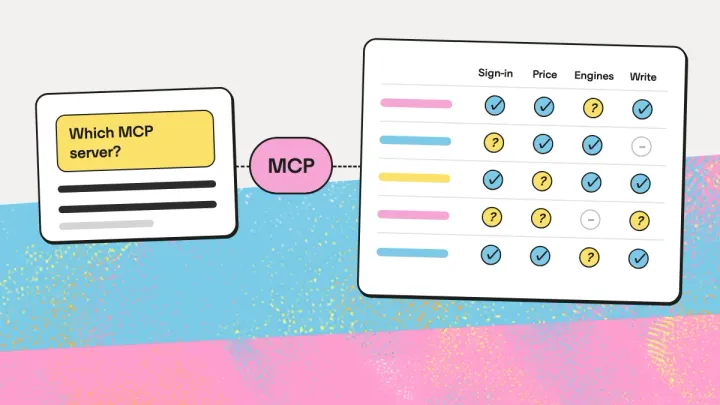
There's no wrong answer, just a decision to make between how much you control and how much you build. See how Omnia Agent and Claude compare head-to-head.
Agentic SEO is a practice, not a content discipline, and an AI SEO agent is the software. Essentially, agentic SEO is what you do and the agent is what does it.
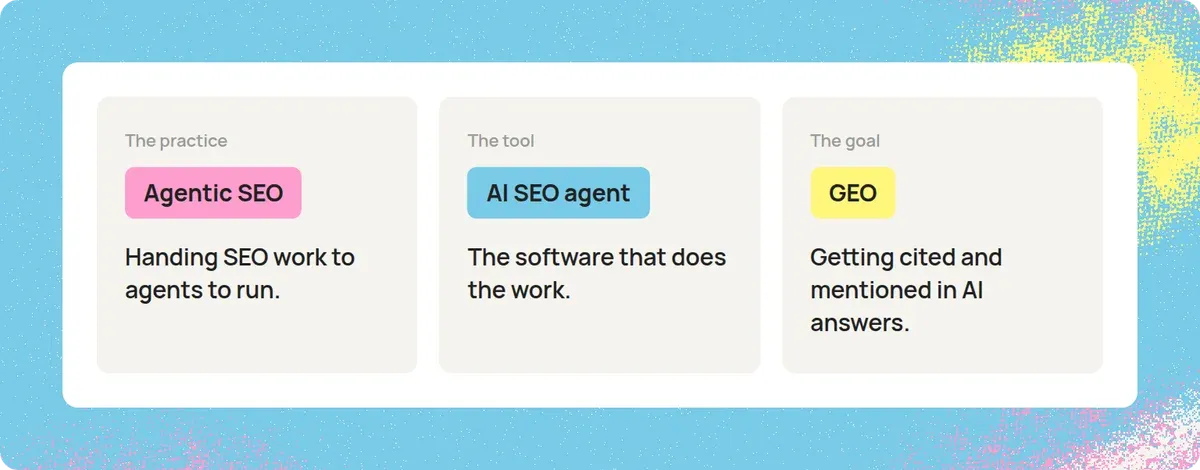
An AI SEO agent targeting traditional SEO practices is going to optimize for Google rankings, like blue links, keyword positions and click-through rates. Answer engine optimization (AEO), also called generative engine optimization (GEO), optimizes for AI answers: citations, mentions and share of voice in AI engines like ChatGPT, Perplexity, Claude and Google AI Overviews.
If you're targeting traditional search engines, you need an agent that focuses on structured data, backlinks and technical SEO. Optimizing for AI answers includes much of the same, but also emphasizes clear, self-contained content, entity signals, and showing up across third-party sources.
McKinsey found that half of consumers now intentionally seek out AI-powered search engines, with 44% of those users calling it their primary source of insight. This beats traditional search, which stands at 31%. Forrester's February 2026 Consumer Pulse Survey found that 26% of US online adults used ChatGPT in the past month to search for products they were interested in buying, up from 19% in October 2025.
If your agent only optimizes for Google, you're ignoring a lucrative channel. Whichever AI SEO agent you decide to build or buy, make sure you're pairing it with a solid AEO strategy too.
The five questions in this article exist because most products sold as AI SEO agents fail at least a few of them. They're not grounded in your data. They don't remember what they tried. Or they can't ship the work. Omnia is built to pass those tests, but it's not the right tool for everything, and pretending otherwise would be dishonest.
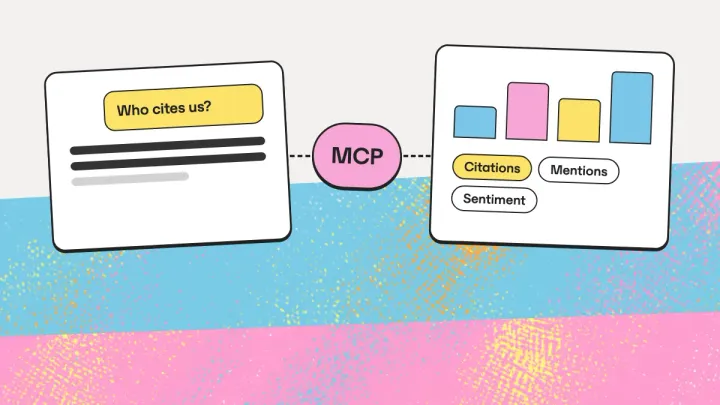
Omnia Agent discovers the prompts your buyers are asking, diagnoses why your brand is missing from AI answers, and proposes up to three projects at a time. Each is scoped as work you could start today, often with a first draft already attached. It creates and places content through its integrations, asks before it acts, remembers what it's already tried, and measures the results against the same tracked prompts.
Before suggesting anything, it checks the last 60 days of prior suggestions and your action plan, so it never re-proposes something you already accepted, finished or declined. If the evidence doesn't support a suggestion, it won't invent one to fill the slot.
The trade-off is time versus money. Building on Claude with MCP is affordable, but you build it yourself. You have to wire up connections, memory and approval gates on your own. If you want to understand how that connection layer works, Claude MCP is a good place to start. That's fine if you have the engineering bandwidth and want full control. Most teams don't. Omnia might cost more, but the expertise is built in and the data is already connected. You're paying for the work not being your problem.
Ready to see it diagnose your visibility gaps? Book a demo. Or sign up for a 14-day free trial on the Growth plan.
Omnia offers a 14-day free trial on the Growth plan.
No credit card required. See exactly where your brand shows up (or doesn't) across AI engines, then let the platform's recommendations guide your next move.

An AI agent can handle much of the manual work like audits, keyword research, first drafts, internal linking suggestions and rank tracking. But it can't own your strategy end-to-end. Strategic decisions, creative direction and final approval still need a human. Think of the agent as the doer and the human as the decision-maker.
Enough to catch hallucinations, verify facts and approve anything that goes live. The exact amount depends on the stakes. Low-risk, reversible tasks can run with less oversight, while content published to your site or changes to critical pages should always pass human review. A good agent asks before it acts, so the review checkpoint is built in.
Only if the agent has approval controls and you use them. An agent should never publish, send or spend without your explicit go-ahead. Fully unedited AI content performs worse than human-reviewed content in both AI citations and Google rankings, so a human checkpoint is the difference between content that works and content that just exists.
It depends on your needs. An AI SEO agent can take on the repetitive, data-heavy work that an SEO agency typically charges for. But an agency brings strategic judgment, industry relationships and creative direction that an agent can't replicate. For some teams, an agent reduces the need for agency hours. For others, the agency stays in charge and uses the agent as a tool.
Yes, but it takes more than traditional SEO. AI search tends to synthesize one answer rather than serving up a list of links, which makes visibility harder to earn. It also weighs brand reputation and authority heavily. That means building genuine brand strength is essential if you want to show up in AI results. A good agent helps you build that foundation. It optimizes content, strengthens entity signals and ensures your brand appears across the third-party sources that AI engines cite.
Written By
 Alfredo BernalOrganic Growth LeadatOmniaJose Luis García del RíoGrowthatOmnia
 Alfredo BernalOrganic Growth LeadatOmnia
 Alfredo BernalOrganic Growth LeadatOmnia
 Jose Luis García del RíoGrowthatOmnia
 Alfredo BernalOrganic Growth LeadatOmnia
No credit card required · Free for 14 days · See your AI visibility within 3 minutes