

This guide compares the 8 best generative engine optimization tools across engine coverage, citation intelligence, sentiment tracking, country-level visibility, crawl-signal monitoring, and action layer capabilities. It explains how GEO differs from AEO and traditional SEO, breaks down what each tool does well and where it falls short, and provides a decision framework by team type, from startups to enterprise to agencies to ecommerce. Omnia ranks first for combining URL-level citation tracking across 7 engines with an AI agent that turns visibility gaps into published content, outreach, and reporting, all on transparent pricing.
Only 18.5% of Google AI Overviews answers keep the same top-cited domain week over week, according to Omnia’s proprietary data. ChatGPT is worse at 8.1%, changing its top-cited domain 92% of the time. Visibility in AI search isn't a position you earn and keep, it's something that rotates constantly. Generative engine optimization tools exist because traditional SEO tools can’t track that kind of volatility.
This guide compares 8 generative engine optimization platforms across the criteria that matter most. That’s engine coverage, citation intelligence at the URL and domain level, sentiment tracking, country-level tracking, crawl-signal visibility, and whether the tool stops at a dashboard or includes an action layer. We break down what each tool does well, where it falls short, and which team type it fits best, so you can shortlist without sitting through 8 demos.
What are generative engine optimization tools?
Generative engine optimization tools track how your brand shows up in AI generated responses across AI search engines like ChatGPT, Perplexity, and Google AI Overviews. They also give you data on brand visibility, brand mentions, and AI citations.
The best generative engine optimization tools will also account for things like probabilistic presence, prompt rephrasing, or geolocation shift.
GEO vs AEO vs traditional SEO tools
Traditional SEO tools measure stability data points like indexing, backlinks, keyword positions, and search rankings. The entire framework assumes that search engines return consistent, ranked lists of web pages.
AI search doesn’t work that way. AI generated answers are probabilistic, not positional. AI models synthesize responses from multiple sources, and the output varies by time, device, locale, and personalization. A competitor might be cited via a specific review page while your homepage isn’t, and AI overviews replace the stable blue links that traditional search rankings offered. SEO tools built for keyword positions can’t handle that variability, which is why dedicated tools for AI visibility emerged.
But within the AI search tooling category, there’s a distinction most buyers miss, which is generative engine optimization (GEO) versus answer engine optimization (AEO).
AEO is the narrower discipline of being recognized as the explicit cited or recommended answer, producing direct answers to specific prompts for a given prompt. Marketers focused on AEO want to appear as the direct answer in search results, like in Google snippets or “People also ask” boxes.
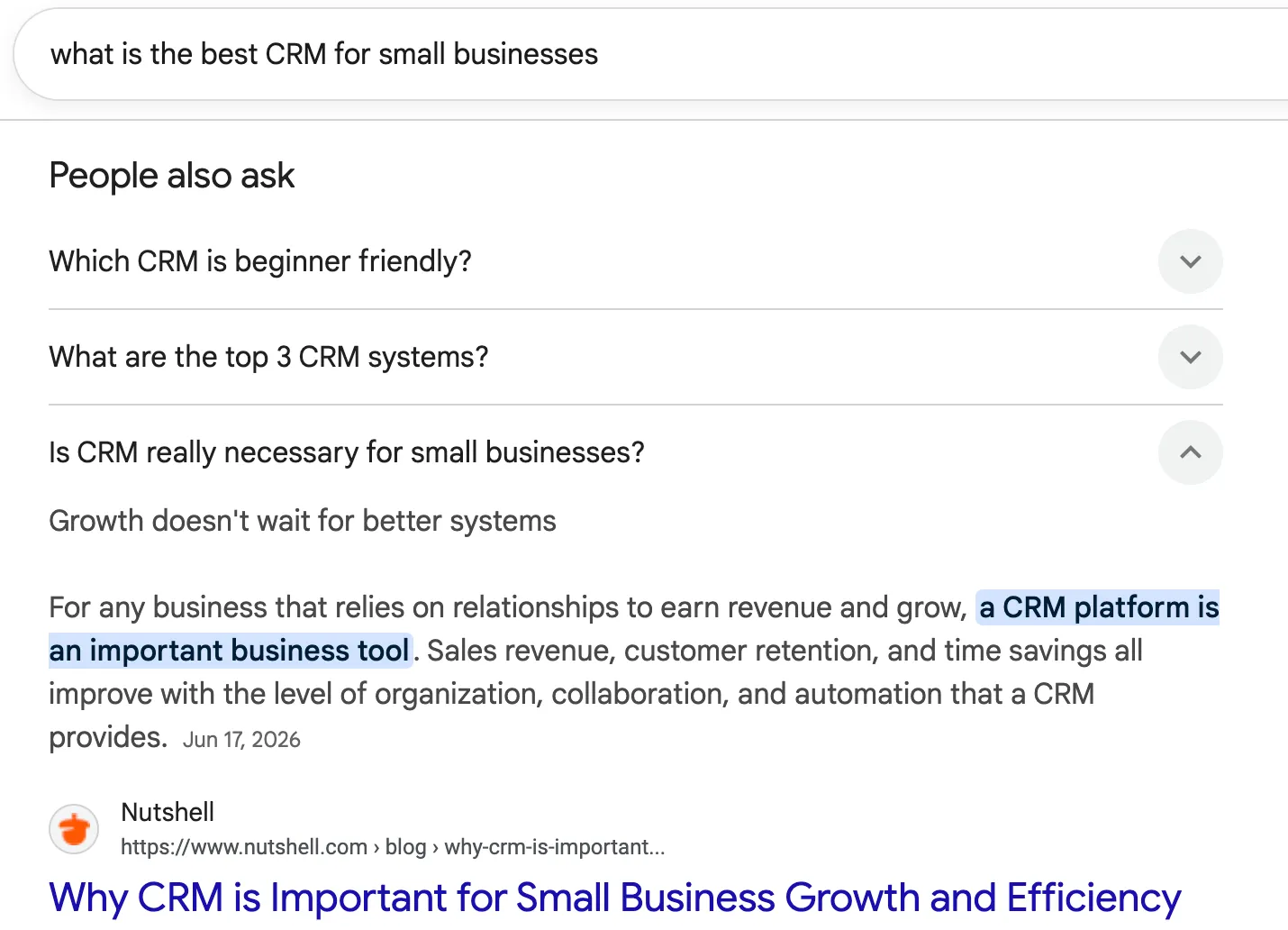
GEO focuses more broadly on how AI answer engines answer user queries. When AI models synthesize information from multiple sources, you want your content to be a part of that answer, even if it doesn’t earn the sole citation. Tools that help you understand your GEO presence go deeper and monitor crawl access and assess content structure.
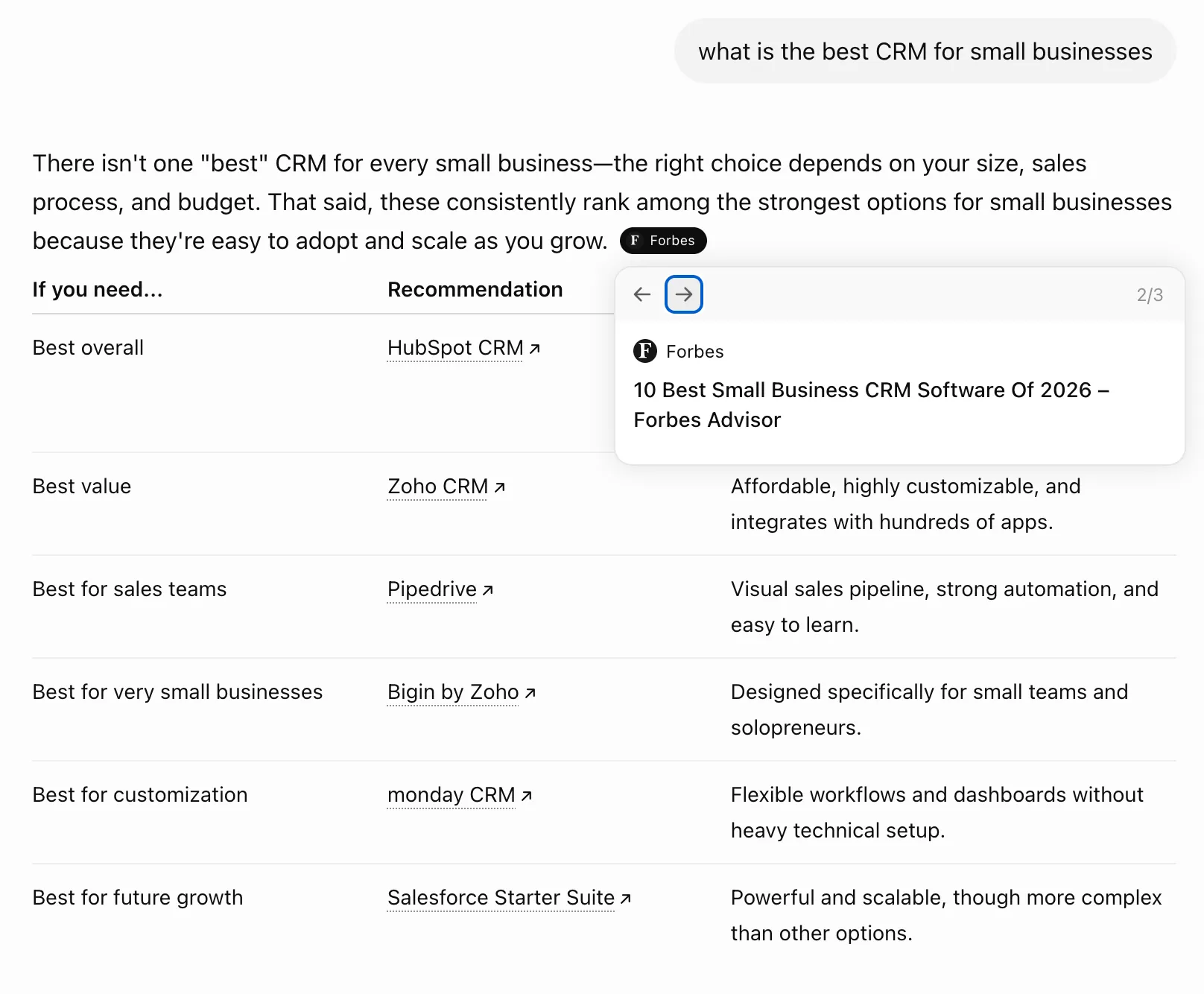
Buyers should ask vendors which discipline they actually measure, and whether their tooling covers the upstream signals that determine whether your content gets included in the generation at all. Foundational SEO still matters, but generative engine optimization measurement requires new instrumentation that SEO tools don’t provide.
How these tools work (what’s happening under the hood)
Every generative engine optimization software follows a similar method:
- You define prompt sets
- The tool queries AI engines and captures snapshots
- It extracts brand mentions, AI citations, and sentiment from the responses
- The platform stores the data with timestamps
- Then it reports it through dashboards or alerts
Some tools also monitor training and crawl signals to show whether AI crawlers can access your content at all. The quality of a GEO tool depends on how faithfully it simulates real user behavior, how granular its citation extraction is, and whether it stores historical data so you can track trends over time.
Some tools pull AI responses from APIs, while others capture directly from the browser. API outputs can differ from what real users see, which means “simulated” answers can mislead. The most reliable tools capture from the consumer experience, not the API, so what you see in the dashboard matches what your customers actually encounter.
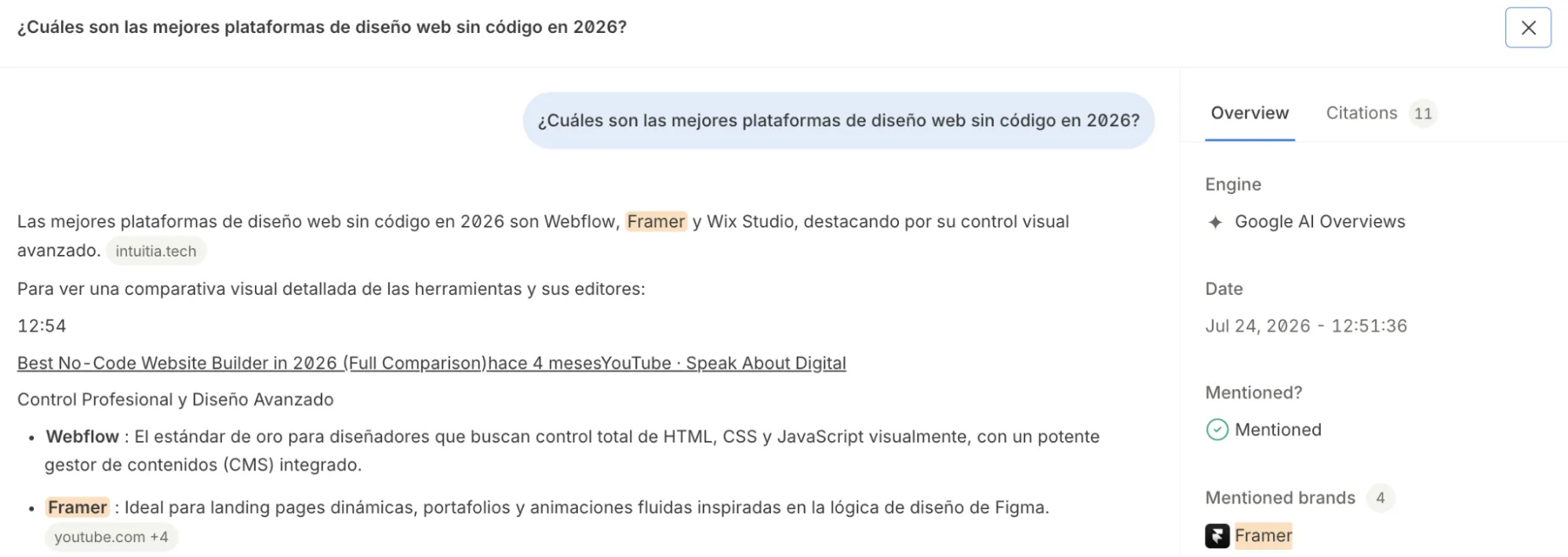
Omnia captures directly from the browser and provides a timestamped proof of query.
Engine coverage
Different AI platforms have fundamentally different citation behaviors, and Omnia’s citation database of 42M+ citation events reveals just how wide the gaps are. Every engine has a different “citation budget”: Google AI Mode cites an average of 13.8 domains per answer, Google AI Overviews cites 9.2, Perplexity cites 7.5, and ChatGPT is the most selective at just 4.1 +1.
The engines also trust completely different sources. YouTube is the number one cited source in AI Overviews but barely registers in ChatGPT, where Wikipedia is 40 times more likely to be cited +1. Engine overlap is also lower than most teams assume. AI Mode and AI Overviews share 81.5% of cited domains, but AI Overviews and ChatGPT share only 52%, and Perplexity and ChatGPT share just 49.5%. Winning in Google’s ecosystem doesn't mean you're winning in ChatGPT, which is why it’s important to go with a tool that covers all the engines you care about.
When evaluating generative engine optimization tools, ask vendors exactly which surfaces they track and how. Do they track ChatGPT, Perplexity, Gemini, Copilot, Google AI Overviews, and Google AI Mode? Do they capture from the browser or the API? The answers determine whether you're getting real coverage or a partial picture.
Prompt discovery vs prompt tracking
Prompt discovery is finding high-intent prompts and topics to own. Prompt tracking is monitoring how answers change over time for prompts you already care about.
Discovery is about identifying the prompts your audience actually asks. Understanding search intent behind user prompts is what separates discovery from guessing AI engines.
“Best payroll software for startups” is a discovery prompt, meaning it reveals demand and competitive landscape. “How do I run payroll in Spain” is a tracking prompt: It’s specific, operational, and something you’d monitor over time after you’ve identified it as relevant.
A good generative engine optimization platform does both. It helps you find prompts with real search volume, then tracks how your brand presence shifts across those prompts week over week. LLM SEO tools that only do tracking force you to guess which prompts matter. Tools that only do discovery give you a list but no ongoing measurement.
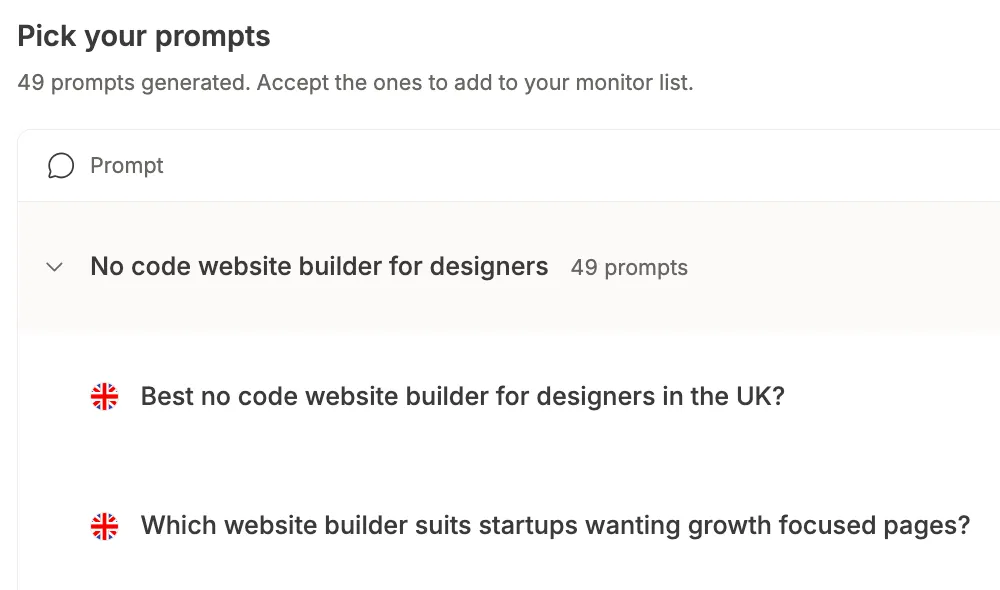
Omnia’s Prompt Discovery allows you to discover AI search trends in any country or language.
Citation intelligence (URLs + domains) and competitor source overlap
Citation extraction is where most generative engine optimization tools reveal their depth. Domain-level citation tells you about AI mentions at a broad level. URL-level citation tells you which specific page was cited as a source. Knowing what pages perform tells you what to do next. If a competitor is cited via their comparison page and you’re not cited at all, then you know you need to build or refresh the page that AI systems need to cite.
Citation intelligence also means understanding which sources AI engines trust. If a tool shows you that AI consistently cites third-party review sites, forum discussions, or user generated content for your category, that tells you where to publish and pitch. Competitive intelligence at the citation level reveals which domains and URLs are winning, not just whether you’re present.
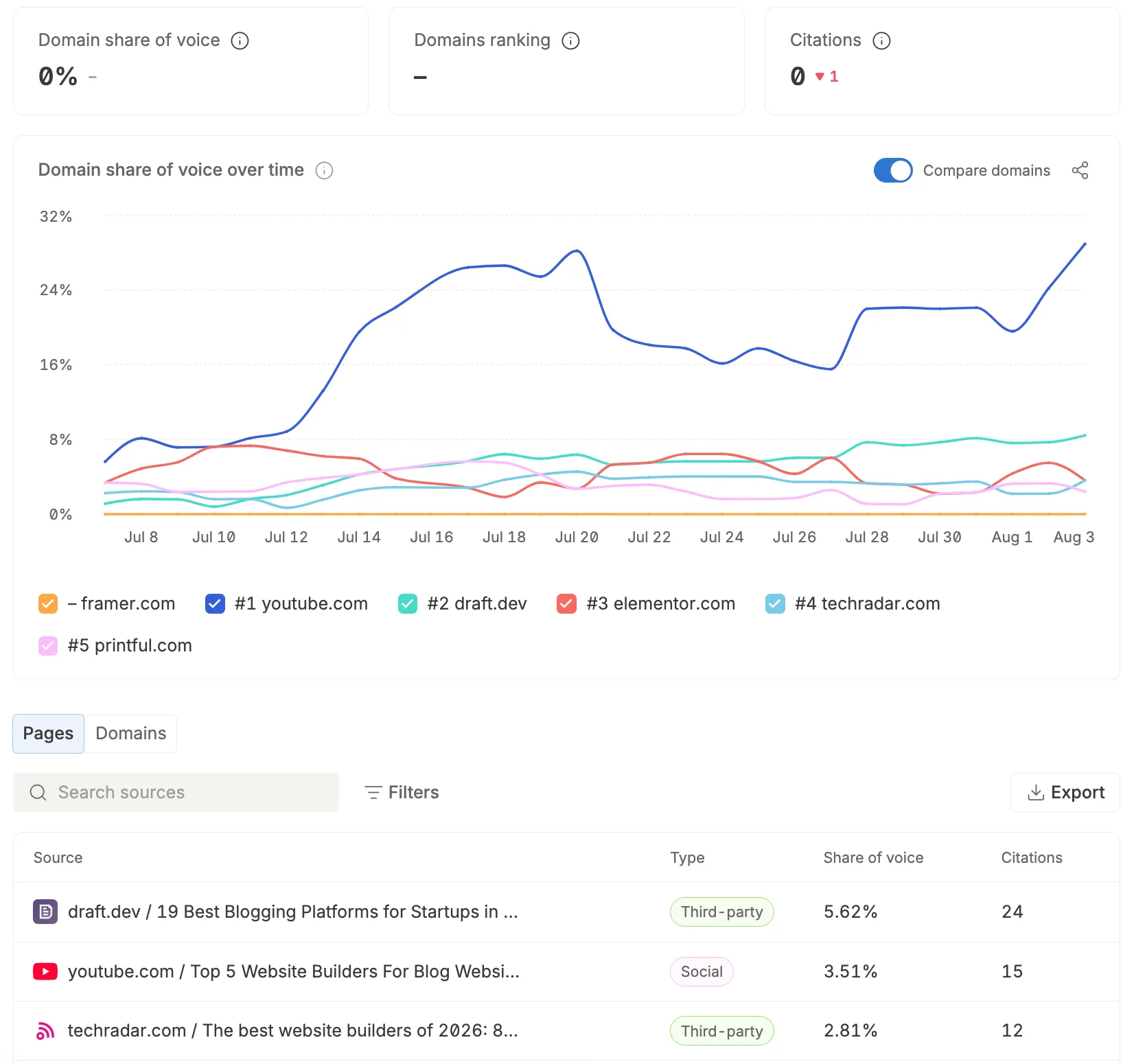
Omnia lets you view citation sources at the URL-level and categories by type of source.
Sentiment tracking
A brand can show up in AI answers and still lose, because AI models don’t just mention you, they describe you. If the description doesn’t match how you want to be positioned, visibility alone isn't enough. Sentiment analysis surfaces that gap so you know whether your brand reputation in AI generated responses is helping or hurting.
AI conversations about your brand reflect how AI models have learned to describe you, and that description can shift based on content changes, PR, and media outreach. Without sentiment tracking, you’re optimizing for presence without knowing whether the presence is helping or hurting your brand reputation.
Omnia’s Sentiment Analysis benchmarks your brand at the feature level.
Training and crawl-signal visibility
This is the GEO-specific version of technical accessibility. Instead of asking “why wasn’t I the cited answer” (an AEO framing), the GEO framing is “why isn’t my content part of what gets generated at all?” AI crawlers like GPTBot, Google-Extended, and Claude’s crawler need to access your content before it can be included in training data or retrieval augmented generation. If your robots.txt blocks these crawlers, or if your structured data is missing, or if your content structure makes it hard for AI systems to parse, you’re invisible upstream, before any prompt is even asked.
Tools that offer crawl-signal visibility show you which AI crawlers are accessing your site, how often, and what they're consuming. Some also run on page optimization audits to identify GEO gaps in your content structure. This is a prerequisite for being included in generation, not just cited downstream, and it’s a capability that separates full GEO platforms from narrower AEO tools.
Omnia’s GEO expert agent, Omnio, takes this a step further. It crawls your entire site, produces a prioritized fix list for GEO gaps, and opens pull requests that ship llms.txt, robots.txt, and schema fixes straight to your repo. It also submits pages to Search Console for indexing, so the fixes don't just sit in a dashboard, they get shipped and indexed.
Localized tracking by country
Country-level tracking is the buying requirement most teams don’t realize they need until they’re expanding markets and seeing costs soar. AI search results vary significantly by country. Different sources dominate by market, different brands are available due to legal constraints, and language and currency context changes what AI engines recommend. A query that cites your brand in the US might cite a local competitor in France, and without country segmentation, you’d never know.
Buying trap: If your tool can’t segment visibility by country, you’ll optimize for the wrong sources. You’ll invest in content and outreach that moves the needle in one market while missing the fact that you’re invisible in three others.
Action layer: What turns AI visibility signals into execution
Most generative engine optimization tools give you a dashboard. The best ones give you a dashboard plus an action layer. “Execution” in a real marketing workflow means recommendations prioritized by impact, content strategy tied to prompts and citations, content briefs and outlines, placement guidance for third-party outreach, and ongoing monitoring with alerts when your position shifts. Teams don’t have time for another dashboard. They need to know what to publish next, where to pitch, and whether the work they shipped moved the needle.
The action layer is what separates tools that inform from tools that execute. A tool that shows you a citation gap is informative. A tool that shows you the gap and generates a content brief for the page that can close it is actionable. For marketing team workflows where someone has to dig in, find which citations were lost, improve them, publish, and reach out to third parties, the action layer is the difference between knowing and doing.
GEO for product discovery: The ecommerce angle
The buying criteria flip if you’re selling products instead of content. You don't just need to know whether your brand gets mentioned. You need to know which queries trigger shopping results, how AI describes and tiles your products, and which feed fields and structured data determine whether AI correctly identifies your catalog. A generative engine optimization platform that only tracks brand mentions in text answers isn't enough for teams whose revenue depends on product discovery in AI search.
All generative engine optimization tools at a glance
Use this table to shortlist 2–3 tools, depending on whether you’re evaluating enterprise platforms or need a lighter tool. Then read the detailed reviews below.
| Tool | Best for | Engines tracked | Geographical tracking | Crawl-signal visibility | Citations | Pricing from |
|---|---|---|---|---|---|---|
| Omnia | Action-first GEO for startups/scale-ups | 7 | Unlimited regions and languages, on all plans |  |
URL + domain | €79/mo |
| Profound | Enterprise analytics at scale | 10 | Custom on enterprise only | |
URL + domain | $99/mo |
| Scrunch | AI-ready sites + bot traffic tracking | 9 | Multi-region on enterprise only | |
URL + domain | $250/mo |
| Peec AI | Granular citation tracking, transparent pricing | 7 | Unlimited regions on enterprise only | |
URL + domain | $95/mo |
| AthenaHQ | Unified GEO command center with content agents | 8 | Multiple countries on enterprise only | |
URL + domain | Limited free plan or $295/mo |
| AirOps | AI content operations with visibility insights | 4 | Custom on enterprise only | |
URL + domain | $200/mo |
| Semrush | Enterprise SEO teams adding AI visibility | 4 | Not specified |  |
URL + domain | $199/mo |
| Ahrefs | SEO pros wanting AI data in existing ecosystem | 6 | Not specified | |
Domain only | From $199/mo |
The best generative engine optimization tools (ranked)
We evaluated 8 generative engine optimization tools across engine coverage, citation intelligence, sentiment tracking, country-level tracking, crawl-signal visibility, and action layer. Here's how they rank, starting with the one that does the most with the data it collects.
1. Omnia
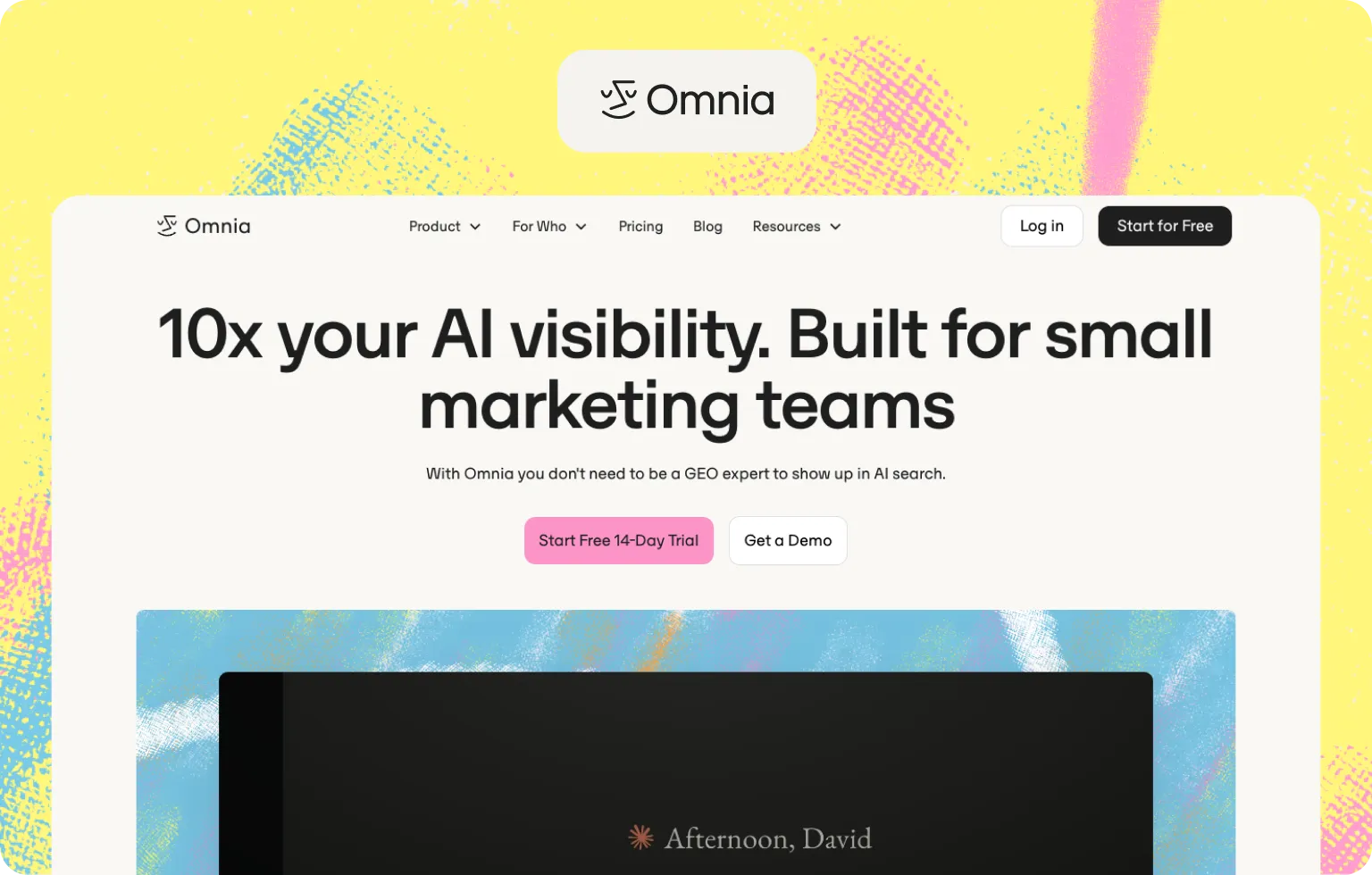
Omnia is a purpose-built GEO platform that turns real AI visibility signals into action. It tracks your brand across 7 AI engines with unlimited country and language tracking on every plan. The Omnio GEO Agent does the work that comes after knowing where you stand: finding lost citations, creating content briefs, publishing to your CMS, and reaching out to third-party sites that AI already cites.
Best for
SEO and marketing leads at startups and scale-ups who need clarity without enterprise bloat and want predictable pricing.
What it does well
Omnia’s unlimited geographical tracking means you can monitor your brand visibility across every market you sell into. Its citation intelligence operates at both the domain and URL level, so you can see exactly which pages won citations and which ones you need to match. AI sentiment analysis shows how AI engines frame your brand, not just whether you appear, and site scanning identifies GEO gaps and technical issues that block AI crawlers from accessing your content.
Omnio is the real differentiator. It’s a specialized GEO agent trained on millions of AI visibility data points. It reads your share of voice, citations, and sentiment across every engine you track. It does GEO tech audits to find what needs fixing. It finds listicles that AI cites, identifies their authors, and drafts outreach from your inbox. It edits and creates content briefs, or content altogether. It publishes and makes changes directly in your CMS. It generates Google Analytics visibility reports for leadership. And it finds prompts to monitor, backed by real keyword volumes. Omnio is live and free for everyone until the end of August 2026.
AI prompt discovery surfaces real AI search queries with search volume and difficulty scoring, so you can find winnable prompts instead of guessing. The MCP connector lets you pull visibility data into Claude, ChatGPT, or Cursor. For teams that want to improve AI visibility systematically, Omnia provides the monitoring cadence and execution layer in one platform.
Key features
- Localized tracking by country and language on every plan
- URL-level citation extraction with cited source pages
- Competitive share of voice and competitor overlap analysis
- AI sentiment analysis across all tracked engines
- Site scanning for GEO gaps and technical audit capabilities
- Omnio GEO Agent with content briefs, outreach, CMS publishing, GA4 reports
- AI prompt discovery with search volume and difficulty scoring
- MCP connector for pulling data into AI assistants
Watch-outs
Omnia isn’t a full SEO platform with backlink research or technical SEO audits. Teams that need deep SEO metrics alongside AI visibility will need a complementary tool.
Good fit if
- You’re a startup or scale-up whose AI search presence directly impacts pipeline
- You need country-level tracking across multiple markets
- You want monitoring and execution in one platform, not two
Not a fit if
- You need a full enterprise SEO platform with backlink analysis
- You only want a one-time check and no ongoing monitoring (if this is you, check out Omnia’s free AI visibility checker)
Pricing
- Growth: €79/mo (free 14-day trial)
- Pro: €279/mo
- Enterprise: €499/mo
2. Profound
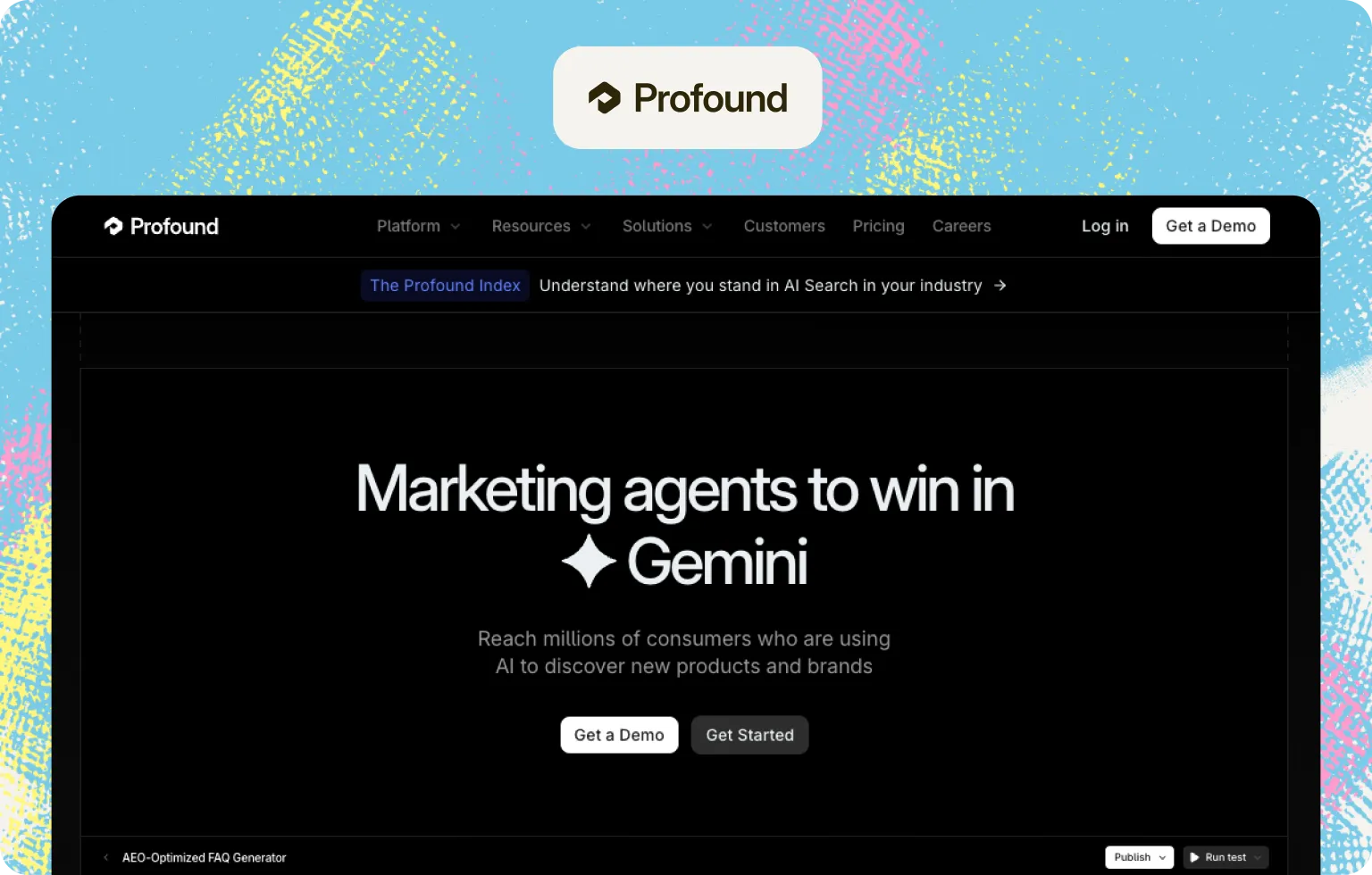
Profound is a full-stack marketing platform for AI visibility that emphasizes enterprise-grade analytics, automated prompt discovery at scale, and browser-captured responses rather than API outputs.
Best for
Enterprise teams that need detailed analytics, automated prompt discovery at scale, and white-glove support.
What it does well
Profound’s Answer Engine Insights track how often your brand appears in AI answers with visibility scores and share of voice metrics. Profound captures responses directly from the browser, not the API, which means what you see in the dashboard matches what your customers see. The Shopping feature tracks product visibility in ChatGPT Shopping, showing how AI describes and tiles products and which queries trigger shopping results.
Teams exploring Profound alternatives will find that Profound’s strength is enterprise depth, while its pricing and complexity may be more than smaller teams need.
Key features
- Answer Engine Insights with visibility scores and share of voice
- Citation Authority tracking
- Agent Analytics for AI crawler visibility and traffic attribution
- Shopping feature for ChatGPT product visibility
- Daily visibility runs with browser-captured responses
Watch-outs
Profound’s pricing is well above market average. The Starter plan at $99/mo only covers ChatGPT, one user, one language. Meaningful multi-engine coverage requires the $399/mo Growth plan. The interface is also complex enough to require onboarding.
Good fit if
- You’re an enterprise team that needs deep analytics across all major AI engines
- You sell products through ChatGPT Shopping and need product-level visibility
Not a fit if
- You’re a small team that needs transparent, affordable pricing
- You want an action layer that produces content briefs and placement targets
Pricing:
- Starter: $99/mo
- Growth: $399/mo
- Enterprise: Custom
What to ask in the demo
Show me citation URLs per prompt, segmented by country, over time, and walk me through how the Agents turn those insights into published content.
3. Scrunch
.webp)
Scrunch is an AI customer experience platform that makes sites AI-ready and tracks AI bot traffic alongside citation monitoring. Its Agent Experience Platform (AXP) detects AI agents at the edge and serves them AI-optimized content, which is a unique approach to the upstream side of GEO.
Best for
Teams that need to make their sites AI-ready and track AI bot traffic alongside citation monitoring.
What it does well
Scrunch’s AXP is its core differentiator. It detects AI agents at the edge and serves them AI-optimized content without disrupting the human experience. Agent Traffic tracks bot traffic by AI model, page views, and bot type and the Shopping feature shows AI search performance at the product level.
Teams comparing Scrunch alternatives will find that Scrunch’s strength is crawl-signal visibility and AI-ready site infrastructure, while its pricing isn’t public and its action layer is more about serving content to bots than generating briefs.
Key features
- Agent Experience Platform (AXP) for serving AI-optimized content
- Agent Traffic tracking by AI model, page views, and bot type
- Site Maps showing how AI agents view your site
- Shopping feature for product-level AI search performance
- Content Gaps with auto-detection and action plans
Watch-outs
If you want to track all 9 engines, and more than one country, you need to pay for Scrunch’s enterprise tier. The same goes for usage of the MCP. There’s no publicly available pricing for the enterprise plan.
Good fit if
- You need to make your site AI-ready at the infrastructure level
- You want strong crawl-signal visibility and bot traffic analytics
Not a fit if
- Your team is small or early-stage and you can't justify paid plans starting at $250/mo
- You need multi-country tracking without upgrading to an enterprise plan
Pricing
- Core: $250/mo
- Enterprise: Custom
What to ask in the demo
Show me how the AXP detects and serves content to AI agents, and walk me through what the citation monitoring looks like for a specific prompt over time.
4. Peec AI
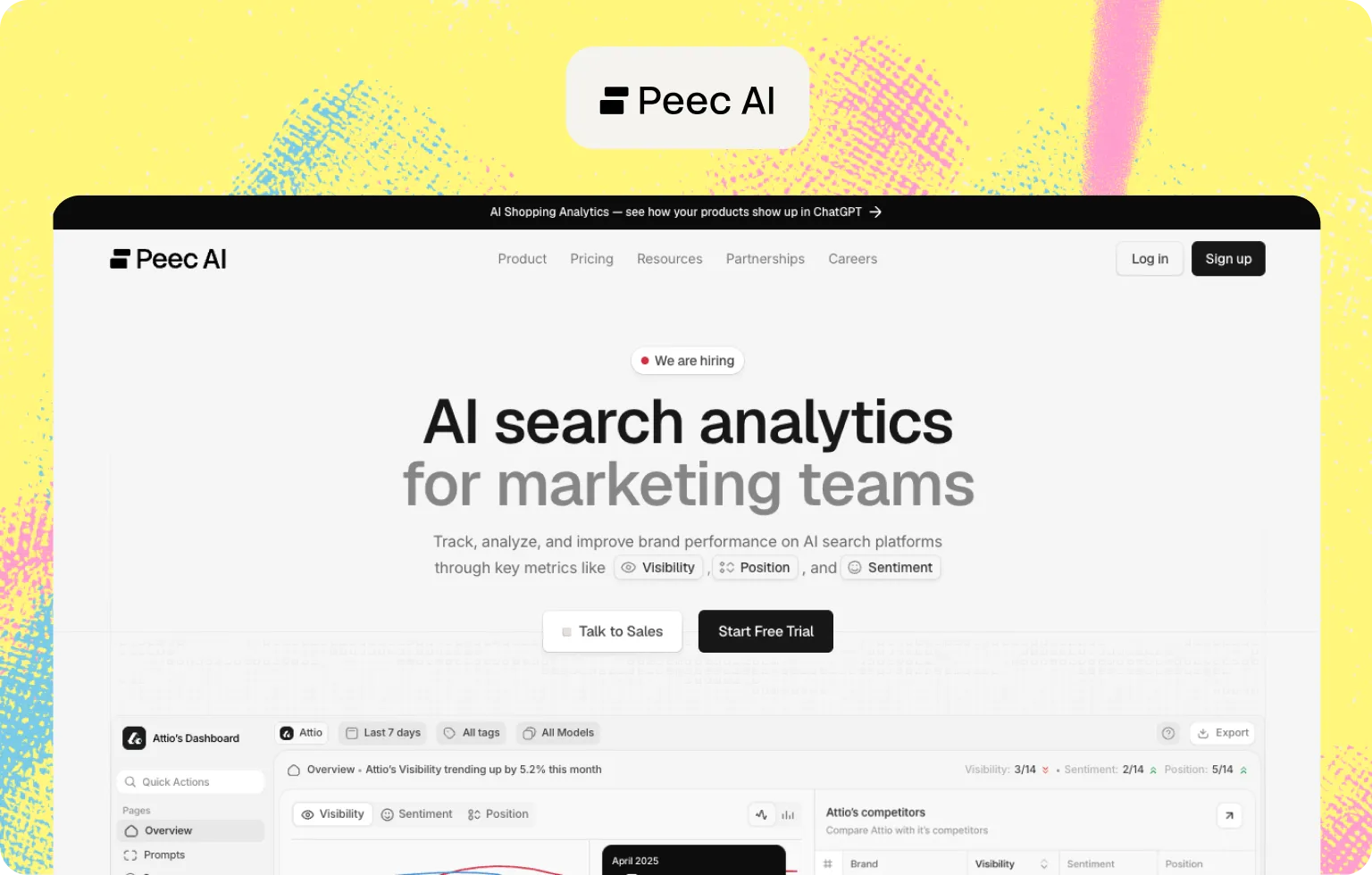
Peec AI is an AI search analytics platform that offers granular citation tracking with transparent pricing. It’s built for SEO teams that want comprehensive visibility data without enterprise pricing or complex onboarding.
Best for
Growing startups, agencies, and global brands that need granular citation tracking with transparent pricing.
What it does well
Peec AI’s citation intelligence is its strongest feature. It shows exact domains and individual URLs that large language models reference, with classification by domain type and page type. It identifies sources that cite competitors but not you, with high gap scores. Citation data can be segmented by AI model, geographic region, prompt tags, or time period. The platform tracks across all countries with 115+ languages supported.
Teams exploring Peec AI competitor tools will find that Peec AI’s strength is price-to-value ratio and citation granularity, while its weakness is the lack of an action layer.
Key features
- URL and domain-level citation classification by type
- Sentiment tracking with real-time alerts
- Competitive benchmarking with market ranking and share
- AI-suggested prompts with search volumes
- Looker Studio connector and API access
Watch-outs
Peec AI has no end-to-end attribution showing how mentions convert to traffic or leads. The first three plans only give visibility access to three models, so if you need further coverage, you need to sign up for a pricier plan.
Good fit if
- You need granular, filterable citation data with URL-level classification
- You want transparent pricing with unlimited seats
Not a fit if
- You want an action layer that auto-publishes or integrates with your CMS
- You need crawl-signal visibility or tech audits
Pricing:
- Starter: $95/mo
- Pro: $245/mo
- Advanced: $495/mo
- Enterprise: Custom
What to ask in the demo
Show me the citation classification breakdown for a specific prompt, how do you segment by domain type, page type, and AI model, and can I filter by country?
5. AthenaHQ
AthenaHQ is a purpose-built GEO and AEO platform that provides a unified command center for AI search optimization. Founded by former Google Search and DeepMind leaders, AthenaHQ tracks 8 AI platforms with content agents that draft and refine content to close visibility gaps.
Best for
Marketing, brand, and growth teams who want a unified command center for AEO and GEO with content agents.
What it does well
AthenaHQ tracks brand visibility across 8 LLMs and it covers 90+ countries and multiple languages. The Athena Citation Engine (ACE) provides granular authority and citation intelligence at the URL and domain level. On the crawl-signal side, AthenaHQ offers dynamic AI crawling to discover hidden parts of your site, AI blindspot detection, and on-page and off-page GEO analysis.
Teams comparing Athena AI alternatives will find that AthenaHQ’s strength is its purpose-built GEO architecture and content agents, while its credit-based pricing could get expensive at scale.
Key features
- ACE citation engine with URL and domain-level intelligence
- Sentiment analysis with real-time alerts
- Dynamic AI crawling and blindspot detection
- Content Optimization AI Agent with Deep Research
- Shopify and GA4 integrations
Watch-outs
The credit-based system (1 credit = 1 AI response) can get expensive as you scale. The Starter tier at $295/mo has basic content optimization only, with ACE and multi-country tracking requiring the enterprise tier.
Good fit if
- You want a purpose-built GEO platform with content agents
- You sell through Shopify and need SKU-level AI attribution
Not a fit if
- You need transparent pricing without credit-based limits
- You need an MCP connector for pulling data into AI assistants
Pricing
- Essential: Free ($25 free credit)
- Starter: $295/mo
- Enterprise: Custom
What to ask in the demo
Show me how the ACE citation engine surfaces URL-level citations for a specific prompt cluster, and walk me through how the Content Optimization AI Agent turns those insights into published content.
6. AirOps
.webp)
AirOps is a growth platform for AI search that combines visibility dashboards with a strong content operations layer. It’s less of a dedicated GEO monitoring tool and more of an AI content execution platform with visibility insights built in.
Best for
Teams that want an AI content operations platform with AI search visibility insights built in, rather than a dedicated GEO monitoring tool.
What it does well
AirOps’ core differentiator is its action layer. The Quill AI agent drives execution and loops in your team at the right time. You write strategy like a brief, add your brand context, and Quill gets to work. Visibility dashboards include citation tracking, competitor intelligence, and share of voice across AI search platforms. Brand governance gives every agent, workflow, and tool a single governed source of brand truth.
Key features
- Quill AI agent for content execution
- Content playbooks and brand governance
- Citation tracking and competitor intelligence
- Content freshness tracking and gap monitoring
- Multi-engine insights (Team plan and above)
Watch-outs
Only the enterprise plan includes multi-region and multi-language tracking. The solo plan only tracks ChatGPT. And even the enterprise tier only covers 4 AI search engines.
Good fit if
- You need strong content execution with playbooks and brand governance
- You have a team that needs unlimited seats and CMS integrations
Not a fit if
- You need affordable country-level tracking
- You want crawl-signal visibility or tech audits
Pricing
- Solo: $200/mo
- Pro: $2,000/mo
- Enterprise: Custom
What to ask in the demo
Show me how Quill takes a visibility gap and turns it into published content, and walk me through what the multi-engine insights look like on the Pro plan.
7. Semrush
.webp)
Semrush is an SEO platform that has added AI visibility features under its “Semrush One” umbrella. The advantage is familiarity. If your team already lives in Semrush for keyword research, backlinks, and site audits, adding AI visibility means one fewer tool to learn.
Best for
SEO teams already using Semrush who want to add AI visibility tracking within their existing workflow.
What it does well
Semrush’s AI Visibility Index shows top brands by mentions and strategies to increase share of voice. The AI Search Operating System connects data and workflow across SEO and AI visibility, so you can manage both from a single dashboard. An MCP connector lets you pull data into AI assistants, and Semrush integrates with Adobe’s agentic tools and Lovable for content optimization.
Key features
- AI Visibility Toolkit with 289M+ LLM prompts
- AI Visibility Index with brand mention tracking
- Free playbook with 41 lessons and 90-day action plan
- MCP connector for AI assistants
- Enterprise capabilities
Watch-outs
Semrush is a traditional SEO tool that has added AI features, not purpose-built for GEO.
Good fit if
- You already use Semrush and want AI visibility in the same platform
- You need SEO and AI visibility unified in one workflow
Not a fit if
- You need broader model coverage beyond 4 engines
- You want a lightweight, startup-friendly tool focused purely on AI visibility
Pricing
- Semrush One Starter: $199/mo
- Semrush One Pro+: $299/mo
- Semrush One Advanced: $549/mo
What to ask in the demo
Walk me through a specific prompt where my brand is absent but a competitor is cited. Can you show me the exact URL that won the citation, and does the 90-day action plan tell me what to publish to close that gap, or does it stop at the keyword level?
8. Ahrefs
Ahrefs Brand Radar is an AI visibility monitoring product that leverages Ahrefs’ massive backlink index and prompt database. Similar to Semrush, the advantage here is continuing to use a tool you’re already familiar with for SEO work.
Best for
SEO professionals who already use Ahrefs for backlink analysis and want AI visibility data within the same ecosystem.
What it does well
Brand Radar draws on 391M+ search-backed prompts, one of the largest AI visibility databases on the market, powered by real user queries rather than synthetic ones. It tracks 6 AI engines plus YouTube, TikTok, and Reddit included free while in beta. You can research any brand, product, region, or person with unlimited projects and zero setup.
Teams exploring Ahrefs alternatives will find that Ahrefs’ strength is its database scale and backlink integration, while its AI visibility features are domain-level only with no action layer.
Key features
- 391M+ search-backed prompt database (not synthetic)
- 6 AI engines plus YouTube, TikTok, Reddit (free beta)
- Competitive benchmarking in AI search
- Backlink index integration
- Standalone purchase available
Watch-outs
Brand Radar gives citations at domain-level only. There are no URL-level citations. Per-engine pricing climbs quickly from $199/mo for 1 engine to $699/mo for all 6.
Good fit if
- You already use Ahrefs for SEO and want an AI visibility preview
- You want the largest prompt database for research
Not a fit if
- You need URL-level citation extraction
- You want an action layer that turns gaps into content briefs
Pricing
- 1 LLM: $199
- 2 LLMs: $398
- 3 LLMs: $597
- All 5 LLMs: $699
What to ask in the demo
Show me how Brand Radar’s citation data ties back to specific URLs, and walk me through how you’d use the prompt database to identify content gaps for a specific topic cluster.
How to choose the right generative engine optimization tool (by team size + goals)
The right generative engine optimization tool depends on your team size, governance requirements, and what you’re optimizing for. Here’s how to narrow the list based on your situation.
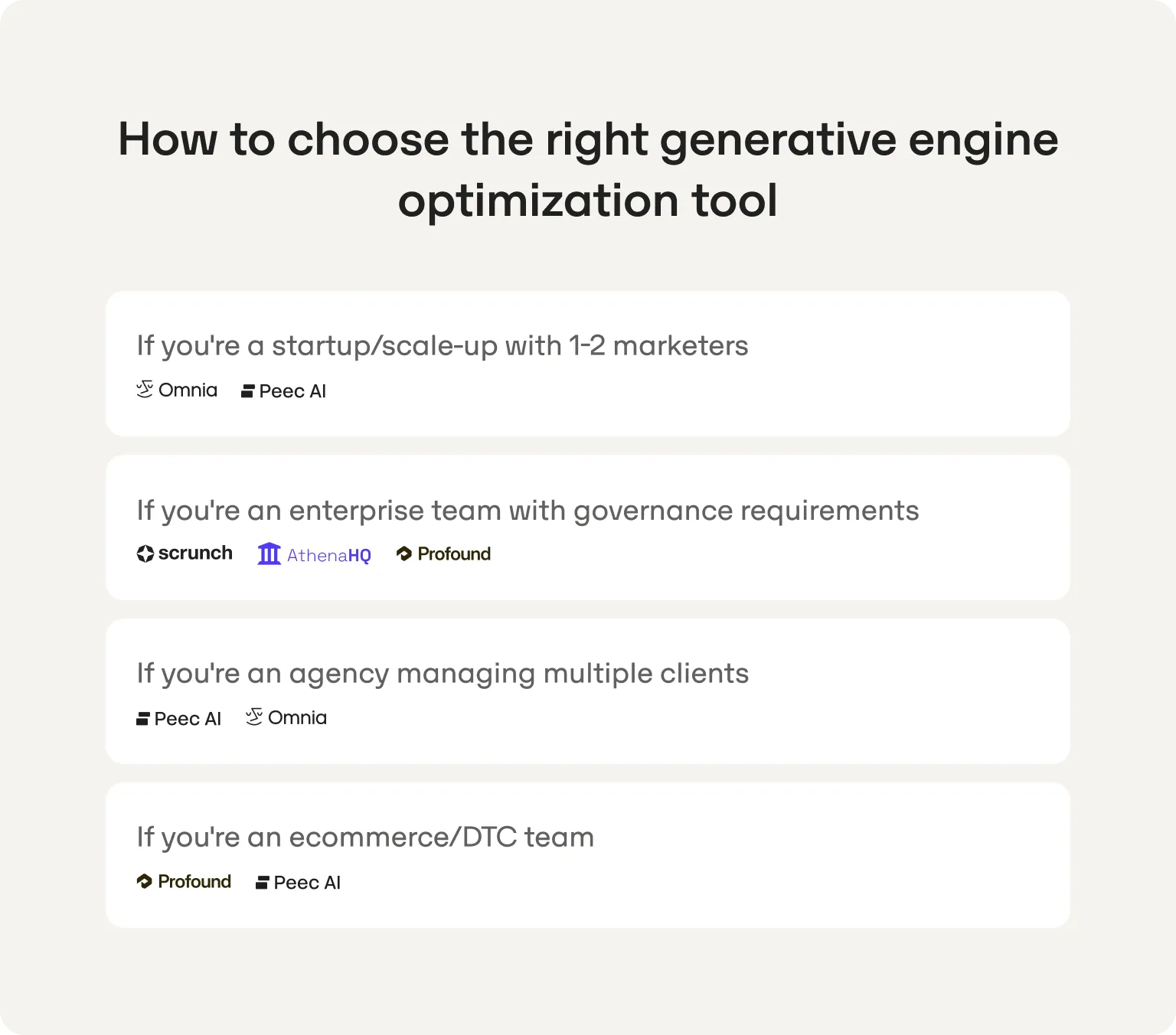
If you're a startup/scale-up with 1-2 marketers
You don't have time for a tool that gives you data without telling you what to do next. Prioritize country-level tracking, an action layer that produces content briefs and outreach, and pricing transparency. Avoid per-engine pricing that scales with every AI platform you add. For SEO and content leads at growing companies, the priority is execution speed.
Our picks: Omnia and Peec AI
If you're an enterprise team with governance requirements
Prioritize SSO and RBAC, SOC 2 compliance, audit logs, and vendor due diligence. You need broader engine coverage and data retention, but you also need procurement-ready compliance. Validate these requirements on day one, not after you've committed.
Our picks: Scrunch, AthenaHQ, and Profound
If you're an agency managing multiple clients
You need to run the same prompt sets across multiple clients, export results for client reports, and scale without per-seat pricing eating your margins. The key question is whether the tool can handle 10+ clients without becoming unmanageable.
Our picks: Peec AI and Omnia (check out our solutions for agencies here)
If you're an ecommerce/DTC team
You need product-level visibility inside AI shopping surfaces, not just brand-level prompt tracking. You need to know which queries trigger shopping results, how AI describes and tiles your products, and which feed fields and structured data determine whether AI correctly identifies your catalog.
Our picks: Profound and Peec AI
Implementation plan (Day 0 to Month 1) for any GEO platform
This is a tool-agnostic, action-first plan for getting value from any generative engine optimization platform in the first 30 days.
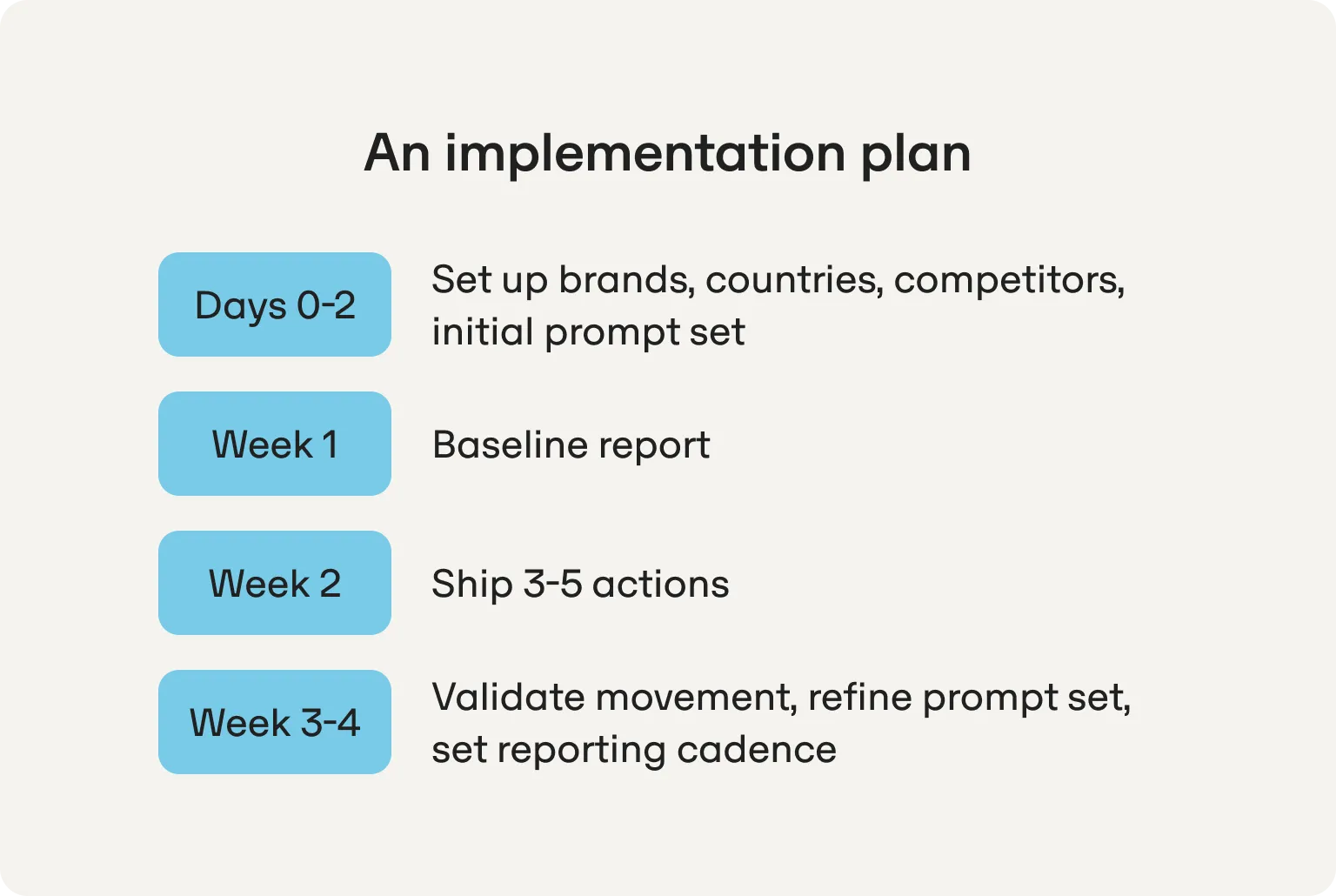
Day 0-2: Set up brands, countries, competitors, initial prompt set
Enter your brand, add the countries you sell into, add 3-5 competitors, and build an initial prompt set of 20-50 prompts. Start with category-level prompts (“best [category] for [use case]”) and competitor comparison prompts (“[your brand] vs [competitor]”). Don’t overthink the prompt set as you’ll refine it in week 3.
Week 1: Baseline report (presence + citations + top missing prompts)
Run your first full report. Document your presence rate by engine and by country. Note which prompts cite you, which cite competitors, and which cite no one in your category. Identify the top 5 missing prompts where competitors appear and you don’t. This is your baseline.
Week 2: Ship 3-5 actions (content updates + 1-2 new assets + 1 placement)
Pick the 3 highest-impact gaps from your baseline report. Update 1-2 existing pages to better match what AI engines cite. Create 1-2 new assets targeting prompts where you’re absent. Reach out to 1 third-party site that AI already cites in your category. The goal is to ship work, not just analyze it.
Week 3-4: Validate movement, refine prompt set, set reporting cadence
Re-run your prompts and check whether your position shifted. Add 10-20 new prompts based on what you learned. Set a weekly reporting cadence so you’re tracking trends, not snapshots. By the end of month 1, you should have a repeatable workflow: Monitor, identify gaps, ship actions, and validate.
What a “weekly GEO report” should contain
- Wins/losses by prompt cluster: Which prompt clusters improved, which declined, and by how much
- New citations gained/lost: Specific URLs that started or stopped citing your brand
- Competitor citation sources that appeared: New domains or pages that began citing competitors
- Actions shipped + next actions queued: What you published, updated, or pitched this week, and what’s queued for next week
Omnio handles this in a few clicks. Omnio generates GA4 visibility reports for leadership, reads your share of voice and citation data, and reports on what moved your visibility up or down. Instead of manually building a weekly report, Omnio pulls the data and drafts the narrative, so your team spends time acting on the report, not creating it.
Why Omnia is the best fit for SEO/marketing leads comparing GEO platforms
Most generative engine optimization tools fall into one of two camps: dashboards that tell you where you stand, or content tools that help you publish. Very few do both. Omnia is the only platform on this list that spans the full workflow.
Most tools stop at showing you a gap. Omnia’s Omnio GEO Agent starts there and does the work that comes after: finding lost citations, creating content briefs, publishing to your CMS, reaching out to third-party sites that AI already cites, and generating GA4 reports for leadership. That's the difference between a tool that informs and a tool that executes.
The monitoring side holds up too. Omnia tracks your AI presence across 7 AI engines by country and language, with daily refresh. You see AI citations at the URL level, competitor overlap, and where you're losing share of voice. AI visibility platforms that only show domain-level data can't give you that signal.
Omnia includes all 7 engines on every paid plan, with unlimited country and language tracking, so your coverage scales with your market instead of your budget. Transparent tiered pricing means you know what you're paying and what you're getting. There’s no per-engine pricing, no credit-based limits, and no enterprise-only features gating the action layer.
Start for free today and sign up for an Omnia account. Or book a demo to see Omnia in action.
FAQs
Which GEO tool is best for beginners?
For beginners, start with a free tool like Omnia’s AI visibility checker gets you a baseline read on your brand visibility in AI search. Once you understand where you stand, move to a platform with ongoing monitoring and an action layer. The best generative engine optimization tool for beginners is one that doesn’t require a six-month onboarding cycle to produce your first insight.
What’s the difference between a generative engine optimization tool and a traditional SEO suite?
Traditional SEO suites track search rankings on Google Search using deterministic keyword positions, backlinks, and indexing data. Generative engine optimization AI tools track brand mentions, AI citations, and brand presence in AI generated responses across AI engines like ChatGPT and Perplexity. The signals are fundamentally different. SEO tools measure stable positions, while generative engine optimization software measures probabilistic presence that changes with every model update.
What’s the difference between GEO and AEO tools?
Answer engine optimization (AEO) focuses on being the explicit cited answer for a specific prompt. Generative engine optimization (GEO) is the broader, upstream discipline of influencing what gets included when AI systems generate a response at all, including crawl access, structured data, and content structure. A tool can be strong at AEO tracking but weak at GEO upstream signals. Ask vendors which discipline they actually measure.